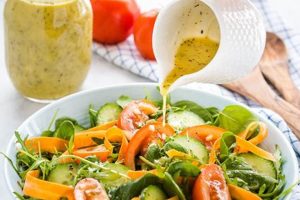
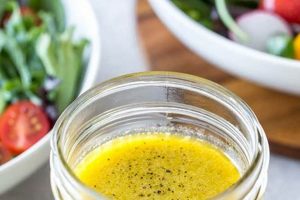
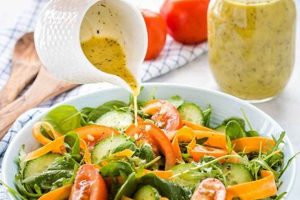
A basic vinaigrette, featuring olive oil as its foundation, typically combines the oil with an acidic element like vinegar or citrus juice. This fundamental mixture can be enhanced with seasonings such as salt, pepper, herbs, and spices. For instance, a classic combination involves whisking together olive oil, red wine vinegar, Dijon mustard, minced garlic, salt, and pepper.
Olive oil-based dressings offer a healthy and flavorful way to enhance salads and other dishes. Olive oil is a source of monounsaturated fats, antioxidants, and anti-inflammatory compounds, contributing potential health benefits. The simplicity of these dressings allows the quality of the olive oil to shine through, while also providing a versatile base for customization. Historically, olive oil and vinegar mixtures have been used as condiments and flavor enhancers across various cultures for centuries.
The following sections will explore various types of olive oil suitable for dressings, different acidic components and their flavor profiles, and complementary seasonings to create a range of delicious and healthful vinaigrette variations. Techniques for emulsification and storage will also be discussed.
Tips for Crafting Exceptional Olive Oil-Based Dressings
Creating a delicious and healthful vinaigrette is achievable with a few key considerations. The following tips offer guidance on ingredient selection, technique, and storage to maximize flavor and quality.
Tip 1: Select High-Quality Olive Oil: The flavor of the dressing depends heavily on the olive oil used. Extra virgin olive oil, known for its robust flavor and aroma, is recommended. Consider exploring different varieties to discover preferred flavor profiles.
Tip 2: Balance Acidity: The ratio of oil to acid is crucial. A general guideline is a 3:1 ratio of oil to vinegar or citrus juice. However, this can be adjusted to personal preference. Taste and adjust as needed.
Tip 3: Emulsify Thoroughly: Proper emulsification creates a smooth and creamy texture, preventing separation. Whisk the ingredients vigorously or use a blender for a more stable emulsion.
Tip 4: Seasoning Strategically: Freshly ground black pepper and sea salt are essential. Experiment with herbs, spices, and aromatics like garlic, shallots, or Dijon mustard to enhance the flavor profile.
Tip 5: Taste and Adjust: Palates vary. Tasting throughout the process allows for adjustments to acidity, seasoning, and other flavor components, ensuring the dressing perfectly complements the intended dish.
Tip 6: Store Properly: Homemade dressings can be stored in an airtight container in the refrigerator for up to a week. Allow the dressing to come to room temperature before serving to enhance the flavors.
Tip 7: Explore Flavor Combinations: Don’t be afraid to experiment. Try different types of vinegar, such as balsamic, red wine, or apple cider vinegar. Citrus juices like lemon or lime can also offer bright and refreshing notes.
By following these guidelines, one can consistently create flavorful, healthy, and versatile dressings that elevate any salad or dish.
These fundamental techniques empower culinary exploration and customization, paving the way for a diverse range of delicious and healthful vinaigrette creations.
1. High-quality Olive Oil
The foundation of a superior simple salad dressing rests upon the selection of high-quality olive oil. Its impact extends beyond mere flavor, influencing texture, aroma, and overall culinary experience. Understanding the nuances of olive oil quality is essential for crafting exceptional dressings.
- Extra Virgin Classification:
Extra virgin olive oil, the highest grade available, results from the first cold-pressing of olives, preserving delicate flavors and beneficial compounds. This classification guarantees a low acidity level (below 0.8%), indicative of superior quality. Its robust flavor profile forms the backbone of a flavorful vinaigrette. For instance, a Tuscan extra virgin olive oil, with its peppery notes, can elevate a simple salad of greens and tomatoes. Conversely, using a lower-grade oil might introduce unwanted flavors and diminish the dressing’s overall quality.
- Flavor Profiles and Cultivars:
Olive oil exhibits diverse flavor profiles influenced by olive cultivars, terroir, and processing methods. Delicate oils, such as those from Liguria, offer subtle fruity and floral notes, suitable for lighter dressings. More robust oils, like those from Spain or Greece, possess stronger, peppery flavors that complement heartier salads and ingredients. Choosing the right oil depends on the desired flavor outcome and the other ingredients in the dressing and salad.
- Aroma and Sensory Experience:
High-quality olive oil offers a complex aromatic profile, contributing to the overall sensory experience of the salad. Aromas can range from grassy and herbaceous to fruity and nutty, further enriching the flavor profile of the dressing. The aroma complements the taste, creating a more immersive culinary experience. A delicate aroma can enhance a spring salad, while a more robust aroma might pair well with roasted vegetables.
- Health Benefits and Antioxidants:
Extra virgin olive oil contains beneficial antioxidants and anti-inflammatory compounds. These contribute to the healthfulness of the dressing and complement the nutritional value of the salad ingredients. Choosing a high-quality oil ensures that these beneficial components are preserved and contribute to the overall nutritional profile of the meal.
In conclusion, selecting a high-quality olive oil is paramount to crafting a simple, yet exceptional, salad dressing. The oil’s quality influences flavor, aroma, texture, and even health benefits. Understanding these factors enables informed decisions, leading to dressings that enhance the culinary experience.
2. Balanced Acidity

Balanced acidity is crucial in a simple salad dressing recipe with olive oil. The interplay between the richness of the oil and the sharpness of the acid forms the foundation of a flavorful vinaigrette. Without proper balance, the dressing can be overly oily or excessively tart, failing to complement the salad ingredients.
- The Role of Acid:
Acid provides brightness and complexity, cutting through the richness of olive oil. It also balances the flavors of the other ingredients in the salad. For example, the sweetness of tomatoes or the earthiness of mushrooms benefits from the acidic counterpoint. The acid also contributes to a more vibrant and refreshing sensory experience.
- Types of Acid:
Vinegars, such as red wine, balsamic, apple cider, and white wine vinegar, offer distinct flavor profiles. Citrus juices, like lemon and lime, provide a brighter, more citrusy acidity. The choice of acid depends on the desired flavor profile and the other ingredients in the salad. A balsamic vinaigrette complements roasted vegetables, while a lemon vinaigrette pairs well with seafood.
- Achieving Balance:
The standard ratio for a vinaigrette is three parts oil to one part acid. However, individual preferences and the specific ingredients may necessitate adjustments. Tasting and adjusting throughout the process is crucial. A dressing with too much oil can taste bland, while too much acid can be overpowering. Careful balancing ensures a harmonious flavor profile.
- Impact on Flavor Perception:
Acidity enhances the perception of other flavors in the dressing and the salad. It brightens the overall taste and adds a refreshing quality. The interaction between acid and other ingredients creates a more complex and nuanced flavor profile. For example, the bitterness of some greens is balanced by the acidity, creating a more palatable experience.
In conclusion, balanced acidity is paramount to a successful simple salad dressing with olive oil. It provides brightness, complexity, and balance, enhancing the flavor profile of both the dressing and the salad itself. The careful selection and proportion of acid contribute significantly to a more enjoyable and satisfying culinary experience.
3. Fresh Seasonings
Fresh seasonings play a vital role in elevating a simple salad dressing recipe with olive oil from basic to exceptional. They provide depth, complexity, and vibrancy, transforming a straightforward emulsion into a nuanced culinary experience. The judicious use of fresh herbs, spices, and aromatics enhances the inherent flavors of the olive oil and acidic components, creating a harmonious and balanced dressing.
- Herbaceous Additions:
Fresh herbs contribute a bright, verdant dimension to olive oil-based dressings. Classic choices include parsley, chives, dill, mint, oregano, and thyme. For example, fresh dill complements a lemon vinaigrette, while oregano pairs well with balsamic. The selection of herbs should consider the other ingredients in both the dressing and the salad itself. Delicate herbs like chives lose their vibrancy when exposed to heat, so they are best added just before serving.
- Spice Integration:
Spices offer warmth and complexity. Freshly cracked black pepper is a staple, adding subtle heat and depth. Other options include red pepper flakes for a touch of heat, or a pinch of cayenne pepper for a more pronounced kick. Ground spices, while convenient, lack the vibrancy of freshly ground counterparts. For instance, freshly ground cumin seeds offer a more nuanced flavor than pre-ground cumin.
- Aromatic Enhancements:
Aromatics, such as garlic, shallots, and ginger, introduce pungent and savory notes. Minced garlic in a red wine vinaigrette, or finely chopped shallots in a lemon vinaigrette, add depth and complexity. These ingredients can be incorporated directly into the dressing or used as a garnish. Roasting garlic mellows its flavor, offering a sweeter and nuttier alternative to raw garlic.
- Citrus Zest Integration:
Citrus zest, packed with essential oils, provides intense citrusy aromas and flavors. Lemon zest complements a lemon vinaigrette, adding a burst of fresh citrus flavor. The zest should be finely grated to avoid any bitter pith. Using a microplane grater ensures the finest zest, maximizing flavor and aroma contribution.
The careful selection and combination of fresh seasonings elevate a simple olive oil-based dressing, transforming it into a dynamic and flavorful element of any salad. The interplay between the fresh seasonings, the olive oil, and the acidic component creates a harmonious balance, enhancing the overall dining experience. The freshness of these ingredients is crucial, as dried herbs and spices lack the same vibrancy and depth of flavor.
4. Proper Emulsification

Proper emulsification is essential for creating a successful simple salad dressing with olive oil. It transforms a mixture of oil and water-based ingredients, like vinegar or citrus juice, into a homogenous, creamy, and visually appealing dressing. Without emulsification, the ingredients separate, resulting in an oily layer on top and a watery layer below, compromising both flavor and texture.
- Temporary vs. Permanent Emulsions:
Simple vinaigrettes are typically temporary emulsions, meaning the ingredients will eventually separate. Vigorous whisking creates a temporary blend, but the mixture will revert to its separated state over time. Permanent emulsions, achieved through the addition of emulsifying agents like egg yolks or mustard, create a more stable and lasting blend. While convenient, permanent emulsions can alter the flavor profile of the dressing.
- Techniques for Emulsification:
Whisking is the most common method for emulsifying simple vinaigrettes. Adding the oil slowly to the vinegar while whisking continuously helps create a better emulsion. A blender offers a more efficient method, producing a finer and more stable emulsion, particularly for dressings containing thicker ingredients like honey or tahini. The chosen method impacts the texture and stability of the dressing.
- Factors Influencing Stability:
Several factors influence emulsion stability. The ratio of oil to acid plays a critical role; a 3:1 ratio is generally recommended. Temperature also affects stability; dressings emulsify more readily at room temperature. The presence of emulsifying agents, like Dijon mustard, enhances stability by binding the oil and water molecules together. Understanding these factors helps create a more desirable and longer-lasting emulsion.
- Impact on Sensory Experience:
Proper emulsification significantly improves the sensory experience of the dressing. A well-emulsified dressing coats the salad ingredients evenly, distributing flavor more effectively. The creamy texture enhances the mouthfeel, while the visually appealing consistency adds to the overall presentation of the dish. A separated dressing delivers an uneven flavor profile and a less satisfying textural experience.
In conclusion, proper emulsification is a critical step in creating a simple yet successful salad dressing with olive oil. It determines the texture, stability, flavor distribution, and overall appeal of the dressing. Understanding the principles of emulsification allows for the creation of a harmonious and delicious vinaigrette that elevates the culinary experience.
5. Strategic Flavor Pairings

Strategic flavor pairings elevate simple salad dressings with olive oil from basic to exceptional. Thoughtful combinations of ingredients create synergistic flavor profiles, enhancing the overall sensory experience. Understanding these pairings allows for the creation of dressings that complement specific salad ingredients and elevate the dish as a whole.
- Complementary Flavor Profiles:
Flavor pairings rely on understanding complementary flavors. These combinations enhance each other, creating a more complex and balanced taste. For example, the bright acidity of lemon juice harmonizes with the herbaceous notes of dill, creating a vibrant and refreshing flavor profile. Similarly, the sweetness of balsamic vinegar complements the earthiness of oregano, producing a rich and savory dressing. These pairings enhance the inherent qualities of each ingredient, creating a synergistic effect.
- Balancing Sweet and Savory:
Balancing sweet and savory elements adds depth and complexity to dressings. A touch of honey or maple syrup can temper the sharpness of vinegar, creating a more rounded flavor profile. Conversely, a pinch of salt or a dash of soy sauce can enhance the sweetness of fruits in a salad. This balance prevents the dressing from being overly sweet or excessively savory, ensuring a harmonious taste experience.
- Considering Salad Ingredients:
Strategic flavor pairings should also consider the other ingredients in the salad. A delicate vinaigrette with lemon and dill complements a light salad with fresh greens and seafood. A more robust dressing with balsamic and oregano pairs well with a heartier salad featuring roasted vegetables or grilled meats. The dressing should enhance, not overpower, the flavors of the other ingredients.
- Textural Considerations:
Texture plays a role in flavor perception. The creamy texture of a well-emulsified vinaigrette interacts with the textures of the salad ingredients, influencing the overall sensory experience. A chunky dressing with added nuts or seeds provides textural contrast to leafy greens. A smooth and creamy dressing complements softer ingredients like avocado or roasted vegetables.
By understanding the principles of strategic flavor pairings, crafting a simple salad dressing with olive oil becomes an exercise in culinary creativity. The careful selection and combination of ingredients can elevate a basic vinaigrette to a nuanced and flavorful component of any salad, enhancing the overall dining experience.
6. Appropriate Storage
Appropriate storage is crucial for maintaining the quality and extending the shelf life of simple salad dressings made with olive oil. Improper storage can lead to oxidation, flavor degradation, and even the growth of harmful microorganisms. Understanding proper storage techniques ensures the dressing remains fresh, flavorful, and safe to consume.
- Container Selection:
Storing dressings in airtight containers is paramount. Exposure to air accelerates oxidation, leading to off-flavors and a decrease in nutritional value. Glass containers are ideal due to their non-reactive nature, preventing the dressing from absorbing unwanted flavors from the container. Dark-colored glass offers additional protection against light-induced oxidation. Selecting appropriate containers is the first line of defense against spoilage and quality degradation.
- Refrigeration:
Refrigeration is essential for preserving the freshness of olive oil-based dressings. Low temperatures inhibit the growth of bacteria and slow down the oxidation process. Dressings should be stored in the coldest part of the refrigerator, typically the back, to maintain optimal temperature consistency. Refrigeration significantly extends the shelf life and preserves the quality of the dressing.
- Temperature Fluctuations:
Minimizing temperature fluctuations is key to maintaining dressing quality. Repeatedly removing the dressing from the refrigerator and exposing it to warmer temperatures accelerates oxidation and can promote bacterial growth. Storing the dressing in a consistent, cool environment is vital for preserving its flavor and freshness. Avoiding temperature fluctuations safeguards against premature spoilage.
- Shelf Life Considerations:
Even with proper storage, simple salad dressings have a limited shelf life. Generally, homemade vinaigrettes without emulsifying agents like egg yolks should be consumed within a week. Dressings containing fresh ingredients like herbs or garlic may have a shorter shelf life. Regularly checking for signs of spoilage, such as off-odors or changes in texture, is essential. Discarding dressings past their prime prevents potential foodborne illnesses.
Adhering to these storage guidelines ensures the longevity and quality of simple salad dressings made with olive oil. Proper storage preserves the delicate balance of flavors, prevents spoilage, and maximizes the enjoyment of this versatile culinary staple. By prioritizing appropriate storage, one can consistently enjoy fresh, flavorful, and safe homemade dressings.
Frequently Asked Questions
This section addresses common inquiries regarding the creation and utilization of simple olive oil-based salad dressings.
Question 1: What is the ideal ratio of oil to vinegar in a basic vinaigrette?
A standard ratio is 3:1, but this can be adjusted based on personal preference and the specific ingredients used. A higher oil ratio yields a richer dressing, while a higher vinegar ratio increases tartness.
Question 2: Can other oils be substituted for olive oil?
While other oils can be used, they will alter the flavor profile. Avocado oil offers a neutral flavor, while grapeseed oil has a slightly nutty taste. These substitutions may be suitable for individuals with olive oil sensitivities or those seeking specific flavor profiles.
Question 3: How can emulsion separation be prevented?
Vigorous whisking or blending creates a temporary emulsion. For increased stability, incorporate an emulsifying agent such as Dijon mustard or honey. Storing the dressing in the refrigerator also helps maintain the emulsion.
Question 4: How long can homemade vinaigrette be stored?
Properly stored in an airtight container in the refrigerator, a basic vinaigrette can last up to one week. Dressings containing fresh ingredients like herbs or garlic may have a shorter shelf life.
Question 5: What are some ways to enhance the flavor of a simple vinaigrette?
Flavor can be enhanced through the addition of fresh herbs, spices, and aromatics. Consider incorporating ingredients such as minced garlic, chopped shallots, Dijon mustard, honey, maple syrup, or citrus zest.
Question 6: Can simple vinaigrettes be used for purposes other than salad dressings?
Their versatility extends beyond salads. Vinaigrettes can be used as marinades for meat, poultry, or vegetables, as well as sauces for roasted or grilled dishes.
Understanding these fundamental aspects allows for the creation of versatile and flavorful dressings tailored to individual preferences and culinary needs.
The following section offers a collection of recipe variations based on the principles discussed.
Simple Salad Dressing Recipe with Olive Oil
Exploration of simple salad dressing recipes centered on olive oil reveals the versatility and potential of this culinary staple. Emphasis on quality ingredients, balanced acidity, proper emulsification, and strategic flavor pairings underscores the ability to create nuanced and flavorful dressings with minimal effort. From selecting extra virgin olive oil to understanding the role of acidity and the impact of fresh seasonings, each element contributes to the final product. Proper storage techniques further ensure the longevity and quality of these dressings. This exploration provides a comprehensive guide to crafting dressings that enhance, rather than mask, the flavors of accompanying ingredients.
The simplicity of an olive oil-based dressing belies its transformative potential. Culinary experimentation with various oils, acids, and seasonings unlocks a world of flavor possibilities, empowering culinary creativity and personalized taste experiences. Mastery of these fundamental principles provides a foundation for crafting exceptional dressings that elevate everyday meals and contribute to a more healthful and flavorful diet.