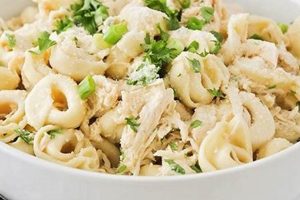
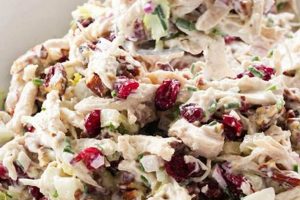
A basic preparation of this dish typically involves cooked chicken, mayonnaise, and seasonings. Celery, onion, grapes, or nuts can be added for variations in flavor and texture. A classic example combines shredded chicken breast with mayonnaise, chopped celery, and salt and pepper.
Quick to prepare and adaptable to various tastes and dietary needs, this type of dish offers a convenient and nutritious meal option. Its versatility allows for adjustments to ingredients and seasonings, making it suitable for picnics, lunches, or light dinners. Historically, chicken salad emerged as a popular dish in the mid-19th century, evolving from earlier meat salad recipes.
The following sections will delve into specific variations, offering step-by-step instructions and tips for creating delicious and easy versions of this culinary staple. Nutritional information and suggestions for ingredient substitutions will also be explored.
Tips for a Delicious Chicken Salad
Achieving a flavorful and satisfying chicken salad involves attention to detail and ingredient selection. The following tips offer guidance for creating a superior culinary experience.
Tip 1: Choose High-Quality Chicken: Selecting fresh, high-quality chicken contributes significantly to the overall flavor and texture. Roasting or poaching a whole chicken allows for optimal control over the cooking process and yields flavorful, moist meat.
Tip 2: Proper Chicken Preparation: Allowing cooked chicken to cool completely before shredding or dicing prevents the mayonnaise from melting and creating a watery consistency. Evenly sized pieces ensure consistent texture and flavor distribution.
Tip 3: Mayonnaise Selection: Using good quality mayonnaise significantly impacts the final product’s richness and creaminess. Consider experimenting with different types of mayonnaise, such as olive oil-based or flavored varieties, to enhance the flavor profile.
Tip 4: Fresh Ingredients: Crisp, fresh ingredients like celery and onion contribute brightness and textural contrast. Thoroughly washing and properly chopping these ingredients enhances their contribution to the dish.
Tip 5: Seasoning Balance: Achieving a well-balanced flavor profile necessitates careful seasoning. Start with a small amount of salt and pepper, tasting and adjusting as needed. Consider incorporating herbs and spices like dill, paprika, or garlic powder for added depth.
Tip 6: Mindful Ingredient Incorporation: Gently folding the ingredients together prevents overmixing, which can result in a mushy texture. Maintaining the integrity of the chicken and other add-ins ensures a more pleasant eating experience.
Tip 7: Chilling for Enhanced Flavor: Allowing the chicken salad to chill in the refrigerator for at least 30 minutes before serving allows the flavors to meld and develop fully. This also enhances the overall enjoyment of the dish.
By adhering to these guidelines, one can create a chicken salad that excels in both flavor and texture. The careful selection and preparation of ingredients contribute significantly to the final product’s quality and satisfaction.
The following section will offer concluding remarks and further resources for exploring various chicken salad variations and culinary techniques.
1. Ingredients

Ingredient selection significantly impacts the final flavor profile and overall quality of a simple chicken salad recipe. Careful consideration of each component contributes to a balanced and satisfying dish.
- Chicken
Cooked chicken serves as the foundation of the recipe. Options include using leftover roasted or poached chicken, or conveniently purchasing pre-cooked chicken. The choice influences the overall flavor and texture of the salad. Rotisserie chicken offers a convenient and flavorful option, while home-cooked chicken allows for greater control over seasonings and cooking methods. The amount of chicken used also impacts the richness and heartiness of the salad.
- Binding Agent
Mayonnaise typically serves as the binding agent, adding creaminess and holding the ingredients together. Alternatives like Greek yogurt or avocado offer lighter and healthier options. The type and quantity of binding agent influence the salad’s texture and richness. Using less mayonnaise results in a lighter salad, while substituting Greek yogurt adds a tangy flavor.
- Aromatics
Aromatics such as celery and onion add depth and complexity. Finely diced celery provides a crisp texture and slightly bitter note, while red onion offers a pungent bite. Other aromatic vegetables like bell peppers or scallions can also be incorporated. These ingredients contribute to the salad’s overall flavor balance and provide textural variety.
- Seasonings
Seasonings enhance the overall flavor profile. Salt and pepper are essential, while herbs and spices like dill, paprika, or garlic powder offer additional complexity. Fresh herbs, such as parsley or chives, provide a bright and fresh element. The choice of seasonings allows for customization based on individual preferences and desired flavor intensity.
The interplay of these ingredient categories contributes to a well-rounded and flavorful chicken salad. Understanding the role and impact of each component allows for informed choices and customization to achieve a desired outcome, ranging from a classic, simple preparation to more complex variations.
2. Preparation
Preparation plays a crucial role in a simple chicken salad recipe, directly impacting the final product’s quality, texture, and flavor. Efficient and proper preparation streamlines the cooking process and ensures optimal ingredient integration. Consider the cause-and-effect relationship between preparation steps and the resulting dish. For example, neglecting to properly chill cooked chicken before combining it with mayonnaise can lead to a watery, less desirable consistency. Conversely, meticulous attention to detail, such as dicing ingredients uniformly, ensures even flavor distribution and enhances the overall dining experience. The significance of preparation extends beyond mere convenience; it directly influences the dish’s success.
Several practical examples illustrate the importance of preparation. Thoroughly washing and drying produce removes potential contaminants and ensures crisp, flavorful ingredients. Precisely measuring ingredients contributes to a balanced flavor profile and avoids unexpected results. Taking the time to properly shred or dice chicken influences the salad’s texture and how it blends with other components. Consider the impact of using coarsely chopped versus finely minced chicken. These seemingly small details contribute significantly to the overall quality and enjoyment of the final dish. Efficient preparation also minimizes cooking time and reduces potential errors, ultimately contributing to a more satisfying culinary experience.
In summary, preparation is an integral component of a simple chicken salad recipe. It represents a crucial step impacting not only the ease of the process but also, more importantly, the final dish’s quality and appeal. Understanding the connection between preparation and outcome empowers one to create a superior chicken salad, transforming simple ingredients into a delectable culinary creation. Overlooking this crucial stage can compromise the desired results, highlighting the practical significance of meticulous preparation in achieving culinary excellence.
3. Technique

Technique encompasses the methods and procedures employed when creating a simple chicken salad recipe. Proper technique elevates the dish beyond a mere combination of ingredients, influencing texture, flavor integration, and overall presentation. Understanding and applying appropriate techniques significantly contributes to the final product’s quality and enjoyment.
- Chicken Handling
The method used to handle cooked chicken directly impacts the salad’s texture. Shredding chicken by hand creates a coarser, more rustic texture, while dicing it into uniform cubes results in a cleaner, more refined presentation. Over-processing the chicken can lead to a mushy texture, detracting from the overall eating experience. The chosen technique should align with the desired outcome and personal preference.
- Ingredient Incorporation
The way ingredients are combined affects flavor distribution and texture. Gently folding ingredients together prevents overmixing and preserves the integrity of individual components. This technique ensures that the chicken remains intact and the other ingredients are evenly distributed throughout the salad. Conversely, aggressive mixing can result in a dense, less appealing texture. Consider the desired texture when incorporating ingredients.
- Seasoning Application
Seasoning technique impacts flavor balance. Gradually adding seasonings and tasting throughout the process allows for adjustments and prevents over-seasoning. This iterative approach ensures that the final flavor profile is balanced and nuanced. Simply adding all seasonings at once risks an uneven distribution of flavor and potential imbalances. The technique of gradual incorporation allows for greater control over the final flavor profile.
- Chilling and Resting
Chilling the prepared chicken salad allows flavors to meld and develop depth. This crucial step enhances the overall taste experience by allowing the ingredients to harmonize. The duration of chilling influences the intensity of flavor development. A minimum of 30 minutes is typically recommended, allowing the flavors to fully integrate. This technique maximizes the flavor potential of the chicken salad.
These technical considerations, while seemingly minor, significantly contribute to the final product’s success. Employing appropriate techniques elevates a simple chicken salad recipe from a basic combination of ingredients to a carefully crafted dish with enhanced flavor and texture. Understanding the impact of each technique allows for informed choices and adjustments, ensuring a delicious and satisfying culinary outcome. Technique, therefore, serves as a crucial bridge between ingredients and a delectable final product.
4. Flavor Balance
Flavor balance is paramount in a simple chicken salad recipe. It represents the harmonious interplay of different taste elements saltiness, sweetness, acidity, and richness creating a cohesive and enjoyable culinary experience. Achieving this balance elevates the dish from a basic combination of ingredients to a nuanced and satisfying meal. An understanding of how different flavors interact and how to adjust them is essential for creating a successful chicken salad.
- Salt and Acidity
Salt enhances the inherent flavors of the chicken and other ingredients, while acidity provides brightness and cuts through the richness of the mayonnaise. A squeeze of lemon juice or a touch of vinegar balances the creamy texture and adds a refreshing note. The interplay between salt and acidity is crucial; too much salt can make the salad overly savory, while insufficient acidity can result in a bland or heavy dish. Careful adjustment of these elements is key to achieving a well-rounded flavor profile.
- Sweetness and Savory Notes
Incorporating a touch of sweetness can complement the savory notes of the chicken and other ingredients. Finely diced grapes or dried cranberries offer a subtle sweetness that balances the savory elements, adding complexity and depth of flavor. The sweetness should be restrained to avoid overpowering the other flavors. This delicate balance between sweet and savory contributes to a more nuanced and interesting flavor profile.
- Textural Contrast and Flavor
Textural contrast plays a role in perceived flavor balance. The crispness of celery and onion provides a counterpoint to the creamy mayonnaise and tender chicken, enhancing the overall sensory experience. This textural variety adds another dimension to the flavor profile, making the salad more engaging and enjoyable. The interplay of textures adds complexity and prevents the salad from becoming monotonous.
- Fresh Herbs and Spices
Fresh herbs and spices contribute aromatic complexity and depth of flavor. Dill, chives, or parsley add brightness and freshness, while a pinch of paprika or garlic powder can introduce subtle warmth and depth. These additions should complement the other flavors without overpowering them. The judicious use of herbs and spices elevates the flavor profile, transforming a simple chicken salad into a more complex and flavorful dish.
Flavor balance in a simple chicken salad recipe is not merely about avoiding extremes; it’s about orchestrating a harmonious blend of tastes and textures. Each ingredient contributes to the overall flavor profile, and careful consideration of their interactions is crucial for achieving a delicious and well-balanced final product. Mastering flavor balance elevates the dish, ensuring a satisfying and memorable culinary experience. It allows for creativity and personalization, enabling each individual to create a chicken salad perfectly suited to their palate.
5. Serving Suggestions
Serving suggestions represent the final, yet crucial, stage in the realization of a simple chicken salad recipe. They extend beyond mere presentation, impacting the overall dining experience by influencing perceived flavors, textures, and convenience. Serving suggestions provide a framework for transforming a basic chicken salad into a versatile and adaptable meal component. The method of presentation affects not only the aesthetic appeal but also the perceived flavor profile and overall enjoyment.
Consider the cause-and-effect relationship between serving style and dining experience. Serving chicken salad on crisp lettuce cups offers a light and refreshing contrast to the creamy filling, enhancing the perception of freshness. Conversely, using flaky croissants adds a buttery richness, complementing the savory notes of the chicken salad. Practical examples abound: A simple scoop of chicken salad served alongside a fresh garden salad offers a balanced and nutritious lunch. Incorporating the salad into a sandwich provides a convenient and portable meal option. These choices directly impact the diner’s perception and experience of the dish, demonstrating the practical significance of thoughtful serving suggestions. The choice of serving vesselbe it a delicate tea sandwich, a hearty whole-wheat roll, or a bed of crisp greensactively shapes the diner’s interaction with the food.
Serving suggestions are integral to a simple chicken salad recipe, transforming it from a standalone dish into a versatile culinary component. Understanding the impact of various serving styles empowers one to tailor the presentation to specific occasions and preferences. This awareness allows for creativity and adaptability, ensuring that the chicken salad remains a satisfying and enjoyable element of any meal. By recognizing the connection between presentation and overall culinary experience, individuals can elevate the simple chicken salad from a basic preparation to a truly versatile and satisfying dish.
Frequently Asked Questions
This section addresses common inquiries regarding simple chicken salad recipes, offering concise and informative responses to clarify potential uncertainties and enhance understanding of preparation methods and ingredient selection.
Question 1: What is the best way to prevent chicken salad from becoming watery?
Ensuring the chicken is completely cooled before combining it with mayonnaise is crucial. Excess moisture from warm chicken contributes to a watery consistency. Thoroughly draining any canned or pre-cooked chicken also helps prevent excess liquid.
Question 2: Can alternative proteins be used in a chicken salad recipe?
While the traditional recipe calls for chicken, variations can incorporate turkey, tuna, or chickpeas for a different flavor profile. These alternatives offer similar textural qualities and readily absorb the flavors of the other ingredients.
Question 3: How long can chicken salad be stored safely in the refrigerator?
Properly stored in an airtight container, chicken salad typically remains safe to consume for up to three to five days in the refrigerator. Beyond this timeframe, the risk of bacterial growth increases.
Question 4: What are some healthy alternatives to mayonnaise in chicken salad?
Greek yogurt or mashed avocado provide healthier alternatives to mayonnaise, offering a lighter texture and reduced fat content. These substitutions maintain the creamy consistency while adding nutritional value.
Question 5: How can one enhance the flavor of a simple chicken salad recipe?
Incorporating fresh herbs, such as dill or chives, elevates the flavor profile. Adding spices like paprika or curry powder introduces complexity. Adjusting the amount of seasonings based on personal preferences further customizes the flavor.
Question 6: What are some creative serving suggestions beyond sandwiches and lettuce wraps?
Chicken salad can be served as a filling for bell peppers or tomatoes for a lighter, low-carbohydrate option. It can also be used as a dip for crackers or crudits, or as a topping for baked potatoes.
Addressing these common queries aims to provide a comprehensive understanding of simple chicken salad preparation and storage. The information presented here empowers individuals to confidently create and enjoy this versatile dish.
The following section provides a concluding summary of key takeaways and encourages further exploration of chicken salad variations.
Simple Chicken Salad Recipe
This exploration of the simple chicken salad recipe has highlighted its adaptable nature, emphasizing the impact of ingredient selection, preparation techniques, and serving methods on the final product. From the foundational elements of chicken and binding agents to the nuanced interplay of seasonings and aromatics, each component contributes significantly to the overall flavor profile and textural experience. Furthermore, the examination of various serving suggestions underscores the dish’s versatility, demonstrating its adaptability to diverse culinary contexts and individual preferences. The seemingly simple nature of this recipe belies its potential for culinary creativity and personalized expression.
The enduring popularity of the simple chicken salad recipe speaks to its adaptability and enduring appeal. Continued experimentation with flavor combinations and presentation styles ensures its relevance in contemporary culinary landscapes. This classic dish, while rooted in tradition, offers a platform for ongoing culinary exploration and personal interpretation, promising a timeless presence in kitchens for generations to come. Its simplicity, combined with its capacity for adaptation, positions the simple chicken salad recipe as a culinary mainstay.