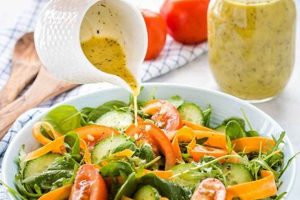
A blend of sesame oil with other ingredients like vinegar, citrus juice, soy sauce, ginger, and sweeteners creates a flavorful condiment for salads and other dishes. A simple example includes toasted sesame oil, rice vinegar, soy sauce, and a touch of honey. Variations can incorporate ingredients such as garlic, chili flakes, or Dijon mustard to create unique flavor profiles.
The use of sesame oil contributes a distinctive nutty aroma and taste. Its rich, complex flavor enhances the overall sensory experience of a salad. Beyond flavor, some varieties of sesame oil offer potential health benefits due to their antioxidant properties. Historically, sesame oil has played a significant culinary role in various Asian cuisines, particularly in East and Southeast Asia, reflecting its versatility and cultural significance.
This exploration will delve into various aspects of crafting such condiments, including selecting appropriate oils, balancing flavors, incorporating diverse ingredients, and adapting recipes to complement different salad types and cuisines.
Tips for Crafting Sesame Oil-Based Salad Dressings
Creating a balanced and flavorful sesame oil-based dressing requires attention to detail and a thoughtful approach to ingredient selection and combination.
Tip 1: Choose the Right Sesame Oil: Toasted sesame oil offers a robust, nutty flavor ideal for richer dressings, while light sesame oil provides a milder taste suitable for delicate greens. Consider the desired flavor profile when selecting the oil.
Tip 2: Balance Acidity: Acidity is crucial for cutting through the richness of sesame oil. Rice vinegar, apple cider vinegar, or citrus juices like lime or lemon can achieve the desired balance. Experiment with different acidic components to find preferred flavor combinations.
Tip 3: Enhance with Umami: Soy sauce, tamari, or fish sauce contribute a savory depth. A small amount can significantly enhance the overall complexity of the dressing.
Tip 4: Sweeten Thoughtfully: A touch of sweetness can balance acidity and enhance other flavors. Honey, maple syrup, or agave nectar are suitable options. Use sparingly to avoid overpowering the other ingredients.
Tip 5: Incorporate Aromatics: Fresh ginger, garlic, or chili flakes can add depth and complexity. Consider toasting these ingredients before adding them to the dressing to intensify their flavors.
Tip 6: Emulsify Effectively: Whisk the dressing vigorously or use a blender to create a smooth emulsion that prevents separation and coats the salad evenly.
Tip 7: Taste and Adjust: Taste the dressing throughout the preparation process and adjust seasonings as needed to achieve the desired balance of flavors.
By following these tips, one can consistently create delicious and well-balanced sesame oil-based dressings that elevate any salad.
These techniques empower culinary exploration and facilitate the creation of dressings perfectly suited to individual preferences and specific salad compositions.
1. Oil Selection (Toasted or Light)
Oil selection significantly impacts the sensory experience of a sesame oil-based salad dressing. Toasted sesame oil, derived from roasted sesame seeds, possesses a deep, nutty, and often smoky flavor. This robust profile makes it suitable for dressings intended for heartier salads featuring ingredients like grilled vegetables, noodles, or proteins. Conversely, light sesame oil, extracted from raw sesame seeds, exhibits a milder, more delicate flavor. Its subtlety complements lighter salads composed of fresh greens, fruits, or lighter vegetables. Choosing the appropriate oil establishes the foundational flavor profile of the dressing, influencing how it interacts with the other ingredients and the overall taste of the salad.
Consider a salad featuring grilled tofu and kale. The bold flavor of toasted sesame oil complements the smoky char of the tofu and the earthy kale. However, in a salad with delicate spinach and fresh berries, the nuanced flavor of light sesame oil harmonizes without overpowering the other ingredients. A light sesame vinaigrette might feature a higher proportion of acidity and lighter aromatics, while a toasted sesame dressing could incorporate richer ingredients like miso paste or black garlic. The selection process involves considering the intended salad composition and the desired balance of flavors.
Careful oil selection ensures a harmonious balance between the dressing and the salad ingredients. Understanding the distinct characteristics of toasted and light sesame oils empowers informed decision-making and allows for greater control over the final culinary outcome. This knowledge allows one to craft dressings that enhance, rather than overpower, the flavors of the salad components.
2. Acidity (Vinegar/Citrus)

Acidity plays a crucial role in sesame oil-based salad dressings, providing balance and enhancing flavor complexity. The richness of sesame oil, particularly toasted sesame oil, benefits from a counterpoint of acidity. This acidic element brightens the overall flavor profile and prevents the oil from dominating the palate. Vinegars, such as rice vinegar, apple cider vinegar, and white wine vinegar, offer varying levels of sharpness and subtle flavor nuances. Citrus juices, including lemon, lime, and orange, contribute a fresh, vibrant acidity and often introduce complementary aromatic notes. The choice of acid depends on the desired flavor profile and the other ingredients in the dressing.
For instance, a dressing featuring toasted sesame oil and ginger might benefit from the mellow acidity of rice vinegar, allowing the nutty and spicy notes to shine. Alternatively, a dressing based on light sesame oil and intended for a seafood salad could be enhanced by the bright, citrusy acidity of lime juice. Incorporating acidity also has practical implications for the emulsion stability of the dressing. The acidic component helps emulsify the oil and other ingredients, creating a more cohesive and stable mixture that clings evenly to the salad components. Without sufficient acidity, the dressing is more likely to separate and appear oily.
Understanding the interplay between acidity and the other components of a sesame oil-based dressing is essential for creating a balanced and flavorful condiment. The appropriate choice and quantity of acid can significantly influence the overall sensory experience of the salad, brightening the flavors, enhancing the texture, and ensuring a harmonious balance between richness and freshness. The selection should complement the specific ingredients of both the dressing and the salad itself, resulting in a cohesive and enjoyable culinary creation.
3. Sweetener (Honey/Maple)
Sweeteners, such as honey or maple syrup, contribute a crucial balancing element within sesame oil-based salad dressings. Their presence tempers the sometimes assertive flavors of sesame oil, particularly the toasted variety, and the acidity of vinegar or citrus juice. This balancing act creates a more rounded flavor profile, preventing the dressing from becoming overly sharp or oily. Beyond mere balancing, sweeteners introduce their own subtle complexities. Honey offers floral and sometimes fruity notes, while maple syrup contributes a characteristic caramel-like richness. These nuances interact with the other ingredients, adding depth and contributing to the overall sensory experience. The choice of sweetener and its quantity should be carefully considered, as an excess can easily overpower the other flavors.
Consider a dressing combining toasted sesame oil, rice vinegar, and honey. The honey’s sweetness softens the boldness of the sesame oil and the sharpness of the vinegar, creating a harmonious blend. A maple syrup-based dressing might complement a salad featuring roasted vegetables or nuts, where the caramel notes enhance the earthiness of the other ingredients. The quantity of sweetener used depends on the desired level of sweetness and the balance of other flavors. A dressing with a higher proportion of acid might require more sweetener to achieve the desired balance, while a dressing featuring milder ingredients might necessitate a smaller amount. Practical application often involves experimentation to determine the optimal balance for a specific recipe.
Careful sweetener selection and judicious use are essential for crafting well-balanced sesame oil-based salad dressings. Sweeteners not only counteract potentially dominant flavors but also introduce their own subtle complexities, adding depth and contributing to a more nuanced flavor profile. Achieving the right balance involves understanding the interplay between sweetness, acidity, and the inherent richness of the sesame oil. This understanding allows for informed decision-making and ensures that the sweetener enhances, rather than overwhelms, the other components of the dressing and the salad itself.
4. Umami (Soy Sauce/Miso)
Umami, often described as a savory, meaty, or brothy taste, plays a significant role in enhancing the complexity and depth of flavor in sesame oil-based salad dressings. Incorporating umami-rich ingredients like soy sauce or miso paste adds a nuanced dimension that complements the nutty richness of sesame oil and balances the other components of the dressing. Understanding the role of umami is crucial for creating a truly well-rounded and satisfying flavor profile.
- Soy Sauce:
Soy sauce, a fermented condiment made from soybeans, wheat, and salt, provides a readily available source of umami. Its salty and savory character adds depth and complexity to the dressing, particularly when combined with the richness of sesame oil. Different types of soy sauce, such as light, dark, or tamari, offer varying levels of intensity and subtle flavor nuances, allowing for customization based on the desired flavor profile. For example, a light soy sauce might be preferred in a dressing for a delicate green salad, while a dark soy sauce could enhance a dressing intended for heartier ingredients.
- Miso Paste:
Miso paste, a fermented soybean product, offers a more concentrated umami flavor compared to soy sauce. Its complex flavor profile, ranging from sweet and nutty to savory and slightly funky, can significantly enhance the depth and complexity of a sesame oil-based dressing. Different types of miso, such as white, red, or yellow, provide varying levels of intensity and subtle flavor differences. White miso, for example, tends to be milder and sweeter, while red miso offers a more robust and savory flavor. The choice of miso depends on the desired flavor profile and the other ingredients in the dressing.
- Balancing Umami with Other Flavors:
The key to effectively incorporating umami lies in achieving balance. While umami enhances complexity, its assertive nature requires careful consideration. The quantity of soy sauce or miso paste should be balanced against the other components of the dressing, such as the acidity of vinegar or citrus juice and the sweetness of honey or maple syrup. Overuse of umami-rich ingredients can result in a dressing that is overly salty or overpowering. Careful adjustment and tasting are crucial to ensure a harmonious blend of flavors.
- Umami and the Overall Flavor Profile:
The addition of umami can significantly elevate a sesame oil-based salad dressing from simple to sophisticated. The interplay between the nutty richness of the sesame oil, the brightness of the acidic element, the subtle sweetness of a sweetener, and the savory depth of umami creates a multi-layered and satisfying flavor profile. This complexity enhances the overall sensory experience of the salad, complementing the flavors of the other ingredients and creating a more complete and enjoyable culinary creation.
The strategic inclusion of umami-rich ingredients like soy sauce or miso paste contributes significantly to the overall balance and complexity of sesame oil-based salad dressings. By understanding the nuances of umami and its interaction with other flavors, one can create dressings that offer a depth of flavor and a satisfying savory element that enhances the entire dining experience. The careful balancing of umami with acidity, sweetness, and the richness of the sesame oil allows for the creation of dressings that are not only flavorful but also complement and elevate the other ingredients in the salad.
5. Aromatics (Ginger/Garlic)

Aromatic ingredients, particularly ginger and garlic, play a crucial role in shaping the complexity and depth of flavor in sesame oil-based salad dressings. These pungent additions contribute far more than just their distinct individual flavors; they interact synergistically with the other components, creating a more nuanced and balanced overall profile. Their careful selection and application are essential for elevating a simple dressing into a more sophisticated and flavorful condiment.
- Ginger’s Bright, Pungent Heat:
Ginger offers a unique blend of spicy heat and subtle sweetness. This characteristic pungency cuts through the richness of the sesame oil, adding a refreshing counterpoint. Its versatility allows for use in both fresh and powdered forms, each contributing a distinct nuance to the dressing. Fresh ginger provides a brighter, more assertive heat, while ground ginger offers a warmer, more subdued spiciness. The choice depends on the desired intensity and the overall balance of flavors in the dressing. For example, a dressing intended for a summer salad might benefit from the vibrancy of fresh ginger, while a dressing for a heartier autumn salad might be enhanced by the subtle warmth of ground ginger.
- Garlic’s Pervasive Savory Note:
Garlic contributes a pungent, savory depth to the dressing, complementing the nutty notes of sesame oil. Similar to ginger, garlic can be used in various forms, including fresh, minced, roasted, or powdered. Fresh garlic provides a sharper, more assertive flavor, while roasted garlic offers a mellowed sweetness. The choice depends on the desired intensity and the overall flavor profile of the dressing. For example, a dressing for a robust salad might benefit from the assertive pungency of fresh garlic, while a dressing for a more delicate salad might be enhanced by the subtle sweetness of roasted garlic.
- Balancing Aromatics within the Dressing:
The key to successfully incorporating aromatics lies in achieving balance. While ginger and garlic contribute desirable complexity, their potent flavors require careful consideration. Overuse can easily overpower the other ingredients, masking the subtle nuances of the sesame oil and other components. The quantity of ginger and garlic should be adjusted based on the desired intensity and the balance of other flavors in the dressing. A dressing with a higher proportion of acid might require more aromatics to achieve the desired balance, while a dressing featuring milder ingredients might necessitate a smaller amount. Careful tasting and adjustment are crucial throughout the preparation process.
- Synergistic Interactions with Other Ingredients:
Aromatics do not exist in isolation within a sesame oil-based dressing. They interact dynamically with the other ingredients, influencing and being influenced by the overall flavor profile. The acidity of vinegar or citrus juice can temper the pungency of ginger and garlic, while the sweetness of honey or maple syrup can soften their sharpness. The richness of the sesame oil provides a backdrop against which the aromatics can shine, creating a complex tapestry of flavors that enhance the overall sensory experience.
The strategic inclusion of aromatics like ginger and garlic elevates sesame oil-based salad dressings, contributing depth, complexity, and balance. Understanding their individual characteristics, their interaction with other ingredients, and the importance of balanced incorporation allows for the creation of dressings that are not merely flavorful but also nuanced and sophisticated. These aromatics, when used judiciously, transform a simple condiment into a culinary element that enhances the entire dining experience.
6. Emulsification Technique

Emulsification is crucial for the texture and stability of sesame oil-based salad dressings. It involves combining two immiscible liquidsin this case, oil and an aqueous solution containing vinegar or citrus juiceinto a stable mixture. Effective emulsification prevents the dressing from separating into distinct oil and water layers, ensuring a cohesive texture that evenly coats salad ingredients. The technique employed influences both the immediate and long-term stability of the emulsion.
Several methods achieve emulsification. Vigorous whisking by hand creates a temporary emulsion, sufficient for immediate use. A blender or food processor generates a more stable emulsion due to higher shear forces, breaking down oil droplets into smaller sizes and distributing them more uniformly throughout the aqueous phase. The addition of emulsifying agents, such as a small amount of Dijon mustard or honey, further enhances stability by reducing surface tension between the oil and water. These agents help prevent the oil droplets from coalescing, maintaining a homogenous mixture. For example, a dressing prepared by simply whisking oil and vinegar might separate within minutes, whereas a dressing emulsified with a blender and a touch of mustard can remain stable for hours or even days.
The practical significance of understanding emulsification extends beyond immediate visual appeal. A stable emulsion ensures that the flavors are evenly distributed throughout the dressing, preventing pockets of excessive oiliness or acidity. It also contributes to a more pleasant mouthfeel, avoiding a greasy or watery sensation. Furthermore, a stable emulsion improves the cling of the dressing to the salad ingredients, enhancing flavor delivery and overall enjoyment. Challenges can arise when using highly acidic ingredients or attempting to emulsify chilled ingredients. Adjusting ingredient ratios, incorporating emulsifying agents, and ensuring consistent temperatures can mitigate these issues. Mastering emulsification techniques enables consistent creation of high-quality, visually appealing, and flavorful sesame oil-based salad dressings.
7. Ingredient Ratios
Ingredient ratios significantly influence the balance and character of a sesame oil-based salad dressing. The interplay between the oil, acid, sweetener, and other components determines the overall flavor profile. A higher proportion of oil creates a richer, more substantial dressing, while a greater emphasis on acid results in a sharper, more tart flavor. The sweetener-to-acid ratio dictates the perceived sweetness and balances the overall taste. For instance, a 3:2:1 ratio of oil to vinegar to sweetener produces a balanced dressing with a noticeable sweetness, whereas a 2:1:1 ratio emphasizes the acidity. These ratios are not fixed rules but rather guidelines adaptable to individual preferences and specific ingredient combinations. A dressing featuring a robust toasted sesame oil might benefit from a higher proportion of acid and sweetener to balance its intensity, whereas a dressing based on light sesame oil might require less of each.
Understanding the impact of ingredient ratios empowers informed adjustments based on the desired outcome. Consider a dressing featuring lime juice, ginger, and honey. Increasing the lime juice creates a brighter, more acidic dressing, highlighting the citrus notes. Conversely, increasing the honey emphasizes the sweetness and tempers the lime’s tartness. The quantity of ginger further modulates the balance, adding pungency that interacts with both the sweet and sour elements. Real-world application involves experimentation and tasting, iteratively adjusting ratios to achieve the desired flavor profile. Recipes provide starting points, but individual palates and specific ingredient characteristics often necessitate further refinement. The interaction between ingredients extends beyond basic taste; texture is also affected. A higher oil content results in a more viscous dressing, while a higher proportion of aqueous ingredients creates a thinner consistency.
Mastery of ingredient ratios allows for consistent creation of sesame oil-based dressings tailored to specific needs and preferences. This knowledge empowers culinary creativity, enabling the development of dressings that complement a wide array of salads and other dishes. Challenges can arise when scaling recipes or substituting ingredients. Careful consideration of the relative proportions and individual ingredient characteristics is crucial for maintaining balance and achieving the desired flavor profile. Ingredient ratios are a fundamental aspect of recipe development, providing a framework for predictable and repeatable results. This understanding allows one to move beyond following recipes and begin crafting unique dressings tailored to individual tastes and culinary visions.
Frequently Asked Questions
This section addresses common inquiries regarding the creation and utilization of sesame oil-based salad dressings.
Question 1: What is the difference between light and toasted sesame oil in dressings?
Light sesame oil, extracted from raw sesame seeds, offers a mild, delicate flavor. Toasted sesame oil, derived from roasted seeds, possesses a more intense, nutty, and often smoky flavor. The choice depends on the desired intensity and the overall flavor profile of the salad.
Question 2: How can one prevent sesame oil-based dressings from separating?
Thorough emulsification is key. Vigorous whisking or using a blender helps create a stable emulsion. Adding a small amount of Dijon mustard or honey can further enhance stability by acting as an emulsifying agent.
Question 3: What types of vinegar work well in sesame oil dressings?
Rice vinegar, apple cider vinegar, and white wine vinegar are all suitable options. Rice vinegar offers a mild, slightly sweet flavor, while apple cider vinegar provides a more tart profile. White wine vinegar contributes a sharper, more acidic taste. The choice depends on the desired balance of flavors.
Question 4: Can these dressings be used for more than just salads?
Absolutely. Sesame oil-based dressings can serve as marinades for meat or tofu, sauces for noodles or vegetables, or dipping sauces for spring rolls and dumplings. Their versatility extends beyond salads, offering a wide range of culinary applications.
Question 5: How should one store leftover sesame oil-based dressing?
Store leftover dressing in an airtight container in the refrigerator for up to one week. Separation may occur upon refrigeration; whisk vigorously or shake well before using.
Question 6: How can one adjust the sweetness or acidity of the dressing?
Adjust sweetness by adding small increments of honey, maple syrup, or other preferred sweeteners. Increase acidity by adding more vinegar or citrus juice. Taste and adjust iteratively until the desired balance is achieved.
Careful consideration of these points ensures successful preparation and utilization of sesame oil-based salad dressings, optimizing flavor, texture, and overall culinary experience.
The following section provides specific recipe examples illustrating these principles in practice.
Conclusion
Exploration of sesame seed oil salad dressing recipes reveals the multifaceted nature of this culinary condiment. Careful selection of sesame oil (toasted or light) lays the foundation for the overall flavor profile. Balancing acidity with sweeteners like honey or maple syrup is crucial, while the incorporation of umami-rich ingredients such as soy sauce or miso paste adds depth and complexity. Aromatics like ginger and garlic contribute further nuance, and proper emulsification techniques ensure a desirable texture and stability. Understanding ingredient ratios empowers customization and control over the final product. These elements, when combined thoughtfully, elevate a simple mixture of oil and vinegar into a versatile and flavorful enhancement for various dishes.
The potential of sesame seed oil salad dressing recipes extends beyond basic culinary applications. Further exploration of ingredient combinations, regional variations, and innovative pairings promises a continued evolution of this versatile condiment. Exploration of cultural influences and historical context provides a deeper appreciation for its significance in global cuisine. Continued experimentation and refinement of techniques will undoubtedly unlock further possibilities and enhance culinary experiences.