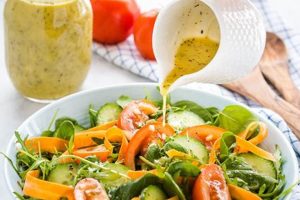
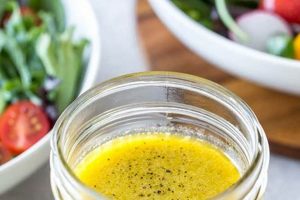
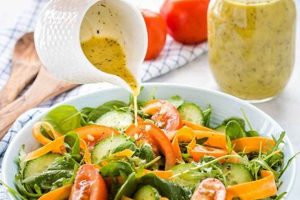
A classic vinaigrette, typically made with oil, vinegar, and seasonings, forms the foundation of many salads. Variations incorporate Dijon mustard, minced garlic, herbs like chives or tarragon, and sweeteners like honey or sugar. A simple example involves whisking together three parts oil with one part vinegar, adding salt, pepper, and other desired ingredients.
The balance of tartness from the vinegar and richness from the oil creates a flavorful complement to fresh greens and vegetables. Its simplicity allows for endless customization, making it adaptable to diverse palates and ingredients. Historically, variations of oil and vinegar dressings have been used for centuries, highlighting the enduring appeal of this culinary staple.
The following sections will explore different variations of this versatile dressing, including classic recipes, regional adaptations, and creative twists. Techniques for achieving optimal emulsification and tips for ingredient selection will also be discussed.
Tips for Crafting Exceptional Vinaigrettes
Achieving a well-balanced and flavorful vinaigrette involves attention to detail and an understanding of fundamental techniques. The following tips offer guidance for creating dressings that enhance any salad.
Tip 1: Use High-Quality Ingredients: The foundation of a good dressing lies in the quality of its components. Opt for extra virgin olive oil for its robust flavor and health benefits. Select a vinegar with a complementary acidity level, such as red wine vinegar, white wine vinegar, or champagne vinegar.
Tip 2: Balance Flavors: Strive for a harmonious blend of tartness, richness, and sweetness. Taste and adjust the proportions of oil and vinegar to achieve the desired balance. A 3:1 ratio of oil to vinegar is a common starting point.
Tip 3: Emulsify Properly: A stable emulsion prevents the dressing from separating. Whisk the ingredients vigorously or use a blender to create a creamy, cohesive texture. Adding a small amount of Dijon mustard can act as an emulsifier.
Tip 4: Season Carefully: Salt and freshly ground black pepper are essential seasonings. Enhance the flavor profile with herbs, spices, or a touch of sweetness. Start with small amounts and adjust to taste.
Tip 5: Experiment with Flavors: Explore different flavor combinations by incorporating ingredients like minced garlic, shallots, herbs (such as chives, parsley, or tarragon), or a pinch of sugar or honey.
Tip 6: Taste and Adjust: Before serving, taste the dressing and adjust the seasoning as needed. The flavor profile may evolve as the ingredients meld.
Tip 7: Store Properly: Store leftover dressing in an airtight container in the refrigerator. Shake well before using as some separation may occur.
By following these guidelines, one can create flavorful and versatile dressings that elevate the simplest of salads. A well-crafted vinaigrette adds depth, complexity, and a touch of culinary artistry to any meal.
This exploration of vinaigrette preparation concludes with a collection of exemplary recipes, offering practical applications of the techniques discussed.
1. Oil (e.g., extra virgin olive)
Oil forms the foundation of a French salad dressing, contributing richness, texture, and flavor. The choice of oil significantly impacts the dressing’s overall character. Extra virgin olive oil, a staple in many kitchens, offers a robust, fruity flavor profile that complements the acidity of vinegar. Its relatively low smoke point makes it ideal for cold preparations like vinaigrettes. Other oils, such as avocado or grapeseed, offer milder flavors and higher smoke points, allowing for versatility in culinary applications. The quality of the oil directly influences the final taste; high-quality extra virgin olive oil provides a superior sensory experience compared to refined or lower-grade oils. Consider the flavor profile of the other ingredients when selecting an oil to ensure a harmonious blend.
The ratio of oil to vinegar dictates the dressing’s consistency and mouthfeel. A classic French vinaigrette typically employs a 3:1 ratio of oil to vinegar, creating a balanced emulsion that coats salad ingredients without overwhelming them. Adjusting this ratio allows for customization based on personal preference or the specific salad components. For instance, a delicate salad might benefit from a higher proportion of oil for a smoother, less acidic dressing. Emulsification, the process of combining oil and vinegar into a stable mixture, is crucial for a successful vinaigrette. Oil’s inherent inability to mix with water-based liquids, like vinegar, necessitates proper emulsification techniques, such as vigorous whisking or the use of an emulsifying agent like Dijon mustard.
Understanding the role of oil in a French dressing allows for informed choices regarding oil selection and proportion, ultimately contributing to a more flavorful and satisfying culinary experience. The interplay of oil, vinegar, and other ingredients determines the final character of the vinaigrette, highlighting the importance of careful selection and proper technique. Choosing an appropriate oil based on its flavor profile and quality, coupled with a balanced ratio and effective emulsification, yields a superior dressing that elevates any salad.
2. Vinegar (e.g., red wine)

Vinegar provides the essential acidic counterpoint to oil in a French salad dressing. Its tartness cuts through the richness of the oil, creating a balanced and flavorful emulsion. Red wine vinegar, a popular choice, contributes a complex, slightly fruity acidity that complements the herbaceous notes often found in these dressings. The specific type of vinegar influences the overall flavor profile. For example, white wine vinegar offers a brighter, crisper acidity, while balsamic vinegar introduces a deeper, sweeter tang. Champagne vinegar lends a delicate, effervescent note. The choice depends on the desired flavor profile and the other ingredients in the salad. A robust salad with bold flavors might benefit from the assertive character of red wine vinegar, while a lighter salad might pair better with the subtlety of white wine vinegar.
The concentration of acetic acid in vinegar affects its sharpness. Higher acidity levels result in a more pronounced tartness. Using too much vinegar can overpower the other flavors, while too little can leave the dressing bland. The balance of vinegar and oil is crucial. A classic French vinaigrette typically uses a ratio of one part vinegar to three parts oil. This ratio provides a balanced flavor and a pleasant mouthfeel. Adjusting this ratio can tailor the dressing to individual preferences or the specific ingredients in the salad. For example, a salad with bitter greens might benefit from a slightly higher proportion of vinegar to balance the bitterness. Emulsification, the process of combining oil and vinegar into a stable mixture, relies on the interaction between these two contrasting ingredients. The acidic nature of vinegar plays a role in creating a stable emulsion, especially when combined with an emulsifying agent like Dijon mustard.
Careful vinegar selection is crucial for a well-balanced French salad dressing. The type and acidity of vinegar influence the overall flavor profile and texture. Understanding the interplay of vinegar with other ingredients, particularly oil, allows for informed choices that contribute to a harmonious and flavorful culinary experience. A properly balanced vinaigrette enhances the flavors of the salad ingredients, creating a cohesive and satisfying dish.
3. Dijon Mustard

Dijon mustard plays a crucial role in French salad dressings, contributing both flavor and functionality. Its inclusion stems from its unique properties as an emulsifier, derived from the presence of mucilage in the mustard seeds. This mucilage allows Dijon mustard to bind oil and vinegar, creating a stable, homogenous emulsion that prevents separation. The creamy texture of Dijon mustard further enhances the dressing’s mouthfeel, contributing to a luxurious, cohesive consistency. Beyond its emulsifying properties, Dijon mustard adds a distinct tangy flavor that complements the acidity of the vinegar and the richness of the oil. This complexity elevates the overall flavor profile of the dressing, moving beyond a simple combination of oil and vinegar.
The importance of Dijon mustard as a component becomes evident when comparing dressings with and without it. A vinaigrette made without Dijon mustard separates quickly, requiring constant re-whisking before serving. The flavor profile also lacks the characteristic tang and depth that Dijon mustard provides. Consider a classic French vinaigrette: the sharp acidity of red wine vinegar is balanced by the richness of extra virgin olive oil, with Dijon mustard acting as the bridge, both literally and figuratively, unifying the disparate elements. This emulsification allows the dressing to cling evenly to salad greens, ensuring consistent flavor in each bite. Furthermore, the subtle heat and complexity of the mustard enhance the overall sensory experience. In other variations, like a honey-mustard dressing, Dijon mustard provides a foundational tang that balances the sweetness of honey.
Understanding the dual role of Dijon mustardas both an emulsifier and a flavor enhanceris essential for crafting successful French salad dressings. Its inclusion not only improves the texture and stability of the dressing but also contributes a nuanced complexity to the flavor profile. From classic vinaigrettes to more elaborate variations, Dijon mustard remains a key component, demonstrating its enduring culinary significance. Its ability to harmonize contrasting flavors and create a smooth, creamy texture makes it an indispensable ingredient in the French culinary repertoire. Recognizing this allows for informed choices regarding ingredient selection and proportion, ultimately contributing to a more sophisticated and satisfying culinary outcome.
4. Fresh Herbs
Fresh herbs contribute significantly to the complexity and aromatic profile of French salad dressings. Their inclusion elevates a simple vinaigrette, transforming it into a nuanced culinary creation. The selection and application of herbs depend on the desired flavor profile and the other ingredients in the salad. Chives, with their delicate onion flavor, offer a subtle yet noticeable enhancement. Parsley, a ubiquitous culinary herb, provides a fresh, slightly peppery note. Tarragon, with its distinctive anise-like flavor, adds a unique dimension, particularly well-suited to dressings accompanying chicken or fish salads. Other herbs, like chervil, mint, or dill, offer distinct flavor profiles that can be incorporated based on personal preference and the overall composition of the salad.
The volatile oils present in fresh herbs impart aromatic complexity to the dressing. These oils are released when the herbs are bruised, chopped, or blended, intensifying their impact on the final flavor. Consider a classic French vinaigrette featuring fresh tarragon: the anise notes of the tarragon intertwine with the acidity of the vinegar and the richness of the olive oil, creating a harmonious blend that complements delicate greens and proteins. In contrast, a parsley-based vinaigrette provides a brighter, more herbaceous counterpoint to roasted vegetables or grilled meats. The freshness of the herbs contrasts with the richness of the other ingredients, creating a balanced and satisfying sensory experience. Using dried herbs can provide a convenient alternative, but the flavor intensity differs significantly. Dried herbs possess a more concentrated flavor profile, requiring careful adjustment of quantities to avoid overpowering the dressing. Fresh herbs offer a vibrant, nuanced flavor that enhances the overall culinary experience.
Incorporating fresh herbs into French salad dressings underscores the importance of aromatic complexity in culinary creations. The judicious selection and application of herbs elevate a basic vinaigrette, transforming it into a nuanced and flavorful complement to a wide range of salads. Understanding the specific flavor profiles of various herbs and their interaction with other ingredients allows for informed choices that result in a more sophisticated and satisfying culinary outcome. The use of fresh herbs underscores the importance of balancing flavors and textures, creating a harmonious and memorable dining experience.
5. Seasoning (salt, pepper)

Seasoning, primarily with salt and pepper, forms an integral part of a successful French salad dressing recipe. Proper seasoning elevates the other ingredients, enhancing their individual flavors and creating a balanced, harmonious whole. The interplay of salt and pepper with the acidity of vinegar and richness of oil is crucial for a well-rounded flavor profile.
- Salt’s Role in Flavor Enhancement
Salt amplifies the inherent flavors of the other ingredients in the dressing. It interacts with the taste receptors on the tongue, reducing bitterness and enhancing sweetness and other desirable taste perceptions. In a French dressing, salt balances the acidity of the vinegar, preventing it from overpowering the other components. The type of salt used can also influence the final taste. Kosher salt, with its larger crystals, dissolves more slowly and provides a cleaner flavor than table salt. Sea salt can add a subtle minerality.
- Pepper’s Contribution to Complexity
Freshly ground black pepper adds a layer of complexity to French dressings. Its subtle heat and slightly pungent aroma complement the other flavors, creating a more nuanced and interesting profile. The coarseness of the grind affects the intensity of the pepper flavor. Coarsely ground pepper provides bursts of flavor, while finely ground pepper offers a more subtle, pervasive heat. White pepper, a milder alternative, can be used for aesthetic purposes when a darker speckle is undesirable.
- Balancing Salt and Pepper
The ratio of salt to pepper depends on personal preference and the specific ingredients in the dressing. A general guideline suggests starting with a smaller amount of pepper and gradually increasing it until the desired level of complexity is reached. Over-salting can ruin a dressing, while under-seasoning results in a flat, uninspired flavor. Tasting and adjusting throughout the preparation process is crucial for achieving the desired balance.
- Integration with Other Ingredients
Salt and pepper not only enhance individual ingredients but also act as a unifying force within the dressing. They harmonize the disparate flavors of oil, vinegar, herbs, and other additions, creating a cohesive and balanced final product. The seasoning process occurs throughout the preparation, starting with the initial whisking of the vinegar and seasonings and continuing with adjustments after the addition of other ingredients.
The seemingly simple act of seasoning with salt and pepper significantly impacts the overall quality of a French salad dressing. Their careful application enhances other flavors, balances acidity and richness, and contributes to a more complex and satisfying culinary experience. A well-seasoned dressing elevates the simplest of salads, demonstrating the importance of these fundamental ingredients in French cuisine.
6. Optional Sweetness (Honey/Sugar)

The addition of sweetness to a French salad dressing, though optional, provides a nuanced layer of flavor that balances the acidity of the vinegar and complements the other ingredients. This element contributes to the overall complexity of the dressing, enhancing its versatility and appeal. Careful consideration of the type and amount of sweetener ensures a harmonious balance within the final composition.
- Balancing Acidity
Sweetness acts as a counterpoint to the tartness of vinegar, creating a more rounded and palatable flavor profile. The perceived acidity of the dressing is modulated by the addition of sugar or honey, preventing an overly sharp taste. This balancing act allows the other flavors, such as the richness of the oil and the aromatics of herbs, to shine through without being overwhelmed by the vinegar. The specific level of sweetness desired depends on personal preference and the other ingredients in the salad. A salad with bitter greens, for example, might benefit from a slightly higher level of sweetness to counterbalance the bitterness.
- Flavor Enhancement and Complexity
Beyond balancing acidity, sweetness contributes to the overall complexity of the dressing. Honey, in particular, introduces subtle floral notes and a unique depth of flavor not achievable with granulated sugar. Different types of honey, such as clover, wildflower, or buckwheat, offer varying flavor profiles that can be strategically incorporated to complement specific salad ingredients. The choice between honey and sugar also influences the texture of the dressing. Honey adds a slight viscosity, while sugar dissolves more readily, resulting in a thinner consistency.
- Complementing Ingredients
The sweetness in the dressing can enhance the flavors of the salad ingredients themselves. For instance, a touch of honey in a vinaigrette complements the natural sweetness of fruits like berries or pears, while a simple sugar addition can enhance the savory notes of roasted vegetables. The interaction between the dressing and the salad components creates a synergistic effect, where the flavors of each element are elevated by the presence of the others. A well-balanced dressing harmonizes with the salad, rather than overpowering it.
- Regional Variations and Adaptations
The use of sweetness in French dressings also allows for regional variations and adaptations. Some regional recipes incorporate local honey varieties or other sweeteners like maple syrup, adding a unique local touch. These variations reflect the diverse culinary traditions within France and highlight the adaptability of the basic vinaigrette framework. The incorporation of sweetness exemplifies how a seemingly simple element can contribute significant depth and complexity to a classic recipe.
The inclusion of optional sweetness in French salad dressings provides a significant layer of flavor complexity and balance. The careful selection and application of sweeteners allow for a harmonious interplay of flavors, enhancing the overall culinary experience. From balancing acidity to complementing specific ingredients, the judicious use of honey or sugar elevates the basic vinaigrette, demonstrating the sophistication and versatility of French cuisine. This nuanced approach to flavor underscores the importance of each component in creating a well-balanced and memorable dish.
7. Proper Emulsification

Proper emulsification is crucial for the texture, stability, and palatability of a French salad dressing. Emulsification refers to the process of combining two immiscible liquids, in this case, oil and vinegar, into a stable mixture. Without proper emulsification, the dressing will quickly separate, resulting in an oily layer on top and a watery layer beneath. This separation not only affects the appearance of the dressing but also compromises its flavor and mouthfeel. A properly emulsified dressing clings evenly to salad ingredients, ensuring a consistent flavor in each bite. The creamy texture achieved through emulsification contributes to a more pleasant sensory experience. A separated dressing, on the other hand, delivers uneven bursts of oil and vinegar, lacking the harmonious blend of flavors intended.
Several factors contribute to successful emulsification in a French dressing. Vigorous whisking is the most common method, creating enough shear force to disperse the oil into tiny droplets within the vinegar. The addition of an emulsifying agent, such as Dijon mustard, significantly improves stability. Dijon mustard contains mucilage, a natural substance that helps bind the oil and vinegar together, preventing separation. The ratio of oil to vinegar also plays a role. A classic French vinaigrette typically employs a 3:1 ratio, providing a balance that facilitates emulsification. Deviating significantly from this ratio can make achieving a stable emulsion more challenging. For example, a higher proportion of vinegar might require more vigorous whisking or a greater amount of emulsifier to achieve the desired consistency. Temperature also influences emulsification. Room temperature ingredients emulsify more readily than cold ingredients.
The practical significance of understanding emulsification extends beyond simply creating a visually appealing dressing. It directly impacts the sensory experience of consuming the salad. A properly emulsified dressing delivers a balanced and consistent flavor in each bite, enhancing the overall enjoyment of the dish. Furthermore, the creamy texture achieved through emulsification contributes to a more luxurious mouthfeel. The stability of the emulsion ensures that the dressing maintains its desired consistency throughout the meal, preventing an unpleasant separation of oil and vinegar. Mastering emulsification techniques enables the creation of superior French salad dressings, showcasing the importance of this fundamental culinary principle.
Frequently Asked Questions
This section addresses common inquiries regarding the preparation and utilization of classic French vinaigrettes.
Question 1: What is the ideal ratio of oil to vinegar in a classic French vinaigrette?
A 3:1 ratio of oil to vinegar is the standard starting point. This balance allows for a harmonious blend of richness and acidity. However, adjustments can be made based on personal preference and the specific salad ingredients.
Question 2: Can alternative oils be used in place of extra virgin olive oil?
While extra virgin olive oil is traditional, other oils like avocado, grapeseed, or walnut oil can be substituted. Consider the flavor profile of the chosen oil and how it will interact with the other ingredients.
Question 3: Why does the dressing separate, and how can separation be prevented?
Separation occurs because oil and vinegar are immiscible. Vigorous whisking or the use of an emulsifying agent, such as Dijon mustard, helps create a stable emulsion and prevents separation. Storing the dressing in an airtight container also helps maintain its consistency.
Question 4: What herbs work well in a French vinaigrette?
Classic choices include chives, parsley, and tarragon. Other herbs, such as chervil, mint, or dill, can also be incorporated depending on the desired flavor profile and the salad ingredients. Fresh herbs are preferred for their vibrant flavor.
Question 5: How can the sweetness level of the dressing be adjusted?
Small amounts of honey, sugar, or maple syrup can be added to balance the acidity of the vinegar. Start with a small amount and adjust to taste, keeping in mind the overall balance of flavors.
Question 6: How long can a French vinaigrette be stored?
When stored in an airtight container in the refrigerator, a French vinaigrette can typically last for up to a week. Shake well before using as some separation may occur over time.
Understanding these fundamental aspects of vinaigrette preparation allows for greater control over flavor and texture, leading to a more satisfying culinary experience.
The subsequent section offers a collection of classic French vinaigrette recipes, providing practical examples of the principles discussed herein.
Classic French Vinaigrette
This exploration has delved into the essential components and techniques underlying successful French salad dressing preparation. From the selection of high-quality oils and vinegars to the crucial role of emulsification and the nuanced addition of herbs and seasonings, each element contributes to the final character of this versatile culinary staple. The balance of acidity, richness, and aromatic complexity defines a well-crafted vinaigrette, elevating simple salads into sophisticated culinary experiences. Understanding the interplay of these elements allows for informed choices regarding ingredient selection, proportion, and technique.
The enduring appeal of the French vinaigrette lies in its adaptability and potential for customization. By mastering the fundamental principles outlined herein, culinary enthusiasts can confidently create dressings tailored to individual preferences and specific salad compositions. Further exploration of regional variations and creative adaptations promises to unlock even greater culinary potential, solidifying the French vinaigrette’s position as a cornerstone of gastronomy.