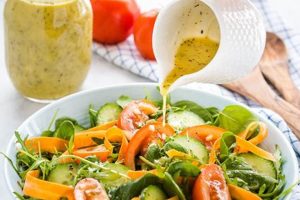
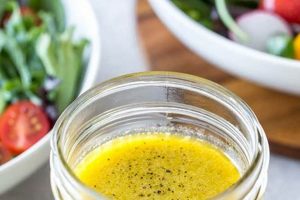
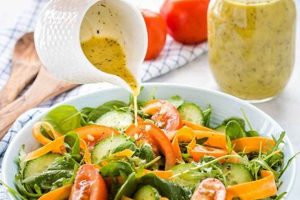
A foundational culinary emulsion, typically composed of extra virgin olive oil and balsamic vinegar, often enhanced with additional ingredients like Dijon mustard, honey, garlic, herbs, or spices. A simple example combines three parts oil with one part vinegar, whisked vigorously to create a temporary emulsion.
This classic combination offers a balanced flavor profile, blending the fruity, peppery notes of olive oil with the sweet, tangy acidity of balsamic vinegar. Its versatility allows for customization based on personal preferences and complements a wide array of salads and vegetables. Furthermore, both olive oil and balsamic vinegar are lauded for their potential health benefits, contributing antioxidants and other beneficial compounds to the diet. This blend has been a staple in Mediterranean cuisine for centuries, reflecting a culinary tradition that emphasizes fresh, simple ingredients.
This exploration will delve into variations on this fundamental dressing, offering specific recipes, discussing the selection of high-quality ingredients, and providing guidance on emulsion techniques. It will also examine the nutritional benefits of this dressing and its role within a balanced diet.
Tips for Crafting Exceptional Olive Oil and Balsamic Vinegar Dressings
Achieving a harmonious balance of flavors and textures in a vinaigrette requires attention to detail. These tips offer guidance on ingredient selection, emulsion techniques, and flavor customization.
Tip 1: Ingredient Quality Matters: Opt for extra virgin olive oil, preferably cold-pressed, for its superior flavor and aroma. Select a high-quality balsamic vinegar, noting that aged varieties offer a more complex, syrupy consistency and sweeter profile.
Tip 2: The Emulsion is Key: A stable emulsion prevents the oil and vinegar from separating. Whisk vigorously or use a blender or immersion blender to create a homogenous mixture. A touch of Dijon mustard can act as an emulsifier, further stabilizing the dressing.
Tip 3: Balance is Paramount: The standard ratio of 3:1 (oil to vinegar) offers a good starting point. However, taste and adjust according to personal preference and the specific balsamic vinegar used. Aged balsamic vinegars often require less due to their inherent sweetness.
Tip 4: Seasoning Enhances Flavor: Freshly ground black pepper and sea salt are essential. Consider adding a pinch of sugar or a touch of honey to balance acidity. Minced garlic, shallots, or herbs can also add depth and complexity.
Tip 5: Experiment with Flavors: Explore different flavor combinations by incorporating fresh or dried herbs (such as oregano, thyme, or rosemary), spices (like paprika or chili flakes), or citrus zest.
Tip 6: Taste as You Go: Continuously taste and adjust the seasoning throughout the preparation process to achieve the desired flavor profile.
Tip 7: Storage Considerations: Store leftover dressing in an airtight container in the refrigerator for up to a week. Shake well before serving, as some separation may occur.
By following these tips, one can elevate a simple vinaigrette to a culinary masterpiece, adding depth and flavor to any salad.
This understanding of the foundational elements of olive oil and balsamic vinegar dressings paves the way for a deeper appreciation of their culinary applications.
1. High-quality Ingredients

The success of a simple olive oil and balsamic vinegar dressing hinges on the quality of its core components. Subpar ingredients can result in a bland or unbalanced final product, while premium ingredients elevate the dressing to a new level of flavor and complexity. Understanding the nuances of ingredient selection is crucial for achieving optimal results.
- Olive Oil Selection
Extra virgin olive oil, derived from the first cold-pressing of olives, offers the most robust flavor and aroma. Look for indicators of quality such as protected designation of origin (PDO) or protected geographical indication (PGI) certifications. These designations guarantee specific production methods and regional characteristics. Different olive oil varietals possess distinct flavor profiles, ranging from fruity and peppery to grassy and buttery. Experimentation is encouraged to discover preferred flavor affinities.
- Balsamic Vinegar Selection
Authentic balsamic vinegar, originating from Modena or Reggio Emilia, Italy, undergoes a lengthy aging process in wooden barrels, resulting in a concentrated, syrupy consistency and complex flavor profile. The aging process contributes to notes of sweetness, acidity, and subtle woodiness. Less expensive balsamic vinegars often contain added sugars and thickeners, which can compromise the balance and depth of flavor in the dressing. Investing in a high-quality balsamic vinegar is a worthwhile investment for superior results.
- Freshness of Additional Ingredients
Beyond the oil and vinegar, any additional components, such as garlic, shallots, herbs, or spices, should be of the highest quality and freshness. Freshly minced garlic offers a pungent, aromatic note that complements the other ingredients. Fresh herbs, as opposed to dried, contribute brighter, more vibrant flavors. The quality of these supporting ingredients plays a significant role in the overall taste and complexity of the final dressing.
- Impact on Final Flavor Profile
The cumulative effect of using high-quality ingredients translates directly to the final flavor profile of the vinaigrette. A superior olive oil provides a nuanced foundation, while a well-aged balsamic vinegar adds depth and complexity. Fresh, vibrant supporting ingredients contribute layers of flavor that create a harmonious and balanced dressing. The investment in quality yields a noticeable difference in taste and overall culinary experience.
By prioritizing high-quality ingredients, one ensures a truly exceptional olive oil and balsamic vinegar dressing. The interplay of these carefully selected components results in a complex, flavorful, and aromatic vinaigrette that elevates any salad or dish.
2. Proper Oil-to-Vinegar Ratio

The oil-to-vinegar ratio significantly influences the balance and palatability of a vinaigrette. It directly impacts the dressing’s texture, mouthfeel, and how it coats and clings to salad ingredients. A proper ratio creates an emulsion where the oil and vinegar are evenly dispersed, preventing a greasy or overly acidic experience. This balance allows the individual flavors of the oil and vinegar to complement rather than overpower each other, and creates a harmonious blend with other ingredients in the salad.
The classic starting point for an olive oil and balsamic vinegar dressing is a 3:1 ratio (three parts oil to one part vinegar). This ratio provides a good balance for most palates, offering a pleasant level of richness from the oil tempered by the tang of the vinegar. However, this ratio can be adjusted based on the specific ingredients used. For instance, a more robust, aged balsamic vinegar, with its inherent sweetness, might require a higher ratio of oil (e.g., 4:1) to achieve the desired balance. Similarly, a milder olive oil may benefit from a slightly lower ratio (e.g., 2:1) to enhance its presence in the dressing. Experimentation and taste testing are crucial for determining the ideal ratio based on personal preference and the specific characteristics of the ingredients. A dressing intended for a delicate green salad might benefit from a lighter, more acidic ratio, while one intended for a heartier salad with roasted vegetables might require a richer, less acidic profile.
Understanding and achieving the proper oil-to-vinegar ratio is fundamental to creating a successful and enjoyable vinaigrette. It forms the basis of the dressing’s structure and flavor profile, impacting how the other ingredients integrate and how the dressing complements the overall salad. Mastery of this ratio allows for flexibility and creativity in crafting dressings tailored to individual preferences and specific culinary applications.
3. Effective Emulsification

Effective emulsification is crucial for creating a homogenous and palatable olive oil and balsamic vinegar salad dressing. Emulsification refers to the process of combining two immiscible liquids, such as oil and vinegar, into a stable mixture. Without proper emulsification, the dressing will quickly separate, resulting in an uneven distribution of flavor and a less appealing texture.
- Temporary vs. Permanent Emulsions
Salad dressings typically involve temporary emulsions, where the dispersed droplets eventually coalesce and separate. The goal is to create an emulsion stable enough to coat salad ingredients evenly during serving. Permanent emulsions, like mayonnaise, utilize emulsifying agents to create a lasting bond between the liquids.
- Techniques for Achieving Emulsification
Vigorous whisking is the most common method for creating a temporary emulsion in a vinaigrette. The rapid agitation breaks the oil into smaller droplets, which become dispersed throughout the vinegar. Alternatively, a blender or immersion blender can be used for a more efficient and consistent result. These methods introduce air into the mixture, further aiding in the dispersion and stabilization of the oil droplets.
- The Role of Emulsifying Agents
While not strictly necessary for temporary emulsions, emulsifying agents can improve stability. Dijon mustard, honey, or even egg yolk (for a richer dressing) contain compounds that act as bridges between the oil and vinegar molecules, helping to keep them dispersed for longer periods. These agents reduce surface tension between the liquids, facilitating a more stable emulsion.
- Impact on Texture and Flavor
Effective emulsification directly impacts the texture and flavor of the dressing. A properly emulsified dressing will have a smooth, creamy consistency that coats salad ingredients evenly, ensuring a balanced flavor distribution in each bite. Conversely, a poorly emulsified dressing will be oily and separate quickly, leading to an inconsistent and less enjoyable eating experience.
A well-emulsified dressing is essential for a high-quality olive oil and balsamic vinegar vinaigrette. It ensures a pleasant texture, consistent flavor, and an appealing presentation, enhancing the overall sensory experience of the salad. By understanding the principles of emulsification and employing appropriate techniques, one can consistently create a superior vinaigrette that complements any salad or dish.
4. Complementary Seasonings
Complementary seasonings play a vital role in elevating a basic olive oil and balsamic vinegar dressing from simple to exceptional. These additions contribute depth, complexity, and balance, transforming the flavor profile and enhancing the overall sensory experience. Their judicious use allows for customization and creativity, enabling the creation of dressings tailored to specific salads and individual preferences.
Salt and freshly ground black pepper are foundational seasonings, enhancing the inherent flavors of the oil and vinegar. Salt, in particular, plays a crucial role in balancing the acidity of the vinegar and bringing out the subtle nuances of the olive oil. Beyond these basics, a wide range of seasonings can be incorporated to create unique flavor profiles. Dijon mustard, for example, not only adds a subtle tang but also acts as an emulsifier, helping to stabilize the dressing. Honey or maple syrup can introduce a touch of sweetness to counterbalance the acidity, while minced garlic or shallots provide a pungent, savory note. Herbs, both fresh and dried, offer a wealth of aromatic possibilities. Fresh herbs like oregano, thyme, basil, and chives contribute bright, vibrant flavors, while dried herbs like rosemary, tarragon, and marjoram offer more concentrated, robust notes. Spices, such as paprika, red pepper flakes, or cumin, can introduce warmth and complexity. A pinch of sugar can subtly enhance sweetness and round out the overall flavor profile.
Consider a classic balsamic vinaigrette enhanced with a touch of Dijon mustard, minced garlic, and dried oregano. The mustard provides a subtle tang and emulsifies the dressing, while the garlic adds a pungent depth. The oregano contributes an earthy, herbaceous note that complements the fruity olive oil and tangy balsamic vinegar. Another example involves incorporating honey, fresh thyme, and a pinch of red pepper flakes into the dressing. The honey adds a touch of sweetness, the thyme contributes a subtle lemony aroma, and the red pepper flakes provide a hint of heat. These examples demonstrate the transformative power of complementary seasonings, showcasing how they can elevate a simple vinaigrette to a culinary masterpiece. Careful consideration of these additions allows for endless variations and ensures a perfectly balanced and flavorful dressing every time.
5. Fresh Herbs and Spices

Fresh herbs and spices are integral to crafting nuanced and flavorful olive oil and balsamic vinegar salad dressings. They contribute aromatic complexity, depth, and vibrancy, elevating the dressing beyond a simple combination of oil and vinegar. The inherent volatile oils within fresh herbs and spices impart distinctive flavors and aromas, transforming the sensory experience of the vinaigrette. These botanical additions contribute more than just flavor; they also introduce textural elements and visual appeal.
The selection and application of herbs and spices significantly impact the final flavor profile of the dressing. For example, a classic Mediterranean-style dressing benefits from the addition of fresh oregano and basil, contributing peppery and slightly sweet notes, respectively. A more robust, earthy dressing might incorporate rosemary or thyme, which offer piney and citrusy undertones. Alternatively, a touch of chopped chives can introduce a delicate onion flavor. Spices like red pepper flakes provide a subtle heat, while a pinch of smoked paprika introduces a smoky depth. The interplay between these herbs and spices, combined with the foundational flavors of olive oil and balsamic vinegar, allows for a diverse range of flavor profiles, catering to various culinary preferences and salad compositions.
Understanding the specific characteristics of different herbs and spices allows for strategic pairings with various salad ingredients. A bright, citrusy dressing with fresh mint and lemon zest complements a summer salad with fresh berries and feta cheese. Conversely, a more robust dressing with rosemary and garlic enhances the flavors of roasted vegetables or grilled meats in a heartier salad. The judicious use of fresh herbs and spices transforms a simple vinaigrette into a dynamic culinary element that enhances the overall dining experience. This knowledge enables culinary exploration and customization, ensuring that the dressing perfectly complements the other components of the salad and contributes to a well-balanced and flavorful meal.
6. Proper Storage Techniques

Proper storage techniques are essential for maintaining the quality and extending the shelf life of olive oil and balsamic vinegar salad dressings. These dressings, particularly those made with fresh ingredients, are susceptible to oxidation, spoilage, and flavor degradation if not stored correctly. Appropriate storage preserves the vibrant flavors of the oil, vinegar, and any added herbs or spices, ensuring a consistently high-quality culinary experience. Neglecting proper storage can lead to undesirable outcomes, such as rancidity in the oil, bacterial growth, and a loss of the dressing’s fresh, vibrant character.
Storing the dressing in an airtight container in the refrigerator is crucial. Exposure to air accelerates oxidation, particularly in olive oil, leading to off-flavors and a decrease in nutritional value. Refrigeration slows down enzymatic activity and microbial growth, further extending the dressing’s lifespan. While refrigeration is generally recommended, certain ingredients, like honey or crystallized garlic, may solidify at lower temperatures. If this occurs, allowing the dressing to come to room temperature before serving restores its original consistency. Prepared dressings, especially those containing fresh herbs or other perishable ingredients, typically last for up to a week in the refrigerator. Regularly checking for any signs of spoilage, such as mold growth or off-odors, is essential. If any signs of spoilage are detected, discarding the dressing is recommended.
Proper storage practices ensure that the time and effort invested in crafting a high-quality dressing are not wasted. They preserve the fresh flavors, maintain the desired consistency, and prevent spoilage, guaranteeing a consistently enjoyable culinary experience. Adhering to these simple yet effective storage techniques maximizes the shelf life of the dressing and contributes to both food safety and culinary satisfaction.
7. Flavor Balance Adjustments
Flavor balance adjustments are integral to achieving a harmonious and palatable olive oil and balsamic vinegar salad dressing. These adjustments, made throughout the preparation process, ensure that the final product is neither too acidic nor too oily, and that the individual flavors of the ingredients complement rather than overpower one another. A well-balanced dressing enhances the overall dining experience, allowing the flavors of the salad ingredients to shine through while contributing its own distinct character.
- Acidity
The acidity of balsamic vinegar can vary significantly depending on its age and production method. Adjusting the acidity is often the first step in achieving a balanced dressing. If the dressing tastes too sharp, sweetness can be added through a touch of honey, maple syrup, or a pinch of sugar. Conversely, if the dressing lacks brightness, a squeeze of lemon juice or a splash of additional vinegar can enhance its acidity. The goal is to achieve a pleasant balance where the acidity complements the other flavors without being overpowering.
- Sweetness
Balancing acidity with sweetness is a fundamental aspect of flavor adjustment. The sweetness level can be fine-tuned using various ingredients, such as honey, maple syrup, or granulated sugar. The choice of sweetener also influences the overall flavor profile. Honey adds a floral sweetness, while maple syrup contributes a subtle caramel note. Granulated sugar offers a neutral sweetness that allows the other flavors to take center stage. Careful adjustments ensure a harmonious interplay between the sweet and acidic components of the dressing.
- Saltiness
Salt plays a crucial role in enhancing and balancing flavors. It not only amplifies the taste of the other ingredients but also helps to temper acidity and bring out the subtle nuances of the olive oil. Adding salt gradually and tasting throughout the process is important to avoid over-salting. Sea salt or kosher salt are generally preferred for their clean flavor and larger crystals, which allow for better control during seasoning. The correct level of saltiness enhances the overall complexity and balance of the dressing.
- Flavor Complexity through Herbs and Spices
Herbs and spices contribute layers of flavor beyond the core components of oil and vinegar. These additions can introduce herbaceous, earthy, spicy, or citrusy notes, depending on the selection. The quantity and combination of herbs and spices influence the overall complexity and balance of the dressing. For example, a touch of dried oregano adds an earthy note, while a pinch of red pepper flakes introduces a hint of heat. Balancing these flavors requires careful consideration and adjustment to achieve the desired flavor profile.
Flavor balance adjustments are an iterative process, requiring continuous tasting and refinement to achieve the desired result. The interplay of acidity, sweetness, saltiness, and the nuanced flavors of herbs and spices creates a complex and harmonious dressing that complements the salad ingredients. Mastering these adjustments allows for the creation of dressings perfectly tailored to individual preferences and specific culinary applications, elevating the olive oil and balsamic vinegar base to a true culinary expression.
Frequently Asked Questions
This section addresses common inquiries regarding the preparation and utilization of olive oil and balsamic vinegar-based salad dressings.
Question 1: What is the ideal ratio of olive oil to balsamic vinegar?
A 3:1 ratio of olive oil to balsamic vinegar generally provides a balanced starting point. However, the ideal ratio depends on the specific balsamic vinegar used; aged varieties often require a higher proportion of oil due to their concentrated sweetness. Taste and adjust accordingly.
Question 2: How can one prevent the dressing from separating?
Vigorous whisking creates a temporary emulsion. Adding a small amount of Dijon mustard, honey, or egg yolk can act as an emulsifier, further stabilizing the mixture.
Question 3: What are the best storage practices for these dressings?
Store dressings in an airtight container in the refrigerator for up to one week. Allow any solidified ingredients, like honey, to return to room temperature before use.
Question 4: Can other oils be substituted for olive oil?
While other oils can be used, they will impart different flavor profiles. Avocado oil offers a neutral flavor, while walnut oil contributes a nutty note. Consider flavor compatibility with other salad ingredients when substituting.
Question 5: How can the sweetness of the dressing be adjusted?
Honey, maple syrup, or a pinch of sugar can be added to balance the acidity of the balsamic vinegar. The specific sweetener chosen will contribute its own subtle flavor nuances.
Question 6: What are some recommended herbs and spices for these dressings?
Fresh or dried herbs like oregano, thyme, basil, and rosemary complement balsamic vinegar well. Garlic, shallots, and spices like red pepper flakes or paprika can add further complexity. Experimentation is encouraged.
Understanding these fundamental aspects allows for the creation of customized, flavorful dressings. Experimentation with different ingredients and ratios is encouraged to discover preferred flavor profiles.
The next section will explore specific recipe variations using this versatile dressing as a foundation.
Conclusion
Exploration of the fundamental elements of a classic vinaigrette based on olive oil and balsamic vinegar reveals a versatile culinary foundation. Emphasis on quality ingredients, proper emulsification techniques, and balanced flavor profiles underscores the potential for culinary creativity. Understanding the interplay of oil, vinegar, seasonings, and additional components allows for customization and adaptation to diverse palates and culinary applications. Proper storage techniques ensure preservation of flavor and freshness.
This foundational knowledge empowers culinary exploration, transforming simple ingredients into dynamic flavor experiences. Continued experimentation with ingredient combinations and ratios offers a pathway to personalized culinary expression, enriching the culinary landscape and promoting appreciation for the subtle artistry of a well-crafted vinaigrette.