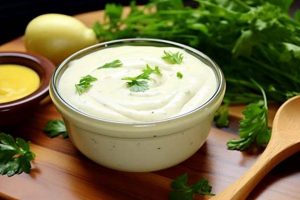
A guide for preparing Caesar salad dressing typically outlines the steps and ingredients required to create this emulsion. Common components include emulsified egg yolks, garlic, lemon juice, Worcestershire sauce, anchovies (or anchovy paste), Dijon mustard, black pepper, and Parmesan cheese. Variations exist, substituting ingredients like mayonnaise or omitting the anchovies for a vegetarian version. A well-executed method emulsifies these ingredients into a creamy, flavorful dressing that clings to romaine lettuce.
The preparation method significantly impacts the final flavor and texture. A classic approach involves gradually whisking oil into the emulsifying agent (egg yolks or mayonnaise) to create a stable, creamy dressing. This dressing elevates a simple salad of romaine lettuce and croutons into a culinary classic. Its rich, savory, and slightly tangy flavor profile complements the crispness of the lettuce and provides a satisfying counterpoint to the crunchy croutons. The popularity and enduring appeal of Caesar salad dressing showcase its versatility and ability to enhance a basic salad’s flavor profile.
This exploration into the nuances of creating Caesar salad dressing serves as a foundation for delving into specific recipes and variations. The following sections will provide detailed instructions for preparing classic, vegetarian, and other adapted versions, along with tips for achieving optimal flavor and texture.
Tips for Exceptional Caesar Salad Dressing
Creating a truly exceptional Caesar salad dressing involves attention to detail and an understanding of the interplay of ingredients. These tips offer guidance for achieving optimal flavor and texture.
Tip 1: Emulsion Stability: A stable emulsion is crucial for a creamy dressing. Gradual addition of oil while whisking vigorously, or using a blender, prevents separation.
Tip 2: Fresh Ingredients: Utilizing fresh, high-quality ingredients significantly impacts the final flavor. Freshly squeezed lemon juice and garlic are preferable.
Tip 3: Anchovy Selection: High-quality anchovy fillets or paste contribute a depth of umami flavor. Omit for a vegetarian option.
Tip 4: Garlic Balance: Raw garlic can be pungent. Adjust the amount according to preference, or briefly soak the minced garlic in cold water to mellow the flavor.
Tip 5: Acidity Adjustment: Taste and adjust the lemon juice to achieve the desired level of acidity. A balanced tang complements the other flavors.
Tip 6: Seasoning: Freshly ground black pepper enhances the dressing. Kosher salt should be used to season to taste.
Tip 7: Parmesan Quality: Freshly grated Parmesan cheese provides superior flavor and texture compared to pre-grated varieties.
Tip 8: Dressing Consistency: The dressing should be thick enough to coat the lettuce leaves without being overly heavy. Adjust consistency with additional oil or lemon juice as needed.
Adhering to these guidelines allows for a Caesar salad dressing that elevates the overall salad experience. A well-balanced dressing, with its creamy texture and complex flavors, transforms simple ingredients into a memorable dish.
With a solid understanding of the techniques and considerations outlined above, one can confidently experiment with different variations and flavor profiles to create a personalized Caesar salad dressing.
1. Ingredients

The quality and combination of ingredients directly influence the character of a Caesar salad dressing. Specific components contribute distinct flavor profiles and functional properties. For instance, emulsifying agents like egg yolks (or alternatives such as mayonnaise or silken tofu) create the creamy texture, while ingredients like anchovies, garlic, lemon juice, Worcestershire sauce, and Parmesan cheese provide the characteristic savory, umami, and tangy notes. The interaction of these ingredients is crucial; high-quality Parmesan contributes a sharp, salty flavor, while fresh lemon juice provides brightness and acidity that balances the richness of the other components. Using inferior ingredients or incorrect proportions can result in a bland or unbalanced dressing.
Consider the impact of ingredient selection: fresh garlic offers a pungent bite, while roasted garlic provides a mellow sweetness. Similarly, using high-quality anchovy fillets, packed in olive oil, versus a paste, results in a more nuanced flavor profile. Even the type of oil usedextra virgin olive oil versus a neutral oilaffects the final taste. Understanding these nuances allows for informed ingredient choices that contribute to a superior dressing. A real-world example is the substitution of nutritional yeast for Parmesan cheese in vegan versions, replicating the cheesy, umami notes while adhering to dietary restrictions.
Mastery of ingredient selection is fundamental to successful Caesar salad dressing preparation. It empowers informed choices based on desired flavor profiles and dietary needs. Challenges may arise when sourcing specific ingredients or adapting for allergies and preferences. However, a thorough understanding of each ingredient’s role allows for strategic substitutions without compromising the essential characteristics of this classic dressing. This careful attention to ingredient selection elevates the final product from a simple mixture to a complex and satisfying culinary experience.
2. Proportions
Precise ingredient proportions dictate the balance and overall success of Caesar salad dressing. The interplay between the emulsifying agent, acid, seasonings, and flavoring components determines the final flavor profile and texture. An excess of oil can result in a greasy dressing, while too much lemon juice creates an overly tart flavor. The delicate balance between the richness of the egg yolk (or alternative emulsifier), the pungent garlic, the salty anchovies, and the sharp Parmesan relies on careful measurement. Even a slight variation in these proportions can significantly alter the final product. For example, a dressing with too much garlic overwhelms the subtle nuances of the anchovies and Parmesan, while insufficient acid fails to cut through the richness of the emulsion. Understanding the proportional relationship between ingredients is essential for consistent, high-quality results.
Consider the impact of ingredient ratios on the emulsification process itself. The proper ratio of oil to emulsifying agent ensures a stable emulsion that prevents separation. Too much oil overwhelms the emulsifier, leading to a broken dressing. Similarly, the ratio of acid to other ingredients affects not only the flavor but also the stability of the emulsion. The acid helps to coagulate the proteins in the emulsifying agent, contributing to a thicker, more stable dressing. Practical applications of this understanding involve adjusting proportions to suit individual preferences. Reducing the amount of anchovies creates a milder dressing, while increasing the Parmesan adds a sharper, cheesier note. These adjustments, however, require careful consideration of their impact on the overall balance and texture of the dressing.
Mastery of proportions is fundamental to achieving a well-balanced and flavorful Caesar salad dressing. It allows for consistent results and the ability to tailor the dressing to specific tastes. Challenges may arise when scaling recipes up or down, requiring careful recalculation of ingredient quantities. However, a solid understanding of the proportional relationships between ingredients empowers informed adjustments and consistent success in creating a dressing that perfectly complements the other salad components. This precision elevates the Caesar salad from a simple dish to a nuanced culinary experience, highlighting the crucial role of proportions in recipe execution.
3. Emulsification method

The emulsification method employed significantly impacts the texture and stability of Caesar salad dressing. Emulsification involves combining two immiscible liquids, typically oil and an aqueous solution (in this case, containing lemon juice, vinegar, or egg yolk), into a stable mixture. The emulsifying agent, often egg yolks in traditional recipes, contains lecithin, which acts as a bridge between the oil and water molecules, creating a smooth, homogenous dressing that doesn’t separate. The chosen method directly influences the final consistency; vigorous whisking by hand creates a lighter, airier emulsion, while using a blender or food processor yields a thicker, more intensely emulsified dressing. A broken emulsion, characterized by separated oil and watery layers, results from improper technique or ingredient ratios. For instance, adding oil too quickly during whisking overwhelms the emulsifying agent and prevents proper emulsification.
Variations in emulsification techniques offer flexibility and control over the final product. The classic method involves slowly drizzling oil into the emulsifying agent while whisking constantly, creating a thick, creamy emulsion. Modern approaches may utilize a blender or food processor for a quicker, more consistent result, though the texture might be denser. The choice between these methods depends on desired texture and available equipment. A chef might prefer the nuanced control of hand-whisking for a delicate emulsion, while a home cook might opt for the convenience of a blender. Regardless of the method, maintaining a consistent, controlled addition of oil and continuous agitation are crucial for success. For example, using pasteurized egg yolks, which are readily available and mitigate safety concerns related to raw eggs, requires adjusting the emulsification process due to their slightly different properties compared to fresh yolks.
Mastery of emulsification techniques is fundamental to producing a high-quality Caesar salad dressing. This understanding allows for control over texture, stability, and consistency. Challenges such as temperature sensitivity and ingredient compatibility can influence the emulsification process. However, a sound understanding of the underlying principles empowers informed choices and consistent success in creating an emulsion that elevates the Caesar salad experience. This knowledge bridges the gap between simply mixing ingredients and creating a culinary emulsion, highlighting the importance of technique in recipe execution.
4. Flavor Balance
Flavor balance is paramount in a successful Caesar salad dressing. The dressing’s characteristic profile arises from a complex interplay of savory, tangy, salty, and umami elements. Achieving harmony among these distinct flavors requires careful consideration of ingredient proportions and their individual contributions. The richness of the emulsified egg yolks (or alternative emulsifier) provides a foundation, while the salty anchovies and Parmesan cheese contribute umami depth. Lemon juice introduces essential acidity, balancing the richness and adding brightness. A touch of Worcestershire sauce adds a subtle layer of complexity, while garlic and black pepper provide pungent notes. An imbalance in any of these elements can compromise the overall flavor profile. Excessive acidity can make the dressing overly tart, while too much garlic can overpower the delicate balance of other flavors. A real-world example of flavor imbalance is a dressing dominated by anchovy flavor, obscuring the contribution of other ingredients.
The practical application of flavor balance involves adjusting ingredient quantities to achieve a harmonious profile. Reducing the amount of anchovies creates a milder dressing, while increasing the Parmesan adds a sharper, cheesier note. Substituting lemon juice with a milder vinegar, such as white wine vinegar, can subtly alter the acidic profile. These adjustments, however, must be made judiciously to maintain the essential character of a Caesar dressing. Furthermore, individual palates vary, so achieving optimal flavor balance sometimes involves fine-tuning the recipe to personal preference. One might prefer a more pronounced garlic flavor, while another might prioritize the tangy notes of lemon juice. This customization, guided by an understanding of flavor interactions, allows for creating a dressing that precisely suits individual tastes.
Mastery of flavor balance is crucial for crafting a truly exceptional Caesar salad dressing. This understanding involves not merely following a recipe but actively engaging with the interplay of ingredients. Challenges may arise when adapting recipes for dietary restrictions or ingredient availability. Substituting ingredients requires careful consideration of how these changes affect the overall flavor profile. However, a deep understanding of how individual components contribute to the whole empowers informed decisions, ensuring a harmonious and flavorful result, regardless of specific ingredient choices. This knowledge distinguishes a truly skilled approach to Caesar salad dressing preparation, emphasizing the crucial role of flavor balance in culinary excellence.
5. Freshness
Freshness significantly impacts the flavor and quality of Caesar salad dressing. Utilizing high-quality, fresh ingredients elevates the dressing from satisfactory to exceptional. The difference between a dressing made with freshly squeezed lemon juice versus bottled juice, or freshly grated Parmesan cheese versus pre-grated, is readily discernible. This emphasis on freshness extends beyond individual ingredients to encompass the preparation process itself; ideally, the dressing is prepared shortly before consumption to maximize its vibrancy.
- Ingredient Quality
Fresh, high-quality ingredients are the foundation of a superior Caesar salad dressing. Freshly squeezed lemon juice provides a bright, clean acidity that bottled juice often lacks. Similarly, freshly grated Parmesan cheese offers a complex, nutty flavor and a pleasant texture that pre-grated versions cannot replicate due to added preservatives and anti-caking agents. Using superior-quality olive oil adds depth and richness to the dressing. These seemingly small details contribute significantly to the overall sensory experience. A dressing made with wilted romaine lettuce and stale croutons, even with perfectly executed dressing, will be underwhelming. Freshness, therefore, extends to all components of the salad.
- Preparation Timing
The timing of dressing preparation plays a crucial role in its freshness. Ideally, Caesar salad dressing is made just before serving. This minimizes the risk of enzymatic degradation, particularly in dressings containing raw egg yolks, and preserves the vibrant flavors of fresh ingredients like garlic and lemon juice. Pre-made dressings, while convenient, may lose their nuanced flavors over time and can also experience textural changes, such as emulsion separation. Emulsified dressings are inherently less stable over time, making freshness a key factor in their quality. While some components, such as a garlic-infused oil, can be prepared in advance, the final emulsification process is best performed just prior to serving.
- Storage Considerations
Proper storage is crucial for maintaining the freshness of any remaining Caesar salad dressing. Storing the dressing in an airtight container in the refrigerator helps to minimize oxidation and preserve its flavor. However, even with optimal storage, the quality of the dressing will degrade over time. Separation of the emulsion is common, and the flavors may become muted. Therefore, it is recommended to consume prepared Caesar salad dressing within a few days. If separation occurs, re-emulsification through vigorous whisking or blending is sometimes possible, although the original texture may not be fully restored.
- Seasonality
While not strictly a component of the dressing itself, the seasonality of the romaine lettuce significantly impacts the overall freshness and enjoyment of the Caesar salad. Romaine lettuce is at its peak during cooler months, offering optimal crispness and flavor. Using in-season lettuce enhances the textural contrast with the creamy dressing and elevates the entire salad experience. This awareness of seasonality reinforces the holistic approach to freshness in Caesar salad preparation, extending beyond the dressing to encompass all components of the dish.
Prioritizing freshness in every aspect of Caesar salad preparation, from ingredient selection to storage, ensures a superior culinary experience. This attention to detail elevates the dish beyond a simple combination of ingredients to a celebration of flavor and texture. The interplay between the fresh, crisp romaine, the crunchy croutons, and the vibrant, freshly prepared dressing creates a synergistic effect, where the whole is greater than the sum of its parts. Ultimately, this commitment to freshness underscores the importance of quality ingredients and mindful preparation in achieving culinary excellence.
6. Adaptations

Adaptability is a key strength of Caesar salad dressing, allowing for modifications to suit diverse dietary needs and preferences without sacrificing the fundamental character of the dressing. Variations on the classic recipe demonstrate the versatility of this culinary staple, offering options for vegetarian, vegan, and other specialized diets. These adaptations often involve strategic ingredient substitutions and adjustments to preparation methods to achieve comparable flavor profiles and textures while adhering to specific dietary restrictions.
- Vegetarian Adaptations
The most common adaptation omits the anchovies, the traditional source of umami. This seemingly simple change necessitates finding alternative ingredients to replicate the savory depth that anchovies provide. Common substitutes include Worcestershire sauce (which often contains anchovies but in smaller quantities), capers, or olives. These ingredients offer a salty, briny flavor that partially compensates for the missing anchovies. Another approach involves using nutritional yeast, which adds a cheesy, umami note. These substitutions demonstrate the adaptability of the recipe while catering to vegetarian preferences.
- Vegan Adaptations
Vegan adaptations present a greater challenge, requiring the replacement of both anchovies and the egg yolks, which serve as the emulsifying agent. Replacing egg yolks typically involves using silken tofu, avocado, or a combination of plant-based ingredients like tahini and soaked cashews. These alternatives provide the necessary creaminess and binding properties while adhering to vegan principles. Replicating the umami of anchovies often requires a combination of ingredients like miso paste, capers, and nutritional yeast. These adaptations demonstrate the potential for transforming classic recipes to align with plant-based diets.
- Low-Fat Adaptations
Health-conscious individuals often seek ways to reduce the fat content in Caesar salad dressing, which traditionally relies on a significant amount of oil for its creamy texture. Low-fat versions often reduce the amount of oil and incorporate additional emulsifying agents like Greek yogurt or low-fat mayonnaise. These adjustments require careful consideration of their impact on the dressing’s texture and flavor. Reducing oil can make the dressing thinner and less rich, necessitating adjustments to other ingredients to maintain flavor balance. These adaptations demonstrate the potential for modifying recipes to align with specific health goals.
- Regional Variations
Regional variations in Caesar salad dressing highlight the adaptability of the recipe across different culinary traditions. Some regions might favor a more pronounced garlic flavor, while others might incorporate local ingredients or spices to create a unique flavor profile. For example, a Southwestern-inspired version might include roasted chilies or cumin, while a Mediterranean adaptation might incorporate Kalamata olives and oregano. These regional interpretations demonstrate the dynamic nature of recipes and their evolution across cultures.
The adaptability of Caesar salad dressing underscores its enduring appeal. These variations demonstrate that adapting a classic recipe is not merely about substitution but involves a deeper understanding of flavor profiles, textures, and the interplay of ingredients. The ability to tailor the dressing to individual preferences and dietary needs ensures that this culinary staple remains relevant and enjoyable for a diverse range of individuals. Furthermore, these adaptations demonstrate the creativity and ingenuity that can arise from exploring the possibilities within a seemingly fixed recipe, contributing to the ongoing evolution of culinary traditions.
Frequently Asked Questions
This section addresses common inquiries regarding Caesar salad dressing preparation, offering concise and informative responses.
Question 1: What is the purpose of the egg yolk in traditional Caesar salad dressing?
The egg yolk serves as an emulsifier, binding the oil and aqueous ingredients (lemon juice, vinegar) into a stable, creamy emulsion. It also contributes richness and a subtle savory flavor.
Question 2: Can Caesar salad dressing be made without raw eggs?
Yes, alternatives such as mayonnaise (which contains emulsified eggs), silken tofu, or avocado can be used to create a similar creamy texture and binding effect. Pasteurized egg yolks also mitigate safety concerns associated with raw eggs.
Question 3: What can be used as a substitute for anchovies?
Worcestershire sauce, capers, olives, or a combination thereof can provide a similar salty, umami flavor. Nutritional yeast also offers a cheesy, savory alternative.
Question 4: How can one prevent Caesar salad dressing from separating?
Ensuring a proper balance of oil and emulsifying agent is crucial. Adding the oil slowly and gradually while whisking constantly helps create a stable emulsion. Using a blender can also promote a more stable emulsion.
Question 5: How long can Caesar salad dressing be stored?
Refrigerated in an airtight container, Caesar salad dressing can typically be stored for up to three days. However, flavor and texture may degrade over time, particularly if the emulsion separates.
Question 6: Can Caesar salad dressing be made ahead of time?
While some components, like garlic-infused oil, can be prepared in advance, the final emulsification and combination of ingredients are best done just prior to serving to maximize freshness and prevent emulsion breakdown.
Understanding these key aspects of Caesar salad dressing preparation ensures a successful and flavorful outcome. Proper technique, ingredient selection, and attention to detail elevate this culinary classic.
The next section provides a detailed, step-by-step recipe for preparing classic Caesar salad dressing.
Recipe Caesar Salad Dressing
Exploration of Caesar salad dressing recipes reveals a delicate balance of art and science. Achieving the desired creamy texture, vibrant flavor, and stable emulsion requires careful consideration of ingredient quality, precise proportions, and appropriate emulsification techniques. Freshness plays a pivotal role, as does the nuanced interplay of savory, tangy, salty, and umami elements. Adaptability allows for customization based on dietary preferences and ingredient availability, demonstrating the enduring versatility of this culinary classic.
Mastery of Caesar salad dressing preparation empowers culinary creativity and elevates a simple salad to a gastronomic experience. Continued exploration of variations and techniques promises further refinement and personalized interpretations of this timeless dressing, ensuring its continued presence in culinary traditions worldwide.