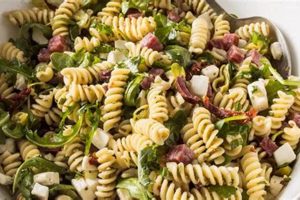
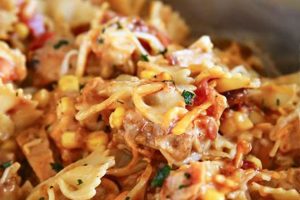
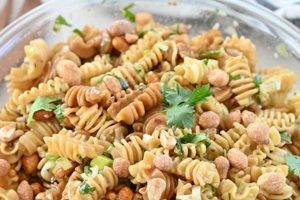
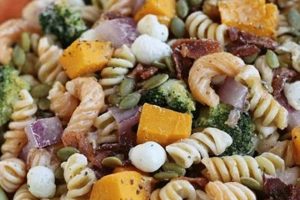
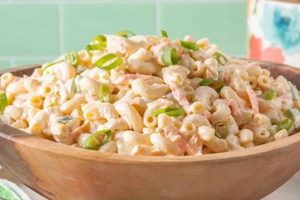
A dish combining cooked pasta, assorted fresh or cooked vegetables, and often a flavorful dressing, encompasses a wide range of possibilities. Examples include classic Italian pasta salad with tomatoes, cucumbers, and olives, orzo pasta salad with roasted Mediterranean vegetables, and Asian-inspired noodle salads with vibrant vegetables and peanut sauce. The diversity of ingredients and dressings allows for customized flavor profiles, from light and refreshing to savory and robust.
Such dishes offer a convenient and nutritious meal option, suitable for various occasions from potlucks to light dinners. They present an opportunity to incorporate a variety of vegetables, contributing to a balanced diet. The adaptability of this dish to seasonal ingredients further enhances its nutritional value and allows for creative culinary exploration. Historically, cold pasta dishes have been present in various cultures for centuries, reflecting the versatility and enduring appeal of this culinary concept.
This exploration will delve into specific ingredients, diverse preparation methods, and tips for crafting flavorful and appealing variations. Nutritional information and suggested pairings will also be discussed to provide a comprehensive guide to creating and enjoying this versatile dish.
Tips for Creating Exceptional Pasta Vegetable Salads
Careful consideration of ingredients and preparation techniques elevates a simple combination of pasta and vegetables into a memorable culinary experience. The following tips offer guidance for achieving optimal flavor and texture.
Tip 1: Pasta Selection: Choose pasta shapes that hold their form well and provide ample surface area for capturing the dressing and clinging to vegetables. Rotini, fusilli, and farfalle are excellent choices. Small pasta shapes like orzo and ditalini also work well.
Tip 2: Vegetable Variety: Incorporate a diverse range of vegetables for a balanced flavor profile and visual appeal. Consider contrasting textures and colors. Roasted vegetables add a depth of flavor, while raw vegetables offer crispness and freshness.
Tip 3: Blanching Techniques: Blanching vegetables like broccoli and green beans helps maintain their vibrant color and crisp-tender texture. Ensure proper cooling to prevent overcooking.
Tip 4: Dressing Considerations: The dressing acts as a unifying element. Vinaigrettes offer a light and tangy option, while creamy dressings provide richness. Balance flavors based on the chosen vegetables and overall desired taste profile.
Tip 5: Flavor Enhancement: Fresh herbs, spices, and aromatics add complexity and depth. Consider incorporating ingredients like chopped fresh parsley, basil, oregano, garlic, or red pepper flakes.
Tip 6: Chilling and Serving: Chilling the salad allows the flavors to meld. Optimal chilling time enhances the overall taste experience. Serve the salad chilled or at room temperature.
Tip 7: Ingredient Proportion: Strive for a balance between pasta and vegetables. Too much pasta can lead to a bland salad, while too many vegetables may overpower the dish.
By following these guidelines, one can create a flavorful and visually appealing pasta vegetable salad suited to a variety of occasions. Attention to detail elevates this simple dish into a satisfying culinary creation.
These practical tips provide a foundation for crafting a delightful culinary experience. The following section will explore specific recipe variations and offer further inspiration.
1. Pasta Choice
Pasta selection significantly influences the final character of a pasta vegetable salad. Shape, size, and texture contribute to both the aesthetic presentation and the overall eating experience. Short, sturdy pasta shapes such as rotini, fusilli, and farfalle effectively capture dressing and hold their form well, even after being chilled. Their crevices and ridges create pockets for dressing and smaller vegetable pieces, ensuring a flavorful bite. Conversely, long, thin pasta like spaghetti or linguine, while suitable for other preparations, tends to become cumbersome and difficult to manage in a salad context. Smaller pasta shapes like orzo and ditalini offer a delicate textural contrast and work well with finely diced vegetables and lighter dressings. Choosing a gluten-free pasta expands accessibility and caters to dietary restrictions. The pasta’s ability to absorb flavors from the dressing and complement the vegetables is a crucial factor in creating a well-balanced and enjoyable salad.
Consider a Mediterranean-inspired pasta salad with roasted vegetables. A robust, ridged pasta like radiatore effectively holds the chunky vegetables and a thicker vinaigrette, providing a satisfying textural experience. In contrast, a light and refreshing orzo pasta salad with chopped cucumbers, tomatoes, and feta benefits from the orzo’s small size and delicate texture, allowing the fresh flavors of the vegetables to shine through. Choosing a whole wheat pasta adds a nutty flavor and boosts the nutritional content of the salad. Understanding the interplay between pasta shape, sauce, and vegetables enables the creation of a dish with harmonious flavors and textures.
Selecting the appropriate pasta shape is paramount to achieving the desired outcome in a pasta vegetable salad. A thoughtful choice elevates the dish beyond a simple combination of ingredients, creating a cohesive and enjoyable culinary experience. Balancing the pasta’s texture and size with the other components ensures a successful and satisfying result. This careful consideration maximizes flavor absorption and enhances the overall appeal of the dish, whether it be a light lunch, a side dish, or a potluck contribution.
2. Vegetable Selection

Vegetable selection is paramount in crafting a well-balanced and flavorful pasta salad. The choice of vegetables influences not only the nutritional value but also the textural and visual appeal of the dish. A thoughtful combination of vegetables can elevate a simple pasta salad into a vibrant and satisfying meal.
- Color and Visual Appeal
Vibrant colors enhance the aesthetic presentation of the salad. Incorporating a variety of colorful vegetables, such as bell peppers (red, yellow, orange), cherry tomatoes, cucumbers, and purple cabbage, creates a visually engaging dish. This diversity contributes to a more appetizing and enjoyable dining experience.
- Texture and Mouthfeel
A mix of textures creates a more dynamic and interesting salad. Combining crunchy vegetables like carrots, celery, and bell peppers with softer vegetables like cooked broccoli or blanched green beans provides textural contrast. This interplay of textures adds complexity and prevents the salad from feeling monotonous.
- Flavor Profile
The chosen vegetables significantly impact the overall flavor profile of the salad. Consider incorporating vegetables with contrasting flavors, such as sweet bell peppers, tangy cherry tomatoes, and earthy mushrooms. Balancing these flavors creates a more nuanced and complex taste experience.
- Nutritional Value
Selecting a variety of vegetables maximizes the nutritional content of the salad. Different vegetables offer different vitamins and minerals. Combining nutrient-rich options like spinach, kale, and broccoli ensures a more wholesome and nutritious meal.
Strategic vegetable selection transforms a basic pasta salad into a vibrant, flavorful, and nutritious meal. By considering color, texture, flavor, and nutritional value, one can craft a well-balanced and appealing dish suitable for a variety of occasions, from casual lunches to potluck gatherings. The interplay of these elements contributes to a satisfying and enjoyable culinary experience.
3. Dressing
Dressing is a critical component of a successful pasta vegetable salad, acting as a unifying element that binds the individual ingredients together. The right dressing enhances the flavors of the pasta and vegetables, creating a cohesive and enjoyable culinary experience. A poorly chosen or unbalanced dressing can overwhelm the other components or leave the salad bland and unappetizing. Understanding the role and impact of different dressings is essential for crafting a well-balanced and delicious pasta salad.
- Flavor Profile
The dressing’s flavor profile should complement the chosen vegetables and pasta. A light and tangy vinaigrette works well with fresh, crisp vegetables, while a creamy dressing might better suit roasted or heartier vegetables. For example, a lemon-herb vinaigrette brightens a salad with cucumbers, tomatoes, and feta, whereas a creamy pesto dressing complements roasted vegetables and sun-dried tomatoes. Balancing the acidity, sweetness, and savory notes within the dressing ensures a harmonious blend of flavors.
- Texture and Consistency
Dressing consistency impacts how it coats the pasta and vegetables. A thinner vinaigrette lightly coats the ingredients, allowing their individual flavors to shine. A thicker, creamier dressing adheres more readily, providing a richer mouthfeel. Consider the pasta shape and vegetable textures when selecting a dressing consistency. For instance, a thicker dressing clings better to larger pasta shapes like rotini, while a thinner dressing is more suitable for smaller pasta like orzo.
- Ingredient Compatibility
Certain dressings pair more effectively with specific ingredients. A balsamic vinaigrette complements roasted vegetables and bolder flavors, while a light vinaigrette enhances delicate vegetables like spinach and spring greens. Consider the overall flavor profile and how the dressing will interact with the other ingredients. A creamy avocado dressing might clash with a Mediterranean-inspired salad, whereas a lemon-oregano vinaigrette harmonizes beautifully.
- Emulsification and Stability
A stable emulsion prevents the dressing from separating, ensuring a consistent flavor and texture throughout the salad. Proper emulsification techniques, such as whisking oil slowly into vinegar, create a cohesive dressing that evenly coats the ingredients. A separated dressing can lead to an uneven distribution of flavor and a less appealing appearance. Adding an emulsifying agent like Dijon mustard can improve stability and prevent separation, particularly in vinaigrettes.
Selecting the appropriate dressing is crucial for elevating a pasta vegetable salad from a simple combination of ingredients to a well-balanced and flavorful dish. Considering the flavor profile, texture, ingredient compatibility, and emulsion stability ensures that the dressing enhances the overall culinary experience, creating a cohesive and satisfying meal.
4. Flavor Enhancers
Flavor enhancers play a crucial role in elevating pasta vegetable salads from simple to exceptional. These additions contribute depth, complexity, and balance, transforming individual ingredients into a harmonious whole. Strategic use of flavor enhancers allows for customization and elevates the overall sensory experience.
- Fresh Herbs
Fresh herbs provide brightness and aromatic complexity. Basil, parsley, mint, oregano, and chives are excellent choices, each imparting a distinct character. Chopped fresh parsley adds a clean, peppery note to Mediterranean-inspired salads, while basil complements tomatoes and pesto dressings. The delicate nature of fresh herbs requires adding them towards the end of preparation to preserve their vibrant flavors and avoid wilting.
- Spices and Seasonings
Spices and seasonings introduce warmth and depth. Garlic powder, onion powder, paprika, red pepper flakes, and black pepper enhance the overall flavor profile. A pinch of red pepper flakes adds a subtle heat, while garlic powder provides a savory base. Balancing spices with other flavor enhancers prevents overpowering the delicate flavors of the vegetables.
- Citrus Zest and Juice
Citrus zest and juice offer a burst of freshness and acidity. Lemon zest brightens a Greek-inspired salad, while lime juice complements Southwestern flavors. The acidic nature of citrus also helps balance richer dressings and prevents the salad from becoming overly heavy. Using both zest and juice maximizes the citrus impact, adding both aromatic and flavor dimensions.
- Aromatics
Aromatics like garlic, shallots, and onions, either raw or roasted, contribute a savory foundation. Roasted garlic imparts a mellow sweetness, while finely diced shallots add a pungent bite. Incorporating aromatics early in the preparation process, such as by roasting them with the vegetables, allows their flavors to permeate the entire salad.
Thoughtful incorporation of flavor enhancers elevates pasta vegetable salads from basic to extraordinary. The interplay of fresh herbs, spices, citrus, and aromatics creates a dynamic flavor profile, transforming individual components into a cohesive and delightful culinary experience. Careful balancing of these elements ensures that the flavor enhancers complement, rather than overpower, the fresh vegetables and pasta, resulting in a well-rounded and satisfying dish.
5. Preparation Method
Preparation methods significantly influence the final quality and character of a pasta vegetable salad. Proper techniques ensure optimal texture, flavor development, and overall appeal. From the cooking of the pasta to the handling of the vegetables and the incorporation of the dressing, each step contributes to the final result. Understanding these methods allows for greater control over the outcome and enhances the overall culinary experience.
- Pasta Cooking
Cooking pasta al dente is crucial for a successful pasta salad. Overcooked pasta becomes mushy and absorbs less dressing, resulting in a less appealing texture and flavor. Conversely, undercooked pasta remains firm and can detract from the overall enjoyment. Properly cooked pasta provides a pleasant chewiness and serves as a sturdy base for the other ingredients. Following package instructions, and testing for doneness by biting into a piece, ensures optimal results.
- Vegetable Preparation
Vegetable preparation methods vary depending on the desired outcome. Raw vegetables offer crispness and freshness, while blanched or roasted vegetables provide different textures and flavor profiles. Blanching preserves the vibrant color and nutrients of vegetables like green beans and broccoli. Roasting vegetables, such as bell peppers and onions, intensifies their sweetness and adds a depth of caramelized flavor. Choosing the appropriate preparation method for each vegetable enhances both the taste and texture of the final salad.
- Dressing Incorporation
The timing and method of dressing incorporation influence how flavors meld and how the salad holds up over time. Adding the dressing too early can lead to soggy vegetables, while adding it too late may result in uneven flavor distribution. Gently tossing the pasta and vegetables with the dressing ensures that all components are evenly coated. For salads that will be chilled, reserving a portion of the dressing to add just before serving can help maintain the desired texture and prevent the salad from becoming overly saturated.
- Chilling and Resting
Chilling the salad allows the flavors to meld and develop fully. The chilling process enhances the overall taste experience and creates a more cohesive flavor profile. However, excessive chilling can negatively impact the texture of certain vegetables. An optimal chilling time balances flavor development with texture preservation. Allowing the salad to rest at room temperature for a short period before serving can further enhance the flavors and bring them to their full potential.
Careful attention to preparation methods elevates a pasta vegetable salad from a simple assembly of ingredients to a carefully crafted dish. By understanding the nuances of pasta cooking, vegetable preparation, dressing incorporation, and chilling, one can create a salad with optimal texture, flavor, and visual appeal. These techniques, combined with thoughtful ingredient selection, contribute to a truly satisfying and enjoyable culinary experience.
6. Serving Suggestions

Serving suggestions provide crucial context for a pasta vegetable salad recipe, transforming it from a mere list of ingredients and instructions into a complete culinary experience. Consideration of serving occasions, complementary dishes, and presentation elevates the perceived value and enjoyment of the salad. Serving suggestions bridge the gap between preparation and consumption, guiding individuals toward a more complete understanding and appreciation of the dish.
A pasta salad intended as a light lunch might be paired with a simple grilled chicken breast or a side of crusty bread. This suggestion enhances the nutritional value and creates a more satisfying meal. Conversely, a pasta salad served as part of a larger buffet or potluck benefits from suggestions for complementary dishes, such as grilled meats, roasted vegetables, or dips. These pairings create a cohesive and balanced spread, allowing the pasta salad to shine within a broader culinary context. Presentation also plays a significant role. A simple garnish of fresh herbs or a sprinkle of toasted nuts elevates the visual appeal and adds a touch of elegance. Serving the salad in a decorative bowl or on individual plates further enhances the dining experience. For example, a Mediterranean-inspired orzo pasta salad served in individual glass jars with a sprig of fresh oregano creates a visually appealing and portable option for a picnic or outdoor gathering.
Effective serving suggestions enhance the versatility and appeal of a pasta vegetable salad recipe. They provide practical guidance for incorporating the salad into various meal contexts and maximizing its enjoyment. By considering the occasion, complementary dishes, and presentation, one transforms a basic recipe into a complete culinary concept, enhancing its value and overall appeal. This understanding empowers individuals to utilize the recipe effectively and create a more satisfying and memorable dining experience.
Frequently Asked Questions
This section addresses common inquiries regarding pasta vegetable salad preparation and provides clear, concise answers to facilitate a successful culinary outcome.
Question 1: What is the best way to prevent pasta salad from becoming soggy?
Sogginess often results from overcooked pasta or adding dressing too early. Cook pasta al dente, drain thoroughly, and cool completely before combining with other ingredients. Adding a portion of the dressing just before serving helps maintain optimal texture.
Question 2: Can roasted vegetables be used in a pasta salad?
Roasted vegetables add depth of flavor and textural complexity. Roast vegetables until tender and slightly caramelized before incorporating them into the salad. Ensure they cool completely before combining with other ingredients.
Question 3: How long can pasta salad be stored in the refrigerator?
Properly stored, pasta salad typically lasts three to five days in the refrigerator. Store in an airtight container to maintain freshness and prevent absorption of other odors.
Question 4: What are some suitable protein additions for a more substantial meal?
Grilled chicken, shrimp, chickpeas, or cubed tofu complement pasta salad well, increasing protein content. Ensure protein elements are cooked thoroughly and cooled before adding to prevent bacterial growth.
Question 5: Can frozen vegetables be used in a pasta salad?
While fresh vegetables are generally preferred, frozen vegetables can be substituted in some cases. Thaw and drain frozen vegetables completely before adding to prevent excess moisture in the salad. Opt for frozen vegetables that hold their shape well after thawing, such as peas or corn.
Question 6: How can one adapt a pasta salad recipe to accommodate dietary restrictions?
Dietary adaptations are readily achievable. Use gluten-free pasta for gluten intolerance. Substitute dairy-free options for creamy dressings to accommodate lactose intolerance. Ensure all ingredients align with specific dietary needs.
Addressing these common questions provides a foundation for successful pasta salad preparation. Attention to detail and an understanding of key principles ensures an enjoyable and satisfying culinary experience.
This FAQ section has provided answers to common queries. The following section will offer a collection of varied and inspiring pasta salad recipes.
Conclusion
Exploration of the multifaceted nature of pasta vegetable salad recipes has revealed key elements contributing to successful outcomes. From pasta selection and vegetable preparation to dressing choices and flavor enhancement, each component plays a crucial role in the final dish. Understanding these elements empowers culinary exploration and facilitates the creation of flavorful, nutritious, and visually appealing salads. Proper preparation techniques, including cooking pasta al dente, blanching or roasting vegetables, and incorporating dressings strategically, ensure optimal texture and prevent sogginess. Attention to detail, from ingredient selection to serving suggestions, elevates this simple dish to a versatile and satisfying culinary creation.
The adaptability of pasta vegetable salads to diverse ingredients and flavor profiles offers endless possibilities for creative expression in the kitchen. This versatility extends beyond individual preferences to encompass dietary restrictions and cultural influences, making pasta salads a truly universal dish. Continued exploration of flavor combinations, textures, and presentations promises a vibrant future for this adaptable culinary staple. Ultimately, the enduring appeal of pasta vegetable salads lies in their ability to combine simplicity with endless possibilities, offering a canvas for both novice and experienced cooks to create delicious and satisfying meals.