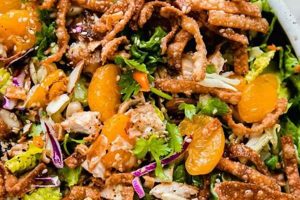
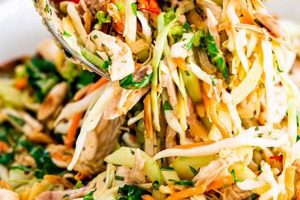
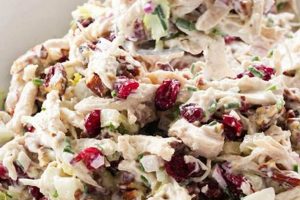
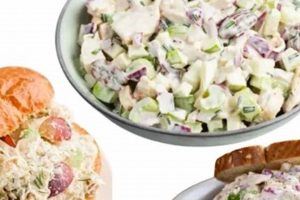
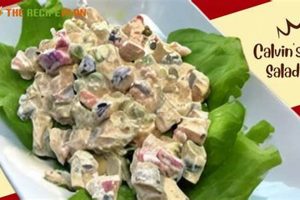
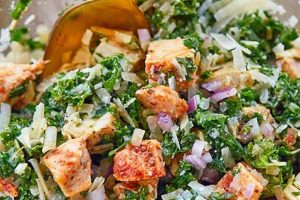
A chilled dish typically combines cooked elbow macaroni, diced chicken, and a creamy dressing. Common additions include celery, onion, grapes, and nuts. Variations exist, incorporating different herbs, spices, and dressings based on regional preferences and individual tastes. For example, some versions may feature a mayonnaise-based dressing, while others might opt for a vinaigrette or a yogurt-based alternative.
This dish offers a convenient and satisfying meal option, suitable for picnics, potlucks, and quick lunches. Its adaptable nature allows for customization based on dietary needs and available ingredients. Historically, chicken salad gained popularity in the mid-19th century, evolving alongside refrigeration technologies and changing culinary trends. The addition of macaroni likely emerged later as a way to extend the dish and add a more substantial carbohydrate element. This combination provides a balanced source of protein and carbohydrates, making it a relatively complete meal.
Further exploration could include variations on the basic formula, addressing topics such as ingredient selection, dressing preparation, and appropriate storage techniques. Tips for presentation and serving suggestions would also be valuable additions to a comprehensive understanding of this versatile dish.
Tips for Preparing a Delicious Chicken and Macaroni Salad
Achieving a well-balanced and flavorful dish requires attention to several key elements. These tips offer guidance for optimizing ingredient selection, preparation methods, and overall presentation.
Tip 1: Optimal Macaroni Selection: Elbow macaroni is traditional, but other small pasta shapes work well. Consider the pasta’s ability to hold the dressing and complement the other ingredients. Slightly undercooking the pasta prevents a mushy texture in the final salad.
Tip 2: High-Quality Chicken: Rotisserie chicken offers convenience, while poaching or grilling boneless, skinless breasts allows for greater control over seasoning. Ensure the chicken is thoroughly cooked and cooled before incorporating it into the salad.
Tip 3: Balancing Flavor Profiles: Fresh herbs and spices elevate the dish. Consider adding dill, chives, or tarragon for a brighter flavor. A pinch of paprika or cayenne pepper can add a subtle warmth.
Tip 4: Dressing Considerations: Mayonnaise-based dressings provide a classic creamy texture. Greek yogurt offers a lighter, tangier alternative. Experiment with different vinegars and mustards to customize the dressing’s flavor profile.
Tip 5: Enhancing Texture and Flavor with Add-ins: Celery, onion, and grapes offer contrasting textures and sweetness. Toasted nuts, such as pecans or walnuts, add crunch and depth of flavor. Dried cranberries or chopped apples can provide a touch of sweetness and chewiness.
Tip 6: Proper Chilling and Serving: Allow the salad to chill thoroughly in the refrigerator for at least two hours before serving. This allows the flavors to meld and the salad to reach optimal temperature. Garnish with fresh herbs or a sprinkle of paprika before serving.
Tip 7: Mindful Ingredient Incorporation: Add the dressing gradually to avoid over-dressing the salad. Delicate ingredients, like grapes, should be added just before serving to prevent them from becoming mushy.
By following these guidelines, one can create a chicken and macaroni salad that is both flavorful and visually appealing. Careful attention to ingredient quality, flavor balance, and proper chilling techniques ensures a satisfying culinary experience.
This foundation of knowledge equips one to explore further nuances of this versatile dish, including variations in ingredients and creative presentation methods.
1. Ingredients

Ingredient selection significantly impacts the final quality and character of a macaroni and chicken salad. Careful consideration of each component’s contribution to flavor, texture, and overall balance is essential for a successful outcome. The following facets highlight key ingredient categories and their roles within the recipe.
- Protein: Chicken
Chicken provides the primary protein source. Options range from pre-cooked rotisserie chicken for convenience to freshly poached or grilled chicken for enhanced flavor control. The chicken should be cooked thoroughly, cooled, and diced or shredded before incorporation.
- Base: Macaroni
Elbow macaroni is the traditional choice, offering a pleasant mouthfeel and absorbing the dressing effectively. Alternative small pasta shapes can be substituted. Proper cooking ensures the pasta retains its shape and texture within the salad.
- Binding Agent: Dressing
The dressing binds the ingredients and contributes significantly to the overall flavor profile. Mayonnaise-based dressings offer a classic creamy texture, while yogurt-based dressings provide a lighter alternative. Flavor variations can be achieved through the addition of herbs, spices, and acidic elements.
- Flavor and Texture Enhancers: Produce and Add-ins
These ingredients contribute complexity and textural variety. Common additions include celery, onion, grapes, and nuts. These elements introduce contrasting flavors and textures, creating a more dynamic and enjoyable sensory experience.
The interplay of these ingredient categories defines the character of the macaroni and chicken salad. A thoughtful balance of protein, starch, and flavor enhancers, unified by a complementary dressing, creates a harmonious and satisfying dish. Consideration of individual dietary preferences and ingredient availability allows for customization and adaptation while maintaining the essential elements of this classic recipe.
2. Preparation
Preparation plays a crucial role in the final outcome of a macaroni and chicken salad recipe. Methodical preparation ensures optimal texture, flavor development, and food safety. The process involves several key stages, each contributing to the overall quality of the dish. For instance, cooking the pasta al dente prevents a mushy texture, while properly dicing the chicken ensures even distribution throughout the salad. Overlooking these steps can lead to an unbalanced and less appealing final product.
Specific preparatory steps influence the balance of flavors and textures. Thoroughly chilling the ingredients before combining them prevents the dressing from becoming watery and helps maintain the crispness of added vegetables. Furthermore, the order of ingredient incorporation matters. Adding more delicate components, such as grapes or herbs, closer to serving time prevents them from becoming soggy or discolored. Consider a scenario where warm chicken is added to the salad the heat can wilt other ingredients and compromise the overall freshness. Alternatively, neglecting to chill the cooked pasta adequately can lead to a sticky, unappetizing texture.
Effective preparation streamlines the assembly process and minimizes the risk of foodborne illness. Proper handling and storage of ingredients, particularly the chicken, are paramount. Ensuring the chicken reaches a safe internal temperature during cooking and then cooling it rapidly before incorporating it into the salad minimizes bacterial growth. Careful attention to these details elevates the dish beyond a simple combination of ingredients, transforming it into a carefully constructed culinary creation. Understanding the impact of each preparatory step allows for greater control over the final product, ensuring a consistently delicious and safe macaroni and chicken salad.
3. Dressing
Dressing constitutes a pivotal element in macaroni and chicken salad recipes, significantly influencing the final product’s flavor profile, texture, and overall palatability. It acts as a unifying agent, binding disparate ingredients into a cohesive whole. The dressing’s role extends beyond simply adding moisture; it contributes crucial flavor dimensions, balancing the savory chicken, the starchy pasta, and any other incorporated elements. A bland or poorly chosen dressing can result in a lackluster salad, while a well-balanced and flavorful dressing elevates the dish considerably. For example, a classic mayonnaise-based dressing provides a creamy richness, counterpointing the neutral flavor of the chicken and pasta. Conversely, a vinaigrette offers a lighter, tangier profile, enhancing the other ingredients without overwhelming them. The choice of dressing should complement the other components, creating a harmonious blend of flavors and textures.
Different dressing styles offer unique characteristics and impact the overall sensory experience. A creamy dressing, often mayonnaise-based, provides a smooth, rich mouthfeel and acts as a blank canvas for additional flavors. Herbs, spices, and acidic elements like lemon juice or vinegar can be incorporated to create complexity and depth. A vinaigrette, on the other hand, offers a brighter, more acidic counterpoint to the richness of the chicken and the subtle sweetness of the pasta. This style of dressing can be particularly effective when the salad includes fresh vegetables or fruits, as the acidity enhances their natural flavors. Consider a scenario with a Greek yogurt-based dressing: its tangy profile complements the savory chicken and provides a lighter alternative to mayonnaise, aligning with health-conscious preferences. The choice of dressing should reflect the desired outcome, whether it be a classic creamy salad or a lighter, brighter rendition.
Understanding the crucial role of dressing in a macaroni and chicken salad recipe empowers informed culinary choices. Selection should consider the interplay of flavors and textures, aiming for a balanced and harmonious final product. Whether opting for a classic mayonnaise base, a vibrant vinaigrette, or a tangy yogurt alternative, the dressing should enhance, not overpower, the other ingredients. Careful consideration of dressing choice contributes significantly to a successful and satisfying culinary experience.
4. Flavor Balance
Flavor balance constitutes a critical aspect of a successful macaroni and chicken salad recipe. A harmonious interplay of flavors elevates the dish beyond a simple combination of ingredients, creating a more complex and satisfying sensory experience. Achieving this balance requires careful consideration of each component’s contribution to the overall flavor profile, ensuring no single element dominates or clashes with others. This exploration delves into the key facets of flavor balance within this specific culinary context.
- Savory Foundation: Chicken and Base Dressing
The chicken and the base dressing establish the foundational savory element of the salad. The inherent mildness of chicken allows it to absorb and carry other flavors, making it an ideal canvas for the other ingredients. The base dressing, whether mayonnaise-based or a lighter alternative like Greek yogurt, provides a creamy richness that complements the chicken. This foundation serves as a backdrop against which other flavors can be introduced and balanced.
- Acidity: Balancing Richness
Acidity plays a crucial role in cutting through the richness of the chicken and dressing. Ingredients like lemon juice, vinegar, or pickles introduce a tartness that brightens the overall flavor profile and prevents the salad from becoming overly heavy. This acidic counterpoint enhances the other flavors, creating a more dynamic and balanced palate experience. For instance, a squeeze of lemon juice can lift a mayonnaise-based dressing, while chopped dill pickles can add a tangy crunch.
- Sweetness: A Complementary Counterpoint
Sweetness provides a complementary counterpoint to the savory and acidic elements. Ingredients like grapes, dried cranberries, or chopped apples introduce a subtle sweetness that rounds out the flavor profile. This sweetness should be judicious, enhancing rather than dominating the other flavors. The interplay of sweet and savory creates a more nuanced and satisfying taste experience. For example, the sweetness of grapes complements the savory chicken and the tangy dressing, creating a balanced flavor profile.
- Texture and Aromatic Complexity: Enhancing the Experience
Textural and aromatic elements contribute to the overall flavor experience. Crispy vegetables like celery and onion add a refreshing crunch, while nuts provide a contrasting richness and depth. Fresh herbs, such as dill, chives, or parsley, introduce aromatic complexity that elevates the flavor profile. These elements create a more dynamic and engaging sensory experience, moving beyond simple taste to encompass texture and aroma. The interplay of these elements contributes to a more complete and satisfying culinary experience.
A well-balanced macaroni and chicken salad demonstrates a thoughtful interplay of these flavor components. The savory base, complemented by acidity, sweetness, and textural and aromatic complexity, creates a harmonious and satisfying culinary experience. Careful consideration of these elements elevates the dish from a simple combination of ingredients to a carefully crafted symphony of flavors and textures.
5. Texture
Texture significantly contributes to the overall enjoyment of a macaroni and chicken salad recipe. A successful rendition balances contrasting textures, creating a dynamic and engaging sensory experience. The interplay of creamy, crunchy, and tender elements elevates the dish beyond a simple combination of ingredients, adding depth and complexity to each bite. This exploration delves into the key textural facets within this specific culinary context.
- Macaroni: The Foundation of Texture
The macaroni provides the foundational textural element. Properly cooked pasta offers a tender, slightly chewy texture that contrasts with the other ingredients. Overcooked pasta results in a mushy, unappetizing texture, while undercooked pasta can be too firm. The ideal texture is al dente, offering a pleasant resistance to the bite without being tough.
- Chicken: Tenderness and Contrast
Chicken contributes a tender, meaty texture that contrasts with the pasta. The chicken can be diced, shredded, or left in larger chunks, depending on the desired texture. Shredded chicken integrates more seamlessly with the other ingredients, while larger chunks offer a more substantial bite. The cooking method also influences the texture; poached or grilled chicken tends to be more tender than baked or fried chicken.
- Vegetables: Crispness and Freshness
Vegetables introduce a crucial element of crispness and freshness. Common additions like celery and onion provide a refreshing crunch that contrasts with the softer textures of the pasta and chicken. These vegetables should retain some bite, offering a satisfying textural contrast. Overly soft or wilted vegetables detract from the overall experience.
- Add-ins: Enhancing Textural Complexity
Additional ingredients further enhance the textural complexity. Nuts, such as chopped walnuts or pecans, offer a satisfying crunch and a contrasting richness. Dried fruits, like cranberries or raisins, provide a chewy texture and a touch of sweetness. These add-ins contribute depth and variety to each bite, preventing the salad from becoming monotonous.
The interplay of these textural elements defines the overall sensory experience of the macaroni and chicken salad. The tender pasta, complemented by the tender chicken, the crisp vegetables, and the contrasting textures of add-ins, creates a dynamic and satisfying culinary experience. Careful attention to texture elevates the dish from a simple combination of ingredients to a carefully constructed balance of contrasting sensations, ensuring a more enjoyable and memorable meal.
6. Presentation

Presentation significantly impacts the perceived appeal and enjoyment of macaroni and chicken salad. While flavor and texture remain paramount, visual appeal enhances the dining experience. Consideration of serving vessel, garnishing techniques, and portion size elevates this dish from a simple meal to a more refined culinary offering. A thoughtfully presented salad entices the appetite and suggests attention to detail, enhancing the overall perception of quality. For instance, serving the salad in a hollowed-out tomato or avocado adds visual interest and a touch of elegance. Conversely, a haphazardly plated salad, regardless of its inherent flavor, may appear less appealing.
Strategic garnishing amplifies visual appeal and complements existing flavors. Fresh herbs, such as sprigs of dill or parsley, provide a pop of color and reinforce the herbaceous notes within the salad. A sprinkle of paprika adds a vibrant hue and a subtle smoky aroma. Toasted nuts, arranged artfully, contribute textural and visual interest. The choice of garnish should complement the salad’s flavor profile and enhance its overall aesthetic. Consider a scenario where a simple sprinkle of chopped chives elevates a classic mayonnaise-based salad, adding a touch of freshness and visual appeal. Alternatively, a scattering of toasted slivered almonds complements a curry-infused chicken salad, reinforcing the nutty notes within the dish.
Thoughtful presentation extends to portion size and serving style. Individual portions, served in small bowls or on lettuce cups, offer a more elegant approach than a large communal bowl. This individualized approach allows for greater control over portioning and enhances the perceived value of the dish. Furthermore, the serving style can be adapted to suit the occasion. For a casual picnic, a simple container suffices. For a more formal setting, a tiered serving platter or individual ramekins elevate the presentation. Understanding the impact of presentation allows one to tailor the serving style to suit the specific context, maximizing the dish’s visual and culinary appeal.
Frequently Asked Questions
This section addresses common inquiries regarding macaroni and chicken salad preparation, offering concise and informative responses to facilitate a successful culinary outcome.
Question 1: What type of chicken is best suited for this recipe?
Rotisserie chicken offers convenience, while poaching or grilling boneless, skinless breasts allows greater control over seasoning. Canned chicken, though less conventional, can be used but may require additional seasoning to enhance flavor.
Question 2: Can alternative pasta shapes be used?
While elbow macaroni is traditional, other small pasta shapes, such as ditalini, shells, or rotini, can be substituted. Consider the pasta’s ability to hold the dressing effectively.
Question 3: How can one prevent the salad from becoming watery?
Ensure all ingredients, especially the chicken and pasta, are thoroughly cooled before combining them with the dressing. Adding the dressing gradually also prevents over-saturation.
Question 4: How long can the salad be stored safely?
Properly stored in an airtight container in the refrigerator, the salad can be safely consumed for up to three to five days. Monitor for any signs of spoilage, such as off-odors or discoloration.
Question 5: Can this recipe be adapted for specific dietary needs?
The recipe is highly adaptable. Greek yogurt can replace mayonnaise for a lower-fat version. Gluten-free pasta can be substituted for individuals with gluten sensitivities. Adjustments to seasonings and add-ins can cater to various dietary restrictions.
Question 6: What are some suitable garnishes beyond fresh herbs?
Toasted nuts, such as slivered almonds or chopped pecans, add crunch and visual appeal. A sprinkle of paprika or a dusting of grated Parmesan cheese can enhance flavor and presentation. Chopped hard-boiled eggs also offer a classic garnish option.
Addressing these common inquiries provides a comprehensive understanding of macaroni and chicken salad preparation. Attention to detail and thoughtful consideration of ingredients and techniques ensure a successful and satisfying culinary experience.
This foundational knowledge prepares one to explore further variations and personalize this classic dish according to individual preferences.
Macaroni and Chicken Salad Recipe
Exploration of macaroni and chicken salad recipes reveals a dish offering versatility and adaptability. Careful ingredient selection, from pasta shape to dressing components, significantly impacts the final product. Attention to textural interplay, balancing creamy, crunchy, and tender elements, enhances enjoyment. Proper preparation techniques, including chilling ingredients and gradual dressing incorporation, prevent common pitfalls like a watery consistency. Flavor balance, achieved through a harmonious blend of savory, acidic, and sweet notes, elevates the dish beyond simple sustenance. Thoughtful presentation further enhances the dining experience, transforming a casual meal into a visually appealing culinary creation. Recipes benefit from an understanding of these core principles, ensuring consistent quality and delicious results.
Macaroni and chicken salad, often perceived as a simple dish, offers significant culinary potential. Application of these explored principles allows for creative variations and personalized adaptations. Continued exploration of flavor profiles, ingredient combinations, and presentation techniques promises further evolution of this classic recipe, solidifying its place as a versatile and enduring culinary staple.