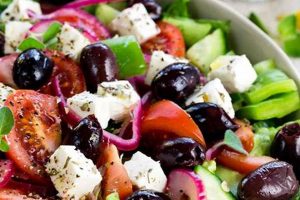
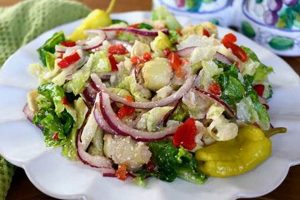
A vibrant and refreshing dish, this Middle Eastern staple typically combines finely chopped vegetables like tomatoes, cucumbers, parsley, mint, and onions. Often, it also includes romaine lettuce and is dressed with a lemon-sumac vinaigrette. Variations might incorporate other ingredients like purslane, green peppers, or chopped radish. A simple yet flavorful combination, it serves as a light meal or a complement to grilled meats and other dishes.
The bright, acidic flavors offer a palate-cleansing counterpoint to richer foods, while the fresh ingredients contribute vitamins and antioxidants. Its prevalence throughout the Levant speaks to both its deliciousness and its adaptability to seasonal produce. This culinary tradition likely evolved over generations, reflecting the region’s agricultural heritage and its emphasis on fresh, wholesome ingredients. The balance of flavors and textures makes it a consistently popular choice.
Further exploration will delve into specific ingredient selections, variations in preparation methods, and cultural significance. Regional adaptations and nutritional information will also be addressed, providing a complete understanding of this beloved dish.
Tips for Preparing an Authentic Lebanese Salad
Achieving the distinctive flavor profile requires attention to detail and an understanding of key techniques. The following tips will guide preparation of an exceptional salad.
Tip 1: Ingredient Quality is Paramount: Select ripe, flavorful tomatoes and cucumbers. Fresh herbs should be vibrant and fragrant. Opting for high-quality olive oil and freshly squeezed lemon juice significantly impacts the final taste.
Tip 2: Knife Skills Matter: Finely dicing the vegetables ensures a pleasant texture and allows the flavors to meld. Consistent sizing creates a harmonious blend.
Tip 3: The Sumac Secret: Sumac, a tangy spice, is essential for authentic flavor. Adjust the amount according to preference, starting with a smaller quantity and adding more as needed.
Tip 4: Perfecting the Vinaigrette: Whisk the olive oil, lemon juice, sumac, and salt together thoroughly to create an emulsion. This ensures even distribution of flavor throughout the salad.
Tip 5: Timing is Key: Dress the salad just before serving to prevent the vegetables from becoming soggy. This maintains a crisp texture and vibrant appearance.
Tip 6: Embrace Freshness: Avoid pre-chopped ingredients. Chopping vegetables just prior to assembling the salad maximizes flavor and nutritional value.
Tip 7: Balance is Essential: Aim for a balance of salty, tart, and herbaceous flavors. Taste and adjust seasonings as needed to achieve the desired profile.
Adhering to these guidelines guarantees a flavorful and authentic culinary experience. The resulting salad offers a refreshing and healthy addition to any meal.
By understanding these core principles, one can appreciate the simplicity and elegance of this classic dish and its enduring appeal.
1. Fresh Ingredients

The emphasis on fresh ingredients is paramount in a Lebanese salad recipe. This commitment to quality produce elevates the dish from simple to exceptional, highlighting the bright, natural flavors inherent in each component. The selection and preparation of these ingredients significantly impact the overall taste and nutritional value.
- Produce Selection
Choosing ripe, seasonal vegetables is crucial. Tomatoes should be plump and juicy, cucumbers firm and crisp, and onions pungent yet sweet. Locally sourced produce, when available, offers peak flavor and supports regional agriculture. Careful selection ensures optimal taste and texture.
- Herb Importance
Fresh herbs like parsley and mint provide a refreshing, aromatic dimension. Their vibrant green color contributes to the visual appeal, while their distinctive flavors enhance the overall profile. Using generous amounts of freshly chopped herbs intensifies the sensory experience.
- Impact of Seasonality
While core ingredients remain constant, seasonal variations allow for creative adaptations. Incorporating ingredients like purslane in summer or adding more hearty greens in winter exemplifies the adaptability of the recipe while maintaining its essence. Embracing seasonality elevates the flavor profile and nutritional content.
- Preparation Techniques
Washing and meticulously chopping the vegetables just before serving preserves their freshness and nutritional value. Avoiding pre-cut ingredients maintains crispness and prevents oxidation. Proper handling maximizes flavor and texture, enhancing the overall quality of the salad.
The interplay of these fresh components contributes to a vibrant and flavorful salad. The emphasis on quality ingredients reflects a deep appreciation for simple, wholesome food, a hallmark of Lebanese cuisine. By prioritizing freshness, the Lebanese salad becomes more than just a side dish; it embodies a culinary tradition that values both taste and nutrition.
2. Fine Dicing
Fine dicing plays a crucial role in a Lebanese salad recipe, impacting both the texture and flavor. Uniformly small pieces ensure even distribution of the vinaigrette, allowing each bite to carry a balanced blend of ingredients. This contrasts with larger, unevenly chopped pieces where the dressing might pool or some bites lack certain elements. The increased surface area from fine dicing also allows the vegetables to release their juices, contributing to a more flavorful and vibrant salad. Imagine a salad with large chunks of tomato versus one with finely diced pieces; the latter offers a more harmonious blend of flavors and a more refined texture.
The practical significance of fine dicing extends beyond flavor enhancement. It creates a pleasant mouthfeel, making the salad easier to enjoy. This uniformity also contributes to a visually appealing presentation. Think of the delicate balance in a traditional Lebanese salad; finely diced cucumbers, tomatoes, and onions combine seamlessly with the herbs and dressing, creating a visually appealing and texturally satisfying dish. This attention to detail highlights the care taken in its preparation.
Mastering this technique elevates the overall dining experience. The careful and precise nature of fine dicing demonstrates a commitment to quality and an appreciation for the subtle nuances of flavor and texture. It transforms the salad from a simple combination of ingredients into a carefully constructed culinary creation. The seemingly simple act of dicing becomes an integral part of the recipe, contributing significantly to the overall success of the dish.
3. Lemon-Sumac Vinaigrette

Lemon-sumac vinaigrette is the defining element of a Lebanese salad, distinguishing it from other salads with similar ingredient lists. This simple yet powerful dressing provides the characteristic tartness that balances the fresh vegetables and herbs. Understanding its components and their interplay is essential to appreciating the dish’s unique flavor profile.
- Sumac’s Tangy Contribution
Sumac, a dried berry spice, delivers a distinctive tartness reminiscent of lemon but with a deeper, more complex flavor profile. Its vibrant red hue also contributes to the salad’s visual appeal. Without sumac, the salad loses its essential Lebanese identity. The spice’s tartness is crucial for cutting through the richness of the olive oil and balancing the sweetness of the vegetables.
- Lemon’s Bright Acidity
Freshly squeezed lemon juice provides a bright, invigorating acidity that complements the sumac. This citrus element adds a refreshing dimension, enhancing the overall flavor experience. Bottled lemon juice lacks the same vibrancy and can contain additives that detract from the salad’s fresh character.
- Olive Oil’s Richness
Extra virgin olive oil provides a rich, fruity base for the vinaigrette, coating the vegetables and carrying the flavors of the sumac and lemon. Its quality significantly impacts the overall taste; opting for a high-quality olive oil elevates the entire dish. The olive oil’s texture also contributes to the salad’s mouthfeel, creating a smooth, luxurious experience.
- Balancing Flavors
The precise balance of lemon, sumac, and olive oil is crucial. Too much lemon can overpower the other flavors, while insufficient sumac diminishes the characteristic tartness. Careful attention to proportions ensures a harmonious blend where each element complements the others.
The interplay of these ingredients creates a vibrant and balanced dressing that elevates the Lebanese salad beyond a simple combination of vegetables. The lemon-sumac vinaigrette provides the essential link, tying together the fresh ingredients and transforming them into a cohesive and flavorful culinary experience. It is this distinctive dressing that truly defines the Lebanese salad.
4. Balance of Flavors

Balance of flavors is fundamental to a successful Lebanese salad recipe. It distinguishes a well-executed salad from a mere collection of ingredients. This balance is not accidental; its a carefully orchestrated interplay of contrasting yet complementary tastes, each element contributing to the overall harmony of the dish. Achieving this balance requires careful consideration of the ingredients and their proportions within the salad.
- Tartness
The primary source of tartness comes from the lemon juice and sumac in the vinaigrette. This tartness provides a refreshing counterpoint to the other flavors, cutting through the richness of the olive oil and preventing the salad from tasting bland. Consider how a squeeze of lemon brightens a dish; similarly, the tartness in a Lebanese salad enlivens the palate and prepares it for the next layer of flavor.
- Freshness
The fresh herbstypically parsley and mintcontribute a cooling, herbaceous element. Their aromatic oils provide a refreshing contrast to the tartness of the dressing and the sweetness of the vegetables. Imagine the invigorating scent of freshly cut mint; this freshness is integral to the salad’s overall balance.
- Sweetness
Ripe tomatoes and cucumbers offer a subtle sweetness that balances the tartness and herbaceous notes. The sweetness should be nuanced, not overpowering. Think of the delicate sweetness of a perfectly ripe tomato; this natural sweetness adds depth and complexity to the salad.
- Saltiness
A pinch of salt enhances the other flavors, bringing them into focus and preventing the salad from tasting flat. The saltiness should be subtle, acting as a supporting player rather than a dominant force. Consider how a touch of salt elevates the flavor of a simple dish; similarly, it enhances the overall balance in the Lebanese salad.
The successful interplay of these four elementstartness, freshness, sweetness, and saltinessdefines the balance of flavors in a Lebanese salad. Each element plays a distinct role, contributing to the overall harmony and ensuring a refreshing, flavorful experience. A well-balanced Lebanese salad offers a complex yet refreshing flavor profile, highlighting the quality of the individual ingredients and the skill of the preparer. It exemplifies the culinary principle that the whole is greater than the sum of its parts.
5. Simple Preparation
The simplicity of preparation is a defining characteristic of a Lebanese salad recipe. This ease of assembly contributes to its widespread popularity, making it an accessible and appealing dish for both novice and experienced cooks. Understanding the elements that contribute to this simplicity reveals a deeper appreciation for the salad’s inherent elegance. It highlights the focus on fresh, high-quality ingredients where minimal intervention is required to create a flavorful and satisfying dish.
- Minimal Processing
The recipe relies primarily on fresh, raw ingredients, minimizing the need for extensive cooking or processing. Washing, chopping, and combining the components constitute the majority of the preparation. This streamlined approach contrasts with more complex salads involving cooked or marinated elements. The emphasis on raw ingredients preserves their natural flavors and nutritional value, showcasing the inherent quality of the produce.
- Basic Techniques
The required culinary techniques are fundamental: chopping vegetables and whisking a simple vinaigrette. Specialized equipment or advanced skills are unnecessary, making the recipe accessible to a broad range of individuals. This simplicity empowers anyone to create a delicious and authentic Lebanese salad, regardless of their culinary background.
- Time Efficiency
The salad can be assembled in minutes, making it an ideal choice for busy weeknights or impromptu gatherings. The quick preparation time contrasts with more labor-intensive dishes, allowing cooks to focus on other aspects of the meal. This efficiency contributes to the salad’s practicality and appeal in modern life.
- Adaptability
The recipe’s simplicity allows for easy adaptation based on available ingredients and personal preferences. While core components remain constant, variations in herbs or the addition of other vegetables allow for customization without compromising the essence of the dish. This adaptability makes the Lebanese salad a versatile and adaptable option for diverse culinary contexts.
The simplicity of preparation enhances the Lebanese salad’s appeal as a refreshing, healthy, and accessible dish. It exemplifies the culinary principle that simple, fresh ingredients, treated with respect, can create a dish that is both delicious and elegant. This ease of preparation contributes to its enduring popularity, making it a staple in Lebanese cuisine and a beloved dish worldwide.
6. Versatile Accompaniment

The Lebanese salad’s versatility as an accompaniment stems from its refreshing character and balanced flavor profile. The bright acidity of the lemon-sumac vinaigrette cuts through richer dishes, cleansing the palate and enhancing the overall dining experience. Consider its role alongside grilled meats, where the salad’s lightness contrasts with the meat’s richness. Similarly, when paired with heavier dishes like kibbeh or stuffed grape leaves, the salad offers a refreshing counterpoint, preventing palate fatigue. This adaptability extends to its inclusion in mezze platters, where it provides a vibrant contrast in both flavor and texture among various dips, cheeses, and other small dishes. This versatility makes it a valuable component in a wide range of culinary contexts.
This adaptability isn’t limited to Lebanese cuisine; the salad complements dishes from other culinary traditions as well. Imagine it alongside grilled fish, roasted vegetables, or even alongside heartier fare like stews. Its refreshing qualities make it a welcome addition, enhancing the flavors of the accompanying dish without overpowering them. This broad appeal contributes to its widespread popularity, both within and beyond its cultural origins. Its ability to seamlessly integrate into various meal structures underscores its practical value as a versatile culinary component.
Understanding the Lebanese salad’s role as a versatile accompaniment unlocks its full potential within a meal. It allows for creative pairings and enhances the overall dining experience. The salad transcends its function as a mere side dish; it becomes an integral part of the culinary narrative, contributing balance, freshness, and a vibrant element to a wide range of dishes. Its adaptability reflects a broader culinary trend towards lighter, healthier accompaniments that complement, rather than compete with, the main course.
Frequently Asked Questions
This section addresses common inquiries regarding Lebanese salad preparation, offering clarity and practical guidance.
Question 1: Can iceberg lettuce be substituted for romaine?
While iceberg lettuce offers a crisp texture, it lacks the flavor depth of romaine. Romaine’s slightly bitter notes complement the other ingredients, contributing to a more balanced flavor profile. While substitution is possible, it’s not recommended for an authentic experience.
Question 2: Is sumac essential? What can be used as a substitute?
Sumac is crucial for the authentic tart flavor. Lemon zest can offer a hint of similar citrus notes but won’t fully replicate sumac’s complexity. While other spices might provide tartness, they will alter the flavor profile significantly. Sumac is highly recommended for an authentic taste.
Question 3: How long can the salad be stored?
Ideally, the salad should be consumed immediately after preparation to maintain optimal freshness and texture. Storing it, even briefly, can cause the vegetables to release moisture, leading to a less crisp and vibrant salad. If storage is unavoidable, dress the salad just before serving.
Question 4: Can other vegetables be added?
While traditional recipes emphasize a specific set of vegetables, regional variations often incorporate additions like chopped radish, green bell peppers, or purslane. These additions can complement the core ingredients without compromising the salad’s essence. However, maintaining a balance of flavors and textures remains essential.
Question 5: What type of olive oil is recommended?
Extra virgin olive oil is preferred for its robust flavor and health benefits. Its fruity notes complement the other ingredients, while its rich texture enhances the salad’s mouthfeel. Lower quality olive oils may lack the same depth of flavor and can negatively impact the overall taste.
Question 6: Can dried herbs be used in place of fresh herbs?
Fresh herbs are essential for the vibrant flavor and aroma characteristic of Lebanese salad. Dried herbs lack the same intensity and can result in a duller, less refreshing taste. While dried herbs can be used in a pinch, they are not recommended for an authentic culinary experience.
These responses clarify common points of confusion, ensuring successful preparation and enjoyment of this culinary classic. Careful attention to these details elevates the final product, delivering a truly authentic and satisfying experience.
This comprehensive guide provides all the information needed to prepare a delicious and authentic Lebanese salad. Exploring this recipe allows one to appreciate the rich culinary heritage of the Levant region and the simple elegance of its cuisine.
Lebanese Salad Recipe
Exploration of a Lebanese salad recipe reveals more than a simple list of ingredients; it unveils a culinary tradition rooted in fresh, high-quality produce and a delicate balance of flavors. From the careful selection of ripe tomatoes and cucumbers to the precise dicing that ensures optimal texture and flavor infusion, each step contributes to the final product. The lemon-sumac vinaigrette, the hallmark of this dish, provides a distinctive tartness that balances the sweetness of the vegetables and the herbaceous notes of parsley and mint. The simplicity of preparation belies the complexity of flavors achieved through this harmonious blend of ingredients. Its versatility as an accompaniment to grilled meats, falafel, or as a standalone light meal further underscores its value in a diverse culinary landscape.
The enduring popularity of this salad speaks to its refreshing nature, nutritional value, and adaptability. Further exploration of regional variations and culinary pairings promises to deepen appreciation for this classic dish and its significance within Lebanese cuisine. Continued experimentation with seasonal ingredients allows for ongoing discovery of new flavor dimensions within this timeless recipe. Ultimately, a Lebanese salad recipe represents more than just a dish; it embodies a culinary philosophy centered around fresh ingredients, balanced flavors, and simple elegance.