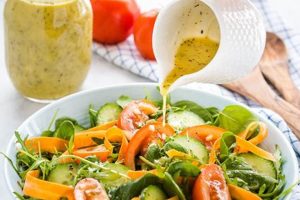
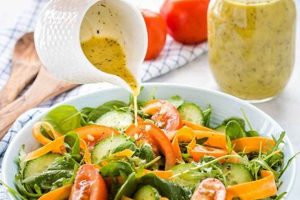
A classic emulsion of oil, vinegar, and seasonings, this type of dressing typically features extra virgin olive oil as its base, combined with a vinegar such as red wine vinegar, white wine vinegar, or balsamic vinegar. Flavor complexity is often achieved through the addition of ingredients like garlic, Dijon mustard, oregano, basil, salt, and black pepper. Variations can include sweeteners like honey or sugar, and other additions like lemon juice or zest.
This blend of readily available ingredients delivers a bright, tangy counterpoint to the flavors of fresh vegetables, making it a versatile choice for various salads. Its simplicity allows for easy customization to individual preferences, while its relatively low calorie and fat content compared to creamy dressings contribute to its appeal for health-conscious individuals. The enduring popularity of this dressing can be attributed to its refreshing taste profile and its place in culinary history as a staple condiment.
This article will delve further into the components of a successful emulsion, explore regional variations and their unique flavor profiles, and offer step-by-step guidance on creating the perfect homemade version, along with suggestions for pairing it with different salad ingredients.
Tips for Crafting an Exceptional Vinaigrette
Achieving a balanced and flavorful vinaigrette requires attention to detail and an understanding of the interplay between ingredients. These tips offer guidance for elevating a basic recipe to something extraordinary.
Tip 1: Use High-Quality Ingredients. The foundation of any good vinaigrette lies in the quality of its components. Opt for extra virgin olive oil with a robust flavor profile and a vinegar that complements the intended salad. Freshly ground pepper and high-quality salt are essential.
Tip 2: Balance Acidity. The ratio of oil to vinegar significantly impacts the final taste. A standard ratio is 3:1, but this can be adjusted based on the vinegar’s strength and personal preference. Taste and adjust accordingly, adding more oil to mellow the acidity or more vinegar for a sharper tang.
Tip 3: Emulsify Thoroughly. Proper emulsification creates a smooth, cohesive dressing that clings to salad greens. Whisk the ingredients vigorously or use a blender or food processor for a more stable emulsion.
Tip 4: Enhance with Flavorful Additions. A simple vinaigrette can be transformed with additions like minced garlic, Dijon mustard, chopped fresh herbs (such as oregano, basil, or thyme), or a pinch of red pepper flakes.
Tip 5: Taste and Adjust. Before dressing the salad, taste the vinaigrette and adjust the seasoning as needed. This allows for fine-tuning the balance of flavors and ensuring the dressing complements the other ingredients.
Tip 6: Store Properly. Leftover vinaigrette can be stored in an airtight container in the refrigerator for several days. Shake or whisk well before using, as the ingredients may separate over time.
Tip 7: Consider the Salad Ingredients. The ideal vinaigrette complements the flavors of the salad itself. A lighter vinaigrette is often preferred for delicate greens, while a more robust dressing can stand up to heartier ingredients.
By following these guidelines, one can consistently create a vinaigrette that enhances the overall dining experience. From selecting premium ingredients to balancing flavors and achieving proper emulsification, attention to detail yields exceptional results.
These tips provide a foundation for exploring the versatility of vinaigrettes and crafting personalized variations that cater to individual tastes and complement a wide array of culinary creations. The following section will conclude with some final thoughts on the importance of mastering this culinary staple.
1. High-quality olive oil

High-quality olive oil is paramount to crafting an authentic and flavorful Italian vinaigrette. Its contribution extends beyond mere texture; the oil forms the foundation of the dressing, influencing taste, aroma, and overall quality. Understanding the characteristics and impact of high-quality olive oil is essential for creating a superior vinaigrette.
- Flavor Profile
Extra virgin olive oil, the highest quality available, boasts a complex flavor profile ranging from fruity and peppery to grassy and herbaceous. These nuanced flavors directly impact the vinaigrette’s taste, offering a depth and complexity not achievable with lower-quality oils. For instance, a Tuscan olive oil with peppery notes can add a distinctive bite to the dressing, while a Sicilian oil might offer a milder, fruitier flavor. Selecting an oil with the right flavor profile is crucial for achieving the desired outcome.
- Acidity Level
Acidity is a critical factor in olive oil quality. High-quality extra virgin olive oil has a low acidity level, typically less than 0.8%. This low acidity contributes to a smoother, less harsh taste in the vinaigrette. Higher acidity oils can introduce an unpleasant sharpness, detracting from the overall balance of the dressing.
- Aroma
The aroma of olive oil plays a significant role in the sensory experience of the vinaigrette. High-quality olive oils possess fragrant aromas that complement the other ingredients. These aromas, ranging from fruity and floral to grassy and herbaceous, enhance the overall appeal of the dressing. The aromatic complexity of the olive oil contributes to a more immersive and enjoyable dining experience.
- Health Benefits
Beyond flavor and aroma, high-quality extra virgin olive oil offers potential health benefits due to its high concentration of monounsaturated fats and antioxidants. Incorporating such an oil into a vinaigrette contributes not only to taste but also to potential nutritional value. This aspect further distinguishes high-quality olive oil as a preferred ingredient.
The selection of high-quality olive oil elevates the Italian vinaigrette from a simple condiment to a culinary experience. The oil’s flavor profile, acidity, aroma, and potential health benefits contribute significantly to the overall quality and enjoyment of the dressing. Investing in high-quality olive oil is an investment in the final dish, ensuring a superior taste and a more satisfying culinary creation.
2. Authentic Vinegar Choices
Vinegar selection significantly influences an Italian vinaigrette’s authenticity and flavor profile. Specific vinegars offer distinct characteristics that complement the other ingredients, contributing to the dressing’s overall balance and complexity. Understanding these nuances allows for informed choices that enhance the culinary experience.
Red Wine Vinegar: Derived from fermented red wine, this vinegar provides a robust, fruity, and slightly tart flavor. Its depth complements heartier salad ingredients like roasted vegetables or bolder greens. A Chianti red wine vinegar, for example, can add a subtle cherry note to the vinaigrette. This choice provides a balanced acidity that harmonizes with the olive oil and herbs.
White Wine Vinegar: Made from fermented white wine, white wine vinegar offers a lighter, crisper, and more delicate acidity compared to red wine vinegar. This makes it ideal for salads featuring lighter greens, such as spring mix or Bibb lettuce. A Pinot Grigio white wine vinegar, for example, might lend a subtle apple or pear note, enhancing the salad’s freshness without overpowering delicate flavors.
Balsamic Vinegar: Originating from Modena, Italy, balsamic vinegar offers a complex sweet and tangy flavor profile due to its aging process. Traditional balsamic vinegar, aged for years in wooden barrels, possesses a rich, syrupy consistency and a more pronounced sweetness. It’s often used sparingly as a finishing touch, drizzled over the salad after the vinaigrette has been tossed. A younger balsamic vinegar, while less complex, still adds a pleasant sweetness and tang to the dressing. This choice requires careful balancing with other ingredients to avoid excessive sweetness.
Choosing the appropriate vinegar requires consideration of the other salad ingredients. A robust red wine vinegar might overpower delicate greens, while a light white wine vinegar might not complement a salad with heartier components. Balsamic vinegar, with its pronounced sweetness, requires careful balancing to avoid overwhelming other flavors. Understanding these relationships allows for a more harmonious and flavorful salad experience. The choice of vinegar offers an opportunity to create a vinaigrette tailored to specific flavor profiles and desired outcomes.
3. Fresh Herbs and Aromatics
Fresh herbs and aromatics play a crucial role in elevating an Italian vinaigrette beyond a simple mixture of oil and vinegar. These ingredients contribute layers of flavor and aroma, transforming the dressing into a vibrant and complex culinary element. Their careful selection and application are essential for achieving a truly authentic and satisfying Italian vinaigrette.
- The Foundation: Oregano and Basil
Oregano and basil serve as foundational herbs in many Italian vinaigrettes. Oregano contributes a slightly peppery, earthy note, while basil offers a sweet, slightly anise-like flavor. These herbs work synergistically, providing a balanced herbal base that complements the acidity of the vinegar and the richness of the olive oil. The quantity of each herb can be adjusted to achieve the desired balance, with some recipes favoring a more prominent oregano presence and others highlighting the sweetness of basil.
- Enhancing Complexity: Parsley and Thyme
While oregano and basil often take center stage, parsley and thyme can add further complexity to the vinaigrette. Parsley contributes a fresh, slightly grassy flavor, while thyme offers a more subtle, earthy note with hints of citrus. These herbs are typically used in smaller quantities than oregano and basil, acting as supporting players that enhance the overall aromatic profile. For example, a touch of thyme can add a subtle layer of complexity to a vinaigrette intended for roasted vegetables.
- The Aromatic Powerhouse: Garlic
Garlic, a pungent aromatic, contributes a distinctive savory depth to Italian vinaigrettes. Its intensity can be adjusted based on personal preference, ranging from a subtle hint to a more pronounced presence. Minced garlic is commonly used, allowing its flavor to permeate the dressing. Roasting the garlic before adding it to the vinaigrette mellows its sharpness and imparts a sweeter, nuttier flavor. This technique adds a layer of complexity not achievable with raw garlic.
- Balancing Heat: Red Pepper Flakes
A pinch of red pepper flakes introduces a subtle heat that balances the other flavors in the vinaigrette. This addition is not traditional in all Italian vinaigrettes but provides a welcome dimension for those who appreciate a touch of spice. The amount of red pepper flakes can be adjusted to control the level of heat, ranging from a gentle warmth to a more pronounced spiciness. This element adds a dynamic contrast to the sweetness of the basil and the earthiness of the oregano.
The interplay of fresh herbs and aromatics is essential for crafting a truly exceptional Italian vinaigrette. The foundational herbs provide a balanced base, while additional herbs and aromatics add layers of complexity and depth. The careful selection and combination of these ingredients elevate the vinaigrette from a simple condiment to a key component of the culinary experience, enhancing the flavors of the salad and providing a truly satisfying sensory experience.
4. Precise Balancing of Flavors
Precise balancing of flavors is paramount in crafting a successful Italian vinaigrette. This delicate equilibrium dictates the dressing’s overall character, ensuring the individual components harmonize rather than compete. The interplay of acidity, sweetness, oiliness, and herbaceousness determines the final taste profile. A harmonious vinaigrette allows the flavors of the salad ingredients to shine through, complementing rather than masking them. Disproportionate elements can lead to a dressing that is overly acidic, excessively sweet, or blandly oily. The goal is to achieve a symphony of flavors, where each element contributes to a unified and pleasurable whole.
Consider the balance between oil and vinegar. A classic ratio of 3:1 (oil to vinegar) often serves as a starting point. However, the specific type of vinegar influences this ratio. A robust red wine vinegar might require slightly more oil to temper its acidity, while a milder white wine vinegar might allow for a higher proportion of vinegar. The desired outcome influences the balance: a tangier vinaigrette requires a higher vinegar ratio, whereas a mellower dressing necessitates a greater proportion of oil. Further complexity arises from the incorporation of other ingredients. The sweetness of balsamic vinegar, for instance, requires careful balancing to avoid overwhelming the other flavors. A touch of sweetness might complement a salad with roasted vegetables, but excessive sweetness could clash with the delicate flavors of fresh greens. Similarly, the pungency of garlic or the heat of red pepper flakes require careful consideration to ensure they enhance rather than dominate the overall taste profile.
Mastering the art of precise balancing transforms an Italian vinaigrette from a simple condiment to a nuanced culinary creation. This precision enhances the sensory experience of the salad, allowing the individual flavors to shine through while contributing to a unified and harmonious whole. Understanding the interplay of these elements provides a foundation for crafting vinaigrettes tailored to specific salads and personal preferences, elevating the simple act of dressing a salad to an art form.
5. Proper Emulsification Technique

Proper emulsification is crucial for the texture and stability of an Italian vinaigrette salad dressing. Emulsification refers to the process of combining two immiscible liquids, in this case, oil and vinegar, into a stable mixture. Without proper emulsification, the vinaigrette will separate quickly, resulting in an oily layer on top and a watery layer below, delivering an uneven distribution of flavor when applied to a salad. A properly emulsified vinaigrette possesses a smooth, creamy texture that clings evenly to salad greens, ensuring each bite receives a balanced flavor profile. This cohesion contributes to a more satisfying sensory experience and allows the nuanced flavors of the herbs, aromatics, and other ingredients to be fully appreciated.
Several methods achieve emulsification in a vinaigrette. Whisking vigorously by hand creates a temporary emulsion, sufficient for immediate use. For a more stable emulsion, a blender or food processor provides greater shearing force, breaking down the oil into smaller droplets that disperse more readily in the vinegar. An emulsifying agent, such as Dijon mustard, can further enhance stability. The mustard contains lecithin, a natural emulsifier that helps bind the oil and vinegar together, preventing separation. The addition of Dijon mustard also contributes a subtle tangy flavor that complements the other ingredients. The choice of method depends on the desired texture and the time available. A quickly whisked vinaigrette will have a slightly looser texture, while a blender-emulsified dressing will be thicker and more stable.
The practical significance of understanding proper emulsification extends beyond immediate enjoyment. A stable emulsion prevents the need for constant re-whisking or shaking before serving, ensuring a consistently pleasant dining experience. Furthermore, proper emulsification improves the visual appeal of the vinaigrette, contributing to a more elegant presentation. A smooth, creamy dressing enhances the aesthetic value of the salad, creating a more appetizing dish. The ability to achieve a stable and visually appealing vinaigrette demonstrates culinary skill and attention to detail. This mastery elevates the perceived quality of the dish, transforming a simple salad into a more refined culinary creation.
6. Appropriate Seasoning Levels
Appropriate seasoning is fundamental to a successful Italian vinaigrette. It directly impacts the balance and overall enjoyment of the dressing, influencing how its other components interact and how it complements the salad ingredients. Seasoning is not merely an afterthought; it is an integral step that requires careful consideration and precise execution.
- Salt’s Role Beyond Flavor Enhancement
Salt’s impact extends beyond simply making the vinaigrette taste salty. It amplifies the inherent flavors of the other ingredients, allowing the sweetness of balsamic vinegar, the herbaceousness of oregano, and the pungency of garlic to become more pronounced. Salt also plays a crucial role in balancing acidity. It tempers the sharpness of the vinegar, creating a more harmonious flavor profile. The type of salt used can also subtly influence the taste. Sea salt, for instance, can offer a more complex flavor compared to standard table salt. Kosher salt, with its larger crystals, is preferred by some for its ease of use and consistent results.
- Black Pepper’s Contribution to Complexity
Freshly ground black pepper adds a layer of complexity to the vinaigrette, introducing a subtle spice and depth that complements the other flavors. Pre-ground pepper often lacks the vibrancy and aromatic intensity of freshly ground peppercorns. The type of peppercorn used can further influence the taste. Black peppercorns offer a classic, robust flavor, while white peppercorns provide a milder, earthier alternative. Some recipes might call for a specific type of peppercorn to complement the other ingredients. For example, a vinaigrette featuring lemon zest might benefit from the brighter flavor of white pepper.
- Balancing Sweetness and Acidity
The interplay of sweetness and acidity in an Italian vinaigrette requires careful management. If balsamic vinegar is used, its inherent sweetness necessitates adjustments in the other seasonings. A touch of salt might be needed to balance the sweetness, preventing it from becoming cloying. Similarly, the acidity of the vinegar requires careful consideration. Too much acidity can make the dressing harsh, while too little can result in a bland, oily mixture. The goal is to achieve a harmonious balance where the sweetness and acidity complement each other, creating a vibrant and refreshing flavor profile.
- The Importance of Gradual Incorporation and Tasting
Seasoning an Italian vinaigrette is a gradual process. Start with a small amount of salt and pepper, taste, and adjust accordingly. Adding seasonings incrementally allows for greater control over the final flavor profile and prevents over-seasoning, which can be difficult to correct. Tasting throughout the process is crucial. This allows for real-time adjustments, ensuring the final vinaigrette achieves the desired balance of flavors. Regular tasting also helps develop a more nuanced understanding of how different seasonings interact and how they influence the overall taste of the dressing.
Appropriate seasoning elevates the Italian vinaigrette, ensuring its components work harmoniously together. It highlights the nuances of the other ingredients, balancing the acidity, sweetness, and herbaceous notes to create a cohesive and flavorful dressing. The careful application of seasonings underscores the importance of this seemingly simple step in achieving a truly exceptional vinaigrette.
7. Complementary Ingredient Pairings

The success of an Italian vinaigrette hinges on its harmonious interaction with the salad’s other components. Complementary ingredient pairings elevate the dish beyond a simple combination of ingredients, creating a synergistic culinary experience where the vinaigrette enhances the flavors of the salad, and vice-versa. Careful consideration of these pairings ensures a balanced and enjoyable meal, transforming a simple salad into a sophisticated culinary creation.
Consider the impact of the vinaigrette on various salad components. Delicate greens, such as butter lettuce or spinach, benefit from a lighter vinaigrette with a higher oil-to-vinegar ratio. The milder acidity prevents the delicate leaves from wilting and allows their subtle flavors to shine. A robust vinaigrette, on the other hand, complements heartier greens like kale or romaine. The stronger acidity provides a necessary counterpoint to the robust flavors of these greens. Roasted vegetables, with their caramelized sweetness and earthy notes, pair well with a vinaigrette featuring balsamic vinegar. The sweetness of the balsamic complements the caramelization, while the acidity cuts through the richness of the roasted vegetables. Examples include pairing a balsamic vinaigrette with roasted beets and goat cheese, or a lemon vinaigrette with grilled chicken and artichoke hearts. The vinaigrette’s acidity balances the richness of the chicken and artichoke, while the lemon zest provides a bright, citrusy counterpoint.
Understanding these relationships allows one to create targeted flavor profiles tailored to specific ingredients. This knowledge enables informed decisions regarding the type of vinegar, the herbs and aromatics, and the overall balance of flavors in the vinaigrette. Challenges arise when pairings clash. An overly acidic vinaigrette can overwhelm delicate greens, while a bland vinaigrette fails to complement the robust flavors of roasted vegetables or grilled meats. Successfully navigating these pairings requires attention to detail and a nuanced understanding of flavor interactions. The practical significance of this knowledge lies in the ability to create balanced, flavorful salads that offer a more satisfying and enjoyable culinary experience. This understanding transforms the act of making a salad from a simple assembly of ingredients to a thoughtful exploration of flavor pairings, demonstrating culinary expertise and elevating the overall dining experience.
Frequently Asked Questions
This section addresses common inquiries regarding Italian vinaigrette salad dressing recipes, offering concise and informative responses.
Question 1: What distinguishes an Italian vinaigrette from other vinaigrettes?
Italian vinaigrettes typically feature extra virgin olive oil, a choice of vinegar (red wine, white wine, or balsamic), and a blend of herbs and aromatics such as oregano, basil, and garlic. These core ingredients create a distinctive flavor profile associated with Italian cuisine.
Question 2: Can sugar be added to an Italian vinaigrette?
While not traditional, a small amount of sugar or honey can be added to balance the acidity, especially when using a particularly tart vinegar. However, excessive sweetness should be avoided as it can mask the other flavors.
Question 3: How long can homemade Italian vinaigrette be stored?
Stored in an airtight container in the refrigerator, homemade Italian vinaigrette typically lasts for up to one week. Separation may occur; shaking well before use recombines the ingredients.
Question 4: Must Dijon mustard always be included?
Dijon mustard acts as an emulsifier, contributing to a smoother, more stable dressing. While not strictly mandatory, its inclusion improves texture and adds a subtle tangy complexity.
Question 5: What are ideal salad pairings for Italian vinaigrette?
Italian vinaigrette complements a variety of salads, from simple green salads with tomatoes and cucumbers to more complex compositions featuring roasted vegetables, grilled chicken, or seafood. Consider the intensity of the vinaigrette when selecting pairings.
Question 6: How can one adjust the vinaigrette’s acidity?
The ratio of oil to vinegar directly influences acidity. Increase the amount of oil for a milder vinaigrette, or increase the vinegar for a sharper tang. Tasting and adjusting is crucial for achieving the desired balance.
Understanding these frequently asked questions facilitates successful preparation and enjoyment of Italian vinaigrette, allowing for greater control over flavor profiles and ensuring a consistently positive culinary experience.
The following section will explore regional variations of Italian vinaigrette, delving into the unique characteristics and ingredients that define each style.
Italian Vinaigrette Salad Dressing Recipe
This exploration of Italian vinaigrette salad dressing recipes has highlighted the essential components and techniques that contribute to its enduring appeal. From the selection of high-quality olive oil and authentic vinegars to the precise balancing of flavors and proper emulsification techniques, each step plays a crucial role in the final outcome. The incorporation of fresh herbs and aromatics adds depth and complexity, while appropriate seasoning levels ensure a harmonious balance. Understanding complementary ingredient pairings further elevates the dining experience, allowing the vinaigrette to enhance the flavors of the salad ingredients. This comprehensive overview has provided a framework for crafting exceptional vinaigrettes tailored to individual preferences and specific culinary creations.
Mastery of Italian vinaigrette preparation empowers culinary enthusiasts to create flavorful and versatile dressings that elevate everyday salads to new heights. Further experimentation with regional variations and personalized ingredient combinations offers continued opportunities for culinary discovery and innovation. This seemingly simple dressing provides a canvas for creative expression, inviting exploration and a deeper appreciation for the nuanced interplay of flavors that define exceptional cuisine.