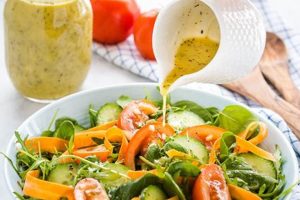
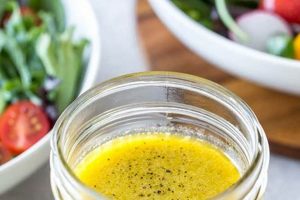
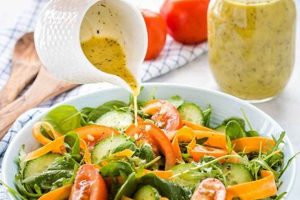
A vibrant and flavorful condiment for salads, this culinary creation typically blends miso paste, ginger, a sweetener like honey or maple syrup, rice vinegar, and an oil such as sesame or neutral vegetable oil. Variations may include additional ingredients like garlic, chili flakes, or citrus juice to further enhance the flavor profile. A well-balanced dressing offers a compelling mix of umami from the miso, a spicy kick from the ginger, sweetness, and acidity. An example might include white miso paste whisked with grated fresh ginger, honey, rice vinegar, and sesame oil.
The popularity of this dressing stems from its versatility and health benefits. Miso, a fermented soybean paste, is rich in probiotics and contributes a savory depth of flavor. Ginger, known for its anti-inflammatory properties, adds a refreshing zing. The combination of these ingredients creates a dressing that not only elevates the taste of salads but also offers potential digestive and health advantages. Its adaptability makes it suitable for a wide range of greens and vegetables, from crisp lettuce to roasted root vegetables. Historically, miso and ginger have played prominent roles in Asian cuisine, and their combined use in dressings showcases a long-standing culinary tradition.
The subsequent sections will explore the various components of this dressing in detail, offer step-by-step instructions for preparation, suggest variations, and provide pairing recommendations. Understanding the core ingredients and techniques allows for customization and experimentation, empowering culinary exploration and the creation of a uniquely personalized dressing.
Tips for Crafting the Perfect Ginger Miso Salad Dressing
Achieving a well-balanced and flavorful dressing requires attention to detail and an understanding of the interplay between ingredients. The following tips offer guidance for optimal results.
Tip 1: Fresh Ginger is Key: Freshly grated ginger provides the most vibrant flavor and aroma. Avoid using powdered ginger, as it lacks the same intensity and freshness.
Tip 2: Balance Sweetness and Acidity: The ratio of sweetener (honey, maple syrup, etc.) to rice vinegar is crucial. Taste and adjust as needed to achieve the desired balance. A slightly sweeter dressing complements bitter greens, while a more tart dressing pairs well with sweeter vegetables.
Tip 3: Miso Selection Matters: Different types of miso (white, yellow, red) offer varying levels of saltiness and umami. White miso is generally milder, while red miso is more intense. Experiment to find a preferred flavor profile.
Tip 4: Emulsification is Essential: Proper emulsification ensures a smooth and creamy dressing. Whisk the ingredients vigorously or use a blender to combine thoroughly. A stable emulsion prevents separation and enhances the overall texture.
Tip 5: Taste and Adjust: Palates vary, so tasting and adjusting the dressing throughout the preparation process is essential. Adding a touch of salt, pepper, or additional spices can personalize the flavor.
Tip 6: Proper Storage: Store leftover dressing in an airtight container in the refrigerator for up to a week. The flavors will meld and deepen over time.
Tip 7: Consider Texture: Minced garlic or chili flakes can add textural complexity and depth of flavor.
By following these tips, one can create a dressing that not only enhances the flavor of salads but also offers a nuanced culinary experience. Mastery of these techniques allows for confident experimentation and the development of unique variations.
The following section will offer a comprehensive recipe, incorporating these tips for creating a perfect ginger miso salad dressing.
1. Fresh Ginger

Fresh ginger is integral to a ginger miso salad dressing recipe, contributing significantly more than mere spiciness. Its aromatic compounds, notably gingerol, zingerone, and shogaols, create a complex flavor profile that complements the umami of miso and the acidity of vinegar. Using fresh ginger, as opposed to dried or powdered forms, delivers a brighter, more pungent flavor and a pleasant textural element. This distinction becomes evident when comparing dressings made with fresh ginger versus powdered ginger; the latter often lacks the characteristic “zing” and can result in a muddy flavor profile. Consider a salad of delicate greens dressed with a ginger miso dressing. Fresh ginger provides a clean, invigorating spiciness that enhances the greens without overpowering them. Powdered ginger, conversely, might deliver a dull, earthy heat that muddies the overall flavor experience.
The practical implications of using fresh ginger extend beyond flavor. Fresh ginger contains higher concentrations of bioactive compounds associated with various health benefits. These compounds are often diminished during processing and drying. Furthermore, the textural contrast offered by finely grated or minced fresh ginger contributes to the sensory experience of the dressing. A dressing featuring fresh ginger offers a subtle textural complexity that enhances the overall enjoyment. Consider its versatility: freshly grated ginger can be adjusted to suit individual preferences for spiciness, simply by varying the amount used. This control over intensity is difficult to achieve with pre-processed forms.
In conclusion, fresh ginger is a cornerstone of a successful ginger miso salad dressing recipe. Its contribution extends beyond simple heat, encompassing aroma, texture, and even health benefits. Choosing fresh ginger ensures a dressing that is both flavorful and nuanced, reflecting a thoughtful approach to ingredient selection. Understanding this nuance underscores the importance of fresh ingredients in achieving optimal culinary results, particularly in recipes where ingredient interaction is paramount.
2. High-quality miso paste

High-quality miso paste forms the foundation of a successful ginger miso salad dressing. Miso’s complex flavor profile, derived from the fermentation of soybeans, koji (a starter culture), and often grains like rice or barley, contributes a depth of umami that distinguishes this dressing. Quality directly impacts the final product. A superior miso paste offers nuanced flavors subtle sweetness, savory depth, and a pleasant funkiness while lower-quality versions may present a one-dimensional saltiness or bitterness. This distinction becomes particularly apparent in a vinaigrette where miso plays a central role. Imagine two dressings: one made with artisanally crafted miso, fermented for an extended period, and another using a mass-produced, short-fermented counterpart. The former delivers a complex interplay of umami, sweetness, and subtle funk, enhancing the other ingredients. The latter might result in a dressing dominated by salt, masking the delicate flavors of ginger and other components.
The impact extends beyond immediate taste. High-quality miso typically contains a richer microbial diversity, a result of longer fermentation and careful production methods. This microbial richness can contribute to a more nuanced flavor and potential health benefits associated with fermented foods. For instance, a dressing made with long-fermented miso might possess a deeper, more layered flavor profile than one made with a shorter-fermented version. This complexity stems from the greater variety of microorganisms involved in the fermentation process, each contributing unique metabolic byproducts. Furthermore, the texture of the paste itself can vary depending on quality. A well-crafted miso tends to be smoother and more easily incorporated into a dressing, leading to a more homogenous emulsion. Conversely, a lower-quality miso might be gritty or difficult to dissolve, resulting in a less appealing texture.
Selecting high-quality miso is therefore a critical step in crafting a superior ginger miso salad dressing. The choice directly influences not only the flavor profile but also the overall sensory experience. Recognizing the nuances of miso quality empowers informed decisions, elevating a simple salad dressing into a culinary expression. This principle applies not just to miso, but to all ingredients; understanding their individual contributions unlocks the potential for creating truly exceptional dishes. Recognizing these nuances transforms cooking from a mechanical process into a journey of exploration and discovery, resulting in dishes that are both delicious and deeply satisfying.
3. Balanced Sweetness/Acidity

Balanced sweetness and acidity are fundamental to a successful ginger miso salad dressing. This balance not only determines the dressing’s palatability but also how it interacts with the other ingredients and the salad itself. The interplay of these two elements creates a dynamic flavor profile that elevates the overall dining experience. A well-calibrated dressing complements the inherent flavors of the salad components, enhancing rather than masking them.
- The Role of Sweeteners
Sweeteners, such as honey, maple syrup, or sugar, play a crucial role in tempering the savory and sometimes pungent notes of miso and ginger. They add a dimension of complexity and round out the flavor profile. For example, the subtle floral notes of honey can complement the earthiness of miso, while the robust sweetness of maple syrup can provide a counterpoint to the spiciness of ginger. The choice of sweetener contributes to the overall character of the dressing.
- Acidity as a Balancing Force
Acidity, typically provided by rice vinegar, mirin, or citrus juice, provides the necessary counterpoint to sweetness. It brightens the dressing, cuts through the richness of the oil, and adds a refreshing tang. Rice vinegar, for instance, lends a mild, slightly sweet acidity, while mirin contributes a more pronounced sweetness. Citrus juices, like lime or lemon, offer a sharper, more vibrant acidity. The specific acid used significantly impacts the final taste.
- Achieving Harmony: The Golden Ratio
The precise ratio of sweetness to acidity depends on personal preference and the other ingredients in the dressing. A general guideline is to start with equal parts sweetener and acid, then adjust to taste. A dressing that is too sweet can be cloying, while one that is too acidic can be sharp and unpleasant. Careful tasting and adjustment are crucial to achieving a harmonious balance. This balance can also be influenced by the inherent bitterness or sweetness of the salad ingredients themselves. A sweeter dressing might complement bitter greens, while a more tart dressing might pair better with sweeter vegetables.
- Impact on Overall Flavor Profile
The balance of sweetness and acidity significantly influences the overall flavor profile of the ginger miso dressing and its interaction with the salad. It affects how the dressing coats the leaves, how the flavors meld, and the overall sensory experience. A well-balanced dressing enhances the flavors of the salad ingredients, creating a cohesive and enjoyable culinary experience. A poorly balanced dressing, conversely, can clash with the salad, masking its delicate flavors or creating an unpleasant dissonance.
In conclusion, the interplay of sweetness and acidity is essential to creating a well-rounded and flavorful ginger miso salad dressing. Careful consideration of these elements, along with thoughtful adjustments based on the specific ingredients and personal preference, allows for a customized and delicious culinary creation. This principle extends beyond salad dressings, highlighting the crucial role of balance in achieving culinary excellence.
4. Proper Emulsification

Proper emulsification is crucial for the texture, stability, and overall sensory experience of a ginger miso salad dressing. Emulsification refers to the process of combining two immiscible liquids, such as oil and water, into a stable mixture. In the context of a ginger miso dressing, emulsification creates a creamy, homogenous texture that evenly coats salad ingredients, ensuring a consistent flavor distribution and preventing the dressing from separating.
- The Science of Emulsification
Emulsification relies on an emulsifying agent, a substance with both hydrophilic (water-loving) and lipophilic (fat-loving) properties. In a ginger miso dressing, miso paste itself acts as an emulsifier, helping to bind the oil and water-based ingredients together. The hydrophilic portion of the emulsifier interacts with the water-based ingredients (vinegar, miso, etc.), while the lipophilic portion interacts with the oil. This creates a stable mixture where tiny droplets of oil are dispersed throughout the water-based phase, preventing separation.
- Techniques for Achieving Emulsification
Several techniques facilitate proper emulsification in a ginger miso dressing. Whisking vigorously by hand creates enough shear force to disperse the oil into small droplets and encourage the emulsifier to coat them. A blender or immersion blender provides greater force and speed, resulting in a more stable and thoroughly emulsified dressing. Slowly drizzling the oil into the water-based ingredients while whisking or blending promotes even distribution and prevents the formation of large oil droplets that could destabilize the emulsion.
- Indicators of a Successful Emulsion
A successfully emulsified ginger miso dressing appears smooth, creamy, and opaque. It clings lightly to salad ingredients, providing even flavor distribution. The dressing should remain stable, without visible separation of oil and water phases, even after sitting for a short period. Conversely, a poorly emulsified dressing appears thin, watery, and may exhibit visible oil separation on the surface or at the bottom of the container. The flavors may not meld cohesively, resulting in an uneven and less satisfying sensory experience.
- Impact on Sensory Experience
Proper emulsification significantly enhances the sensory experience of a ginger miso salad dressing. The creamy texture provides a more palatable mouthfeel, contributing to the overall enjoyment of the salad. Even distribution of the dressing ensures consistent flavor with every bite. A stable emulsion also prevents the salad from becoming oily or watery, maintaining its fresh crispness and preventing a soggy texture. Consider the difference between a smooth, creamy dressing that lightly coats each leaf and a separated dressing that leaves some leaves dry while pooling oil at the bottom of the bowl. The former enhances the salad, while the latter detracts from it.
Proper emulsification is therefore essential for creating a high-quality ginger miso salad dressing. It is not merely a technical step but a crucial factor that influences the texture, stability, flavor delivery, and overall enjoyment of the dish. Mastering this technique elevates the dressing from a simple mixture of ingredients to a carefully crafted culinary creation.
5. Complementary Oils

Oil selection significantly influences the flavor profile and sensory experience of a ginger miso salad dressing. The chosen oil interacts with the other ingredients, contributing its unique characteristics to the final product. Neutral oils, such as grapeseed or avocado oil, allow the prominent flavors of miso and ginger to shine through, providing a clean canvas for the other ingredients. These oils offer a subtle, unobtrusive backdrop, allowing the nuanced flavors of the miso and ginger to take center stage. Consider a dressing where delicate white miso is the star. A neutral oil ensures the miso’s subtle sweetness and umami notes are not masked but rather enhanced.
Conversely, more flavorful oils, like toasted sesame oil, contribute their own distinct character to the dressing. Sesame oil, with its nutty, roasted aroma, adds a layer of complexity and richness. This richness can complement the savory notes of the miso and create a more robust flavor profile. Imagine a dressing intended for a heartier salad with roasted vegetables. Toasted sesame oil adds a depth of flavor that complements the caramelized vegetables and stands up to the robust flavors of the miso. However, the intensity of flavorful oils requires careful balancing; overuse can overwhelm the other delicate ingredients. A small amount of toasted sesame oil adds depth and complexity, while an excessive amount can dominate the flavor profile, masking the nuances of the miso and ginger.
The choice of oil also affects the dressing’s texture and mouthfeel. Lighter oils create a thinner, more delicate dressing, while heavier oils contribute a richer, more viscous consistency. This textural variation allows for customization based on the specific salad ingredients and desired outcome. A light and airy dressing might complement delicate greens, while a richer dressing might better suit heartier vegetables or grains. Therefore, oil selection is not merely a functional choice but an integral component of recipe development. A thoughtful approach to oil selection demonstrates an understanding of ingredient interaction and its impact on the final dish. The choice should reflect the intended flavor profile, the texture of the salad, and the overall desired sensory experience. This nuanced approach to ingredient selection elevates the ginger miso salad dressing from a simple condiment to a carefully crafted culinary creation.
6. Optional Enhancements (Garlic, Chili)

Optional enhancements, such as garlic and chili, offer opportunities to personalize and add complexity to a ginger miso salad dressing recipe. These additions introduce new dimensions of flavor and aroma, transforming the dressing from a foundational element to a nuanced culinary statement. Consider the impact of garlic: its pungent, savory notes interact with the umami of miso and the brightness of ginger, creating a deeper, more layered flavor profile. A small amount of minced garlic, incorporated into the dressing, can elevate its complexity without overpowering the core flavors. Conversely, the judicious use of chili flakes introduces a subtle heat that complements the sweetness and acidity of the dressing. This heat adds a pleasant warmth and lingering spice that enhances the overall sensory experience. The choice between fresh chilies and dried flakes offers further customization, with fresh chilies providing a brighter, more vegetal heat, and dried flakes delivering a more concentrated, intense spice.
The effectiveness of these enhancements depends on careful integration and balance. Overuse of garlic can lead to a pungent, overpowering dressing, while excessive chili can obscure the delicate interplay of sweet, sour, salty, and umami notes. A practical example illustrates this balance: a dressing intended for a delicate salad of spring greens might benefit from a single small clove of garlic, finely minced, to add a subtle savory undertone. The same dressing, if intended for a more robust salad with grilled vegetables or tofu, could accommodate a larger amount of garlic or the addition of a pinch of chili flakes to complement the bolder flavors. This adaptability highlights the importance of considering the overall flavor profile and the intended use of the dressing when incorporating optional enhancements.
Strategic use of these enhancements allows for customization and creative expression within the framework of a ginger miso salad dressing. Understanding the individual contributions of garlic and chili, as well as their interaction with the core ingredients, empowers informed choices that elevate the dressing from a simple condiment to a carefully crafted component of a complete dish. This principle of considered ingredient selection applies broadly to culinary practice, underscoring the potential for nuance and complexity within even seemingly simple recipes. The thoughtful incorporation of optional enhancements reflects a deeper understanding of flavor dynamics and the potential for culinary artistry.
7. Appropriate Storage

Appropriate storage is essential for maintaining the quality, flavor, and safety of ginger miso salad dressing. Proper storage practices prevent undesirable microbial growth, preserve the delicate balance of flavors, and maximize the dressing’s shelf life. Neglecting appropriate storage can lead to spoilage, flavor degradation, and potential health risks. The dressing’s complex interplay of ingredients, including the fermented miso paste, makes it susceptible to changes if not stored correctly. For example, exposure to air can cause oxidation, leading to off-flavors and a loss of freshness. Fluctuations in temperature can encourage microbial growth, compromising both the quality and safety of the dressing.
Storing the dressing in an airtight container in the refrigerator is crucial. The airtight seal minimizes exposure to oxygen, preserving the fresh flavors of the ginger and other ingredients. Refrigeration maintains a stable, cool temperature that inhibits microbial growth, ensuring food safety. The choice of container also matters. Glass containers are ideal as they are non-reactive and do not absorb flavors. Avoid storing the dressing in metal containers, as the acidity of the vinegar can react with the metal, imparting undesirable flavors and potentially leaching harmful substances into the dressing. Practical application demonstrates the impact of proper storage: a dressing stored correctly in a sealed glass container in the refrigerator can maintain its optimal flavor and texture for up to a week. Conversely, a dressing left exposed to air at room temperature might spoil within a day or two, developing off-flavors and an undesirable texture.
Understanding appropriate storage practices is therefore integral to maximizing the enjoyment and longevity of a ginger miso salad dressing. Correct storage preserves the carefully crafted balance of flavors, ensures food safety, and minimizes waste. This practice reflects a broader principle of culinary consciousness: respecting the ingredients and treating the final product with care. Just as careful ingredient selection and preparation contribute to a high-quality dressing, appropriate storage safeguards the investment of time and effort, ensuring a delicious and safe culinary experience.
Frequently Asked Questions
This section addresses common inquiries regarding ginger miso salad dressing preparation and utilization.
Question 1: Can dried ginger be substituted for fresh ginger?
While dried ginger can be used in a pinch, it lacks the vibrant flavor and aroma of fresh ginger. Fresh ginger is strongly recommended for optimal results. Dried ginger tends to have a more concentrated, almost medicinal flavor that can overpower the other delicate ingredients in the dressing.
Question 2: What type of miso paste is best suited for this dressing?
White (shiro) miso is generally preferred for its mild, slightly sweet flavor. Yellow (shinshu) miso offers a balanced option, while red (aka) miso, with its intense, fermented flavor, should be used sparingly as it can easily dominate the dressing.
Question 3: How long can the dressing be stored?
When stored in an airtight container in the refrigerator, the dressing can last for up to one week. The flavors may meld and deepen over time.
Question 4: Can the dressing be used for other dishes besides salads?
Absolutely. The dressings versatility extends beyond salads. It can be used as a marinade for tofu, chicken, or fish, or as a dipping sauce for vegetables or dumplings.
Question 5: How can the dressing be adjusted if it’s too sweet or too acidic?
If the dressing is too sweet, add a small amount of rice vinegar or a squeeze of lemon or lime juice. If its too acidic, add a touch more sweetener, such as honey or maple syrup.
Question 6: What are some common mistakes to avoid when making this dressing?
Common mistakes include using low-quality miso paste, overusing strong-flavored oils like toasted sesame oil, and not properly emulsifying the dressing. These errors can lead to a dressing that is unbalanced, oily, or lacks the desired flavor complexity.
Careful attention to ingredient selection, proper emulsification techniques, and appropriate storage practices are crucial for creating a successful and enjoyable ginger miso salad dressing.
This concludes the frequently asked questions section. The following section will offer concluding thoughts and summarize the key takeaways for creating and enjoying this versatile dressing.
Ginger Miso Salad Dressing Recipe
Exploration of ginger miso salad dressing recipes reveals a compelling interplay of culinary elements. Emphasis on fresh ginger underscores its aromatic vibrancy, contrasting sharply with the muted character of dried substitutes. Miso paste selection is paramount, impacting umami depth and overall flavor complexity. Balancing sweetness and acidity is crucial, dictating the dressing’s harmony and interaction with salad components. Proper emulsification ensures textural consistency and flavor distribution. Complementary oils, whether neutral or flavorful, influence both taste and mouthfeel. Optional enhancements like garlic and chili offer avenues for personalized complexity. Appropriate storage safeguards the dressing’s quality and longevity.
Ginger miso salad dressing recipes offer more than a simple condiment; they represent a nuanced culinary creation. Careful ingredient selection, thoughtful preparation, and proper storage elevate this dressing beyond mere functionality, transforming it into a testament to culinary artistry. Further exploration and experimentation promise continued evolution and refinement within this versatile culinary domain.