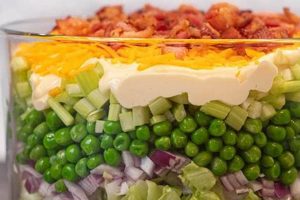
A dish featuring peas as the primary ingredient, chilled and often combined with other vegetables, seasonings, and a binding agent such as mayonnaise or vinaigrette, constitutes a chilled pea salad. The use of frozen peas offers convenience and year-round availability, eliminating the need for fresh shelling. An example includes combining thawed frozen peas with chopped celery, red onion, and a creamy dressing. Variations may incorporate bacon, cheese, or herbs.
Chilled pea salads offer a refreshing and nutritious side dish, particularly suitable for warm weather. Utilizing frozen peas ensures consistent quality and simplifies preparation. This approach to the dish likely gained popularity with the increased availability and affordability of frozen foods in the mid-20th century, offering home cooks a quick and easy way to incorporate vegetables into meals. The flexibility of this type of salad allows for customization to individual preferences and dietary needs.
The following sections will explore various aspects of preparing this versatile dish, covering ingredient selection, dressing options, and suggested variations. Additional information regarding nutritional value and serving suggestions will also be provided.
Tips for a Successful Chilled Pea Salad
Achieving a delightful chilled pea salad involves attention to detail. These tips ensure optimal texture, flavor, and overall presentation.
Tip 1: Thaw and Drain Thoroughly: Excess moisture from frozen peas can dilute the dressing and create a watery salad. Thorough thawing and draining are crucial for optimal texture and flavor. Patting peas dry with a paper towel after draining enhances this effect.
Tip 2: Balance Flavor Profiles: Consider the interplay of sweet, savory, and acidic elements. A creamy dressing complements the sweetness of peas, while a vinaigrette offers a tangy counterpoint. Incorporating ingredients like bacon or feta cheese adds savory notes.
Tip 3: Embrace Textural Variety: Combine peas with crisp vegetables such as diced celery, red onion, or chopped water chestnuts. Crumbled bacon or toasted nuts contribute a satisfying crunch.
Tip 4: Season Strategically: Fresh herbs like mint or dill enhance the bright flavors of the salad. A pinch of salt and freshly ground black pepper balances the sweetness. Avoid over-seasoning, allowing the natural flavors of the ingredients to shine through.
Tip 5: Chill Adequately: Chilling intensifies the flavors and provides a refreshing experience. Refrigerate the salad for at least 30 minutes before serving to allow the flavors to meld.
Tip 6: Consider Presentation: A visually appealing salad enhances the dining experience. Serve in an attractive bowl and garnish with fresh herbs or a sprinkle of paprika for a touch of color.
By following these suggestions, one can consistently create a chilled pea salad that is both flavorful and visually appealing, offering a refreshing and satisfying culinary experience.
These tips provide a solid foundation for crafting a successful chilled pea salad. The following section concludes with suggestions for variations and serving ideas.
1. Frozen Peas

Frozen peas serve as the foundational ingredient in a frozen pea salad recipe. Their availability, convenience, and consistent quality contribute significantly to the salad’s appeal. Understanding the characteristics of frozen peas is essential for maximizing their potential in this dish.
- Quality and Selection
The quality of frozen peas directly impacts the final salad. Opting for high-quality frozen peas, ideally those that have been flash-frozen shortly after harvesting, ensures optimal flavor, texture, and color. Avoiding packages with visible frost or ice crystals indicates proper storage and minimizes freezer burn, which can impart an unpleasant taste.
- Thawing Techniques
Proper thawing prevents mushy peas and a watery salad. Recommended methods include placing the frozen peas in a colander and rinsing them under cold water until thawed. Alternatively, allowing them to thaw overnight in the refrigerator offers a gentler approach. Avoid using warm or hot water, as this can compromise texture and flavor.
- Nutritional Value
Frozen peas retain their nutritional value remarkably well. They offer a good source of vitamins, minerals, and fiber. Their inclusion in a salad contributes to the overall nutritional profile of the dish, making it a healthy and satisfying option. This nutritional density adds value to the frozen pea salad as a meal component.
- Versatility in Recipes
Beyond their central role in the frozen pea salad, frozen peas lend themselves to a variety of culinary applications. Their adaptability allows for incorporation into soups, stews, stir-fries, and other dishes, showcasing their versatility as a kitchen staple. This adaptability highlights the broader culinary potential of this simple ingredient.
The selection, handling, and inherent qualities of frozen peas directly influence the success of a frozen pea salad recipe. Understanding these aspects allows for informed choices that contribute to a flavorful, visually appealing, and nutritious dish. From the initial selection to the final presentation, the role of frozen peas remains pivotal in creating a satisfying culinary experience.
2. Thawing

Thawing, a critical step in preparing a frozen pea salad, directly impacts the final dish’s texture, flavor, and overall appeal. Incorrect thawing methods can result in mushy peas, excess water, and a diluted dressing, compromising the salad’s quality. Conversely, proper thawing preserves the peas’ vibrant green color, maintains their firm texture, and prevents the salad from becoming watery.
Several thawing techniques exist, each with its own implications. Rapid thawing under warm running water, while seemingly efficient, can lead to uneven thawing and a loss of texture. Microwaving, another quick method, often results in partially cooked peas, affecting both taste and texture. The preferred methods, yielding optimal results, involve either gradual thawing in the refrigerator overnight or placing the frozen peas in a colander and rinsing under cold water until thawed. These approaches ensure even thawing while preserving the peas’ structural integrity.
For instance, consider two scenarios: In the first, frozen peas are thawed quickly under hot water. The result is a mushy texture and a bland flavor. In the second, peas are thawed gradually in the refrigerator. The peas retain their firmness and sweetness, contributing positively to the salads overall quality. This comparison underscores the importance of proper thawing techniques.
The practical significance of understanding proper thawing techniques extends beyond simply avoiding a watery salad. It contributes to a more enjoyable culinary experience by maximizing the peas inherent qualities. The correct thawing process unlocks the full potential of this versatile ingredient, ensuring a delightful and satisfying frozen pea salad. Neglecting this crucial step can compromise the entire dish, highlighting its essential role in the recipe’s success.
3. Complementary Ingredients

Complementary ingredients elevate a frozen pea salad from simple to sophisticated. Their strategic inclusion enhances texture, introduces contrasting flavors, and contributes visual appeal. These ingredients interact with the sweetness of peas, creating a balanced and harmonious culinary experience. Careful consideration of flavor profiles, textural contrasts, and color combinations are essential in ingredient selection.
Crisp vegetables offer textural contrast to the soft peas. Celery, red onion, and chopped bell peppers introduce a refreshing crunch. The slight bitterness of red onion, for example, offsets the sweetness of the peas, creating a balanced flavor profile. Incorporating ingredients like bacon or feta cheese introduces savory notes and salty complexity. The salty, smoky flavor of bacon complements the sweetness of peas, while feta cheese contributes a creamy, tangy element. Fresh herbs, such as mint, dill, or parsley, impart bright, aromatic notes, enhancing the overall freshness of the salad. A simple vinaigrette, incorporating lemon juice or vinegar, provides acidity, balancing the sweetness and creating a refreshing counterpoint. Chopped walnuts or pecans offer a satisfying crunch and nutty flavor.
Consider a frozen pea salad with chopped celery, red onion, crumbled bacon, and a lemon vinaigrette. The celery and red onion provide contrasting textures, the bacon introduces a savory element, and the vinaigrette offers a tangy counterpoint to the sweetness of the peas. This combination exemplifies the synergistic effect of complementary ingredients. Conversely, a salad consisting solely of peas and mayonnaise, while palatable, lacks the complexity and depth of flavor achieved through the incorporation of carefully chosen complementary ingredients.
Understanding the role of complementary ingredients in a frozen pea salad allows for informed choices that maximize flavor, texture, and visual appeal. This understanding allows for the creation of a dish that transcends its basic components, offering a more nuanced and satisfying culinary experience. The strategic inclusion of complementary ingredients transforms the simple frozen pea salad into a versatile and delightful dish, showcasing the potential of thoughtful ingredient combinations.
4. Dressing

Dressing forms an integral component of a frozen pea salad recipe, significantly influencing the final product’s flavor profile, texture, and overall appeal. The dressing acts as a unifying element, binding the ingredients together and imparting a cohesive taste experience. It provides an opportunity to introduce contrasting or complementary flavors that interact with the natural sweetness of peas. The choice of dressing also affects the salad’s consistency, ranging from creamy and rich to light and tangy.
Different dressing styles offer distinct characteristics. A creamy dressing, such as one based on mayonnaise or sour cream, provides a rich, smooth texture and a mild, slightly tangy flavor that complements the peas’ sweetness. A vinaigrette, on the other hand, introduces a sharp, acidic element that cuts through the richness of other ingredients and offers a refreshing counterpoint. The choice depends on the desired flavor profile and the other components of the salad. A creamy dressing, for instance, pairs well with ingredients like bacon and hard-boiled eggs, while a vinaigrette complements fresh herbs and crisp vegetables. An example of a successful pairing is a lemon vinaigrette with fresh dill and chopped red onion, creating a bright, refreshing flavor profile that balances the peas’ sweetness. Conversely, a heavy mayonnaise-based dressing might overwhelm delicate flavors and create a dense, less appealing texture.
The practical significance of understanding the role of dressing in a frozen pea salad recipe lies in the ability to create a balanced and harmonious dish. Selecting the appropriate dressing and adjusting its components allows for customization and optimization of the salad’s flavor profile, aligning it with individual preferences. This understanding enables the creation of a dish that is not merely a collection of ingredients but a cohesive and satisfying culinary experience, demonstrating the transformative power of a well-chosen dressing. Careful consideration of the dressing’s role, alongside the other components of the recipe, ensures a successful and enjoyable frozen pea salad.
5. Seasoning
Seasoning plays a crucial role in elevating a frozen pea salad recipe from satisfactory to exceptional. It enhances the inherent flavors of the ingredients, balances sweetness, introduces complexity, and creates a harmonious taste experience. Careful consideration of seasoning choices ensures a well-rounded and flavorful salad.
- Salt and Pepper:
Salt and freshly ground black pepper serve as foundational seasonings in virtually any culinary endeavor, including frozen pea salad. Salt enhances the flavors of other ingredients, while pepper adds a subtle heat and complexity. The proper balance of salt and pepper is essential for achieving a well-seasoned salad. Too much salt can overpower the other flavors, while too little can result in a bland dish. Freshly ground black pepper is preferred over pre-ground pepper due to its more pronounced aroma and flavor.
- Herbs:
Fresh herbs contribute brightness and aromatic complexity to frozen pea salad. Dill, mint, parsley, and chives are particularly well-suited for this application. Dill’s slightly tangy flavor complements the sweetness of peas, while mint adds a refreshing coolness. Parsley contributes a clean, herbaceous note, and chives offer a mild onion flavor. Using fresh herbs elevates the salad’s flavor profile, creating a more nuanced and enjoyable experience.
- Acids:
A touch of acidity brightens the flavors of a frozen pea salad and balances the sweetness of the peas. Lemon juice, vinegar, or a squeeze of lime juice can be incorporated into the dressing or added directly to the salad. The acidity provides a refreshing counterpoint to the other ingredients, creating a more dynamic and balanced flavor profile. For example, a lemon vinaigrette adds a bright citrus note that enhances the overall flavor of the salad.
- Spices:
While often used sparingly, spices can add depth and complexity to a frozen pea salad. A pinch of paprika or cayenne pepper introduces a subtle warmth, while a dash of cumin or coriander adds an earthy element. The choice of spices should complement the other ingredients and the overall flavor profile of the salad. Overuse of spices can easily overpower the delicate flavors of the peas and other ingredients, so a light hand is recommended.
The strategic use of seasoning in a frozen pea salad recipe significantly contributes to the dish’s overall success. By thoughtfully combining salt, pepper, herbs, acids, and spices, one can create a balanced and flavorful salad that transcends its simple components. Proper seasoning elevates the dish, transforming it from a basic side dish into a culinary highlight.
6. Chilling

Chilling is a crucial step in preparing a frozen pea salad, significantly impacting the final dish’s flavor, texture, and overall enjoyment. This process allows the flavors of the various ingredients to meld and harmonize, creating a more cohesive and balanced taste profile. Furthermore, chilling enhances the refreshing quality of the salad, making it particularly appealing in warmer weather. The following facets explore the nuances of chilling and its importance in the context of a frozen pea salad recipe.
- Temperature and Time
The ideal chilling temperature for a frozen pea salad is between 35-40F (2-4C). This temperature range effectively slows bacterial growth while preserving the integrity of the ingredients. The recommended chilling time is at least 30 minutes, allowing sufficient time for the flavors to meld. Extended chilling, up to several hours, further intensifies the flavors but should not exceed 24 hours to maintain optimal freshness and texture. A salad chilled for merely 15 minutes, for instance, may not fully develop its flavor profile, while one left unrefrigerated becomes susceptible to bacterial growth and spoilage.
- Flavor Development
Chilling allows the individual flavors of the various ingredients peas, vegetables, herbs, dressing to blend and harmonize. This process enhances the overall complexity and balance of the salad. The acidic notes of a vinaigrette, for example, mellow and integrate with the sweetness of peas during chilling, creating a more nuanced flavor. Similarly, the aromatic compounds in fresh herbs become more pronounced and integrated with the other flavors upon chilling. A freshly prepared salad often exhibits disparate flavors, which chilling harmonizes into a unified taste experience.
- Textural Enhancement
Chilling contributes to the desired textural qualities of a frozen pea salad. Crisp vegetables retain their firmness, while the peas maintain a pleasant texture. The chilling process also allows the dressing to emulsify and adhere evenly to the other ingredients, enhancing the overall mouthfeel. A warm salad often exhibits a less appealing texture limp vegetables, soft peas, and a runny dressing. Chilling addresses these issues, creating a more satisfying sensory experience.
- Food Safety
Chilling plays a critical role in ensuring the food safety of a frozen pea salad. Maintaining a low temperature inhibits the growth of harmful bacteria that can cause foodborne illness. This is especially important for salads containing mayonnaise-based dressings or other perishable ingredients. Proper chilling practices, combined with appropriate storage techniques, ensure the salad remains safe for consumption and minimizes the risk of spoilage. Neglecting to chill the salad adequately creates a hospitable environment for bacterial growth, potentially compromising food safety.
The chilling process, encompassing temperature control, flavor development, textural enhancement, and food safety, is integral to creating a successful frozen pea salad. Understanding and implementing proper chilling techniques ensures a flavorful, refreshing, and safe dish. From enhancing flavor profiles to preserving textural integrity, chilling elevates the frozen pea salad from a simple collection of ingredients to a cohesive and enjoyable culinary experience.
7. Presentation
Presentation, often an overlooked aspect of culinary endeavors, significantly influences the perceived appeal and enjoyment of a frozen pea salad. While flavor and texture undoubtedly hold primary importance, visual presentation enhances the dining experience, stimulating appetite and creating a sense of anticipation. Consideration of color, arrangement, and serving vessel elevates the dish from merely palatable to visually enticing.
- Color Palette
The vibrant green of frozen peas provides a natural foundation for an appealing color palette. Complementary ingredients should enhance rather than detract from this inherent vibrancy. Incorporating ingredients with contrasting colors, such as red onion, orange bell peppers, or yellow corn, creates visual interest and highlights the peas’ verdant hue. Conversely, an abundance of similarly colored ingredients, such as cucumbers or green beans, can result in a monotonous and less visually appealing presentation. Garnishes, such as chopped fresh herbs or a sprinkle of paprika, further enhance the color palette and add a touch of elegance.
- Arrangement and Composition
Thoughtful arrangement elevates the presentation of a frozen pea salad. Distributing ingredients evenly ensures visual balance and allows each component to be appreciated. Creating height or texture through layering or mounding adds visual appeal. For instance, a bed of lettuce topped with the pea salad and garnished with crumbled bacon creates a visually appealing layered presentation. Conversely, simply dumping all the ingredients into a bowl without consideration for arrangement results in a less appealing, haphazard presentation.
- Serving Vessel
The choice of serving vessel plays a significant role in the overall presentation. A clear glass bowl showcases the vibrant colors and textures of the salad, while a rustic ceramic bowl adds a touch of homestyle charm. The size and shape of the bowl should complement the volume and style of the salad. A shallow, wide bowl works well for a smaller portion, while a deeper bowl is more suitable for a larger quantity. Serving the salad in an inappropriate vessel, such as a small, deep bowl, can detract from its visual appeal and make it appear less appetizing.
- Garnishes and Finishing Touches
Garnishes provide the finishing touch, adding visual flair and enhancing the sensory experience. Fresh herbs, such as sprigs of dill or mint, add a touch of freshness and color. A sprinkle of paprika or a drizzle of olive oil enhances the visual appeal and introduces subtle flavor nuances. Crumbled bacon or toasted nuts add textural contrast and visual interest. Garnishes should be used judiciously, complementing the salad rather than overwhelming it. Over-garnishing can detract from the overall presentation and create a cluttered appearance.
The presentation of a frozen pea salad, encompassing color, arrangement, serving vessel, and garnishes, significantly impacts its perceived appeal and enjoyment. Thoughtful consideration of these elements elevates the dining experience, transforming a simple side dish into a visually enticing culinary creation. The principles of effective presentation extend beyond mere aesthetics, influencing the overall perception and enjoyment of the dish, demonstrating the interconnectedness of visual appeal and culinary satisfaction.
Frequently Asked Questions
This section addresses common inquiries regarding chilled pea salad preparation, offering concise and informative responses.
Question 1: Can other frozen vegetables be incorporated into a chilled pea salad?
Other frozen vegetables can complement peas, but their thawing and preparation require consideration. Corn, carrots, and green beans are suitable additions. Ensure thorough draining to prevent excess moisture.
Question 2: What are suitable alternatives to mayonnaise-based dressings?
Vinaigrettes offer a lighter alternative. Lemon juice, olive oil, and herbs create a refreshing dressing. Greek yogurt provides a creamy, tangier option with lower fat content.
Question 3: How long can chilled pea salad be stored safely?
Refrigeration at temperatures below 40F (4C) is recommended. Consume within three to four days for optimal quality and safety. Discard if any signs of spoilage appear.
Question 4: Can dried herbs be substituted for fresh herbs?
Fresh herbs offer superior flavor. If using dried herbs, reduce the quantity by approximately one-third due to their concentrated flavor profile.
Question 5: How can one prevent a watery chilled pea salad?
Thorough thawing and draining of frozen peas is crucial. Patting peas dry with a paper towel after draining further reduces moisture content.
Question 6: Can this salad be prepared in advance for a large gathering?
Preparing components, such as chopping vegetables and making the dressing, in advance is feasible. Combine ingredients shortly before serving to maintain optimal texture and prevent the salad from becoming watery.
Addressing these common inquiries provides clarity and facilitates successful preparation. The following sections offer additional tips and recipe variations.
This FAQ section has provided answers to common queries. The next section will offer various recipe variations for this versatile dish.
Frozen Pea Salad Recipe
This exploration has provided a comprehensive overview of creating a successful frozen pea salad. Key elements highlighted include the importance of proper thawing techniques for frozen peas, the strategic selection of complementary ingredients for enhanced flavor and texture, the role of dressing in unifying the dish, the impact of seasoning on overall taste, the necessity of chilling for flavor development and food safety, and the significance of presentation in elevating the dining experience. Each component contributes to the final product’s overall quality and enjoyment.
Frozen pea salad, often perceived as a simple side dish, offers significant potential for culinary creativity and satisfaction. Understanding the nuances of ingredient selection, preparation techniques, and presentation elevates this dish beyond its humble components. This exploration encourages a deeper appreciation for the versatility and potential of the frozen pea salad, inviting culinary experimentation and a renewed perspective on this classic dish.