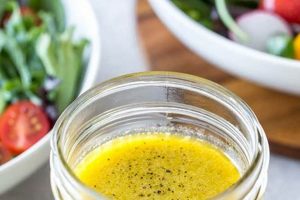
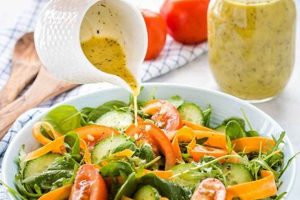
Recipes for salad dressings that exclude all dairy products, including milk, cheese, yogurt, and butter, offer alternatives for individuals seeking to avoid lactose or following a vegan lifestyle. These dressings typically rely on plant-based ingredients like olive oil, vinegar, citrus juices, nut butters, tahini, and nutritional yeast for flavor and texture.
Eliminating dairy from salad dressings opens up culinary possibilities and addresses dietary restrictions. It can contribute to reduced saturated fat intake and align with ethical considerations related to animal welfare and environmental sustainability. Historically, many cultures developed non-dairy dressings out of necessity or tradition, using readily available ingredients like lemon juice, herbs, and spices. These traditional methods form the foundation of many modern recipes.
Further exploration of this topic will cover diverse ingredient combinations, preparation techniques, flavor profiles, and suitable pairings with different salad types. Additionally, practical tips and troubleshooting advice will be provided to ensure successful emulsion and storage.
Tips for Crafting Delicious Dairy-Free Salad Dressings
Achieving flavorful and well-balanced non-dairy dressings requires attention to ingredient selection, proper emulsification techniques, and mindful flavor pairings.
Tip 1: Embrace Acidity: Acidity provides brightness and balance. Consider lemon, lime, or vinegar varieties like apple cider, balsamic, or red wine. Start with a small amount and adjust to taste.
Tip 2: Explore Flavorful Oils: Extra virgin olive oil offers a robust flavor, while avocado oil provides a neutral base. Experiment with infused oils like garlic or chili for added depth.
Tip 3: Utilize Emulsifiers: Smooth, creamy textures are achieved through emulsification. Tahini, Dijon mustard, or soaked cashews can effectively bind oil and vinegar.
Tip 4: Enhance with Umami: Nutritional yeast adds a cheesy, savory flavor. Miso paste, soy sauce (or tamari for gluten-free), or sundried tomatoes contribute umami richness.
Tip 5: Incorporate Fresh Herbs and Spices: Freshly chopped herbs like parsley, dill, or mint add vibrancy. Ground spices or spice blends like cumin, coriander, or smoked paprika introduce complexity.
Tip 6: Sweeten Strategically: A touch of sweetness can balance acidity. Maple syrup, agave nectar, or dates offer natural alternatives to refined sugars.
Tip 7: Adjust Consistency: Achieve desired thickness by adding water, more oil, or a thickening agent like arrowroot powder.
By following these guidelines, one can create versatile and delectable dressings to complement any salad. Proper storage in airtight containers in the refrigerator extends shelf life.
Through careful consideration of ingredients and techniques, crafting exceptional dairy-free dressings becomes an achievable culinary endeavor.
1. Vegan Ingredients

Vegan ingredients are fundamental to dairy-free salad dressing recipes, providing the base for flavor, texture, and emulsification while adhering to plant-based dietary restrictions. Understanding the role and variety of these ingredients is crucial for crafting successful dressings.
- Oil Bases
Oils form the foundation of most dressings, contributing richness and mouthfeel. Extra virgin olive oil offers a robust flavor, while avocado oil provides a neutral base. Other options include grapeseed, sunflower, and flaxseed oils, each with unique flavor profiles and health benefits.
- Acidity
Acidity balances the richness of oils and adds brightness. Vinegars such as apple cider, balsamic, and red wine vinegar offer distinct flavor profiles. Citrus juices like lemon and lime provide a zesty tang. Balancing acidity is crucial for a palatable dressing.
- Emulsifiers
Emulsifiers bind oil and water-based ingredients, creating a stable and creamy texture. Tahini (sesame seed paste), Dijon mustard, and soaked cashews or other nuts are effective vegan emulsifiers, preventing separation and contributing to a cohesive dressing.
- Flavor Enhancers
Flavor enhancers contribute depth and complexity. Nutritional yeast provides a cheesy, savory note. Miso paste, soy sauce (or tamari for gluten-free), maple syrup, and various herbs and spices allow for a wide range of flavor profiles, from umami-rich to sweet and herbaceous.
The careful selection and combination of these vegan ingredients allows for the creation of diverse and flavorful dairy-free salad dressings, catering to a wide range of tastes and preferences while adhering to vegan dietary principles. Experimentation with different combinations leads to unique and satisfying culinary experiences.
2. Flavor Balance

Flavor balance is paramount in crafting successful dairy-free salad dressings. The absence of dairy’s inherent richness and creamy texture necessitates a thoughtful approach to achieving a harmonious blend of tastes. A well-balanced dressing avoids extremes, ensuring no single flavor dominates. This involves careful consideration of the interplay between acidity, sweetness, saltiness, umami, and the flavors imparted by herbs, spices, and other aromatics. An overly acidic dressing can be sharp and unappetizing, while excessive sweetness can cloy. Insufficient saltiness can make a dressing taste flat, and neglecting umami can result in a lack of depth. For instance, a lemon-tahini dressing requires a precise balance between the tartness of lemon juice, the richness of tahini, and a touch of sweetness, often from maple syrup or agave, to create a cohesive and enjoyable flavor profile.
Achieving flavor balance often involves a process of incremental adjustments. Starting with a base recipe and tasting throughout the preparation process allows for fine-tuning. A small amount of acid can brighten a dressing, while a pinch of salt can enhance other flavors. A touch of sweetness can temper acidity and round out the overall taste. The specific ingredients and their proportions will vary depending on the desired flavor profile. A vinaigrette, for example, might emphasize acidity and herbaceous notes, while a creamy dressing might prioritize richness and umami. Understanding the interplay of these elements enables the creation of dressings that complement, rather than overpower, the flavors of the salad ingredients.
Mastery of flavor balance elevates dairy-free salad dressings from simple condiments to integral components of a delicious and satisfying meal. This understanding allows for greater creativity and control in the kitchen, enabling the development of dressings tailored to individual preferences and specific salad combinations. Successfully balancing flavors not only enhances the taste of the dressing itself but also elevates the overall dining experience.
3. Emulsification Techniques

Emulsification is crucial for creating stable and desirable textures in dairy-free salad dressings. Because traditional emulsifiers like egg yolks are not vegan, alternative methods are necessary to prevent separation of oil and water-based ingredients. Effective emulsification creates a cohesive, creamy dressing that clings to salad ingredients rather than pooling at the bottom of the bowl. The process involves dispersing tiny droplets of one liquid (typically oil) within another (vinegar or citrus juice) that would normally not mix. This is achieved through vigorous whisking, blending, or the use of binding agents.
Several techniques and ingredients facilitate successful emulsification in dairy-free dressings. Vigorous whisking by hand can create a temporary emulsion, suitable for dressings used immediately. For more stable emulsions, high-speed blenders are effective. Immersion blenders are particularly useful for smaller batches. Certain ingredients act as emulsifiers by binding the oil and water phases. Tahini, due to its high fat content and slightly gritty texture, acts as a natural emulsifier. Dijon mustard, containing lecithin, also aids in emulsification. Soaked cashews, when blended, create a creamy base that emulsifies effectively. The choice of technique and emulsifier depends on the desired texture and the other ingredients in the dressing. For example, a vinaigrette requires only a temporary emulsion and can be whisked by hand, while a creamy cashew dressing requires a high-speed blender and soaked cashews for a stable, smooth result.
Understanding emulsification techniques allows for control over texture and stability in dairy-free salad dressings. Properly emulsified dressings exhibit improved mouthfeel and coat salad ingredients more evenly, enhancing flavor delivery. Moreover, a stable emulsion prevents unsightly separation and maintains a visually appealing dressing. Failure to emulsify properly can result in a thin, watery dressing with separated oil, compromising both taste and presentation. Therefore, mastering these techniques is essential for creating high-quality dairy-free dressings that rival their dairy-containing counterparts in both flavor and texture.
4. Creative Flavor Combinations

Creative flavor combinations are essential for elevating dairy-free salad dressings beyond basic vinaigrettes. The absence of dairy’s inherent richness necessitates exploration of diverse ingredients to achieve complexity and depth of flavor. Strategic pairings of herbs, spices, fruits, vegetables, and other flavoring agents can compensate for the lack of dairy and create unique taste experiences. For example, a combination of roasted red peppers, smoked paprika, and toasted walnuts can impart a smoky, savory depth to a dressing. Similarly, a blend of mango, lime, and cilantro can create a vibrant, tropical-inspired flavor profile. These combinations not only add interest but also broaden the range of salads with which a dressing can be paired. A creamy avocado-cilantro dressing, for instance, complements Mexican-inspired salads, while a miso-ginger dressing enhances Asian-inspired greens. Such tailored flavor combinations ensure the dressing enhances, rather than masks, the flavor profile of the salad itself.
The versatility of dairy-free dressings expands significantly through creative flavor combinations. Building upon a foundation of oil, acid, and emulsifier, one can incorporate a wide array of ingredients to achieve specific flavor profiles. Sweetness can be introduced through maple syrup, dates, or fruit purees. Umami can be achieved with nutritional yeast, miso paste, or mushrooms. Heat can be added through chili flakes, jalapeos, or other peppers. Herbs and spices contribute aromatic complexity. The possibilities are vast, limited only by culinary imagination. Careful consideration of complementary flavors and textures is essential for balanced and appealing results. Experimentation with different combinations is encouraged to discover new and exciting flavor profiles.
Mastery of creative flavor combinations transforms the creation of dairy-free salad dressings into an art form. It allows for customization and personalization, ensuring dressings cater to specific dietary needs and preferences. This approach not only expands culinary horizons but also adds excitement and enjoyment to healthy eating. Successfully combining flavors in dairy-free dressings enhances the overall dining experience, demonstrating that plant-based cuisine can be both nutritious and exceptionally flavorful.
5. Storage and Shelf Life

Proper storage directly impacts the shelf life and quality of dairy-free salad dressings. Because these dressings typically omit preservatives common in commercial products, they are more susceptible to spoilage. Oxidation of oils, growth of microorganisms, and separation of ingredients can occur if dressings are not stored correctly. Airtight containers, preferably glass, are essential for minimizing oxidation and preventing absorption of unwanted flavors. Refrigeration at temperatures below 40F (4C) is crucial for inhibiting microbial growth and slowing enzymatic activity that can lead to spoilage. The shelf life of a dairy-free dressing varies depending on its ingredients. Vinaigrettes, with their higher acidity, generally last longer than creamy dressings based on nuts or seeds. A simple vinaigrette might remain palatable for a week or more, while a cashew-based dressing is best consumed within five days. Homemade dressings lacking preservatives should always be stored in the refrigerator.
Careful observation is essential for assessing the freshness of dairy-free dressings. Visible signs of spoilage include mold growth, discoloration, or a noticeable change in odor. Separation of oil and water-based ingredients is common and can often be remedied by shaking or whisking. However, if accompanied by off-odors or other signs of spoilage, the dressing should be discarded. Freezing is generally not recommended for most dairy-free dressings, as it can negatively impact texture and emulsion stability upon thawing. However, certain components, such as roasted vegetables or infused oils, can be prepared and frozen separately for later incorporation into fresh dressings. Proper labeling with preparation dates ensures effective stock rotation and reduces food waste.
Understanding storage practices and expected shelf life is essential for maximizing the quality and enjoyment of dairy-free salad dressings. Careful attention to these details contributes to food safety and minimizes waste. Proper storage preserves the freshness, flavor, and texture of dressings, ensuring they enhance, rather than detract from, culinary creations. This knowledge allows individuals to confidently prepare and enjoy homemade dairy-free dressings as part of a healthy and flavorful diet.
Frequently Asked Questions about Dairy-Free Salad Dressings
This section addresses common inquiries regarding the preparation, storage, and versatility of dairy-free salad dressings.
Question 1: How can one achieve a creamy texture in dairy-free dressings without using dairy products?
Creamy textures are achievable through the use of ingredients like tahini, soaked cashews, avocado, or silken tofu. These ingredients, when blended, create a smooth, emulsified consistency that mimics the mouthfeel of dairy-based dressings.
Question 2: What are suitable substitutes for dairy-based emulsifiers like egg yolks?
Effective vegan emulsifiers include Dijon mustard (containing lecithin), tahini, and soaked cashews. These ingredients help bind oil and water-based components, creating a stable emulsion.
Question 3: How can one prevent separation in dairy-free dressings?
Proper emulsification techniques, such as vigorous whisking or blending, are crucial. Additionally, using effective emulsifiers like tahini or mustard helps maintain a stable emulsion and prevents separation.
Question 4: How long can dairy-free salad dressings be stored?
Shelf life varies depending on the ingredients. Vinaigrettes typically last longer (up to a week) than creamy dressings (3-5 days). Proper storage in airtight containers in the refrigerator is essential.
Question 5: Are dairy-free dressings suitable for individuals with nut allergies?
Individuals with nut allergies should avoid dressings containing nuts or nut-based ingredients like cashew cream. Alternatives include seed-based dressings (e.g., sunflower seed) or those relying on tahini or avocado.
Question 6: Can dairy-free dressings be frozen?
Freezing is generally not recommended as it can negatively affect texture and emulsion stability. It’s best to prepare fresh dressings as needed.
Understanding these aspects allows for confident preparation and enjoyment of versatile and flavorful dairy-free salad dressings.
The following section will explore specific dairy-free salad dressing recipes, offering practical examples of these principles in action.
Dairy-Free Salad Dressing Recipes
Dairy-free salad dressing recipes offer a versatile and flavorful approach to healthy eating, accommodating dietary restrictions and ethical considerations. Exploration of ingredient selection, emulsification techniques, and flavor balancing empowers culinary creativity within the plant-based realm. From tangy citrus vinaigrettes to rich and creamy cashew-based dressings, the possibilities extend far beyond simple oil and vinegar combinations. Proper storage practices ensure these culinary creations maintain their quality and freshness.
The increasing demand for dairy-free options reflects a broader shift towards mindful consumption and culinary innovation. Exploration of plant-based alternatives continues to expand culinary horizons, offering both delicious and healthful options for a diverse range of palates and preferences. Dairy-free salad dressing recipes represent a significant contribution to this evolving culinary landscape.