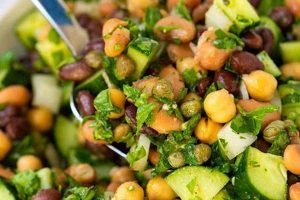
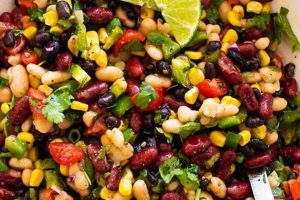
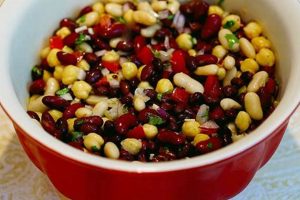
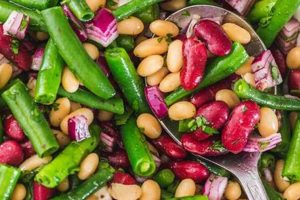
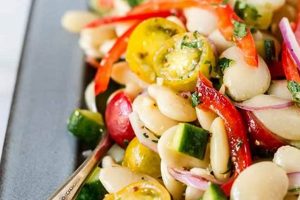
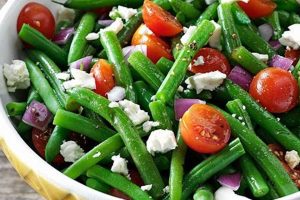
A dish composed primarily of three varieties of beans, typically kidney, cannellini, and green beans, combined with a smooth, flavorful dressing often based on mayonnaise or sour cream. Variations may incorporate additional vegetables like celery, onion, or bell pepper, and seasonings such as mustard, dill, or vinegar. This type of salad is frequently served chilled as a side dish at picnics, barbecues, and potlucks.
This blend of legumes offers a nutritional powerhouse, providing substantial protein, fiber, and complex carbohydrates. It is a versatile dish, adaptable to individual preferences with different bean combinations and seasonings. Historically, combining various beans in salads has been a culinary practice across cultures, offering a cost-effective and nutritious meal option. The creamy variant likely emerged with the increased availability and use of mayonnaise and sour cream in modern cuisine.
The following sections will delve into specific bean varieties suitable for this salad, explore diverse dressing options, and provide detailed preparation instructions, covering techniques from basic to advanced.
Tips for a Perfect Three-Bean Salad
Achieving a well-balanced and flavorful three-bean salad involves careful consideration of ingredient selection and preparation techniques. The following tips offer guidance for optimal results.
Tip 1: Bean Selection: Opt for canned beans for convenience, or cook dried beans for enhanced flavor and texture. Ensure thorough rinsing of canned beans to remove excess sodium.
Tip 2: Blanching Green Beans: Briefly blanch fresh green beans to maintain a vibrant color and crisp texture. Immediately plunge into ice water to stop the cooking process.
Tip 3: Dressing Consistency: The dressing should be creamy and thick enough to coat the beans without being overly heavy. Adjust consistency with additional mayonnaise, sour cream, or a touch of milk or buttermilk.
Tip 4: Flavor Balance: Achieve a balanced flavor profile by incorporating tangy elements like vinegar or lemon juice to complement the richness of the creamy dressing.
Tip 5: Marinating Time: Allowing the salad to marinate in the refrigerator for at least an hour, or preferably longer, enhances flavor development and allows the beans to absorb the dressing.
Tip 6: Fresh Herbs: Incorporating fresh herbs such as dill, parsley, or chives elevates the salad’s flavor and adds a fresh element. Chop finely to distribute evenly throughout the salad.
Tip 7: Texture Variation: Consider adding chopped celery, red onion, or bell pepper for added texture and flavor complexity.
By following these tips, one can create a three-bean salad that is both flavorful and visually appealing, enhancing any meal or gathering.
The following section offers a complete recipe incorporating these tips, providing a step-by-step guide to creating a delicious three-bean salad.
1. Bean Variety

Bean variety constitutes a foundational element of a successful creamy three-bean salad. The interplay of textures and flavors from different beans contributes significantly to the overall sensory experience. Selecting a diverse range of beans not only offers visual appeal but also provides a complex nutritional profile. For instance, kidney beans offer a robust, earthy flavor and firm texture, while cannellini beans contribute a creamy texture and mild taste. The inclusion of green beans introduces a crisp, fresh counterpoint. This combination exemplifies how varying bean types create a balanced and satisfying salad.
The choice of beans affects the salad’s ability to absorb and complement the creamy dressing. Beans with a firmer texture, like kidney or wax beans, retain their shape and provide textural contrast, whereas softer beans, such as cannellini or pinto beans, absorb the dressing more readily, creating a creamier overall consistency. Understanding these characteristics allows for informed decisions regarding bean selection based on desired textural and flavor outcomes. Experimentation with different bean combinations expands the culinary possibilities and allows for personalized variations. Black beans, chickpeas, or even lentils can offer unique flavor profiles and textures.
Careful consideration of bean variety elevates the creamy three-bean salad from a simple side dish to a culinary creation. The balance of textures, flavors, and nutritional value achieved through strategic bean selection ensures a delightful and wholesome dining experience. A well-chosen combination provides a foundation for the creamy dressing to enhance, rather than mask, the individual characteristics of each bean, creating a cohesive and satisfying dish. This understanding allows for informed choices and greater control over the final product, resulting in a consistently appealing and nutritious salad.
2. Creamy Dressing
Creamy dressing defines the character of a three-bean salad, transforming it from a simple combination of legumes into a cohesive, flavorful dish. The dressing provides the unifying element, binding the diverse textures and tastes of the beans while contributing its own distinct flavor profile. Understanding the components and variations within creamy dressings is crucial for crafting a successful three-bean salad.
- Base Ingredient
The base ingredient establishes the dressing’s fundamental texture and flavor. Mayonnaise offers a classic, rich creaminess, while sour cream provides a tangier profile. Greek yogurt offers a lighter, slightly tart alternative. The chosen base influences the overall richness and mouthfeel of the salad.
- Tangy Elements
Balancing the richness of the base requires the incorporation of tangy elements. Vinegar, lemon juice, or even a touch of pickle relish introduce acidity that cuts through the creaminess and brightens the overall flavor profile. The level of tanginess can be adjusted to personal preference, balancing the creamy and acidic notes.
- Flavor Enhancers
Flavor enhancers contribute depth and complexity to the dressing. Dijon mustard provides a sharp, savory note, while finely minced onion or garlic offers pungent accents. Fresh herbs like dill, parsley, or chives introduce a fresh, aromatic dimension. These additions elevate the dressing beyond simple creaminess, creating a multi-layered flavor experience.
- Seasoning and Sweeteners
Proper seasoning with salt and pepper is essential to enhance the overall flavor profile. A touch of sugar or honey can balance the tanginess and round out the dressing’s flavor. The judicious use of seasonings allows for precise control over the final taste, ensuring a harmonious blend of flavors.
The interplay of these creamy dressing components contributes significantly to the final character of the three-bean salad. The careful selection and balancing of these elements elevate the dish from a simple side to a flavorful and satisfying culinary creation. The creamy dressing acts as a canvas, allowing for endless variations and personalized expressions of flavor, ultimately determining the overall success and appeal of the three-bean salad.
3. Flavor Balance
Flavor balance represents a critical aspect of a successful creamy three-bean salad recipe. The inherent textures and tastes of the beans necessitate a dressing that complements, rather than overwhelms, these characteristics. Achieving harmony requires a careful interplay of creamy, tangy, and savory elements. An overly rich dressing can mask the individual bean flavors, while an excessively tangy dressing can create an unbalanced, sharp taste. The delicate balance between these contrasting flavors defines the overall palatability of the salad.
Consider the interplay of mayonnaise, vinegar, and mustard in a classic creamy three-bean salad dressing. Mayonnaise provides the creamy foundation, while vinegar introduces acidity to cut through the richness. Mustard adds a layer of complexity, contributing a subtle sharpness and enhancing the overall savory profile. This balance prevents any single flavor from dominating, allowing the individual bean flavors to shine through while creating a cohesive and enjoyable taste experience. Substituting plain yogurt for mayonnaise offers a lighter, tangier base, requiring adjustments to vinegar and seasonings to maintain equilibrium.
Understanding the impact of individual ingredients on overall flavor balance allows for informed recipe adjustments and personalized variations. Recognizing the interplay between creamy, tangy, and savory elements empowers one to create a dressing tailored to specific bean combinations and individual preferences. Careful consideration of these factors ensures a harmonious flavor profile, transforming a simple mixture of beans into a well-rounded, delicious creamy three-bean salad. This principle underscores the importance of flavor balance as a crucial determinant of a successful recipe.
4. Fresh Ingredients
Fresh ingredients contribute significantly to the overall quality and flavor profile of a creamy three-bean salad. While canned beans offer convenience, incorporating fresh elements elevates the dish by introducing vibrant textures and nuanced flavors. Fresh green beans, for instance, offer a crisp, snappy texture that contrasts with the creaminess of the dressing and the softer textures of canned kidney or cannellini beans. This textural diversity enhances the sensory experience of the salad. Similarly, freshly chopped herbs like dill, parsley, or chives provide a bright, aromatic counterpoint to the richness of the dressing, adding a layer of complexity beyond the standard dried herb options. Freshly diced red onion or bell pepper contributes not only textural variation but also a subtle sweetness and piquancy, further enhancing the overall flavor profile.
The use of fresh ingredients allows for greater control over the final flavor profile. One can adjust the quantities of fresh herbs or vegetables to achieve the desired balance and intensity of flavors. This flexibility allows for customization and personalization, catering to individual preferences. Freshly squeezed lemon juice offers a brighter, more vibrant acidity compared to bottled lemon juice, impacting the balance between creamy and tangy elements in the dressing. Moreover, the incorporation of fresh ingredients often aligns with a focus on healthier eating habits. Fresh vegetables and herbs provide essential vitamins and nutrients, contributing to a more wholesome and nutritious meal.
Prioritizing fresh ingredients in a creamy three-bean salad elevates the dish from a simple side to a more complex and satisfying culinary experience. The interplay of fresh textures and nuanced flavors enhances the overall sensory appeal, offering a more vibrant and dynamic taste. This approach underscores the importance of ingredient selection in achieving a well-balanced and flavorful salad. Selecting fresh, high-quality components allows the inherent flavors of each ingredient to shine, creating a final product that is both delicious and nutritious. The attention to freshness contributes not only to the taste but also to the overall perception of quality and culinary care.
5. Proper Preparation
Proper preparation techniques are essential for optimizing the texture, flavor, and overall quality of a creamy three-bean salad. Careful attention to detail in each stage, from bean selection and handling to dressing preparation and ingredient combination, ensures a successful and satisfying culinary outcome. Overlooking these critical steps can result in a subpar salad with compromised flavor and texture.
- Bean Handling
Proper bean handling significantly influences the final texture and flavor of the salad. Canned beans require thorough rinsing to remove excess sodium and any residual canning liquid, which can dilute the dressing and impart an undesirable metallic taste. Dried beans necessitate pre-soaking and cooking to the appropriate tenderness, ensuring a pleasant texture without being mushy or overly firm. Overcooked beans can disintegrate in the salad, while undercooked beans result in an unpleasant, hard texture. The careful handling of beans establishes a crucial foundation for the salad’s overall quality.
- Green Bean Blanching
Blanching fresh green beans enhances their color and ensures a crisp-tender texture. Briefly submerging the green beans in boiling water, followed by immediate immersion in ice water, halts the cooking process and sets the vibrant green color. This technique prevents the green beans from becoming dull and overcooked in the final salad, maintaining a desirable textural contrast against the other bean varieties. Skipping this blanching process can result in limp, less appealing green beans that detract from the salad’s visual and textural appeal.
- Dressing Emulsification
Creating a stable and well-emulsified dressing ensures a smooth, creamy texture that evenly coats the beans. Properly combining the base ingredient (mayonnaise, sour cream, or yogurt) with the other dressing components, such as vinegar, mustard, and seasonings, creates a cohesive mixture that adheres to the beans rather than separating or becoming watery. A poorly emulsified dressing can result in an uneven distribution of flavors and a less appealing, separated appearance.
- Ingredient Combination and Chilling
The timing of ingredient combination impacts the final flavor and texture of the salad. Combining the beans and dressing too early can cause the beans, especially softer varieties, to absorb excess dressing and become mushy. Chilling the salad for an adequate period allows the flavors to meld and develop fully. Insufficient chilling time results in a less cohesive flavor profile and a less satisfying overall experience.
Proper preparation techniques are integral to achieving a creamy three-bean salad with optimal texture, flavor, and visual appeal. Attention to detail in each step, from bean handling to ingredient combination, ensures a harmonious blend of flavors and textures, creating a truly satisfying culinary experience. These techniques elevate the simple combination of beans and dressing into a well-executed dish that exemplifies the importance of careful preparation in achieving culinary excellence.
6. Chilling Time
Chilling time plays a crucial role in the development of flavor and texture in a creamy three-bean salad. This period of refrigeration allows the ingredients to meld, the flavors to deepen, and the textures to optimally balance. Understanding the impact of chilling time is essential for achieving a well-balanced and flavorful salad.
- Flavor Development
Chilling allows the dressing to permeate the beans, resulting in a more cohesive flavor profile. The individual flavors of the beans, dressing ingredients, and any added herbs or vegetables meld together, creating a more complex and harmonious taste. A freshly made salad often tastes disjointed, with the individual components vying for attention. Chilling allows these flavors to marry, resulting in a more unified and balanced taste experience.
- Texture Enhancement
Chilling firms the beans, especially if using fresh green beans, contributing to a more pleasing texture. The chilling process also allows the dressing to thicken slightly, enhancing its ability to cling to the beans and creating a more satisfying mouthfeel. A warm salad can have a less appealing, softer texture, and the dressing may be thinner and less cohesive.
- Marination Effect
The chilling period acts as a marinating process, allowing the acidic components of the dressing, such as vinegar or lemon juice, to gently tenderize the beans and further enhance flavor penetration. This marinating effect is particularly noticeable with firmer beans like kidney beans. Without sufficient chilling time, the beans may retain a slightly tough texture, and the dressing’s flavors may not fully penetrate.
- Serving Temperature
A chilled three-bean salad offers a refreshing contrast, particularly when served during warmer months or alongside heavier dishes. The cool temperature enhances the creamy texture of the dressing and provides a welcome contrast to grilled meats or spicy dishes. A warm or room-temperature salad lacks this refreshing quality and can feel heavy or less palatable, especially in warmer weather.
Chilling time is not merely a storage step but an integral component of the overall recipe, significantly impacting the final flavor and textural experience of a creamy three-bean salad. Adequate chilling allows the individual components to harmonize, creating a dish that is greater than the sum of its parts. The chilling process enhances the balance of flavors, improves the texture, and elevates the overall dining experience, demonstrating its essential role in achieving a truly delicious and satisfying creamy three-bean salad.
7. Serving Suggestions
Serving suggestions enhance the versatility of the creamy three-bean salad, extending its role beyond a simple side dish. Thoughtful presentation and pairings elevate the dining experience, transforming the salad into a more substantial and integrated component of a meal. Consideration of complementary flavors and textures maximizes the salad’s potential and broadens its culinary applications.
- Standalone Salad
As a standalone salad, the creamy three-bean salad offers a light yet satisfying meal option. Served chilled in a bowl, it provides a refreshing and nutritious lunch or a light dinner. Garnishing with a sprinkle of fresh herbs or a dollop of plain yogurt enhances visual appeal and adds a touch of freshness. This straightforward presentation highlights the salad’s inherent flavors and textures.
- Barbecue Side Dish
The creamy three-bean salad serves as a classic barbecue accompaniment, complementing grilled meats and providing a refreshing counterpoint to richer flavors. Its cool, creamy texture contrasts with the smoky char of grilled foods, creating a balanced and satisfying meal. The salad’s versatility allows it to pair well with a variety of proteins, from burgers and hot dogs to grilled chicken and fish.
- Picnic Fare
The salad’s portability and ease of preparation make it an ideal choice for picnics and potlucks. Transporting the salad in a sealed container maintains its freshness and prevents spills. Its ability to hold up well at room temperature for a reasonable period makes it a practical and convenient option for outdoor gatherings. The salad’s vibrant colors and diverse textures also contribute to an appealing presentation on a picnic spread.
- Sandwich or Wrap Filling
Incorporating the creamy three-bean salad as a sandwich or wrap filling adds a substantial and flavorful element. The salad’s creamy texture provides moisture and binds the other ingredients, while its complex flavor profile adds depth and interest. Combining the salad with deli meats, cheeses, or grilled vegetables creates a satisfying and portable meal option. This application highlights the salad’s versatility beyond its traditional role as a side dish.
These serving suggestions demonstrate the creamy three-bean salad’s adaptability and its potential to enhance a variety of dining occasions. From a simple standalone salad to a flavorful sandwich filling, the salad’s versatility allows for creative culinary applications that extend beyond its traditional role as a side dish. Understanding these various serving options allows one to fully appreciate and utilize the creamy three-bean salad’s potential, transforming it from a basic side into a multifaceted culinary component.
Frequently Asked Questions
This section addresses common inquiries regarding the preparation and enjoyment of three-bean salad, offering practical guidance and clarifying potential uncertainties.
Question 1: What type of beans are best suited for this salad?
While the classic recipe utilizes kidney, cannellini, and green beans, variations can incorporate other beans like black beans, pinto beans, or chickpeas. Selection depends on preferred flavor and texture profiles. Firm beans maintain their structure, while softer beans absorb dressing more readily.
Question 2: Can dried beans be used instead of canned?
Dried beans offer enhanced flavor but require pre-soaking and cooking. Ensure thorough cooking to achieve appropriate tenderness without mushiness. Adjust cooking time based on bean variety and desired texture.
Question 3: How can the dressing’s consistency be adjusted?
Dressing consistency can be modified by adding small amounts of milk, buttermilk, or additional mayonnaise or sour cream. Adjusting gradually prevents an overly thin or thick dressing. Achieve a balance that coats the beans without being excessively heavy.
Question 4: How long can the salad be stored in the refrigerator?
Properly stored in an airtight container, three-bean salad typically lasts for three to five days in the refrigerator. Monitor for any signs of spoilage, such as off-odors or changes in texture, before consuming. Discard any salad showing signs of spoilage.
Question 5: Can this salad be frozen?
Freezing is not recommended, as it compromises the texture of the beans and can cause the dressing to separate upon thawing. The resulting texture becomes watery and less appealing. Prepare fresh salad for optimal flavor and texture.
Question 6: How can one reduce the sodium content in this salad?
Thoroughly rinsing canned beans reduces sodium content. Using low-sodium or no-salt-added canned beans further minimizes sodium intake. Adjusting seasoning in the dressing allows for flavor customization while controlling overall sodium levels. Consider using fresh herbs and spices to enhance flavor without relying on salt.
Careful consideration of these frequently asked questions facilitates successful preparation and ensures an enjoyable three-bean salad experience. Understanding these aspects allows for greater control over the final product, resulting in a dish that meets individual preferences and dietary needs.
The following section provides a complete recipe, incorporating the insights discussed above and offering a step-by-step guide to creating a delicious and well-balanced three-bean salad.
Creamy 3 Bean Salad Recipe
Exploration of creamy 3 bean salad recipes reveals a dish offering both simplicity and complexity. Careful selection of bean varieties, thoughtful dressing preparation, and attention to chilling time contribute significantly to the final product. Balancing creamy, tangy, and savory elements in the dressing enhances the inherent flavors of the beans. Incorporating fresh ingredients elevates the salad’s sensory experience. Proper preparation techniques, from blanching green beans to achieving a stable dressing emulsion, ensure optimal texture and flavor. The versatility of this salad extends beyond its traditional role as a side dish, offering potential as a standalone meal, picnic fare, or sandwich filling.
Creamy 3 bean salad recipes represent a versatile culinary canvas, allowing for personalized adaptations while adhering to core principles of flavor balance and textural harmony. Further exploration of bean varieties, dressing variations, and complementary ingredients offers continued culinary discovery. This adaptable dish holds a place at diverse dining occasions, demonstrating its enduring appeal and potential for creative expression.