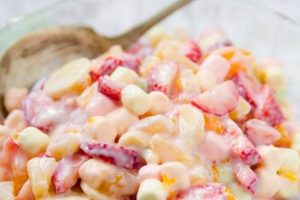
Combinations of fruit with a sweetened cream cheese base offer a refreshing and flavorful dessert or side dish. These dishes often incorporate a variety of fruits, from berries and grapes to tropical options like pineapple and mango. The cream cheese element can be plain, flavored with extracts like vanilla or almond, or combined with other ingredients like whipped cream or marshmallow creme for a lighter, fluffier texture. A classic example features a mixture of mandarin oranges, pineapple chunks, and maraschino cherries folded into a sweetened cream cheese mixture.
The appeal of such dishes lies in their balance of sweetness and tanginess, as well as the contrast in textures between the creamy base and the juicy fruit. They provide a relatively simple way to incorporate fresh produce into a meal or gathering, and can be adapted to seasonal availability. Historically, the pairing of dairy with fruit has been a popular culinary theme, evolving from simple combinations to more elaborate layered desserts and salads. The availability of commercially produced cream cheese in the late 19th century made such recipes increasingly accessible to the average home cook.
Variations on this culinary theme are numerous. This exploration will delve into specific recipe examples, offering guidance on ingredient selection, preparation techniques, and presentation suggestions. It will also address dietary adaptations and explore complementary flavor profiles for a comprehensive understanding of these versatile dishes.
Tips for Cream Cheese Fruit Salad Recipes
Achieving optimal results with fruit and cream cheese combinations requires attention to detail. The following tips offer guidance for creating a successful dish.
Tip 1: Fruit Selection: Opt for fruits at peak ripeness for optimal flavor and texture. Consider a variety of colors and textures for visual appeal and a complex flavor profile. Avoid overly ripe or bruised fruit, as this can negatively impact the overall quality.
Tip 2: Cream Cheese Quality: Full-fat cream cheese provides a richer, creamier texture. Reduced-fat versions can be used, but may result in a slightly thinner consistency.
Tip 3: Sweetener Adjustment: The level of sweetness can be adjusted to personal preference. Granulated sugar, powdered sugar, honey, or maple syrup are all suitable options.
Tip 4: Flavor Enhancement: Extracts like vanilla or almond, citrus zest, or spices like cinnamon or nutmeg can elevate the flavor profile. A small amount of lemon juice can balance sweetness and add brightness.
Tip 5: Texture Variation: Incorporating nuts, chopped cookies, or shredded coconut can add textural interest. Whipped cream or marshmallow creme can be folded into the cream cheese mixture for a lighter texture.
Tip 6: Chilling Time: Allowing the salad to chill for at least 30 minutes before serving allows the flavors to meld and enhances the overall experience. Avoid freezing, as this can negatively affect the texture of the fruit.
Tip 7: Presentation: Serving the salad in a decorative bowl or individual glasses enhances the visual appeal. Garnishing with fresh mint leaves, a sprinkle of nuts, or a dusting of powdered sugar adds a finishing touch.
By following these guidelines, one can create a fruit and cream cheese salad that is both visually appealing and delicious. Attention to ingredient selection, flavor balancing, and presentation ensures a satisfying culinary experience.
From classic combinations to innovative variations, the possibilities for creating flavorful and visually appealing fruit and cream cheese salads are vast. The following section will explore specific recipe ideas to inspire culinary creativity.
1. Cream cheese base

The cream cheese base forms the foundation of cream cheese fruit salads, providing the characteristic creamy texture and tangy flavor that complements the sweetness and freshness of the fruit. Its preparation and composition significantly influence the overall quality and taste of the final dish. Understanding the nuances of creating this base is crucial for a successful outcome.
- Fat Content and Texture:
The fat content of the cream cheese directly impacts the texture of the base. Full-fat cream cheese yields a richer, denser, and creamier texture, while reduced-fat versions result in a lighter, potentially thinner consistency. The choice depends on the desired outcome and dietary considerations. A higher fat content generally contributes to a more luxurious mouthfeel.
- Sweetening Agents:
Balancing the tanginess of cream cheese requires the addition of sweeteners. Granulated sugar, powdered sugar, honey, or maple syrup can be incorporated. The choice of sweetener influences not only the sweetness level but also the overall flavor profile. Honey, for example, imparts a distinct floral note, while maple syrup offers a subtle caramel-like flavor.
- Flavor Enhancements:
Beyond sweetness, the cream cheese base can be further enhanced with various flavorings. Vanilla extract, almond extract, citrus zest, or spices like cinnamon or nutmeg can add complexity and depth. A small amount of lemon juice can brighten the flavor and balance the sweetness. These additions contribute to a more nuanced and interesting flavor profile.
- Additional Ingredients:
Incorporating other ingredients into the cream cheese base can modify its texture and flavor. Whipped cream or marshmallow creme can be folded in to create a lighter, fluffier consistency. Mascarpone cheese can be added for a richer, more decadent flavor. These additions offer further customization options.
The careful consideration of these facets when preparing the cream cheese base is essential for achieving a balanced and flavorful fruit salad. The base acts as a unifying element, binding the diverse fruits together and creating a harmonious blend of textures and tastes. A well-executed cream cheese base elevates the fruit salad from a simple combination of ingredients to a cohesive and delightful culinary experience.
2. Fruit Selection

Fruit selection significantly impacts the overall balance and appeal of cream cheese-based fruit salads. The interplay of sweetness, tartness, and texture among chosen fruits determines the final flavor profile and sensory experience. Consideration of fruit characteristicsfirmness, juiciness, and aromais crucial. For example, incorporating firmer fruits like apples or grapes provides textural contrast against the creamy base, while including juicy fruits like berries or melon contributes to a refreshing element. Overly ripe or bruised fruit should be avoided as they can compromise both flavor and aesthetic appeal.
Balancing flavor profiles is paramount. Pairing overly sweet fruits like bananas or mangoes with tart fruits such as berries or kiwi creates a more complex and enjoyable taste experience. The choice of fruits can also be guided by seasonal availability, maximizing freshness and flavor. A summer fruit salad might feature berries, melon, and peaches, while a winter version could incorporate citrus fruits, apples, and pears. The selection process requires careful consideration of these factors to achieve a harmonious blend of flavors and textures.
Strategic fruit selection elevates a simple cream cheese fruit salad from a basic dish to a more nuanced culinary creation. Understanding the interplay of flavors, textures, and seasonal availability allows for informed choices that optimize both taste and presentation. Ultimately, successful fruit selection contributes significantly to a well-balanced and satisfying cream cheese fruit salad.
3. Sweetener Choice
Sweetener choice plays a crucial role in cream cheese fruit salad recipes, influencing the final flavor profile and overall balance. The inherent tanginess of cream cheese necessitates a sweetener to achieve a palatable and harmonious blend. Different sweeteners possess unique characteristics that affect both taste and texture. Granulated sugar offers a clean, neutral sweetness, while powdered sugar dissolves readily, creating a smooth consistency. Honey introduces a distinct floral sweetness and subtle viscosity, whereas maple syrup contributes a warm, caramel-like flavor. The choice depends on the desired flavor profile and the other ingredients incorporated into the salad. For instance, a fruit salad featuring berries and a vanilla-infused cream cheese base might benefit from the delicate sweetness of honey, whereas a tropical fruit salad with pineapple and mango could be enhanced by the robust flavor of maple syrup.
The quantity of sweetener used is another critical consideration. Over-sweetening can mask the natural flavors of the fruit and cream cheese, while insufficient sweetening results in an unbalanced and potentially tart dish. Careful adjustment is necessary to achieve the optimal level of sweetness that complements the other ingredients. Factors such as the natural sweetness of the chosen fruits and the tanginess of the cream cheese base should influence this decision. A fruit salad with naturally sweet fruits like ripe bananas or mangoes might require less added sweetener compared to one featuring tart fruits like cranberries or kiwi. Practical experimentation and taste-testing are often necessary to determine the ideal balance for specific recipes.
Understanding the impact of sweetener choice is essential for creating well-balanced and flavorful cream cheese fruit salads. The interplay between sweetener type and quantity significantly affects the overall taste experience. Matching the sweetener to the other ingredients and adjusting the amount according to the desired sweetness level allows for a harmonious blend of flavors. Successful sweetener selection elevates the dish from a simple combination of ingredients to a more refined and satisfying culinary creation.
4. Flavor Enhancements
Flavor enhancements play a pivotal role in elevating cream cheese fruit salad recipes from simple to exceptional. These additions introduce complexity and depth, transforming the flavor profile and overall sensory experience. Strategic incorporation of flavor enhancers allows for customization and creativity, catering to individual preferences and desired taste outcomes. Understanding the nuances of various flavor enhancers is crucial for crafting a well-balanced and delightful fruit salad.
- Extracts and Spices:
Extracts, such as vanilla, almond, or peppermint, offer concentrated flavors that seamlessly blend with the cream cheese base. Spices, including cinnamon, nutmeg, or cardamom, introduce warmth and complexity. The choice depends on the desired flavor profile and the types of fruit incorporated. Vanilla extract complements berries and stone fruits, while cinnamon enhances apples and pears.
- Zests and Juices:
Citrus zests, like lemon, orange, or lime, provide a burst of fresh, aromatic flavor. A small amount of citrus juice can balance sweetness and add brightness to the cream cheese base. Lemon zest pairs well with berries and tropical fruits, while orange zest complements apples and cranberries.
- Liqueurs and Spirits:
A splash of liqueur or spirit can add a sophisticated touch to cream cheese fruit salads. Grand Marnier, Cointreau, or rum can complement citrus fruits and tropical fruits, while brandy or amaretto can enhance stone fruits and berries. The alcohol content should be minimal to avoid overpowering the delicate flavors of the fruit.
- Herbs and Flowers:
Fresh herbs, such as mint, basil, or tarragon, introduce an herbaceous element that complements certain fruits. Edible flowers, like rose petals or lavender, can add a delicate floral aroma and visual appeal. Mint pairs well with melon and berries, while basil complements tomatoes and strawberries.
The judicious use of flavor enhancers allows for a wide range of flavor combinations and personalized variations within cream cheese fruit salad recipes. By understanding the interplay between different flavor profiles and the characteristics of individual fruits, one can create a harmonious and delightful culinary experience. The strategic incorporation of these enhancements elevates the fruit salad from a simple dish to a more complex and nuanced culinary creation.
5. Presentation techniques
Presentation techniques significantly influence the perceived appeal and enjoyment of cream cheese fruit salad recipes. Visual appeal stimulates appetite and enhances the overall dining experience. A thoughtfully presented salad elevates the dish beyond its basic components, transforming it into a visually engaging culinary creation. Consideration of color, texture, and serving vessel contributes to a more appealing presentation. For example, a vibrant array of colorful fruits arranged in a clear glass bowl showcases the diversity of ingredients and creates an enticing visual display. Alternatively, individual portions served in elegant glasses or hollowed-out fruit shells add a touch of sophistication and enhance the perceived value of the dish.
The choice of serving vessel and accompanying garnishes further enhances presentation. A rustic wooden bowl complements a casual gathering, while a crystal bowl adds elegance to a formal setting. Garnishes provide finishing touches that elevate visual appeal and introduce complementary flavors. Fresh mint leaves, a sprinkle of toasted nuts, or a dusting of powdered sugar add visual interest and subtle flavor nuances. A fruit salad featuring tropical fruits might be garnished with toasted coconut flakes and a drizzle of honey, while a berry-based salad could be adorned with fresh mint sprigs and a light dusting of powdered sugar. These details demonstrate attention to detail and enhance the overall sensory experience.
Effective presentation techniques transform cream cheese fruit salads into visually captivating and appetizing dishes. Strategic choices regarding color arrangement, serving vessels, and garnishes elevate the perceived value and enjoyment of the salad. While taste remains paramount, presentation plays a crucial role in enhancing the overall dining experience, demonstrating care and attention to detail. Understanding these principles allows for the creation of visually appealing and memorable culinary presentations.
Frequently Asked Questions
This section addresses common inquiries regarding the preparation and enjoyment of fruit salads featuring a cream cheese base.
Question 1: Can reduced-fat cream cheese be used?
Reduced-fat cream cheese can be substituted, but it may yield a slightly thinner consistency and less rich flavor compared to full-fat versions. Adjusting the recipe by adding a thickening agent, such as a small amount of cornstarch or unflavored gelatin, can help improve the texture.
Question 2: How long can the salad be stored?
Storage time depends on the types of fruit used. Generally, these salads are best consumed within 24 hours of preparation, particularly if using easily oxidized fruits like apples or bananas. Storing the salad in an airtight container in the refrigerator helps maintain freshness.
Question 3: Can canned fruit be used?
While fresh fruit is generally recommended for optimal flavor and texture, canned fruit can be used in a pinch. Ensure the canned fruit is well-drained and rinsed to remove excess syrup. Choose canned fruit packed in juice rather than heavy syrup to control sweetness levels.
Question 4: How can browning of fruit be prevented?
Fruits susceptible to browning, such as apples, bananas, and pears, can be treated with a small amount of lemon juice to prevent oxidation. This helps maintain their appearance and prevents discoloration.
Question 5: Can this type of salad be served as a dessert or a side dish?
Cream cheese-based fruit salads offer versatility and can be served as both a dessert and a side dish. The sweetness level and accompanying ingredients can be adjusted to suit either purpose. A less sweet version with minimal added sugar complements savory dishes, while a sweeter version with added whipped cream or nuts functions as a satisfying dessert.
Question 6: What are some suitable variations for dietary restrictions?
Adapting recipes to accommodate dietary restrictions is often achievable. For dairy-free options, vegan cream cheese alternatives can be used. Sugar substitutes can be employed for those limiting sugar intake. Gluten-free variations are typically straightforward as most recipes do not contain gluten-containing ingredients.
Careful consideration of ingredient selection, preparation techniques, and storage practices ensures optimal results. Adaptability to various dietary needs further expands the accessibility and enjoyment of these salads.
This concludes the frequently asked questions section. The following segment will offer a collection of curated recipes for practical application of the discussed principles.
Cream Cheese Fruit Salad Recipes
Exploration of cream cheese fruit salad recipes reveals a versatile culinary landscape. Careful selection of ingredients, thoughtful flavor pairings, and attention to presentation elevate these dishes beyond simple combinations. From the foundational cream cheese base to the nuanced selection of fruits, sweeteners, and flavor enhancers, each component contributes to the final product. Understanding the interplay of these elements allows for the creation of balanced, flavorful, and visually appealing salads suitable for various occasions.
The adaptability of cream cheese fruit salad recipes offers a platform for culinary creativity and personalized expression. Exploration of flavor profiles, textures, and presentation techniques empowers culinary enthusiasts to craft unique and satisfying dishes. Continued experimentation promises further evolution and refinement within this culinary domain.