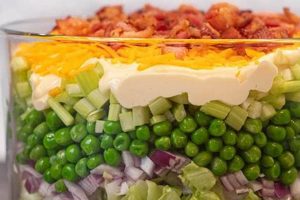
A chilled dish featuring peas as the primary ingredient, often combined with other vegetables, herbs, and a flavorful dressing. Variations can include ingredients such as chopped celery, onion, mint, or parsley, bound together with a vinaigrette, mayonnaise-based, or creamy dressing. A simple version might involve blanched peas tossed with olive oil, lemon juice, and fresh herbs.
This type of salad offers a refreshing and nutritious option, particularly suitable for warm weather. Peas are a good source of protein and fiber, and the addition of other vegetables enhances the nutritional value. Historically, peas have been a staple in many cuisines, and combining them in a cold salad provides a versatile dish that can serve as a side, a light lunch, or a component of a larger buffet spread.
The following sections will delve into specific recipe variations, explore suitable dressing options, and offer tips for ingredient selection and preparation.
Tips for Preparing a Superior Pea Salad
Creating a truly exceptional chilled pea salad involves attention to detail and a thoughtful approach to ingredient selection and preparation. The following tips offer guidance for achieving optimal flavor and texture.
Tip 1: Use Fresh or Frozen Peas: Fresh peas at their peak offer unparalleled sweetness and flavor. If fresh peas are unavailable, frozen peas provide a convenient and high-quality alternative. Canned peas are generally less desirable due to their softer texture.
Tip 2: Blanch Peas Briefly: Whether using fresh or frozen peas, blanch them quickly in boiling water to enhance their vibrant green color and tender-crisp texture. Avoid overcooking, which can lead to mushiness.
Tip 3: Balance Flavors and Textures: Consider a variety of complementary ingredients to enhance the peas’ flavor profile. Crisp vegetables such as diced celery or red onion add contrasting texture, while fresh herbs like mint, parsley, or dill provide aromatic complexity.
Tip 4: Choose the Right Dressing: The dressing is crucial to the overall success of the salad. A light vinaigrette complements the fresh flavors, while a creamy dressing adds richness. Consider a lemon-herb vinaigrette, a classic mayonnaise-based dressing, or a yogurt-based dressing for a lighter touch.
Tip 5: Chill Thoroughly: Allowing the salad to chill for at least an hour before serving allows the flavors to meld and enhances the refreshing quality of the dish.
Tip 6: Season Carefully: Seasoning is paramount. Taste and adjust the seasoning throughout the preparation process, ensuring a balanced and harmonious final product.
Tip 7: Add Protein (Optional): Consider adding cooked and crumbled bacon, diced ham, or shredded chicken for a more substantial salad.
Tip 8: Garnish Thoughtfully: A simple garnish can elevate the presentation. Fresh herbs, a sprinkle of crumbled feta cheese, or a few toasted slivered almonds can add visual appeal and another layer of flavor.
By following these tips, one can achieve a pea salad that is not only flavorful and visually appealing but also showcases the versatility and nutritional value of this humble legume.
The following section will present several complete recipes incorporating these principles, demonstrating the diverse possibilities of chilled pea salads.
1. Fresh or Frozen Peas

Pea selection significantly impacts the final quality of a cold pea salad. Fresh peas, when in season, offer optimal sweetness and a vibrant green color. Their tender yet slightly firm texture holds up well in a salad. Sourcing fresh peas locally, when possible, maximizes flavor and supports regional agriculture. However, fresh peas have a limited availability and require prompt use. Frozen peas present a convenient and readily available alternative. Rapid freezing technology preserves the peas’ nutritional value and flavor profile, offering a close approximation to fresh peas, especially when out of season. This availability makes frozen peas a practical choice for year-round preparation. The critical distinction lies in avoiding canned peas, as their texture is often compromised, resulting in a mushy consistency unsuitable for a refreshing cold salad.
The impact of pea choice becomes evident in the final dish. Fresh peas contribute a bright, sweet flavor, while properly handled frozen peas retain a similar profile. A salad made with fresh peas from a local farmer’s market, tossed with a light vinaigrette and fresh mint, exemplifies the peak of flavor achievable with this ingredient. Comparatively, a winter salad utilizing frozen peas, combined with roasted root vegetables and a creamy dressing, demonstrates the versatility and practicality of this option. In both cases, the pea selection directly influences the overall sensory experience.
Understanding the nuances of pea selection ensures consistent quality in cold pea salad preparation. Choosing fresh or frozen peas, based on availability and seasonality, allows for a consistently successful dish. While fresh peas offer optimal flavor during their peak season, frozen peas provide a reliable and practical substitute year-round. Avoiding canned peas safeguards against textural issues, ensuring a refreshing and enjoyable salad. This careful consideration of a seemingly simple ingredient ultimately elevates the final product.
2. Complementary Ingredients
Complementary ingredients are essential for elevating a cold green pea salad recipe beyond its basic form. These additions contribute not only to the salad’s nutritional value but also to its textural and flavor complexity. Thoughtful selection of complementary ingredients transforms a simple pea salad into a balanced and satisfying dish.
- Textural Contrast:
Crisp vegetables offer a counterpoint to the peas’ texture. Chopped celery, diced red onion, or sliced bell peppers introduce a satisfying crunch. Water chestnuts or chopped jicama provide a unique, slightly sweet crispness. These textural variations prevent the salad from becoming monotonous and enhance the overall eating experience.
- Aromatic Herbs:
Fresh herbs infuse the salad with vibrant flavor and aroma. Mint, dill, parsley, and chives are excellent choices. Mint provides a refreshing coolness, dill offers a subtle anise-like flavor, parsley contributes a clean, herbaceous note, and chives impart a mild onion flavor. The selection of herbs can significantly influence the salad’s overall flavor profile.
- Savory Additions:
Incorporating savory elements adds depth and complexity. Crumbled feta cheese, bacon bits, or diced ham introduce salty and umami notes that complement the sweetness of the peas. These additions also contribute to a more substantial and satisfying salad.
- Fruits and Nuts:
Fruits and nuts offer sweetness, acidity, and contrasting textures. Chopped grapes, dried cranberries, or slivered almonds add another dimension to the salad. Grapes provide a juicy burst of sweetness, cranberries offer a tart counterpoint, and almonds contribute a satisfying crunch. These ingredients also enhance the visual appeal of the finished dish.
The interplay of these complementary ingredients elevates the cold green pea salad from a simple side dish to a more complex and flavorful culinary creation. Balancing textural contrast, aromatic herbs, savory elements, and sweet or crunchy additions allows for a wide range of flavor profiles and ensures a delightful and well-rounded salad experience.
3. Flavorful Dressing
Flavorful dressing is integral to a successful cold green pea salad recipe, acting as a unifying element that binds the ingredients and elevates the overall taste profile. The dressing’s impact extends beyond mere flavor enhancement; it influences texture, moisture, and the overall sensory experience. Careful consideration of dressing choice is essential, as it directly impacts the final product’s quality and appeal. A bland or poorly chosen dressing can render a salad unappetizing, while a well-crafted dressing transforms individual components into a harmonious and flavorful whole.
Several factors contribute to a dressing’s suitability for a cold pea salad. Acidity plays a crucial role, balancing the sweetness of the peas and adding brightness. Vinegar-based dressings, whether a classic vinaigrette or a more complex blend incorporating lemon or lime juice, provide necessary tartness. The choice of oil also influences the dressing’s flavor and texture. Extra virgin olive oil offers a robust, fruity flavor, while lighter oils like grapeseed or avocado oil provide a more neutral base. Emulsified dressings, such as those based on mayonnaise or yogurt, introduce creamy richness and textural complexity. Herbs, spices, and other flavoring agents further enhance the dressing’s complexity, creating a nuanced and well-rounded flavor profile. For instance, a lemon-dill vinaigrette provides a bright, herbaceous counterpoint to the sweetness of peas, while a creamy dressing with fresh mint and crumbled feta complements the peas and adds a layer of savory richness. A honey-mustard dressing offers a touch of sweetness and tang, contrasting with the fresh, green flavor of the peas.
The practical significance of dressing selection lies in achieving balance and harmony. The dressing should complement, not overpower, the peas and other ingredients. Overly acidic dressings can mask the delicate sweetness of the peas, while excessively rich dressings can create a heavy, cloying dish. A well-balanced dressing enhances the natural flavors of the ingredients, creating a cohesive and enjoyable culinary experience. Ultimately, the choice of dressing significantly contributes to the cold pea salad’s success, demonstrating the importance of careful consideration and thoughtful execution in recipe development.
4. Proper Chilling

Proper chilling is crucial to the success of a cold green pea salad recipe. Chilling enhances the salad’s refreshing quality and allows the flavors of the various components, including the peas, complementary vegetables, herbs, and dressing, to meld and harmonize. The temperature directly impacts the perceived freshness and overall palatability of the salad. A well-chilled salad offers a crisp, refreshing contrast, especially desirable in warmer weather. Conversely, a salad served at room temperature may taste bland and less appealing, with the flavors muddled and less distinct. For example, a chilled pea salad with a lemon-herb vinaigrette offers a vibrant and invigorating experience, while the same salad served warm may taste flat and less refreshing.
The practical application of proper chilling involves several considerations. Ideally, the salad should be chilled for at least one hour before serving, allowing sufficient time for the flavors to develop and the temperature to reach optimal coolness. Thorough chilling also enhances the texture of the ingredients, particularly the peas and other vegetables, contributing to a more satisfying sensory experience. However, excessive chilling can negatively impact certain ingredients. Delicate herbs may wilt, and some vegetables may lose their crispness if chilled for too long. Therefore, balancing chilling time with ingredient sensitivity is essential for achieving optimal results. Consider chilling the dressing separately and adding it just before serving to maintain the integrity of delicate ingredients.
Understanding the role of proper chilling underscores its significance in achieving a high-quality cold green pea salad. Chilling is not merely a final step but an integral part of the recipe, directly influencing the salad’s overall flavor, texture, and appeal. Careful attention to chilling time and ingredient sensitivity ensures a refreshing and flavorful salad that showcases the best qualities of each component. This attention to detail elevates the dish from a simple combination of ingredients to a well-executed culinary creation.
5. Balanced Seasoning

Balanced seasoning is paramount in a cold green pea salad recipe, elevating it from a simple combination of ingredients to a harmonious and flavorful dish. Seasoning is not merely an afterthought but an integral process that influences the overall taste profile and enhances the inherent flavors of each component. Understanding the nuances of balanced seasoning ensures a well-rounded and enjoyable culinary experience.
- Salt:
Salt enhances the natural sweetness of peas and other vegetables, amplifying their flavors without making the salad taste salty. It acts as a flavor enhancer, brightening the other ingredients and creating a more complex taste profile. Proper salting also helps to balance any acidity from the dressing or other ingredients. Too little salt results in a bland salad, while excessive salt overpowers the delicate flavors.
- Pepper:
Freshly ground black pepper adds a subtle layer of complexity and warmth. It complements the fresh, green flavors of the peas and herbs, providing a subtle spice note without overpowering the other ingredients. The type of pepper used can also influence the final flavor. Black pepper offers a classic, slightly pungent flavor, while white pepper provides a milder, earthier note.
- Acidity:
Acidity plays a vital role in balancing the flavors of a cold pea salad. A squeeze of lemon or lime juice, or a splash of vinegar in the dressing, brightens the overall taste and balances the sweetness of the peas and other vegetables. Acidity also enhances the effectiveness of salt, allowing for a more nuanced and balanced flavor profile.
- Herbs and Spices:
Fresh herbs and spices contribute aromatic complexity and depth of flavor. Fresh mint, dill, or parsley complement the peas’ flavor, while a pinch of red pepper flakes adds a touch of heat. Balancing these additions is essential, ensuring they enhance rather than overpower the overall flavor profile.
The interplay of these seasoning elements is crucial for achieving a well-balanced cold green pea salad. The goal is not to create a distinctly salty, peppery, or acidic salad, but rather to use these elements judiciously to enhance the natural flavors of each ingredient. A properly seasoned salad allows the sweetness of the peas, the brightness of the herbs, and the complexity of the dressing to shine through, creating a cohesive and delightful culinary experience.
Frequently Asked Questions
This section addresses common inquiries regarding the preparation and enjoyment of cold pea salads.
Question 1: What type of peas are best suited for a cold salad?
Fresh peas at their peak offer optimal sweetness and texture. If unavailable, frozen peas provide a suitable alternative. Canned peas are generally discouraged due to their softer texture.
Question 2: How can one prevent the peas from becoming mushy?
Briefly blanching fresh or frozen peas in boiling water enhances color and sets texture. Avoid overcooking, which leads to mushiness. Immediately plunge the blanched peas into ice water to stop the cooking process and preserve their texture.
Question 3: What dressings complement a cold pea salad?
Light vinaigrettes, creamy mayonnaise-based dressings, and yogurt-based dressings all provide suitable options. The choice depends on personal preference and the desired flavor profile. A lemon-herb vinaigrette offers brightness, while a creamy dressing adds richness.
Question 4: How long should a cold pea salad be chilled?
Chilling for at least one hour allows flavors to meld. However, avoid excessive chilling, which can negatively affect the texture of certain ingredients, particularly delicate herbs. Chilling the dressing separately and adding it just before serving can mitigate this issue.
Question 5: Can protein be added to a cold pea salad?
Cooked and crumbled bacon, diced ham, or shredded chicken can be incorporated to create a more substantial salad. These additions provide additional protein and complement the other flavors.
Question 6: How can the presentation of a cold pea salad be enhanced?
Garnishes such as fresh herbs, crumbled feta cheese, or toasted slivered almonds add visual appeal and further flavor complexity. Consider the color and texture of the garnish in relation to the salad’s other components.
Understanding these key aspects of preparation ensures a successful and enjoyable cold pea salad experience. Careful attention to ingredient selection, dressing choice, and chilling time optimizes the final product.
The following section will offer several recipe variations to illustrate the versatility of this dish.
Cold Green Pea Salad Recipe
Exploration of cold green pea salad recipes reveals a dish offering versatility and nutritional value. Careful ingredient selection, from fresh or frozen peas to complementary vegetables and herbs, contributes to a balanced flavor profile. Dressing choice, whether a light vinaigrette or a creamy emulsion, further enhances the sensory experience. Proper chilling allows flavors to meld, while balanced seasoning elevates the overall taste. Consideration of these elements ensures a successful outcome, transforming simple ingredients into a harmonious and refreshing culinary creation.
Cold green pea salad recipes provide a canvas for culinary creativity. Adaptation to seasonal ingredients and individual preferences allows for endless variations. This adaptability ensures continued relevance in diverse culinary landscapes, offering a refreshing and nutritious option for various occasions. Further exploration of flavor combinations and ingredient pairings promises continued evolution and enjoyment of this versatile dish.