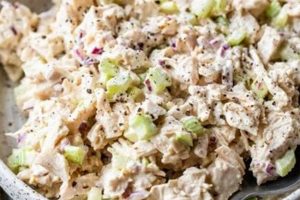
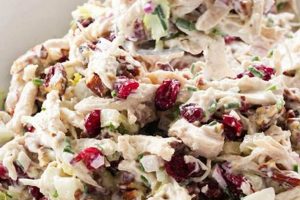
A dish combining cooked chicken, mayonnaise, and curry powder forms the base of this culinary creation. Often, additional ingredients like grapes, celery, almonds, onions, and apples enhance the flavor and texture. Variations exist, incorporating different types of curry powder, mayonnaise substitutes (like Greek yogurt), and fruits or vegetables. For example, a mango chutney chicken salad introduces a sweet and tangy element, while a cashew and raisin version offers a more savory profile.
This blend of ingredients provides a flavorful and protein-rich meal option. Its adaptable nature allows for customization to individual preferences and dietary needs. Historically, chicken salad emerged as a popular dish in the mid-19th century, and the incorporation of curry powder reflects the growing influence of global cuisines. The dish provides a convenient and satisfying way to utilize leftover cooked chicken, contributing to its enduring appeal.
This exploration will delve further into specific variations, providing detailed recipes and examining the nutritional value of each component. Techniques for achieving optimal flavor and texture will also be discussed.
Tips for Crafting Exceptional Curried Chicken Salad
Optimizing the flavor and texture requires attention to several key aspects of preparation.
Tip 1: Chicken Selection: Utilizing high-quality, properly cooked chicken contributes significantly to the final product. Roasting or poaching yields optimal results, providing a richer flavor profile compared to pre-cooked or boiled chicken.
Tip 2: Curry Powder Choice: Experimentation with various curry powders allows for customized flavor profiles. Madras curry powder offers a robust, complex flavor, while a milder yellow curry provides a gentler introduction to the spice.
Tip 3: Mayonnaise Management: Full-fat mayonnaise contributes to a creamier texture, but Greek yogurt or reduced-fat alternatives can create a lighter dish. Start with a smaller quantity and adjust according to desired consistency.
Tip 4: Ingredient Incorporation: Gradual addition of ingredients ensures even distribution and prevents overmixing, which can result in a mushy texture. Gentle folding preserves the integrity of delicate components like grapes or herbs.
Tip 5: Freshness Enhancement: Freshly chopped herbs, such as cilantro or mint, elevate the flavor profile. Toasted nuts or seeds add a welcome crunch and complexity.
Tip 6: Chilling Time: Allowing the salad to chill for at least 30 minutes allows the flavors to meld and deepen. This step is crucial for optimal enjoyment.
Tip 7: Creative Serving: Curried chicken salad offers versatile serving options. Consider serving it in sandwiches, wraps, lettuce cups, or as a topping for crackers or crudits.
Attention to these details ensures a well-balanced and flavorful curried chicken salad. From chicken selection to creative presentation, each element contributes to the overall culinary experience.
By understanding these principles, one can confidently create a dish that delights the palate and satisfies the appetite.
1. Chicken (cooked, diced)

Cooked, diced chicken forms the foundational element of chicken salad with curry recipes. The preparation method and quality of the chicken significantly influence the final dish’s overall quality. Overcooked chicken results in a dry, stringy salad, while undercooked chicken presents food safety risks. Properly cooked chicken, whether roasted, poached, or baked, provides a tender, flavorful base that absorbs the curry and other ingredients effectively. Dicing the chicken into uniform pieces ensures even distribution throughout the salad and contributes to a pleasant texture. For instance, using roasted chicken leftover from a previous meal imbues the salad with deeper, more complex flavors compared to using plain boiled chicken. This choice impacts not only the taste but also the overall culinary experience.
The size of the dice also affects the salad’s final character. A finer dice creates a smoother, more homogenous texture, while a coarser dice provides more substantial bites of chicken. This consideration allows for customization based on personal preference. Furthermore, the choice of chickenbreast, thigh, or a combinationinfluences the salad’s richness and moisture content. Darker meat from chicken thighs contributes more moisture and flavor, while breast meat offers a leaner option. Understanding these nuances allows for tailored adjustments to achieve desired outcomes, impacting both the nutritional profile and the sensory experience.
In conclusion, the significance of properly cooked, diced chicken in a curry chicken salad recipe should not be underestimated. This core ingredient provides the canvas upon which the other flavors and textures are built. Careful consideration of cooking methods, dicing techniques, and chicken type allows for a customized culinary creation. Successfully navigating these elements distinguishes a truly exceptional chicken salad from a mediocre one.
2. Mayonnaise (or alternative)
Mayonnaise plays a crucial role in chicken salad with curry recipes, acting as a binding agent and contributing to the overall texture and flavor profile. It emulsifies the ingredients, creating a cohesive mixture while adding a creamy richness. The type of mayonnaise utilized significantly impacts the final result. Full-fat mayonnaise yields a classic, richer salad, while reduced-fat or light versions create a lighter dish. For example, using a Japanese mayonnaise, known for its umami notes, can complement the curry flavors, adding depth and complexity.
Alternatives to traditional mayonnaise offer opportunities to cater to dietary restrictions or preferences. Greek yogurt provides a tangy, protein-rich alternative, creating a lighter, brighter salad. Avocado can be blended to create a creamy, healthy substitute with a distinct flavor profile. These alternatives not only alter the nutritional composition but also introduce unique textural elements. For individuals seeking a vegan option, plant-based mayonnaise alternatives, often made from ingredients like aquafaba or soy milk, provide suitable substitutes, ensuring inclusivity and catering to diverse dietary needs. The choice between traditional mayonnaise and its alternatives should align with desired flavor profiles, dietary goals, and overall health considerations.
The quantity of mayonnaise used directly influences the final consistency of the salad. Too much mayonnaise results in a loose, overly creamy texture, while too little produces a dry, crumbly mixture. Achieving the desired balance requires careful consideration and gradual incorporation of the mayonnaise or chosen alternative. The ideal consistency allows the salad to hold its shape without being overly dense, enabling easy spreading or scooping. Mastering this aspect ensures a pleasant eating experience and maximizes the enjoyment of the combined flavors.
3. Curry Powder (Blend)

Curry powder forms the defining characteristic of “chicken salad with curry recipe,” contributing the distinctive flavor profile that sets it apart from traditional chicken salad. Understanding the nuances of curry powder, including its composition and variety, is essential for crafting a successful and flavorful dish.
- Spice Composition:
Curry powder is not a single spice but a blend, typically incorporating turmeric, cumin, coriander, and chili peppers. The specific combination and proportions of these spices vary significantly, resulting in a wide range of flavor profiles, from mild and aromatic to intensely spicy and complex. For example, a Madras curry powder often includes fenugreek and mustard seeds, lending a pungent and slightly bitter note, while a sweeter curry powder might incorporate cinnamon or cardamom.
- Heat Level:
The heat level of curry powder is determined by the type and quantity of chili peppers used in the blend. This allows for customization based on individual preferences, ranging from mild and approachable to fiery and intense. A Kashmiri curry powder, known for its vibrant red color and mild heat, offers a gentler introduction to curry flavor, while a vindaloo curry powder delivers a significantly spicier experience.
- Flavor Profile:
Beyond heat, curry powders exhibit a wide array of flavor profiles. Some emphasize earthy notes, while others showcase citrusy or floral undertones. The specific blend of spices influences the overall taste, allowing for nuanced adjustments to complement other ingredients in the chicken salad. A korma curry powder, with its nutty and aromatic profile, pairs well with sweeter fruits and creamy mayonnaise, while a rogan josh blend, featuring warming spices like ginger and cloves, complements savory additions like toasted nuts.
- Freshness and Storage:
The freshness of curry powder significantly impacts the final flavor of the dish. Like all spices, curry powder loses potency over time. Proper storage in airtight containers, away from light and heat, preserves its vibrant flavor and aroma. Using freshly ground spices whenever possible elevates the overall quality of the chicken salad. The difference between freshly ground spices and pre-ground blends is noticeable, impacting the complexity and depth of flavor.
The careful selection and utilization of curry powder is paramount in achieving a well-balanced and flavorful chicken salad. Consideration of spice composition, heat level, and overall flavor profile allows for tailored adjustments to suit individual palates and desired outcomes. By understanding these nuances, one can elevate the dish beyond a simple mixture of ingredients to a complex and satisfying culinary experience.
4. Fruits (grapes, apples)
Fruit additions contribute a crucial dimension to chicken salad with curry recipes, introducing sweetness, acidity, and textural contrast to the savory, spiced profile. Careful selection and preparation of these fruits enhance the overall balance and complexity of the dish.
- Sweetness and Acidity:
Fruits like grapes and apples provide a natural sweetness that balances the savory notes of the chicken and the spice of the curry. The inherent acidity in these fruits also brightens the flavor profile, preventing the salad from becoming overly rich or heavy. Green grapes offer a crisp, tart counterpoint, while red grapes contribute a milder sweetness. Granny Smith apples provide a sharp tartness, whereas Honeycrisp apples offer a more mellow sweetness. The choice of fruit influences the overall balance of sweet and savory elements within the salad.
- Textural Contrast:
The addition of fruits introduces textural variation to the chicken salad. The crisp, juicy texture of grapes contrasts with the tenderness of the chicken and the creaminess of the mayonnaise. Apples, depending on their variety and preparation, can provide a range of textures, from crisp and snappy to slightly softer and more yielding. This interplay of textures creates a more dynamic and engaging culinary experience. For example, diced apples maintain a firmer texture, while thinly sliced or shredded apples offer a more delicate presence within the salad.
- Flavor Pairing:
The specific flavors of chosen fruits interact with the other ingredients in the salad. The sweetness of grapes complements the savory chicken and spices, while the tartness of apples cuts through the richness of the mayonnaise. Consideration of these flavor pairings ensures a harmonious blend of tastes. For instance, the subtle sweetness of grapes pairs well with milder curry powders, while the tartness of apples balances the intensity of spicier blends.
- Preparation and Incorporation:
Proper preparation of the fruit enhances its integration into the salad. Grapes, typically halved or quartered, distribute evenly throughout the mixture. Apples, depending on their variety, may benefit from a light coating of lemon juice to prevent browning and maintain their fresh appearance. The method of incorporation also influences the final result. Gently folding the fruit into the salad prevents overmixing and preserves its texture, ensuring a pleasant and balanced final product.
The strategic inclusion of fruits like grapes and apples elevates chicken salad with curry recipes from simple to sophisticated. The interplay of sweetness, acidity, and texture enhances the overall culinary experience, creating a dish that is both flavorful and refreshing. Careful consideration of these elements ensures a well-balanced and satisfying result, showcasing the harmonious fusion of savory, spicy, and sweet components.
5. Vegetables (celery, onion)
Vegetables such as celery and onion provide crucial textural and flavor dimensions within chicken salad with curry recipes. These additions contribute a refreshing crispness that contrasts with the creaminess of the mayonnaise and the tenderness of the chicken. Their distinct flavors enhance complexity, balancing the richness and spice of the curry powder. Celery, with its slightly bitter, herbaceous notes, offers a refreshing counterpoint to the richness of the mayonnaise, while onion, depending on the variety, introduces a pungent sharpness or a subtle sweetness. The choice of onionred, white, or yellowinfluences the overall flavor profile. For instance, red onion imparts a sharper, more pungent flavor, while yellow onion offers a milder sweetness. The interplay of these flavors creates a more balanced and nuanced culinary experience.
Beyond flavor, celery and onion contribute to the structural integrity of the salad. Their firm texture prevents the mixture from becoming overly mushy, maintaining a desirable consistency. Proper preparation techniques, such as finely dicing the celery and onion, ensure even distribution throughout the salad and prevent overwhelming any single bite. The quantity of these vegetables also influences the final outcome. Too much celery can lead to a stringy texture, while an excess of onion can overpower the other flavors. A balanced incorporation ensures that the vegetables enhance the salad without dominating it. For example, a finely diced mixture of celery and red onion adds both crispness and a touch of piquancy without overpowering the curry or other ingredients. This balanced approach enhances the overall enjoyment and appeal.
The strategic inclusion of vegetables like celery and onion contributes significantly to the success of chicken salad with curry recipes. Their textural and flavor contributions create a more complex and satisfying dish, balancing the richness and spice with refreshing crispness and nuanced flavors. Careful consideration of vegetable variety, preparation techniques, and quantity ensures a harmonious blend of ingredients, maximizing both flavor and textural appeal. Successfully integrating these elements elevates the dish from a simple combination of ingredients to a carefully crafted culinary creation.
6. Nuts/Seeds (almonds, cashews)

Nuts and seeds, such as almonds and cashews, offer crucial textural and flavor enhancements to chicken salad with curry recipes. Their inclusion introduces a satisfying crunch that contrasts with the softer textures of the chicken, mayonnaise, and fruits. This textural complexity elevates the overall sensory experience, making each bite more dynamic and engaging. Furthermore, nuts and seeds contribute distinct flavor profiles that complement the curry spices. Almonds, for instance, offer a subtly sweet and nutty flavor that pairs well with the warmth of curry powder, while cashews provide a richer, buttery taste that enhances the overall creaminess of the salad. These complementary flavors create a more nuanced and balanced profile. Roasting the nuts before adding them to the salad further intensifies their flavor and enhances their crunch. For example, toasted slivered almonds contribute a delicate crunch and a toasted nuttiness that complements the curry spices without overpowering the other flavors.
Beyond flavor and texture, nuts and seeds contribute nutritional value to the dish. They are excellent sources of healthy fats, protein, and fiber, enhancing the nutritional density of the chicken salad. The inclusion of these nutrient-rich ingredients transforms the salad into a more complete and satisfying meal. Furthermore, the variety of nuts and seeds availablefrom walnuts and pecans to sunflower and pumpkin seedsallows for customization and experimentation. Each variety offers unique flavor and textural nuances, allowing for tailored adjustments to suit individual preferences. For example, substituting sunflower seeds for cashews provides a nut-free alternative while still contributing a satisfying crunch and a subtly nutty flavor. This adaptability makes nuts and seeds a versatile and valuable component of curried chicken salad recipes.
In summary, the addition of nuts and seeds like almonds and cashews elevates chicken salad with curry recipes from simple to sophisticated. Their contributions extend beyond mere texture and flavor, enhancing nutritional value and offering opportunities for customization. Understanding the interplay of these elements allows for a thoughtful and balanced approach to ingredient selection, maximizing both the culinary and nutritional impact of the final dish. This deliberate incorporation transforms the salad from a basic combination of ingredients into a well-rounded and satisfying culinary creation.
Frequently Asked Questions
This section addresses common inquiries regarding the preparation and enjoyment of chicken salad incorporating curry.
Question 1: What type of curry powder is best suited for chicken salad?
The optimal curry powder depends on individual preference. Milder options like korma or yellow curry provide a gentler introduction, while Madras or vindaloo curry powders offer more intense heat and complex flavor profiles. Experimentation is encouraged to discover preferred flavor balances.
Question 2: Can mayonnaise be substituted with healthier alternatives?
Greek yogurt or mashed avocado offer healthier alternatives to mayonnaise, contributing a tangy flavor and creamy texture while reducing overall fat content. These substitutes also offer potential benefits for individuals with specific dietary restrictions.
Question 3: How long can curried chicken salad be stored safely?
Refrigeration in an airtight container allows for safe storage up to three days. Beyond this timeframe, quality and safety may be compromised. Prompt refrigeration after preparation is essential for optimal preservation.
Question 4: What methods of cooking chicken work best for this recipe?
Roasting or poaching chicken yields optimal flavor and texture for chicken salad. These methods retain moisture and enhance flavor development compared to boiling or using pre-cooked chicken. The enhanced flavor profile contributes significantly to the overall dish quality.
Question 5: How can one adjust the level of spiciness in the salad?
Spiciness can be adjusted by carefully controlling the amount of curry powder used. Starting with a smaller quantity and gradually increasing allows for tailored heat levels suited to individual preferences. Alternatively, choosing milder curry powders offers a less spicy option.
Question 6: Beyond grapes and apples, what other fruits complement curried chicken salad?
Dried cranberries, chopped mango, or mandarin orange segments provide complementary fruit additions. These options introduce varied textures and flavors that enhance the complexity of the salad while aligning with the curry profile. Experimentation is key to discovering preferred combinations.
Careful consideration of these frequently asked questions facilitates successful preparation and enjoyment of chicken salad featuring curry. Addressing these common points ensures optimal flavor, texture, and safety.
The subsequent section will offer specific recipe variations, providing detailed guidance for creating diverse and flavorful curried chicken salads.
Chicken Salad with Curry Recipe
Chicken salad with curry recipe offers a versatile and flavorful culinary canvas. Exploration of core componentschicken, mayonnaise, curry powder, fruits, vegetables, and nuts/seedsreveals the potential for customization and nuanced flavor profiles. Proper cooking techniques, ingredient selection, and balanced proportions contribute significantly to the final product. Understanding the interplay of these elements allows for informed choices regarding flavor profiles, textures, and nutritional value.
This exploration provides a foundation for culinary experimentation, encouraging a deeper understanding of the interplay of flavors and textures within this versatile dish. The potential for creative adaptation and personalized variations ensures enduring appeal and continued culinary exploration within the realm of chicken salad enhanced by the distinctive notes of curry.