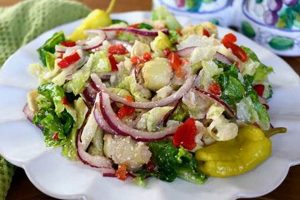
An exemplary Italian antipasto salad typically features a vibrant array of cured meats like salami, prosciutto, and mortadella, combined with cheeses such as provolone, mozzarella, or Parmesan. Artichoke hearts, roasted red peppers, pepperoncini, olives, and marinated mushrooms often contribute a tangy, savory dimension. Fresh vegetables like tomatoes, cucumbers, and onions provide a crisp counterpoint. A simple vinaigrette, sometimes infused with herbs like oregano or basil, completes the dish.
This type of salad serves as an excellent appetizer, offering a delightful medley of flavors and textures that stimulate the palate. Its versatility allows for adaptation to various dietary needs and preferences, with ingredients easily substituted or omitted. Historically, antipasto, meaning “before the meal” in Italian, represents a culinary tradition of presenting a selection of small, flavorful bites to whet the appetite for the courses to follow. The salad format provides a convenient and appealing way to enjoy these elements.
The following sections will delve into specific ingredient selections, preparation techniques, and variations that contribute to crafting a truly exceptional Italian antipasto salad. Further exploration will encompass optimal serving suggestions and complementary pairings for a complete dining experience.
Tips for an Exceptional Italian Antipasto Salad
Achieving optimal flavor and presentation requires careful consideration of ingredient selection and preparation techniques.
Tip 1: High-Quality Ingredients: Opt for premium cured meats and cheeses. Fresh, locally sourced vegetables, when available, enhance the salad’s vibrancy.
Tip 2: Balance of Flavors and Textures: Incorporate a variety of salty, tangy, and savory elements. Contrasting textures, from crisp vegetables to creamy cheeses and tender meats, create a more engaging experience.
Tip 3: Fresh Herbs: Fresh herbs like basil, oregano, or parsley elevate the salad’s aroma and flavor profile. Add them just before serving for optimal impact.
Tip 4: Marinade Considerations: Allowing vegetables like mushrooms or artichoke hearts to marinate enhances their flavor. A simple olive oil and vinegar base infused with garlic and herbs works well.
Tip 5: Dressing Choice: A light vinaigrette complements the salad without overpowering the other ingredients. Consider a lemon-herb or balsamic vinaigrette.
Tip 6: Proper Storage: Store ingredients separately and combine just before serving to maintain optimal freshness and prevent the salad from becoming soggy.
Tip 7: Artistic Presentation: Arrange the ingredients thoughtfully on a platter or in individual bowls for an appealing visual presentation. Consider color and texture variations for maximum impact.
Attention to these details ensures a well-balanced and flavorful antipasto salad that serves as an impressive appetizer or a light, satisfying meal.
By understanding these principles, one can elevate a simple antipasto salad from ordinary to extraordinary.
1. High-Quality Ingredients

Ingredient quality directly correlates with the overall caliber of an Italian antipasto salad. Superior ingredients elevate the sensory experience, contributing nuanced flavors and textures that distinguish an exceptional salad from a mediocre one. The impact of high-quality ingredients is discernible in every element, from the richness of the cured meats to the vibrancy of the vegetables.
Consider the difference between thinly sliced prosciutto di Parma, with its delicate, sweet-salty flavor, and a generic, mass-produced ham. Similarly, fresh mozzarella, made with high-quality milk, offers a creamy texture and clean flavor that surpasses processed cheese alternatives. Ripe, in-season tomatoes contribute a burst of juicy sweetness compared to bland, out-of-season options. These distinctions underscore the importance of prioritizing quality in ingredient selection.
Investing in high-quality ingredients ultimately yields a more rewarding culinary experience. While cost may be a factor, the improvement in flavor and overall enjoyment justifies the expense. This principle applies not only to the core ingredients but also to supporting elements like olives, artichoke hearts, and even the olive oil used in the vinaigrette. Discerning palates will readily appreciate the difference that premium ingredients make in creating a truly exceptional antipasto salad.
2. Balanced Flavors

Balance constitutes a cornerstone of a superlative Italian antipasto salad. The interplay of salty, sweet, sour, bitter, and umami elements creates a dynamic flavor profile that engages the palate. A well-balanced salad avoids overwhelming any single taste, ensuring a harmonious and satisfying experience. This balance extends beyond individual ingredients to the overall composition of the salad.
Consider the classic combination of salty prosciutto, sweet roasted red peppers, and tangy marinated artichoke hearts. The saltiness of the prosciutto is tempered by the sweetness of the peppers, while the artichoke hearts provide a contrasting acidic note. Adding a handful of peppery arugula introduces a subtle bitterness, further enhancing the complexity of the flavor profile. This interplay of contrasting tastes demonstrates the importance of balance in achieving a truly exceptional antipasto salad.
Achieving optimal balance requires careful consideration of ingredient proportions and flavor intensities. Overemphasis on any single element can disrupt the harmony of the salad. For example, an excessive amount of salty olives can overpower the other flavors, while too much vinegar in the vinaigrette can render the salad overly acidic. A discerning palate and attention to detail are essential for achieving the delicate balance that characterizes a truly outstanding Italian antipasto salad. Careful balancing of flavors distinguishes a memorable and harmonious culinary experience.
3. Textural Variety

Textural variety plays a crucial role in elevating an Italian antipasto salad from satisfactory to exceptional. A combination of textures provides a more engaging and satisfying sensory experience. The interplay of crisp, creamy, chewy, and crunchy elements adds depth and complexity, stimulating the palate beyond mere taste. This textural diversity distinguishes a truly memorable salad.
Consider the contrast between crisp romaine lettuce, creamy fresh mozzarella, chewy salami, and crunchy toasted pine nuts. Each element contributes a unique textural dimension, creating a dynamic and enjoyable eating experience. Without this variety, the salad might feel monotonous, lacking the engaging interplay that textural contrast provides. Furthermore, textural variation can enhance the perception of flavors, allowing individual components to stand out while contributing to the overall harmony of the salad.
Understanding the significance of textural variety allows for strategic ingredient selection and preparation. Blanching vegetables like green beans or asparagus can create a tender-crisp texture, while roasting vegetables like peppers or zucchini imparts a soft, yielding quality. Incorporating elements like croutons, toasted nuts, or crispy prosciutto adds a welcome crunch. Thoughtful consideration of these textural nuances elevates the Italian antipasto salad from a simple dish to a culinary masterpiece.
4. Fresh Herbs
Fresh herbs constitute an indispensable element in achieving an exceptional Italian antipasto salad. Their aromatic and flavor contributions significantly elevate the overall sensory experience. Unlike dried herbs, which offer a more concentrated and often muted flavor profile, fresh herbs provide a brightness and vibrancy that enhances the other ingredients. This vibrancy stems from the volatile oils present in fresh herbs, which dissipate over time, especially during the drying process. Consequently, the inclusion of fresh herbs distinguishes a truly remarkable antipasto salad.
Specific herbs often associated with Italian cuisine, such as basil, oregano, and parsley, play distinct yet complementary roles. Basil, with its sweet, slightly peppery flavor, pairs well with tomatoes and mozzarella. Oregano, possessing a more pungent, earthy aroma, complements cured meats and olives. Parsley, offering a mild, fresh flavor, provides a versatile counterpoint to other, more assertive ingredients. The strategic use of these herbs can significantly impact the overall balance and complexity of the salad. For example, a chiffonade of fresh basil elevates a simple caprese salad within the antipasto, while a sprinkle of chopped oregano enhances the robustness of salami and provolone. Judicious herb selection ensures that the individual flavors harmonize without overpowering one another.
Beyond flavor enhancement, fresh herbs contribute to the visual appeal of the antipasto salad. The vibrant green hues of basil, oregano, and parsley contrast beautifully with the other ingredients, creating a visually appealing presentation. The careful placement of whole basil leaves or sprigs of parsley can elevate the aesthetic presentation of the salad. However, it’s crucial to add fresh herbs just before serving to maximize their impact. Prolonged exposure to air and other ingredients can diminish their flavor and visual appeal. Understanding the role and proper utilization of fresh herbs is essential for crafting a truly exceptional Italian antipasto salad.
5. Vinaigrette Selection
Vinaigrette selection significantly influences the overall quality of an Italian antipasto salad. The vinaigrette acts as a unifying element, binding the diverse flavors and textures while contributing its own distinct character. An appropriately chosen vinaigrette enhances the existing flavors without overpowering them, creating a harmonious and balanced culinary experience. Conversely, an ill-suited vinaigrette can disrupt the delicate balance of the salad, masking the nuanced flavors of the individual components.
A classic balsamic vinaigrette, with its sweet and tangy notes, complements the richness of cured meats and cheeses while providing a counterpoint to the sweetness of roasted vegetables. For example, a balsamic vinaigrette enhances the savory notes of prosciutto and provolone while balancing the sweetness of roasted red peppers. Alternatively, a lighter lemon-herb vinaigrette, with its bright, citrusy flavor, pairs well with fresh mozzarella, tomatoes, and artichoke hearts. The herbaceous notes of the vinaigrette complement the delicate flavors of these ingredients without overpowering them. A heavier, cream-based dressing, however, might mask the subtle flavors of the fresh vegetables and overwhelm the lighter cheeses.
Careful consideration of the vinaigrette’s acidity, sweetness, and herbaceous notes is crucial for achieving optimal balance within the salad. The vinaigrette should complement, not compete with, the other ingredients. Achieving this balance distinguishes a truly exceptional Italian antipasto salad from a merely satisfactory one. Understanding the nuanced interplay between the vinaigrette and the other components allows for informed decision-making, ensuring a harmonious and flavorful culinary creation.
Frequently Asked Questions
This section addresses common inquiries regarding the preparation and enjoyment of an exceptional Italian antipasto salad.
Question 1: Can one substitute ingredients in an Italian antipasto salad?
Ingredient substitution offers flexibility in catering to dietary restrictions and personal preferences. Alternatives for cured meats include grilled chicken or chickpeas. Vegan cheese options can replace traditional dairy cheeses. Adaptability is key, ensuring a personalized and enjoyable culinary experience.
Question 2: What is the optimal serving temperature for an Italian antipasto salad?
Room temperature serving is generally recommended. This allows the flavors of the cured meats and cheeses to fully develop while maintaining the crispness of the vegetables. Chilling certain components, like mozzarella, separately beforehand helps maintain their ideal texture.
Question 3: How long can an Italian antipasto salad be stored?
Storage of prepared antipasto salad is not recommended due to the potential for textural degradation, particularly with the vegetables. Storing ingredients separately and combining them just prior to serving preserves optimal freshness and quality.
Question 4: What types of bread pair well with an Italian antipasto salad?
Crusty Italian bread or focaccia complement the flavors of the salad. Serving bread alongside provides a vehicle for enjoying the vinaigrette and enhances the overall dining experience.
Question 5: Can an Italian antipasto salad be served as a main course?
While traditionally served as an appetizer, an Italian antipasto salad can function as a light main course. Adding elements like grilled chicken, beans, or pasta can enhance its nutritional value and create a more substantial meal.
Question 6: What are common mistakes to avoid when preparing an Italian antipasto salad?
Common errors include using low-quality ingredients, overdressing the salad, and neglecting textural variety. Prioritizing fresh, high-quality ingredients, employing a light vinaigrette, and incorporating diverse textures elevate the final product considerably.
Understanding these aspects contributes to the creation of an exceptional Italian antipasto salad that satisfies a range of preferences.
For further exploration, the subsequent section will provide specific recipe variations and serving suggestions.
Crafting the Best Italian Antipasto Salad
Achieving an exceptional Italian antipasto salad hinges on a careful orchestration of high-quality ingredients, balanced flavors, varied textures, fresh herbs, and a complementary vinaigrette. Prioritizing ingredient quality lays the foundation for a superior culinary experience. Balancing salty, sweet, sour, bitter, and umami notes creates a harmonious flavor profile. Textural diversity, achieved through the interplay of crisp, creamy, chewy, and crunchy elements, elevates the sensory experience. Fresh herbs contribute vibrancy and aromatic depth, while the vinaigrette acts as a unifying element, enhancing without overpowering the other components.
Culinary exploration extends beyond mere sustenance; it delves into the realm of sensory delight and artistic expression. The pursuit of the best Italian antipasto salad embodies this principle, inviting experimentation with flavors, textures, and presentations. Through an understanding of the underlying principles discussed, one can elevate this classic dish from ordinary to extraordinary, transforming a simple salad into a culinary masterpiece.