A superior salad featuring burrata cheese typically involves fresh, high-quality ingredients complementing the creamy, delicate flavor of the cheese. Common components might include ripe tomatoes, seasonal fruits like peaches or figs, peppery greens such as arugula, and a simple vinaigrette. A thoughtfully constructed salad showcases the burrata as the star, balancing its richness with contrasting textures and flavors.
Crafting an exceptional salad around burrata offers a delightful culinary experience. The cheese’s unique texture a solid outer shell yielding to a soft, creamy interior provides a luxurious element. Combined with carefully chosen ingredients, a well-executed salad can elevate a simple meal or serve as an impressive centerpiece for a gathering. The relative simplicity of preparation also contributes to its appeal.
The following sections will explore various approaches to creating exceptional burrata salads, encompassing ingredient selection, preparation techniques, and suggested flavor combinations.
Tips for an Exceptional Burrata Salad
Elevating a burrata salad from simple to extraordinary involves attention to detail and a focus on balancing flavors and textures. The following tips provide guidance for achieving optimal results.
Tip 1: Prioritize High-Quality Burrata: Selecting fresh, high-quality burrata is paramount. Look for cheese that is properly stored and exhibits a milky-white exterior. The interior should be soft and creamy, not overly runny.
Tip 2: Seasonality Matters: Utilize seasonal produce for optimal flavor. Summer tomatoes, ripe stone fruits, and fresh herbs offer vibrant flavors that complement burrata beautifully. Winter citrus, roasted root vegetables, and hearty greens provide appealing alternatives during colder months.
Tip 3: Balance Richness with Acidity: Burrata’s richness benefits from a counterpoint of acidity. A simple vinaigrette with high-quality olive oil and balsamic or lemon juice provides necessary balance. Incorporating acidic fruits, such as tomatoes or citrus segments, also achieves this.
Tip 4: Consider Texture: Textural contrast enhances the overall experience. Toasted nuts, crusty bread, or crispy prosciutto add a welcome crunch against the creamy burrata.
Tip 5: Simplicity Often Reigns: Avoid overwhelming the delicate flavor of the burrata. A few carefully chosen, high-quality ingredients often create the most impactful salad.
Tip 6: Proper Timing is Crucial: Dress the salad immediately before serving to prevent the greens from wilting and the burrata from becoming watery. Serving the cheese at room temperature allows its full flavor and creamy texture to shine.
Tip 7: Elevate with Herbs: Fresh herbs add brightness and complexity. Basil, mint, and chives pair particularly well with burrata.
By focusing on these key elements, one can consistently create a burrata salad that is both visually appealing and palate-pleasing. Attention to ingredient quality, balance, and timing ensures a delightful culinary experience.
With these tips in mind, the following section will offer specific recipe ideas to inspire culinary creativity.
1. High-quality Burrata
The foundation of an exceptional burrata salad rests upon the quality of the burrata itself. Subpar cheese will inevitably compromise the final dish, regardless of other ingredient choices. Understanding the hallmarks of high-quality burrata is essential for achieving optimal results.
- Freshness
Fresh burrata is key. It should be consumed within a few days of production. Proper refrigeration is crucial for maintaining optimal quality. Fresh burrata exhibits a clean, milky aroma and a soft, supple texture.
- Appearance
Visually, high-quality burrata presents a pristine white exterior. The outer shell, or stracciatella, should appear smooth and slightly elastic. Avoid burrata with discoloration or a dry, cracked exterior.
- Texture
The interior of the burrata should be soft, creamy, and yielding. It should flow slightly when cut open, but not be excessively runny or watery. The stracciatella should offer a delicate contrast in texture, providing subtle chewiness.
- Flavor
High-quality burrata possesses a delicate, milky, and slightly tangy flavor. It should be rich and buttery without being overly salty or sour. Off-flavors or a pronounced acidity indicate suboptimal quality.
These factors contribute significantly to the overall success of a burrata salad. Selecting burrata that exhibits these characteristics ensures the final dish delivers the desired creamy texture, delicate flavor, and luxurious experience.
2. Seasonal Ingredients

Seasonality plays a crucial role in crafting a superior burrata salad. The delicate, creamy nature of burrata benefits significantly from the vibrant flavors of peak-season produce. Utilizing ingredients at their optimal ripeness enhances the overall balance and complexity of the dish. This approach not only maximizes flavor but also promotes sustainability by reducing reliance on out-of-season produce transported long distances.
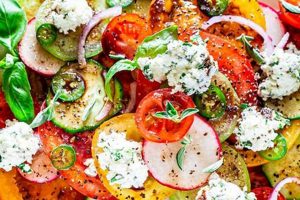
Consider a summer burrata salad: ripe heirloom tomatoes, bursting with sweetness and acidity, provide a natural counterpoint to the rich cheese. Fresh basil, fragrant and peppery, adds another layer of complexity. A drizzle of high-quality olive oil and a sprinkle of flaky sea salt complete the dish, showcasing the simplicity and elegance of seasonal ingredients. In contrast, a winter burrata salad might feature roasted butternut squash, offering earthy sweetness and a contrasting texture. Toasted pecans provide crunch, while pomegranate seeds contribute bursts of tartness and visual appeal. The adaptability of burrata allows for creativity throughout the year, showcasing the diversity of seasonal produce.
Choosing seasonal ingredients offers several advantages. Flavor is paramount; produce harvested at its peak ripeness offers superior taste compared to out-of-season alternatives. Nutritional value is also enhanced, as produce retains more nutrients when consumed fresh. Furthermore, embracing seasonality fosters a connection to local agriculture and reduces environmental impact. By prioritizing seasonal produce, one elevates the burrata salad from a simple dish to a celebration of flavor and sustainability.
3. Balanced Flavors

A truly exceptional burrata salad hinges on the careful balance of flavors. Burrata, with its rich, creamy, and subtly tangy profile, provides a luxurious foundation. However, relying solely on the cheese risks a one-dimensional experience. Strategic incorporation of complementary and contrasting flavors elevates the salad from simple to extraordinary.
- Acidity
Acidity plays a crucial role in cutting through the richness of the burrata. Ingredients like tomatoes, balsamic vinegar, or citrus fruits introduce a bright, tart counterpoint that prevents the salad from feeling heavy. The acidity also enhances the perception of sweetness in other components.
- Sweetness
A touch of sweetness complements the savory notes of the burrata. Ripe seasonal fruits, such as peaches, figs, or berries, offer a natural sweetness. A drizzle of honey or a balsamic glaze can also provide a subtle sweetness, balancing the acidity and enhancing the overall flavor profile.
- Saltiness
Salt enhances the flavors of all ingredients, including the burrata itself. Flaky sea salt, a sprinkle of Parmesan cheese, or salty cured meats like prosciutto contribute savory notes that balance the richness and sweetness. However, restraint is key; over-salting can easily overwhelm the delicate flavors of the salad.
- Bitterness/Peppery Notes
A subtle hint of bitterness or peppery flavor adds complexity and depth. Arugula, radicchio, or watercress provide a pleasant bitterness that contrasts the creamy burrata. Freshly cracked black pepper or a pinch of red pepper flakes introduce a gentle heat that further enhances the flavor profile.
By thoughtfully combining these elements, a harmonious balance emerges. The interplay of acidity, sweetness, saltiness, and bitterness creates a complex and nuanced flavor profile that elevates the burrata salad to a truly memorable culinary experience. Each ingredient contributes to the overall composition, ensuring that no single flavor dominates, but rather that they work in concert to highlight the creamy richness of the burrata.
4. Textural Contrast

Textural contrast forms a crucial element in a superlative burrata salad, elevating it beyond a simple combination of ingredients. The inherent creaminess of burrata necessitates contrasting textures to prevent a monotonous sensory experience. A well-executed salad engages the palate with a variety of sensations, creating a more dynamic and satisfying meal.
- Crunchy Elements
Crunchy components provide a stark contrast to the soft, yielding burrata. Options include toasted nuts (pine nuts, walnuts, pecans), crusty bread (crostini, croutons), or seeds (pumpkin, sunflower). These elements introduce a satisfying bite and auditory feedback, enhancing the overall dining experience. The interplay of creamy and crunchy creates a dynamic textural landscape.
- Tender Greens
Tender greens, such as baby spinach, arugula, or butter lettuce, offer a delicate counterpoint to the richness of the burrata. Their subtle texture adds a refreshing element without overpowering the cheese. The gentle interplay of textures creates a harmonious balance.
- Firm Vegetables/Fruits
Incorporating firmer vegetables or fruits provides yet another layer of textural complexity. Roasted vegetables, such as bell peppers or zucchini, offer a slight chewiness. Fruits like sliced apples, pears, or grapes introduce a juicy crispness. These additions prevent the salad from becoming overly soft and contribute to a more satisfying mouthfeel.
- Crispy Proteins (Optional)
While not essential, the addition of crispy proteins can further enhance textural contrast. Crispy prosciutto, pancetta, or even fried chickpeas offer a savory crunch that complements the burrata. These elements add a layer of complexity and richness to the salad.
The strategic interplay of these textural elements transforms the burrata salad from a simple dish into a multi-sensory experience. The creamy burrata, juxtaposed against crunchy, tender, and firm components, creates a delightful interplay on the palate. This attention to textural detail elevates the salad, ensuring a more satisfying and memorable meal.
5. Simple Preparation
The concept of “simple preparation” plays a crucial role in achieving a truly exceptional burrata salad. Burrata, with its delicate flavor and creamy texture, often shines brightest when not overshadowed by complex preparations or overly manipulated ingredients. Simplicity, in this context, signifies a focus on high-quality ingredients and straightforward techniques that allow the inherent qualities of the burrata to take center stage. Overly complicated preparations risk masking the subtle nuances of the cheese, detracting from the overall experience.
Consider a classic example: fresh burrata served alongside ripe heirloom tomatoes, drizzled with extra virgin olive oil, and seasoned with flaky sea salt and freshly cracked black pepper. This minimalist approach highlights the creamy richness of the burrata and the sweetness of the tomatoes, allowing their natural flavors to harmonize. The simplicity of the preparation ensures that the focus remains on the quality and freshness of the core ingredients. Conversely, a salad involving numerous cooked or processed elements might overwhelm the delicate burrata, obscuring its unique characteristics.
Understanding the significance of simple preparation in the context of a burrata salad unlocks its full potential. It emphasizes the importance of sourcing high-quality burrata and seasonal produce, allowing these ingredients to shine. This approach not only streamlines the cooking process but also often results in a more satisfying and flavorful dish. By embracing simplicity, one creates a canvas that showcases the exquisite nature of burrata, resulting in a truly exceptional culinary experience.
6. Proper Timing
Proper timing represents a critical, often overlooked, element in crafting a truly exceptional burrata salad. While ingredient quality and thoughtful combinations contribute significantly, neglecting the temporal aspect can compromise the final product. Burrata, with its delicate texture and creamy interior, is particularly susceptible to changes in temperature and moisture. Understanding the importance of timing ensures the salad remains vibrant, flavorful, and texturally appealing.
- Burrata Temperature
Serving burrata at the correct temperature is paramount. Refrigerated burrata mutes its flavor and firms its texture. Allowing the cheese to come to room temperature for approximately 30-60 minutes before serving unlocks its full potential, maximizing its creamy texture and delicate flavor profile.
- Salad Assembly
Timing the assembly of the salad is crucial. Delicate greens, such as arugula or spinach, wilt quickly when dressed. Therefore, it’s essential to assemble the salad components just prior to serving. This ensures the greens remain crisp and vibrant, providing a refreshing counterpoint to the creamy burrata.
- Dressing Application
The timing of dressing application also significantly impacts the final result. Adding dressing too early can lead to soggy greens and a diluted flavor profile. Dressing the salad immediately before serving ensures the ingredients remain crisp and the flavors vibrant. This allows each component, including the delicate burrata, to shine.
- Ingredient Preparation
Proper timing extends to the preparation of individual ingredients. For instance, if incorporating toasted nuts or croutons, these elements should be prepared shortly before serving to maintain their optimal crunch. Similarly, any fruits or vegetables that are prone to browning should be cut and incorporated into the salad at the last minute.
By carefully considering these temporal aspects, one ensures the burrata salad achieves its full potential. Proper timing allows the delicate flavors and textures of the ingredients, particularly the burrata, to shine. Attention to these seemingly minor details contributes significantly to the overall enjoyment and elevates the salad from simple to exceptional.
Frequently Asked Questions
This section addresses common inquiries regarding the preparation and enjoyment of burrata salad.
Question 1: What type of burrata is best suited for salad?
Fresh burrata, ideally from a local cheesemonger, provides optimal flavor and texture. Look for cheese with a milky-white exterior and a soft, creamy interior. Avoid products with excessive liquid or a sour aroma.
Question 2: Can other cheeses be substituted for burrata?
While substitutions can be made, they will inherently alter the intended flavor and texture profile. Fresh mozzarella offers a milder alternative, while ricotta salata provides a saltier, firmer option. However, neither fully replicates the unique characteristics of burrata.
Question 3: How long can burrata be stored?
Burrata is best consumed within a few days of purchase. Store it in its original packaging, submerged in brine, in the refrigerator. Avoid freezing burrata, as this compromises its texture.
Question 4: What dressings complement burrata best?
Simple vinaigrettes with high-quality olive oil and balsamic or lemon juice enhance burrata’s flavor without overpowering it. Avoid heavy, creamy dressings that might mask the cheese’s delicate nuances.
Question 5: Can burrata salad be prepared in advance?
While certain components, such as roasted vegetables or toasted nuts, can be prepared ahead of time, it’s crucial to assemble the salad immediately before serving. This prevents the greens from wilting and the burrata from becoming watery. The goal is to maintain optimal freshness and textural integrity.
Question 6: How can one prevent the salad from becoming watery?
Excess moisture can stem from several sources, including watery burrata, over-dressing, or early assembly. Selecting high-quality burrata, applying dressing just before serving, and ensuring all ingredients are dry contribute to a more appealing, less watery salad.
Addressing these common concerns ensures a more successful and enjoyable burrata salad experience. Focusing on ingredient quality, proper storage, and timely assembly optimizes both flavor and presentation.
This concludes the frequently asked questions section. Proceed to the recipe section for detailed instructions on creating specific burrata salad variations.
Best Burrata Salad Recipe
Achieving a truly exceptional burrata salad involves a multifaceted approach. Ingredient quality stands as a cornerstone, emphasizing fresh, high-quality burrata and seasonal produce. Balancing the inherent richness of the cheese with complementary flavors, such as acidity from citrus or tomatoes, and contrasting textures, like crunchy nuts or crusty bread, creates a more dynamic and satisfying sensory experience. Simple preparation methods allow the delicate flavors of the burrata to shine, while proper timing, particularly with regard to salad assembly and dressing application, ensures optimal freshness and prevents unwanted wateriness. Understanding these key elements empowers culinary exploration and facilitates consistent creation of superior burrata salads.
Ultimately, the pursuit of the “best” burrata salad recipe remains an ongoing journey, shaped by individual preferences and seasonal variations. Continual exploration of flavor combinations, textural contrasts, and presentation styles allows for refinement and personalization. Embracing these principles elevates the burrata salad from a simple dish to a culinary expression, celebrating the delicate nuances of this exceptional cheese.