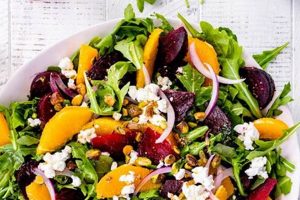
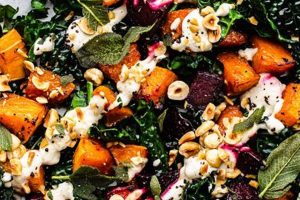
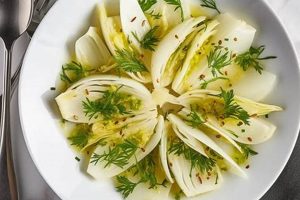
Combining the earthy sweetness of beets with the tangy, creamy texture of goat cheese creates a vibrant and balanced salad. This classic pairing often features roasted or pickled beets, crumbled or whipped goat cheese, and complementary ingredients such as toasted nuts, citrus segments, and leafy greens like arugula or spinach. A simple vinaigrette, often citrus-based or balsamic, ties the flavors together. Variations can include candied pecans, pistachios, or walnuts, orange or grapefruit supremes, and additions like red onion or fennel.
The popularity of this salad stems from the complementary flavor profiles and textures. The sweetness of the beets is offset by the tangy goat cheese, while the creamy cheese contrasts with the beet’s firm texture. The inclusion of nuts adds a satisfying crunch, and citrus brightens the dish with acidity and aroma. From a nutritional standpoint, beets are rich in nitrates and antioxidants, while goat cheese provides protein and calcium. This colorful combination offers a visually appealing and healthy dish suitable as a light lunch, starter, or side.
This exploration of beet and goat cheese salads will delve into various recipes, highlighting diverse preparation methods, ingredient variations, and presentation suggestions. Whether a novice cook or an experienced chef, discovering new ways to enjoy this classic combination provides culinary inspiration and a delightful sensory experience.
Tips for Crafting the Perfect Beet and Goat Cheese Salad
Elevating a beet and goat cheese salad from simple to exceptional involves attention to detail and a thoughtful approach to ingredient selection and preparation. The following tips offer guidance for achieving optimal flavor and texture.
Tip 1: Roast Beets for Enhanced Sweetness: Roasting beets intensifies their natural sweetness and concentrates their flavor. Wrap beets individually in foil with a drizzle of olive oil and roast until tender. This method also simplifies peeling.
Tip 2: Balance Flavors with Acidity: The earthiness of beets and the tang of goat cheese benefit from a bright acidic counterpoint. Citrus segments, a balsamic glaze, or a light vinaigrette provide this necessary balance.
Tip 3: Consider Textural Variety: Toasted nuts, such as walnuts or pecans, introduce a satisfying crunch. Other textural elements can include crispy shallots or croutons.
Tip 4: Choose the Right Goat Cheese: Soft, creamy goat cheese varieties crumble easily and blend well with other ingredients. Consider aged goat cheese for a more intense flavor profile.
Tip 5: Don’t Overcrowd the Plate: Allow each element to shine by avoiding overcrowding. Strategic placement enhances visual appeal and allows flavors to meld harmoniously.
Tip 6: Dress Lightly: A simple vinaigrette is often sufficient. Overdressing can mask the delicate flavors of the beets and goat cheese. A light drizzle is all that is needed.
Tip 7: Season Thoughtfully: Freshly ground black pepper and a touch of sea salt enhance the overall flavor profile without overpowering the other ingredients.
By following these tips, one can create a beet and goat cheese salad that delivers a harmonious balance of flavors, textures, and visual appeal. Careful preparation and ingredient selection elevate this simple salad to a truly memorable culinary experience.
This comprehensive guide provides a strong foundation for creating exceptional beet and goat cheese salads. Experimentation and personal preference will further refine technique and lead to the discovery of unique and satisfying flavor combinations.
1. Beet Preparation (Roasting/Pickling)

Beet preparation significantly influences the final character of a beet salad with goat cheese. Roasting and pickling represent two distinct approaches, each imparting unique qualities to the beets and consequently, the overall salad. Roasting concentrates the beet’s natural sugars, yielding a tender, sweet, and slightly caramelized flavor profile. This method complements the tangy goat cheese, creating a balanced flavor contrast. Pickling, conversely, introduces a sharp, acidic dimension. Pickled beets offer a vibrant color and a crisp texture, providing a refreshing counterpoint to the creamy goat cheese. The choice between roasting and pickling depends on the desired flavor profile and textural contrast in the finished salad.
Consider a salad featuring roasted golden beets, crumbled goat cheese, toasted walnuts, and a citrus vinaigrette. The sweetness of the roasted beets harmonizes with the tangy goat cheese and citrus, while the walnuts contribute a satisfying crunch. Alternatively, a salad with pickled red beets, whipped goat cheese, fresh dill, and a simple olive oil dressing offers a brighter, more acidic experience. The pickled beets provide a vibrant pop of color and a crisp texture, contrasting with the creamy goat cheese and herbaceous dill. These examples demonstrate how beet preparation techniques contribute distinct characteristics to the overall salad composition.
Understanding the impact of beet preparation methods allows for strategic flavor and texture manipulation within a beet and goat cheese salad. Roasting enhances sweetness and tenderness, while pickling introduces acidity and crispness. Selecting the appropriate method ensures a balanced and harmonious final product, aligning with specific flavor preferences and desired textural complexity. This awareness elevates the salad beyond a simple combination of ingredients, transforming it into a carefully constructed culinary experience.
2. Goat Cheese Selection
Goat cheese selection plays a crucial role in the overall success of a beet salad. The nuances of flavor and texture offered by different goat cheese varieties significantly influence the final dish. Careful consideration of these characteristics allows for a harmonious balance between the earthy sweetness of beets and the tangy, creamy notes of the cheese.
- Fresh Chvre:
Fresh chvre, with its mild, slightly tangy flavor and creamy texture, provides a versatile base. It readily crumbles, making it easy to distribute throughout the salad. Its delicate flavor profile allows other ingredients, such as the beets and vinaigrette, to shine without being overpowered. Consider a salad with roasted beets, fresh chvre, candied pecans, and a balsamic vinaigrette for a balanced combination.
- Aged Goat Cheese:
Aged goat cheese offers a more intense, complex flavor profile. The aging process concentrates the flavors, resulting in a sharper, tangier, and sometimes even slightly nutty taste. This bolder flavor can stand up to more robust ingredients and dressings. A salad with pickled beets, aged goat cheese, toasted walnuts, and a Dijon vinaigrette exemplifies this pairing.
- Flavored Goat Cheese:
Flavored goat cheeses, such as those infused with herbs, spices, or fruits, introduce an additional layer of complexity. Herb-infused goat cheese, like one with chives or dill, complements the earthy beets, while a cheese with cranberries or figs adds a touch of sweetness. These flavored varieties offer a unique twist on the traditional beet and goat cheese salad combination.
- Texture Considerations:
The texture of goat cheese, ranging from soft and spreadable to firm and crumbly, also impacts the salad’s overall composition. A whipped goat cheese creates a light and airy element, while a harder aged cheese provides a more substantial presence. Consider the desired textural contrast when selecting a goat cheese for a specific beet salad recipe.
Selecting the appropriate goat cheese variety elevates the beet salad from simple to exceptional. The chosen cheese must complement the beets, other ingredients, and the dressing, contributing to a balanced and harmonious flavor profile. Careful consideration of flavor intensity, texture, and potential flavor pairings ensures a well-rounded and satisfying culinary experience.
3. Complementary Ingredients

Complementary ingredients are essential for a successful beet salad with goat cheese. These additions elevate the dish beyond a simple two-ingredient combination, adding layers of flavor, texture, and visual appeal. The inherent earthiness of beets and the tangy creaminess of goat cheese provide a foundation upon which a variety of complementary ingredients can build. Strategic selection creates a balanced and harmonious flavor profile while enhancing the overall sensory experience.
Several categories of complementary ingredients contribute distinct characteristics:
- Nuts: Toasted nuts, such as walnuts, pecans, or pistachios, introduce a satisfying crunch and nutty flavor. Walnuts, with their slightly bitter edge, offer a pleasant contrast to the sweetness of the beets, while pecans provide a buttery richness. Pistachios, with their vibrant green color, add visual interest.
- Citrus: Citrus fruits, particularly oranges and grapefruits, introduce a bright acidity that cuts through the richness of the goat cheese and the earthiness of the beets. Citrus segments add a juicy burst of flavor and visual appeal. The zest of citrus fruits can also be used to impart a more intense citrus aroma.
- Leafy Greens: Leafy greens, such as arugula, spinach, or watercress, contribute a peppery bite and a fresh element to the salad. Arugula, with its distinctive peppery flavor, offers a sharp contrast to the sweetness of the beets, while spinach provides a milder, more neutral backdrop.
- Other Vegetables: Thinly sliced red onion adds a pungent bite, while fennel provides a subtle anise flavor. These additions contribute textural and flavor complexity.
A well-composed beet salad with goat cheese often incorporates elements from multiple categories. For example, a salad with roasted beets, crumbled goat cheese, candied pecans, orange segments, and baby spinach offers a balance of sweet, tangy, crunchy, and fresh elements.
Understanding the role of complementary ingredients allows for informed choices that enhance the overall composition of the salad. Careful consideration of flavor profiles, textures, and colors ensures a harmonious and satisfying culinary experience. The strategic incorporation of complementary ingredients elevates the beet and goat cheese salad from a simple combination to a complex and well-balanced dish. The interplay of these elements creates a symphony of flavors and textures, demonstrating the importance of complementary ingredients in achieving culinary excellence.
4. Vinaigrette Choice
Vinaigrette selection significantly impacts the overall balance and flavor profile of a beet salad with goat cheese. The vinaigrette acts as a unifying element, bringing together the earthy sweetness of the beets, the tangy creaminess of the goat cheese, and any other complementary ingredients. A thoughtfully chosen vinaigrette enhances the individual components while creating a harmonious whole. An overly acidic vinaigrette can overpower the delicate flavors of the beets and goat cheese, while a bland vinaigrette fails to provide the necessary contrast and depth. The ideal vinaigrette complements and enhances, rather than masks, the other flavors present.
Several factors influence vinaigrette selection, including the preparation method of the beets and the type of goat cheese used. Roasted beets, with their concentrated sweetness, often pair well with a slightly tangy vinaigrette, such as one made with citrus juice or balsamic vinegar. Pickled beets, already possessing a sharp acidity, may benefit from a milder vinaigrette based on olive oil and a touch of Dijon mustard. The intensity of the goat cheese also plays a role. A mild, fresh chvre allows for a wider range of vinaigrette options, while a more assertive aged goat cheese might require a bolder vinaigrette to achieve balance. A beet salad with roasted beets, fresh chvre, and candied pecans might benefit from a citrus vinaigrette, while a salad with pickled beets, aged goat cheese, and walnuts might be better suited to a Dijon vinaigrette.
Achieving a harmonious balance of flavors is the primary goal of vinaigrette selection. The vinaigrette should complement the existing flavors, providing acidity, sweetness, or other nuanced notes that enhance the overall composition. Experimentation with different flavor combinations is encouraged, but careful consideration of the interplay between the vinaigrette and other ingredients is crucial for a successful outcome. A well-chosen vinaigrette elevates the beet and goat cheese salad, transforming it from a simple combination of ingredients into a cohesive and well-balanced culinary creation. The vinaigrette’s ability to unify and enhance the other components underscores its crucial role in the final dish.
5. Presentation
Presentation significantly influences the perceived quality and enjoyment of a beet salad with goat cheese. While flavor remains paramount, visual appeal enhances the dining experience. Thoughtful presentation elevates the dish from a simple combination of ingredients to a visually engaging culinary creation. Careful consideration of plating, color contrast, and textural variation transforms the salad into an aesthetically pleasing and appetizing presentation.
- Plating Techniques:
Plating techniques impact visual appeal and portion control. A composed salad, with ingredients intentionally arranged, offers a more refined presentation than a tossed salad. Consider arranging beet slices in a circular pattern, topping them with crumbled goat cheese and strategically placed nuts and greens. Alternatively, layering ingredients in a glass jar creates visual interest and portability.
- Color Contrast:
Color contrast enhances visual appeal. The deep red or golden hues of beets provide a striking backdrop for the creamy white goat cheese and vibrant green additions like arugula or pistachios. Intentionally incorporating contrasting colors creates visual interest and highlights the diversity of ingredients.
- Textural Variation:
Visual presentation benefits from showcasing varied textures. The smooth goat cheese contrasts with the firm beets, while crunchy nuts or croutons add another dimension. Visually highlighting these textural differences adds depth and complexity to the presentation.
- Garnishes:
Garnishes provide finishing touches. A sprinkle of fresh herbs, a drizzle of balsamic glaze, or a few edible flowers add a touch of elegance and enhance the sensory experience. Garnishes should be chosen carefully to complement the flavors of the salad and add to the overall visual appeal without being overwhelming.
Thoughtful presentation enhances the enjoyment of a beet salad with goat cheese. Visual appeal stimulates appetite and elevates the perceived quality of the dish. Strategic plating, color contrast, highlighting textural variation, and careful garnishing transform a simple salad into a visually stunning culinary experience. While flavor remains crucial, presentation adds another layer of enjoyment, demonstrating the connection between aesthetics and culinary satisfaction. By considering these visual elements, one elevates the beet and goat cheese salad from a basic dish to a visually compelling and memorable culinary creation.
Frequently Asked Questions
This section addresses common inquiries regarding beet and goat cheese salads, offering practical guidance and clarifying potential uncertainties.
Question 1: How can one prevent beets from bleeding excessively and staining other salad components?
Several techniques minimize beet bleeding. Adding an acidic element, such as vinegar or citrus juice, to the beets helps set the color. Roasting beets in their skins also contains the color. If using pre-cooked beets, adding them to the salad just before serving reduces staining.
Question 2: What are suitable alternatives to goat cheese in a beet salad while maintaining a comparable flavor profile?
Feta cheese provides a similar tangy, salty flavor and crumbly texture. Ricotta salata, a firmer, saltier version of ricotta, offers another alternative. For a non-dairy option, a cashew-based cream cheese can provide a creamy texture and mild flavor that complements beets.
Question 3: How long can a prepared beet and goat cheese salad be stored?
Storage time depends on the specific ingredients. Generally, a beet and goat cheese salad can be refrigerated for up to three days. However, adding the dressing just before serving is recommended to prevent the salad from becoming soggy.
Question 4: Can canned beets be used in this type of salad?
While fresh beets offer superior flavor and texture, canned beets provide a convenient alternative. Rinsing canned beets thoroughly removes excess brine and improves flavor. Roasting canned beets briefly enhances their sweetness and texture.
Question 5: What are some strategies for making beet and goat cheese salads more visually appealing?
Visual appeal is enhanced through color and textural contrasts. Golden beets provide a striking contrast to traditional red beets. Incorporating ingredients like toasted nuts, crumbled goat cheese, and vibrant greens creates textural and visual interest. Strategic plating, using techniques like layering or arranging components in distinct sections, enhances presentation.
Question 6: How can one adjust the sweetness level of a beet and goat cheese salad?
Balancing sweetness involves adjusting ingredients and dressings. Pickled beets offer a tangy counterpoint to naturally sweet beets. A vinaigrette with a touch of honey or maple syrup adds sweetness, while acidic elements like lemon juice or vinegar temper excessive sweetness.
Understanding these common concerns allows for informed decision-making during preparation, ensuring a successful and enjoyable beet and goat cheese salad experience. By addressing these potential challenges, one can confidently create a well-balanced and flavorful dish.
The following section offers specific recipe variations, providing practical examples of how these principles translate into delicious culinary creations.
Conclusion
Exploration of beet salad recipes incorporating goat cheese reveals a versatile dish offering a harmonious balance of flavors and textures. Careful consideration of beet preparation, goat cheese selection, complementary ingredients, and vinaigrette choice contributes to a successful outcome. Roasting enhances beet sweetness, while pickling introduces a tangy dimension. Goat cheese varieties, ranging from fresh chvre to aged options, offer diverse flavor profiles and textures. Complementary ingredients, such as nuts, citrus segments, and leafy greens, add complexity and visual appeal. The vinaigrette, acting as a unifying element, balances flavors and enhances the overall composition. Thoughtful presentation further elevates the dish, transforming a simple salad into a visually appealing culinary experience.
The adaptability of beet salad recipes featuring goat cheese allows for endless variations catering to individual preferences. Understanding the interplay of ingredients empowers culinary exploration and creativity. Strategic ingredient selection and preparation techniques unlock the full potential of this classic combination, ensuring a consistently delightful and satisfying culinary experience.