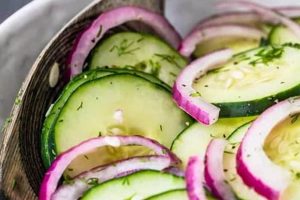
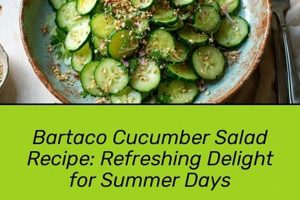
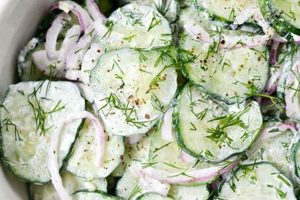
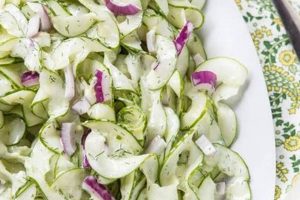
A guide for preparing a dish of sliced cucumbers and onions, typically combined with a dressing of vinegar, oil, and seasonings, offers a refreshing and flavorful culinary experience. Variations can include additions such as herbs, spices, or other vegetables to enhance the taste and texture. A simple preparation, it can serve as a light lunch, a side dish, or a component of a larger meal.
Cool and crisp, this type of salad provides a healthy and hydrating option, particularly suitable for warmer weather. Cucumbers are a good source of hydration and vitamins, while onions offer various health benefits and add pungent flavor. Historically, such combinations have been appreciated across different cultures for their simplicity and refreshing qualities, often adapted using locally available ingredients and seasonings. This dish remains a popular choice for its ease of preparation, nutritional value, and adaptable flavor profile.
This exploration will delve into various aspects of creating this culinary staple, including selecting the best ingredients, different dressing options, tips for optimal preparation, and creative serving suggestions.
Tips for a Perfect Cucumber and Onion Salad
Achieving optimal flavor and texture requires attention to detail throughout the preparation process. These tips offer guidance for creating a truly exceptional dish.
Tip 1: Salt the cucumbers: Drawing out excess moisture from sliced cucumbers prevents a watery salad. After slicing, sprinkle cucumbers with salt and let them sit for 15-20 minutes before rinsing and patting dry.
Tip 2: Thinly slice the vegetables: Uniformly thin slices ensure even flavor distribution and a pleasing texture. A mandoline slicer or sharp knife can achieve optimal thinness.
Tip 3: Choose the right onion: Red or white onions offer a sharp, pungent bite. Sweet onions, such as Vidalia, provide a milder flavor. Consider the overall flavor profile desired when selecting an onion variety.
Tip 4: Balance the dressing: Acidity and sweetness should complement each other. A classic vinaigrette typically uses a ratio of three parts oil to one part vinegar. Adjust according to preference.
Tip 5: Add fresh herbs: Dill, mint, or parsley can elevate the flavor profile. Freshly chopped herbs offer the most vibrant taste and aroma.
Tip 6: Chill before serving: Chilling allows the flavors to meld and enhances the refreshing qualities of the salad. Refrigerate for at least 30 minutes before serving.
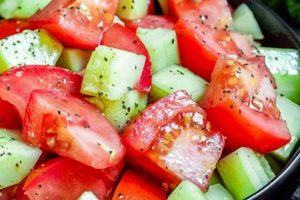
Tip 7: Consider additions: Enhance the salad with ingredients like chopped bell peppers, tomatoes, or feta cheese for added texture and flavor complexity.
By following these tips, one can create a simple yet satisfying dish that showcases the fresh flavors of cucumbers and onions. Attention to these details elevates the final product from ordinary to exceptional.
These guidelines provide a strong foundation for crafting a delicious and refreshing salad. Further exploration of specific recipes and variations can expand culinary horizons.
1. Ingredients

Ingredient selection significantly impacts the final flavor profile and overall quality of a cucumber and onion salad. Careful consideration of each component ensures a balanced and desirable outcome. Cucumbers, the foundational element, contribute a refreshing, hydrating base. Choosing firm, unwaxed cucumbers with vibrant green skin ensures optimal texture and flavor. Different varieties, such as English or Persian cucumbers, offer subtle variations in taste and texture, allowing for customization.
Onions provide a pungent counterpoint to the cucumber’s mildness. Common choices include red, white, or sweet onions like Vidalia. The choice influences the salad’s overall sharpness and sweetness. Beyond these primary components, the dressing plays a crucial role. A simple vinaigrette, typically composed of vinegar and oil, provides acidity and richness. The type of vinegar, ranging from apple cider to white wine vinegar, further nuances the flavor profile. Fresh herbs, like dill or mint, contribute aromatic complexity, while spices, such as black pepper or red pepper flakes, add subtle heat and depth.
Understanding the interplay of these ingredients allows for informed choices based on desired outcomes. A milder salad might utilize sweet onions and a light vinaigrette, while a bolder version could incorporate red onions, a sharper vinegar, and a touch of spice. The selection process becomes a crucial step in crafting a salad that aligns with specific taste preferences. Effective ingredient selection ultimately transforms simple components into a harmonious and flavorful dish.
2. Preparation
Preparation significantly influences the final quality and enjoyment of a cucumber and onion salad. This stage encompasses several crucial steps, each contributing to the dish’s overall success. Proper preparation maximizes flavor, optimizes texture, and enhances presentation. Neglecting these steps can result in a watery, unevenly flavored, or less appealing salad.
The initial step typically involves slicing the cucumbers and onions. Uniformly thin slices ensure even distribution of flavor and a pleasant texture. Salting the cucumbers prior to combining them with other ingredients draws out excess moisture, preventing a watery salad. This step, often overlooked, significantly improves the final result. Thoroughly drying the salted cucumbers further enhances the salad’s crispness and prevents the dressing from becoming diluted. The choice of cutting technique also affects the final presentation. Thinly sliced vegetables create a delicate, elegant appearance, while thicker slices offer a more rustic aesthetic. Careful consideration of these elements ensures a visually appealing and texturally satisfying dish.
Precise execution of these preparatory steps lays the groundwork for a successful cucumber and onion salad. Attention to detail, from slicing techniques to moisture control, significantly impacts the final product. Understanding the importance of each step allows one to create a salad that not only tastes delicious but also presents beautifully. This foundational understanding transforms simple ingredients into a cohesive and enjoyable culinary experience.
3. Dressing
The dressing constitutes a pivotal component, significantly influencing the overall flavor profile and enjoyment of a cucumber and onion salad. It provides acidity, richness, and depth, transforming individual ingredients into a cohesive and flavorful dish. Careful consideration of dressing choices allows for customization based on desired taste outcomes, ranging from tangy and vibrant to creamy and mild.
- Vinaigrettes
Vinaigrettes, classic dressings for this type of salad, typically consist of oil and vinegar. The ratio of oil to vinegar impacts the richness and tanginess. A standard ratio is three parts oil to one part vinegar, but this can be adjusted based on preference. Variations include balsamic vinaigrettes, red wine vinaigrettes, and apple cider vinaigrettes. Each vinegar imparts unique flavor characteristics, influencing the salad’s overall profile. The choice of oil, such as olive oil, avocado oil, or grapeseed oil, also contributes to flavor and texture.
- Creamy Dressings
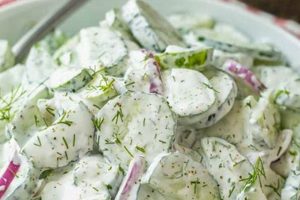
Creamy dressings offer a richer, milder alternative to vinaigrettes. These dressings often incorporate sour cream, yogurt, or mayonnaise as a base. They provide a smooth, velvety texture and a less acidic flavor profile. Examples include ranch dressing, dill dressing, and creamy Italian dressing. Creamy dressings complement the crispness of the cucumbers and the sharpness of the onions, creating a balanced flavor experience.
- Flavor Enhancements
Flavor enhancements elevate dressings beyond basic oil and vinegar or creamy bases. Fresh herbs, such as dill, mint, parsley, or chives, add aromatic complexity. Spices, including black pepper, red pepper flakes, or paprika, introduce warmth and depth. Other additions, like garlic, lemon juice, or honey, further customize the flavor profile. These enhancements allow for a wide range of flavor combinations, catering to individual preferences.
- Dressing Application
Proper application of the dressing ensures even flavor distribution and prevents a soggy salad. Adding the dressing just before serving maintains the vegetables’ crispness. Gently tossing the salad with the dressing ensures that all ingredients are evenly coated. Alternatively, serving the dressing on the side allows individuals to control the amount added to their portion, accommodating varying taste preferences and dietary needs.
The selection and application of the dressing significantly influence the final outcome of a cucumber and onion salad. Understanding the different types of dressings, the role of flavor enhancements, and proper application techniques enables the creation of a well-balanced and enjoyable culinary experience. The interplay of these elements elevates the salad beyond its basic components, transforming it into a flavorful and satisfying dish.
4. Flavor Balance
Flavor balance represents a critical aspect of a successful cucumber and onion salad, elevating it from a simple combination of ingredients to a harmonious and enjoyable dish. Achieving this balance requires careful consideration of the interplay between different taste elements: sweetness, acidity, saltiness, and pungency. A well-balanced salad features a pleasant contrast and complexity, where no single flavor dominates the others.
- Acidity
Acidity, primarily derived from the dressing, provides a bright, tangy counterpoint to the mildness of cucumbers and the sharpness of onions. Vinegar, a common source of acidity, offers diverse options, each with unique flavor characteristics. Apple cider vinegar imparts a slightly sweet and fruity note, while white wine vinegar offers a crisper, cleaner taste. Lemon juice provides a citrusy brightness. Balancing acidity involves considering the intensity of the vinegar and adjusting its quantity in the dressing. Too much acidity can make the salad overly tart, while too little can result in a bland flavor profile.
- Sweetness
Sweetness can temper the acidity and pungency, adding a layer of complexity. Sweet onions, such as Vidalia, inherently contribute sweetness. Alternatively, a touch of sugar or honey in the dressing can introduce subtle sweetness. Balancing sweetness requires careful moderation. Excessive sweetness can mask the other flavors, while insufficient sweetness can leave the salad unbalanced.
- Saltiness
Salt enhances the flavors of the other ingredients and helps draw out excess moisture from the cucumbers. However, excessive salt can overpower the salad. Careful salting of the cucumbers and judicious use of salt in the dressing are essential for achieving a balanced flavor profile. The type of salt used, such as sea salt or kosher salt, can also subtly influence the taste.
- Pungency
Pungency, primarily from the onions, adds a sharp, biting note. The choice of onion variety influences the intensity of pungency. Red onions offer a robust pungency, while white onions provide a milder bite. Balancing pungency involves selecting an onion variety that complements the other flavors without overpowering them. Soaking sliced onions in cold water can mellow their pungency if desired. Balancing these elements ensures that each flavor plays its part without dominating the others.
A well-executed cucumber and onion salad demonstrates a harmonious interplay of these four elements. The acidity cuts through the richness of the dressing and the mildness of the cucumbers. The sweetness tempers the acidity and pungency. The salt enhances the overall flavor and helps manage moisture. The pungency adds a layer of complexity and bite. The resulting salad offers a refreshing, flavorful, and balanced culinary experience.
5. Serving Suggestions
Serving suggestions enhance the versatility of a cucumber and onion salad, extending its role beyond a simple side dish. Consideration of these suggestions allows for integration into diverse culinary contexts, maximizing the salad’s potential and broadening its appeal. Thoughtful presentation and complementary pairings elevate the overall dining experience.
As a standalone dish, a cucumber and onion salad offers a refreshing light lunch or a simple side. Its crispness and bright flavors provide a palate-cleansing counterpoint to richer dishes. However, its potential extends beyond these basic applications. Paired with grilled meats or fish, the salad’s acidity cuts through richness, balancing the overall meal. Incorporated into sandwiches or wraps, it adds a layer of fresh, crunchy texture and vibrant flavor. As a component of a larger salad, it contributes textural contrast and a burst of refreshing flavor. Served alongside heavier dishes like casseroles or stews, it provides a light and refreshing counterbalance. The salad’s adaptability allows for creative integration into various culinary scenarios.
Effective serving suggestions consider not only the salad itself but also the broader culinary context. Presentation plays a key role. A simple arrangement in a bowl suffices for a casual meal, while a more elaborate presentation, such as individual portions plated artfully, elevates a formal setting. Garnishes, like fresh herbs or a sprinkle of spices, enhance visual appeal. Understanding the interplay between the salad and its accompanying dishes, as well as the overall dining occasion, allows for strategic and effective serving suggestions. These considerations transform the salad from a simple side dish into a versatile culinary component, enhancing the overall dining experience.
Frequently Asked Questions
This section addresses common inquiries regarding cucumber and onion salad preparation, offering practical solutions and clarifying potential uncertainties. These responses aim to provide comprehensive guidance for achieving optimal results.
Question 1: How can one prevent a watery cucumber and onion salad?
Salting the sliced cucumbers before incorporating them into the salad draws out excess moisture. After approximately 15-20 minutes, rinse the cucumbers and pat them dry to remove excess salt and residual water. This crucial step significantly improves the salad’s final texture.
Question 2: What type of onion works best in this salad?
Red or white onions offer a sharp, pungent flavor, while sweet onions like Vidalia provide a milder taste. Selection depends on the desired flavor profile. Consider the overall balance of the salad when choosing an onion variety.
Question 3: Can one prepare this salad in advance?
While the salad can be prepared a few hours in advance, adding the dressing immediately before serving is recommended to maintain the vegetables’ crispness and prevent a soggy salad. Storing the prepared vegetables and dressing separately allows for optimal texture and flavor retention.
Question 4: What can be done to reduce the pungency of raw onions?
Soaking thinly sliced onions in cold water for 10-15 minutes can mellow their sharp flavor. This process diminishes the intensity of the onion’s pungency without compromising its textural contribution to the salad.
Question 5: What are some suitable dressing alternatives for those avoiding oil-based vinaigrettes?
Lemon juice or a light vinegar, such as apple cider vinegar or white wine vinegar, can serve as a base for a lighter dressing. Herbs, spices, and a touch of sweetener can enhance the flavor without adding significant fat. This offers a refreshing and healthier alternative to traditional oil-based dressings.
Question 6: How can this salad be enhanced beyond basic cucumbers and onions?
Additions such as chopped bell peppers, tomatoes, fresh herbs (dill, mint, parsley), or crumbled feta cheese can introduce varied textures and flavors. These additions create complexity and elevate the salad beyond a simple two-ingredient dish.
Addressing these commonly encountered questions helps ensure consistent and successful preparation. Attention to these details elevates the final dish, transforming simple ingredients into a satisfying and flavorful salad.
For further culinary exploration, consider experimenting with various ingredient combinations, dressings, and serving suggestions to discover personalized variations.
Conclusion
Exploration of the elements contributing to a successful cucumber and onion salad reveals the importance of ingredient selection, preparation techniques, dressing choices, and flavor balance. From the crispness of cucumbers to the pungency of onions, each component plays a crucial role in the final dish. Proper slicing, salting, and drying techniques optimize texture and prevent a watery salad. The dressing, whether a classic vinaigrette or a creamy alternative, provides acidity, richness, and depth of flavor. Balancing these elements ensures a harmonious and enjoyable culinary experience. Serving suggestions further enhance the salad’s versatility, integrating it into diverse culinary contexts.
This foundational understanding empowers culinary exploration and personalized variations. Attention to detail and thoughtful consideration of each element transform simple ingredients into a refreshing and flavorful dish, showcasing the potential of this culinary staple. Further experimentation with diverse ingredients, dressings, and serving styles promises continued culinary discovery and enjoyment.