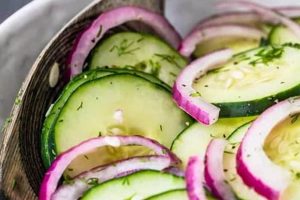
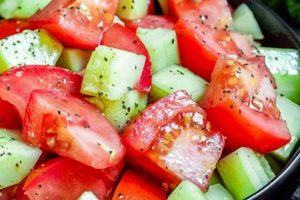
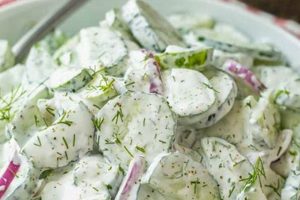
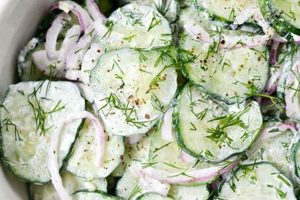
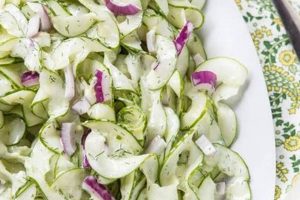
A guide to preparing a cucumber salad in the German style typically provides a list of ingredients, such as cucumbers, vinegar, onions, dill, and seasonings, alongside step-by-step instructions for combining these components. Variations exist, incorporating ingredients like sour cream, yogurt, or sugar, reflecting regional preferences and family traditions.
This dish offers a refreshing and light complement to richer German cuisine. Its simple preparation makes it accessible to cooks of all skill levels, while its versatility allows for adaptation to individual tastes and seasonal ingredient availability. Historically, such salads were a practical way to preserve and enjoy cucumbers during harvest seasons, showcasing resourcefulness and culinary ingenuity.
Further exploration of this culinary topic might include detailed examinations of regional variations, discussions of optimal ingredient selection, and analyses of the cultural significance of this simple yet enduring dish.
Tips for German Cucumber Salad Preparation
Optimizing ingredient selection and preparation techniques enhances the flavor and texture of German cucumber salad. Attention to detail ensures a refreshing and authentic culinary experience.
Tip 1: Cucumber Selection: Opt for firm, unwaxed European cucumbers, often labeled as “English” or “hothouse” cucumbers. These varieties possess thinner skins and fewer seeds, contributing to a superior texture.
Tip 2: Slicing Technique: Thinly slicing the cucumbers, preferably using a mandoline, creates a delicate texture and allows for optimal flavor absorption. Avoid overly thick slices, which can result in a less palatable salad.
Tip 3: Salting and Draining: Salting the sliced cucumbers and allowing them to drain removes excess moisture, preventing a watery salad and concentrating the cucumber flavor.
Tip 4: Vinegar Selection: White wine vinegar or apple cider vinegar provides the traditional tangy base for the dressing. Experimenting with different vinegar types allows for nuanced flavor profiles.
Tip 5: Dill Incorporation: Fresh dill is essential for authentic German cucumber salad. Dried dill can be used as a substitute if fresh is unavailable, but the flavor will be less vibrant.
Tip 6: Sweetener Adjustment: A touch of sugar or a sweetener substitute balances the acidity of the vinegar. The level of sweetness can be adjusted to personal preference.
Tip 7: Chilling Time: Allowing the salad to chill for at least 30 minutes before serving allows the flavors to meld and enhances the refreshing quality of the dish.
By following these tips, one can consistently create a German cucumber salad that exemplifies the dish’s characteristic refreshing flavors and crisp textures.
These preparatory insights pave the way for a deeper understanding of German culinary traditions and provide a foundation for further exploration of regional variations and innovative adaptations.
1. Thinly sliced cucumbers

Thinly sliced cucumbers are fundamental to a successful German cucumber salad. This slicing technique maximizes surface area, facilitating efficient absorption of the vinegar-based dressing. The thin slices also contribute to a delicate, palatable texture, contrasting with potentially tougher, thicker cuts. If cucumbers are sliced too thickly, the salad can become unwieldy and the flavor distribution uneven. Consider the difference between a thinly sliced cucumber’s delicate crunch and a thickly sliced cucumber’s more substantial bite. The former integrates seamlessly into the overall composition of the salad, while the latter can dominate the textural experience. In traditional preparations, a mandoline is often employed to achieve uniform, thin slices, highlighting the importance of this element.
The practical significance of thin cucumber slices extends beyond texture and flavor absorption. Thin slices also contribute to a visually appealing presentation. The delicate, translucent slices allow the dressing to coat them evenly, creating a glistening appearance. This visual appeal enhances the dining experience, showcasing the care taken in preparation. Furthermore, the thinness allows for greater flexibility in serving and plating, contributing to the salad’s versatility as a side dish. Imagine serving thick cucumber rounds alongside delicate entrees; the visual and textural mismatch would detract from the overall presentation. The thin slices, however, integrate harmoniously with a wide range of accompanying dishes.
In summary, the emphasis on thinly sliced cucumbers in German cucumber salad recipes underscores the interconnectedness of texture, flavor, and presentation in culinary traditions. This seemingly simple technique plays a crucial role in the dish’s success, impacting both the sensory experience and the cultural significance of this classic preparation. While variations exist, the principle of maximizing surface area and achieving a delicate texture remains consistent, demonstrating the enduring wisdom of traditional culinary practices.
2. Vinegar-based dressing
The vinegar-based dressing forms the foundational flavor profile of German cucumber salad, distinguishing it from creamy or oil-based salad preparations. An understanding of its components and their interaction is essential for appreciating this dish’s unique character.
- Acidity as a Preservative and Flavor Enhancer
Vinegar’s primary role extends beyond flavor; historically, it served as a crucial preservative, extending the shelf life of seasonal vegetables like cucumbers. This practical function evolved into a defining culinary characteristic. The acidic environment inhibits bacterial growth while simultaneously brightening and sharpening the cucumbers’ flavor. Common vinegar choices include white wine vinegar, apple cider vinegar, or even a simple white vinegar, each imparting subtle nuances to the final dish.
- Balancing Acidity with Sweetness
The sharpness of vinegar is typically tempered with a sweetener, often sugar or a substitute. This balancing act creates a complex flavor profile that avoids overwhelming tartness. The level of sweetness can be adjusted to individual preference, ranging from a subtle hint to a more pronounced sweetness. This interplay between acidity and sweetness is key to achieving the desired balance.
- The Role of Seasoning and Aromatics
Beyond vinegar and sweetener, salt and pepper provide essential seasoning, enhancing the overall flavor profile. Fresh dill is a hallmark of German cucumber salad, contributing a bright, herbaceous aroma and flavor that complements the other ingredients. Other aromatics, such as minced onion or garlic, can be added to introduce further complexity.
- Marinating Time and Flavor Development
The marinating process, while brief, plays a significant role in the final flavor development. As the cucumbers rest in the dressing, they absorb the vinegar, sweetener, and aromatics, allowing the flavors to meld. Over-marinating, however, can result in excessively soft cucumbers. The optimal marinating time generally ranges from 30 minutes to a few hours, striking a balance between flavor infusion and textural integrity.
The interplay of these elements within the vinegar-based dressing defines the quintessential German cucumber salad experience. The carefully calibrated balance of acidity, sweetness, and aromatics creates a refreshing and flavorful dish that complements a variety of main courses. Understanding the function of each component allows for informed adjustments and personalized variations while maintaining the dish’s essential character.
3. Fresh Dill
Fresh dill stands as a cornerstone of authentic German cucumber salad, contributing a distinctive aromatic and flavor profile that elevates the dish beyond a simple vegetable preparation. Its presence is not merely customary but integral to the sensory experience, inextricably linked to the cultural identity of this culinary classic. Substituting dried dill, while permissible in some contexts, fundamentally alters the character of the salad, diminishing the bright, herbaceous notes that fresh dill provides. This distinction underscores the importance of ingredient selection in preserving culinary authenticity.
The impact of fresh dill extends beyond mere flavor enhancement. Its delicate, feathery fronds contribute a visual element, adding textural complexity to the thinly sliced cucumbers and onions. Consider a summer picnic spread: a bowl of German cucumber salad, vibrant with fresh dill, offers a visual counterpoint to heavier, richer dishes. This visual appeal, coupled with the refreshing aroma, stimulates the appetite and enhances the overall dining experience. Moreover, dill possesses purported health benefits, including potential anti-inflammatory properties, adding another layer of value to its inclusion.
In conclusion, the inclusion of fresh dill in German cucumber salad transcends its immediate sensory contribution. It embodies a connection to culinary tradition, enriching the dish with both flavor and cultural significance. While practical considerations sometimes necessitate substitutions, understanding the integral role of fresh dill allows for informed choices and an appreciation of the nuances that define authentic German cuisine. This knowledge empowers individuals to replicate not just the recipe but also the cultural heritage embedded within each ingredient.
4. Optional Onion

The inclusion of onion in German cucumber salad, while optional, presents an opportunity to introduce a nuanced layer of flavor and texture, influencing the overall sensory experience. Understanding the role of onion in this context requires consideration of its various forms, preparation methods, and impact on the balance of other ingredients.
- Choice of Onion Variety
Different onion varieties offer distinct flavor profiles. Common choices include red onion, yellow onion, and white onion. Red onion imparts a sharper, more pungent flavor and a vibrant color, while yellow onion offers a balanced sweetness and pungency. White onion provides a milder, slightly sweeter flavor. The chosen variety influences the overall taste and aesthetic of the salad.
- Preparation Technique: Thin Slices vs. Mincing
The preparation method further impacts the onion’s contribution. Thinly sliced onions provide a more noticeable textural presence, while minced onions offer a more subtle, evenly distributed flavor. The choice depends on personal preference and the desired balance of textures within the salad.
- Balancing Onion with Other Ingredients
The intensity of the onion flavor should complement, not overpower, the other ingredients. The amount of onion used, as well as the marinating time, can be adjusted to achieve the desired balance. A shorter marinating time retains a more pronounced onion flavor, while a longer marinating time mellows the pungency.
- Cultural and Regional Variations
The inclusion and preparation of onion in German cucumber salad can also reflect regional or family traditions. Some recipes emphasize the onion component, while others minimize or omit it altogether. Recognizing these variations highlights the dynamic nature of culinary practices.
Ultimately, the decision to include onion and the specific approach to its preparation contributes to the personalized nature of German cucumber salad. This seemingly minor ingredient offers a range of possibilities, allowing individuals to tailor the dish to their specific preferences while remaining within the established culinary framework. The “optional” designation underscores the adaptability of this classic dish, demonstrating its capacity to accommodate individual tastes and regional variations.
5. Salt and Pepper Seasoning
Salt and pepper seasoning, while seemingly simple, plays a crucial role in a German cucumber salad recipe, influencing both flavor perception and the overall balance of the dish. Salt enhances the natural flavors of the cucumbers and other ingredients, while pepper adds a subtle complexity. The interaction between these two seasonings extends beyond mere taste enhancement; salt, through osmosis, draws out excess moisture from the cucumbers, contributing to a crisper texture and a more concentrated flavor profile. This process is essential for preventing a watery salad, particularly when using cucumbers with high water content. Furthermore, salt modulates the perceived acidity of the vinegar in the dressing, creating a more harmonious balance of flavors.
Consider the impact of omitting salt entirely. The cucumbers would taste bland, and the overall flavor profile would lack depth. The dressing’s acidity might become overly dominant, resulting in an unbalanced and less palatable salad. Similarly, the absence of pepper would diminish the subtle warmth and complexity it contributes. For example, a cucumber salad seasoned solely with salt might taste overly simplistic, while a salad seasoned only with pepper might lack the necessary foundation of salt to enhance the other flavors. In practical application, the appropriate amount of salt and pepper depends on individual preferences and the specific ingredients used. Adjusting the seasoning incrementally, tasting throughout the process, allows for precise control over the final flavor profile.
In conclusion, salt and pepper seasoning, despite its ubiquity, should not be overlooked in a German cucumber salad recipe. Its impact extends beyond basic seasoning, influencing texture, flavor balance, and the overall sensory experience. Understanding the function of each component allows for informed adjustments and ensures a final product that exemplifies the refreshing and flavorful characteristics of this classic dish. The careful application of these fundamental seasonings underscores the importance of attention to detail in even the simplest culinary preparations.
6. Brief Marinating Time

A brief marinating time is a defining characteristic of German cucumber salad, directly influencing its textural and flavor profile. Unlike salads that benefit from extended marinades, this dish prioritizes the crispness of the cucumbers. Prolonged exposure to the acidic dressing results in excessive softening, compromising the desired texture. The marinating process serves primarily to infuse the cucumbers with the flavors of the vinegar, sweetener, and aromatics, a process that occurs relatively quickly due to the thinness of the cucumber slices. Consider the contrast between a briefly marinated cucumber, retaining its crispness and providing a refreshing bite, and an over-marinated cucumber, soft and yielding, lacking the characteristic textural contrast. This distinction underscores the importance of a controlled marinating period.
The optimal marinating time typically ranges from 30 minutes to a few hours, depending on the specific recipe and desired level of flavor saturation. This relatively short timeframe allows for sufficient flavor infusion without compromising the cucumbers’ structural integrity. Practical examples include preparing the salad shortly before a meal or marinating it overnight for a next-day lunch, demonstrating the flexibility afforded by a brief marinating period. Attempting to expedite the process through the use of a more concentrated vinegar solution risks overwhelming the delicate cucumber flavor and creating an overly acidic salad. Conversely, extending the marinating time beyond the recommended range results in a textural shift, detracting from the refreshing quality of the dish. This balance highlights the precision inherent in traditional culinary practices.
In summary, the brief marinating time in German cucumber salad recipes reflects a deliberate balance between flavor development and textural preservation. Adhering to this principle ensures a final product that embodies the refreshing, crisp characteristics that define this classic dish. Understanding the delicate interplay between marinating time, texture, and flavor allows for informed adjustments while maintaining the integrity of this traditional preparation. This knowledge empowers individuals to appreciate the nuances of German culinary practices and replicate the intended sensory experience.
Frequently Asked Questions
This section addresses common inquiries regarding German cucumber salad preparation, offering practical guidance and clarifying potential points of confusion.
Question 1: Can other types of vinegar be used besides white wine vinegar?
While white wine vinegar is traditional, apple cider vinegar or a diluted white vinegar can be substituted. Each imparts a slightly different flavor profile, allowing for nuanced variations.
Question 2: Is it necessary to peel the cucumbers?
Peeling depends on cucumber variety and personal preference. European cucumbers, often preferred for this salad, have thin skins that do not require peeling. If using thicker-skinned varieties, peeling is recommended.
Question 3: How long can the salad be stored in the refrigerator?
German cucumber salad is best consumed within 24 hours of preparation. Beyond this timeframe, the cucumbers may become excessively soft and the flavors less vibrant.
Question 4: Can this salad be made ahead of time for a party or potluck?
The salad can be prepared several hours in advance. However, it is recommended to add the dressing shortly before serving to maintain optimal cucumber texture.
Question 5: What main dishes pair well with German cucumber salad?
This salad complements a variety of German main courses, such as schnitzel, sausages, or roasted meats. It also pairs well with grilled fish or poultry.
Question 6: Can sugar substitutes be used in the dressing?
Sugar substitutes can be used, but the resulting flavor profile may differ slightly. Adjustments in quantity may be necessary to achieve the desired level of sweetness.
Careful consideration of these frequently asked questions ensures a successful and authentic German cucumber salad experience. Attention to detail in ingredient selection, preparation methods, and storage practices optimizes the dish’s flavor and textural qualities.
This comprehensive FAQ section provides a foundation for further exploration of German culinary traditions and encourages experimentation within the established framework of this classic dish.
Conclusion
Exploration of German cucumber salad recipes reveals a dish defined by simplicity, freshness, and a careful balance of flavors. Thinly sliced cucumbers, a vinegar-based dressing, fresh dill, and optional onions comprise the core components. A brief marinating period preserves the cucumbers’ crisp texture while allowing for flavor infusion. Emphasis on ingredient quality and precise techniques underscores the importance of culinary tradition in achieving an authentic result. Regional variations exist, demonstrating the adaptability of this classic dish.
Culinary exploration benefits from understanding the historical and cultural context of traditional recipes. German cucumber salad, seemingly simple in its composition, exemplifies the enduring value of culinary knowledge passed down through generations. Continued appreciation for these traditions ensures their preservation and provides opportunities for innovative adaptations while respecting established culinary principles.