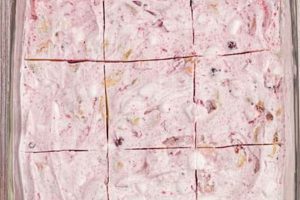
This classic dessert, a pistachio pudding-based salad with miniature marshmallows, pineapple, and whipped topping, gained popularity in the 1970s. Variations exist, but the core ingredients remain consistent, offering a light, fluffy, and sweet treat. A typical preparation involves combining instant pistachio pudding mix with milk, then folding in crushed pineapple, miniature marshmallows, and whipped topping.
The dessert’s simple preparation and readily available ingredients contribute to its enduring appeal. Its refreshing flavor profile makes it a popular choice for potlucks, picnics, and holiday gatherings. While the origins of its name remain unclear, its association with a specific brand of whipped topping solidified its place in culinary history. The dish provides a nostalgic connection for many and continues to be enjoyed across generations.
This article will explore the evolution of this beloved dessert, delve into various recipe adaptations, and offer tips for achieving the perfect texture and flavor. Further discussion will cover its cultural significance and its enduring presence in American cuisine.
Tips for a Perfect Pistachio Pudding Dessert
Achieving the ideal texture and flavor in this beloved dessert relies on attention to detail and a few key techniques. The following tips will help ensure a successful outcome.
Tip 1: Use Instant Pudding Mix: Instant pistachio pudding mix provides the foundational flavor and contributes to the desired creamy consistency. Cook-and-serve pudding mixes are not recommended.
Tip 2: Chill Thoroughly: Chilling allows the flavors to meld and the salad to firm up, resulting in a more satisfying texture. A minimum chilling time of two hours is recommended.
Tip 3: Drain the Pineapple: Excess juice from the canned pineapple can make the salad watery. Thoroughly draining the pineapple before incorporating it is crucial.
Tip 4: Fold Gently: Overmixing can break down the marshmallows and create a dense texture. Gently folding the ingredients together preserves the desired lightness and fluffiness.
Tip 5: Use Fresh Whipped Topping: While frozen whipped topping can be used, fresh whipped topping often yields a superior texture and flavor. Ensure it is thoroughly chilled before incorporating.
Tip 6: Consider Texture Variations: Chopped nuts, such as pecans or walnuts, can add a pleasant textural contrast. Maraschino cherries can also provide a pop of color and sweetness.
Tip 7: Adjust Sweetness: For those who prefer a less sweet dessert, reducing the amount of miniature marshmallows can effectively balance the overall sweetness.
By following these tips, one can consistently create a delightful and refreshing dessert suitable for any occasion. Attention to these details elevates the final product from simple to exceptional.
These techniques offer a pathway to mastering this simple yet satisfying dessert. The following section concludes with variations and adaptations for personalized enjoyment.
1. Pistachio Pudding

Pistachio pudding serves as the foundational component of this classic dessert, providing its signature flavor and characteristic pale green hue. Understanding the role of pistachio pudding is essential to appreciating the dessert’s overall composition and enduring appeal.
- Flavor Profile
The distinct flavor of pistachio pudding, derived from artificial flavorings rather than actual pistachios, contributes significantly to the dessert’s identity. Its sweet, slightly nutty, and uniquely artificial taste profile is central to the nostalgic experience. While some variations incorporate real pistachios, the artificial flavor remains the standard.
- Texture and Consistency
Instant pistachio pudding mix, when combined with milk, creates a creamy, smooth base for the other ingredients. This texture contrasts with the airy marshmallows and the chunkier pineapple, creating a multi-faceted sensory experience. The pudding’s viscosity also helps bind the ingredients together.
- Color Contribution
The vibrant, light green color of the pistachio pudding is a defining visual characteristic. This distinctive hue contributes to the dessert’s overall aesthetic and immediate recognition. The artificial coloring associated with the pudding mix is integral to this visual appeal.
- Historical Context
The widespread availability and popularity of instant pistachio pudding mix in the mid-20th century coincided with the emergence of this dessert. This accessibility contributed to the recipe’s rapid adoption and subsequent proliferation across American households.
The interplay of flavor, texture, color, and historical context establishes pistachio pudding as an indispensable element of this iconic dessert. Its unique characteristics contribute significantly to the overall sensory experience and cultural significance, solidifying its place in culinary history.
2. Pineapple
Canned pineapple plays a crucial role in this iconic dessert, contributing a distinct sweetness, tangy acidity, and textural variation. Its presence significantly influences the overall flavor profile and sensory experience.
- Flavor Contribution
The sweetness of pineapple complements the creamy pistachio pudding, while its characteristic tartness provides a counterpoint, preventing the dessert from becoming overly sweet. This balance is essential to the overall flavor profile. The specific type of canned pineapple, typically crushed or tidbits, influences the intensity of sweetness and tartness.
- Textural Variation
The distinct texture of pineapple, particularly in the crushed or tidbit form, introduces a textural contrast to the smooth pudding and airy marshmallows. This interplay of textures enhances the overall sensory experience. The pineapple pieces offer a subtle chewiness that complements the softer elements.
- Moisture Content
The juice present in canned pineapple contributes to the dessert’s moisture content. However, excessive juice can result in a watery consistency. Thoroughly draining the pineapple before incorporating it is crucial for achieving the desired texture and preventing the dessert from becoming overly diluted.
- Historical Significance
The inclusion of canned pineapple reflects the culinary trends of the mid-20th century when the dessert gained popularity. Canned goods were readily available and convenient, contributing to the recipe’s widespread adoption and ease of preparation. This ingredient choice aligns with the broader historical context of the dish.
The interplay of flavor, texture, moisture, and historical context establishes canned pineapple as a vital component of this classic dessert. Its unique characteristics contribute significantly to the overall sensory experience and cultural relevance. Understanding the role of pineapple deepens appreciation for the dessert’s enduring appeal and continued presence in American cuisine.
3. Miniature Marshmallows

Miniature marshmallows contribute significantly to the distinctive texture and overall appeal of this classic dessert. Their small size, airy texture, and ability to suspend within the mixture create a unique sensory experience. Their presence offers textural contrast to the creamy pudding and chunky pineapple. The marshmallows’ inherent sweetness complements the other ingredients without overwhelming the overall flavor profile. Furthermore, their ability to readily absorb and distribute flavors throughout the mixture ensures a balanced taste experience.
The inclusion of miniature marshmallows exemplifies the dessert’s character as a light and refreshing treat. The marshmallows prevent the dessert from becoming overly dense or rich. Consider, for example, the difference in texture between a marshmallow-laden version and one without. The absence of marshmallows would yield a denser, heavier product, lacking the characteristic airiness. This textural distinction underscores the essential role of miniature marshmallows in defining the dessert’s identity. Recipes omitting this component deviate significantly from the traditional preparation and sensory experience.
Understanding the contribution of miniature marshmallows is crucial for replicating authentic versions of this dessert. Their impact extends beyond mere sweetness and texture, encompassing the overall balance and lightness that define the dish. Attempts to substitute or omit this ingredient inevitably alter the final product’s sensory profile. Therefore, appreciating the specific role of miniature marshmallows is essential for both understanding and recreating this classic dessert.
4. Whipped Topping
Whipped topping is integral to this classic dessert, contributing significantly to its texture, appearance, and overall appeal. The specific association with “Cool Whip,” a popular brand of non-dairy whipped topping, has further cemented its place in the recipe’s identity and cultural recognition.
- Texture and Volume
Whipped topping provides a light, airy texture that complements the creamy pudding and other ingredients. It adds volume and fluffiness, creating a contrast with the denser components. The incorporation of air during the whipping process creates a delicate structure that contributes to the dessert’s overall lightness. This textural element is essential for achieving the desired sensory experience.
- Flavor Enhancement
While whipped topping primarily contributes texture, its subtle sweetness and vanilla notes enhance the overall flavor profile. The mildness of the topping prevents it from overpowering the other flavors, allowing the pistachio and pineapple to remain prominent. The subtle sweetness complements the overall balance of the dessert.
- Visual Appeal
The bright white color of whipped topping creates a visual contrast with the green pistachio pudding, enhancing the dessert’s presentation. The fluffy appearance contributes to an impression of lightness and airiness. The visual appeal enhances the overall sensory experience and contributes to the dessert’s attractiveness.
- The “Cool Whip” Connection
The frequent specification of “Cool Whip” in recipes and common parlance has linked the dessert to this particular brand. While other whipped toppings can be used, the association with “Cool Whip” has become ingrained in the dessert’s cultural identity. This connection contributes to the recipe’s name recognition and its nostalgic association with a specific product.
The combination of texture, flavor enhancement, visual appeal, and the specific cultural association with “Cool Whip” solidify whipped topping’s crucial role in this classic dessert. Understanding these facets provides a deeper appreciation for the dessert’s enduring popularity and its continued presence in American cuisine.
5. Nostalgia

Nostalgia plays a significant role in the continued popularity of this specific dessert. Its association with past decades, particularly the 1970s, evokes a sense of comfort and familiarity for many. This connection to the past contributes to the dessert’s enduring appeal and its frequent appearance at gatherings and celebrations.
- Family Gatherings
The dessert often appears at family potlucks, holidays, and other gatherings, reinforcing its association with shared experiences and positive memories. For many, the taste evokes childhood memories of these events, strengthening the nostalgic connection. This recurring presence at family events solidifies its position as a comfort food.
- Retro Recipes
The dessert’s inclusion in vintage cookbooks and community recipe collections further strengthens its nostalgic appeal. These sources connect the dish to a specific era and culinary tradition. The presence of handwritten recipe cards passed down through generations amplifies this connection to the past and reinforces the dessert’s place within family histories.
- Potluck Culture
The dessert’s ease of preparation and transportability made it a staple at potlucks, a common social gathering in past decades. This association with communal dining experiences contributes to its nostalgic appeal. The dessert’s prevalence at these gatherings further reinforces its connection to social history and shared culinary experiences.
- Simpler Times
For some, the dessert represents a simpler time, evoking feelings of childhood innocence and carefree enjoyment. The straightforward recipe and readily available ingredients contribute to this perception. This association with a less complicated era reinforces the dessert’s comfort food status and its ability to evoke positive emotions linked to the past.
The nostalgic associations surrounding this dessert contribute significantly to its continued popularity. These connections to past experiences and cultural trends imbue the dessert with a significance that extends beyond its simple ingredients and preparation. The feelings of comfort and familiarity evoked by this dessert contribute to its enduring presence in American cuisine and its continued role in social gatherings.
Frequently Asked Questions
This section addresses common inquiries regarding the preparation and history of this classic dessert. Clarity and accuracy are prioritized to provide comprehensive responses.
Question 1: Why is it called “Watergate Salad”?
The origin of the name remains uncertain. No definitive connection to the Watergate scandal has been established. A popular theory suggests the name arose from its frequent inclusion at social gatherings during the period of the scandal, but this remains speculative. The association with “Cool Whip,” a prominent brand of whipped topping, may have also influenced the name’s popularization.
Question 2: Can this dessert be made ahead of time?
Advance preparation is possible and often beneficial. Chilling for at least two hours allows the flavors to meld and the texture to firm. Overnight refrigeration is also acceptable. The dessert’s stability makes it suitable for preparing a day or two in advance of serving.
Question 3: What type of pineapple is recommended?
Crushed pineapple is traditionally preferred for its texture and balanced sweetness. Pineapple tidbits can also be used. Thoroughly draining the pineapple, regardless of type, is essential to prevent a watery consistency.
Question 4: Are there variations on the traditional recipe?
Numerous adaptations exist, incorporating ingredients such as nuts, maraschino cherries, or different flavors of pudding mix. These variations offer opportunities for personalized flavor preferences and creative exploration. However, they deviate from the classic formulation.
Question 5: Must “Cool Whip” brand topping be used?
While “Cool Whip” is frequently specified and contributes to the dessert’s name recognition, other whipped toppings are acceptable. The choice may influence the final texture and flavor profile. However, the traditional recipe and cultural association remain linked to “Cool Whip.”
Question 6: Is this dessert considered a salad?
Categorization as a “salad” is primarily due to its inclusion of fruit and its chilled presentation. It functions as a dessert due to its sweetness and role in meal structures. The “salad” designation reflects historical culinary conventions rather than a strict adherence to salad definitions.
Understanding the historical context, ingredient choices, and preparation techniques enhances appreciation for this classic dessert. This knowledge allows for informed decisions regarding recipe adaptations and ensures a successful culinary experience.
The following section provides a concluding summary and offers final reflections on this enduring dessert’s significance in American culinary tradition.
Watergate Salad Original Recipe with Cool Whip
Exploration of the “Watergate salad original recipe with Cool Whip” reveals a dessert deeply embedded in American culinary history. Analysis of its core componentspistachio pudding, pineapple, miniature marshmallows, and whipped toppingdemonstrates the interplay of flavors and textures contributing to its enduring popularity. The association with the “Cool Whip” brand, while not definitive in its origins, further solidifies its cultural recognition. Beyond its ingredients, the dessert’s nostalgic significance connects generations through shared experiences and culinary traditions. Preparation techniques, variations, and the persistent ambiguity surrounding its name contribute to its unique position within American cuisine.
The “Watergate salad original recipe with Cool Whip,” despite its simple composition, offers a complex narrative reflecting cultural trends, culinary history, and the enduring power of nostalgia. Its continued presence at gatherings and within family traditions underscores its significance beyond mere sustenance. Further investigation into regional variations and evolving interpretations promises deeper insight into this iconic dessert’s evolving role in American culinary heritage.