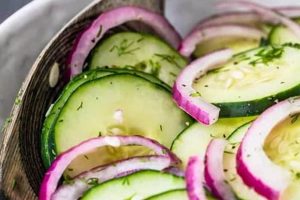
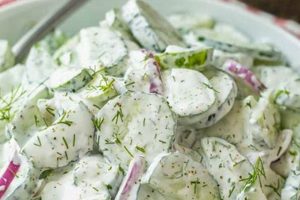
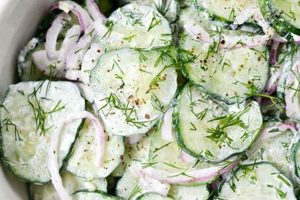
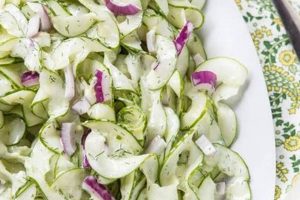
Sunomono, a refreshing Japanese side dish featuring thinly sliced cucumbers, epitomizes the cuisine’s focus on simple, fresh ingredients and balanced flavors. Common preparations involve marinating the cucumbers in a vinegar-based dressing, often seasoned with sugar, salt, and mirin. Variations may incorporate ingredients like wakame seaweed, sesame seeds, or chili flakes for added texture and complexity. This dish exemplifies the Japanese culinary principle of “sunomono,” which encompasses vinegared dishes designed to cleanse the palate and complement richer flavors within a meal.
This light and flavorful salad offers several culinary and nutritional advantages. The cucumbers provide hydration and vital nutrients, while the vinegar dressing contributes a tangy kick that aids digestion. Historically, sunomono played a crucial role in preserving vegetables before refrigeration became widespread. Its refreshing nature also makes it a perfect complement to heavier, richer dishes common in Japanese cuisine, balancing flavors and enhancing the overall dining experience.
The following sections will delve deeper into specific variations of this quintessential Japanese salad, exploring regional differences, ingredient selections, and preparation techniques. Further discussion will cover the cultural significance of sunomono and its enduring popularity in modern Japanese cuisine.
Tips for Preparing a Refreshing Japanese Cucumber Salad
Achieving optimal flavor and texture in a Japanese cucumber salad requires attention to detail. The following tips offer guidance for creating a truly authentic and enjoyable culinary experience.
Tip 1: Salt the cucumbers and drain excess moisture. Salting draws out excess water, resulting in a crisper texture and preventing the dressing from becoming diluted. Gently massage the sliced cucumbers with salt and allow them to rest for 15-20 minutes before rinsing and thoroughly patting dry.
Tip 2: Utilize high-quality rice vinegar. Rice vinegar forms the foundation of the dressing and contributes a subtle sweetness and delicate acidity. Opting for a high-quality rice vinegar significantly enhances the overall flavor profile.
Tip 3: Balance sweetness and acidity. Achieving the perfect balance between sweet and sour is crucial. Adjust the proportions of sugar and vinegar to suit personal preference, but erring on the side of slightly sweeter is generally preferred.
Tip 4: Consider adding umami. Incorporating a touch of umami can elevate the flavor profile. A small amount of mirin, a sweet rice wine, or a dash of soy sauce can add depth and complexity.
Tip 5: Enhance with sesame. Toasted sesame seeds contribute a nutty aroma and pleasant crunch. Lightly toast the seeds before adding them to the salad for optimal flavor.
Tip 6: Experiment with additions. While simplicity is key, consider incorporating other ingredients such as thinly sliced wakame seaweed, shredded carrots, or a pinch of chili flakes to add texture and complexity.
Tip 7: Chill thoroughly before serving. Chilling the salad allows the flavors to meld and enhances the refreshing qualities. Allow the salad to rest in the refrigerator for at least 30 minutes before serving.
By following these tips, one can create a Japanese cucumber salad that is both refreshing and flavorful. Attention to detail and quality ingredients ensure a truly authentic and enjoyable culinary experience.
This exploration of preparation techniques provides a foundation for understanding the nuances of this simple yet elegant dish. The following conclusion will summarize key takeaways and reiterate the cultural significance of Japanese cucumber salad within the broader culinary landscape.
1. Thinly sliced cucumbers
Thinly sliced cucumbers are fundamental to a successful Japanese cucumber salad, impacting both texture and flavor absorption. The thinness allows the marinade to penetrate quickly and evenly, infusing the cucumber with the desired balance of sweet, sour, and salty notes. This also creates a delicate, almost translucent appearance, aesthetically aligning with the minimalist principles of Japanese cuisine. Thicker slices would result in a less flavorful, potentially crunchy salad, detracting from the intended refreshing and light experience. For instance, in a traditional sunomono, the thin cucumber slices readily absorb the vinegar-based dressing, becoming pliable and flavorful within minutes, while thicker slices would remain dense and less imbued with the marinade’s essence.
The method of slicing also influences the final result. Using a mandoline produces uniform slices, ensuring consistent marinating. Alternatively, a sharp knife can achieve similar results with careful attention to technique. The thinness facilitates a rapid pickling process, allowing the flavors to develop quickly. This is particularly important in dishes like sunomono, where a quick, refreshing side dish is desired. Imagine a bento box with thick cucumber slices; the flavors would be uneven, and the texture potentially overwhelming alongside other delicate items.
In summary, the emphasis on thinly sliced cucumbers highlights the importance of texture and flavor balance in Japanese cuisine. This seemingly simple step significantly impacts the overall sensory experience, ensuring the salad remains light, refreshing, and flavorful. The technique reflects a broader culinary philosophy that values precision and attention to detail, even in seemingly simple preparations. Mastering this technique is crucial for anyone seeking to authentically recreate this iconic Japanese dish.
2. Rice Vinegar Base

Rice vinegar serves as the foundational element in Japanese cucumber salad dressings, contributing a unique flavor profile that distinguishes it from other cucumber salad variations. Its mild acidity and subtle sweetness provide a balanced counterpoint to the cucumber’s refreshing coolness, creating a harmonious blend of flavors. Understanding the nuances of rice vinegar and its interaction with other ingredients is essential for crafting an authentic Japanese cucumber salad.
- Acidity and Flavor Profile
Rice vinegar possesses a milder acidity compared to Western vinegars, offering a gentler tartness that complements the delicate flavor of cucumbers. Specific types, such as seasoned rice vinegar, often contain added sugar and salt, streamlining the dressing preparation process and imparting a balanced sweet-sour flavor. This nuanced acidity avoids overpowering the cucumber’s natural freshness, contributing to the salad’s light and refreshing character.
- Balancing Sweetness and Acidity
The inherent sweetness of rice vinegar allows for precise balancing of flavors within the dressing. Additional sugar or mirin can further enhance sweetness, while salt provides a savory counterpoint. This delicate balance is crucial for achieving the characteristic sweet-and-sour profile that defines Japanese cucumber salads. The interplay of these flavors creates a dynamic taste experience, stimulating the palate without being overly sharp or cloying.
- Cultural Significance
Rice vinegar is a staple in Japanese cuisine, reflecting a historical preference for fermented ingredients and lighter flavor profiles. Its use in cucumber salad underscores a broader cultural emphasis on fresh, seasonal ingredients and balanced nutrition. This ingredient embodies a long-standing culinary tradition that values simplicity and harmony of flavors, enhancing the cultural authenticity of the dish.
- Interaction with other ingredients
Rice vinegar acts as a solvent for other flavor components in the dressing, such as sugar, salt, and spices. It also interacts with the cucumbers, softening their texture and infusing them with flavor. This interaction is essential for creating a cohesive and well-integrated dish where the individual ingredients contribute to a unified flavor profile. For example, the vinegar’s acidity helps to extract and distribute the flavors of ginger or chili flakes, creating a more complex and layered taste experience.
The role of rice vinegar extends beyond mere acidity; it contributes to the overall balance, cultural authenticity, and sensory experience of Japanese cucumber salad. Its careful selection and application are critical for achieving the desired flavor profile and textural nuances, showcasing the profound impact of seemingly simple ingredients in Japanese culinary artistry. This foundation of rice vinegar provides a canvas for further exploration of regional variations and individualized flavor preferences within the realm of Japanese cucumber salads.
3. Sugar and Salt Balance

The interplay of sugar and salt is paramount in Japanese cucumber salad, contributing significantly to its characteristic flavor profile. This balance extends beyond mere seasoning; it influences texture, preservation, and the overall sensory experience. Understanding this delicate interplay is crucial for achieving an authentic and enjoyable culinary outcome.
- Flavor Enhancement and Counterpoint
Sugar and salt don’t merely exist in isolation; they interact synergistically to enhance and balance each other. Sugar tempers the sharpness of the vinegar, while salt provides a savory counterpoint, preventing the salad from becoming overly sweet. This interplay creates a complex flavor profile that stimulates the palate, offering a dynamic experience that moves between sweet, sour, and salty notes. The specific ratio of sugar to salt can be adjusted based on personal preference and the specific type of rice vinegar used, highlighting the potential for customization within this seemingly simple dish.
- Osmosis and Texture
Salt plays a critical role in drawing out excess moisture from the cucumbers through osmosis. This process not only contributes to a crisper texture but also intensifies the cucumber flavor by concentrating its natural sugars. The subsequent addition of sugar in the marinade then helps to rehydrate the cucumbers, resulting in a pleasant, slightly firm texture. This manipulation of moisture content is crucial for achieving the desired textural balanceneither too soggy nor too crunchycharacteristic of a well-made Japanese cucumber salad. This osmotic process is evident when salted cucumber slices release water, visibly shrinking before being incorporated into the dressing.
- Preservation and Shelf Life
Historically, both salt and sugar played vital roles as preservatives. In cucumber salads, salt inhibits bacterial growth, extending the dish’s shelf life, while sugar further contributes to preservation by creating an environment less hospitable to spoilage microorganisms. While refrigeration has lessened the necessity of these preservation methods, their historical significance underscores the functional role these ingredients play beyond flavor enhancement. This traditional aspect resonates with the broader cultural context of Japanese cuisine, which historically relied on such techniques to preserve seasonal ingredients.
- Regional Variations and Customization
Regional variations in Japanese cucumber salad often reflect different approaches to sugar and salt balance. Some regions might favor a sweeter profile, while others might emphasize a more savory or tart flavor. This regional diversity underscores the adaptability of this simple dish and allows for individual customization based on personal preference. For example, a Kyoto-style cucumber salad might incorporate a touch more mirin for added sweetness, while a Tokyo-style version might emphasize a sharper vinegar flavor with less sugar.
The careful balancing of sugar and salt in Japanese cucumber salad is a testament to the nuanced approach to flavor in Japanese cuisine. These seemingly simple ingredients play multifaceted roles, influencing not only taste but also texture and preservation. Understanding this delicate interplay allows for a deeper appreciation of the culinary artistry behind this refreshing and culturally significant dish, paving the way for experimentation and personalized adaptations while respecting the core principles of balance and harmony.
4. Optional sesame seeds
While optional, sesame seeds frequently enhance Japanese cucumber salad, contributing both textural and flavor complexity. Their presence, though not mandatory, elevates the sensory experience, aligning with the Japanese culinary focus on subtle nuances and balanced elements. Understanding their role provides insight into how seemingly minor additions can significantly impact the overall dish.
- Flavor Enhancement
Sesame seeds impart a subtle nutty aroma and flavor that complements the refreshing cucumber and tangy vinegar base. The toasting process intensifies these characteristics, creating a deeper, more pronounced nutty note that harmonizes with the other ingredients without overpowering them. This flavor boost adds another layer of complexity to the otherwise simple salad, enriching the overall taste experience.
- Textural Contrast
The small, firm seeds offer a pleasant textural contrast to the soft, yielding cucumber slices. This interplay of textures creates a more dynamic and engaging mouthfeel, preventing the salad from feeling monotonous. The subtle crunch of the sesame seeds adds a satisfying element that enhances the overall sensory experience.
- Visual Appeal
Sesame seeds, particularly the black or toasted varieties, provide visual contrast against the pale green cucumbers and translucent dressing. This visual element aligns with the Japanese aesthetic appreciation for simplicity and natural beauty, enhancing the dish’s presentation. The sprinkling of seeds adds a touch of elegance and visual interest to the otherwise minimalist salad.
- Nutritional Value
Beyond flavor and texture, sesame seeds offer nutritional benefits, contributing small amounts of healthy fats, fiber, and minerals. While not a primary source of these nutrients, their inclusion aligns with the broader Japanese culinary focus on balanced and healthful meals. This nutritional aspect further justifies their inclusion, even as an optional ingredient.
Though optional, the inclusion of sesame seeds in Japanese cucumber salad demonstrates how seemingly small details can significantly enhance a dish. Their contribution to flavor, texture, visual appeal, and even nutritional value underscores the Japanese culinary emphasis on balance, subtlety, and attention to detail. Whether toasted or untoasted, black or white, sesame seeds offer a simple yet effective way to elevate this refreshing and culturally significant dish.
5. Subtle Umami (Mirin)

Mirin, a sweet rice wine, plays a crucial, albeit often subtle, role in contributing umami to Japanese cucumber salad. While not always explicitly listed in simplified recipes, its presence deepens the flavor profile, adding a layer of complexity that elevates the dish beyond simple sweet and sour notes. Understanding mirin’s contribution to umami provides insight into the nuanced flavor balancing characteristic of Japanese cuisine.
- Balancing Sweetness and Acidity
Mirin’s sweetness complements the rice vinegar’s acidity, creating a more rounded and less starkly contrasting flavor profile. This balanced sweetness avoids an overly simplistic sweet-and-sour taste, allowing the other subtle flavors, including the umami notes, to emerge more prominently. For example, in a sunomono-style cucumber salad, mirin tempers the vinegar’s sharpness, creating a more harmonious and palatable experience.
- Umami Enhancement
Mirin contributes a subtle yet distinct umami element derived from its slow fermentation process. This umami depth rounds out the flavor profile, adding a savory richness that complements the refreshing cucumber and tangy vinegar. This umami note distinguishes the salad from simpler versions that rely solely on sugar for sweetness, adding a depth often associated with more complex culinary creations. This depth of flavor is particularly noticeable when comparing a salad made with mirin to one made without; the mirin version offers a more nuanced and satisfying taste.
- Synergy with Other Ingredients
Mirin’s subtle umami synergistically interacts with other ingredients, such as soy sauce or dashi, if present, further enhancing the overall savory depth. Even without these additional umami-rich components, mirin subtly elevates the existing flavors, creating a more cohesive and complex taste experience. For instance, the addition of a small amount of soy sauce to a mirin-based dressing creates a layered umami experience, enhancing the overall savoriness of the salad.
- Cultural Significance
Mirin, like rice vinegar, holds cultural significance in Japanese cuisine. Its use reflects a historical appreciation for fermented ingredients and their contribution to complex flavor profiles. Incorporating mirin into cucumber salad, even in small quantities, connects the dish to broader culinary traditions and adds a layer of authenticity often absent in simplified adaptations. This historical context adds depth to the understanding and appreciation of the dish.
Mirins contribution of subtle umami to Japanese cucumber salad exemplifies the Japanese culinary emphasis on nuanced flavor balancing. Its presence, though sometimes understated, elevates the dish beyond basic sweet and sour notes, adding depth and complexity that resonate with broader cultural traditions and culinary philosophies. Understanding this subtle yet significant role enhances appreciation for the artistry and intentionality behind even seemingly simple Japanese dishes.
Frequently Asked Questions
This section addresses common inquiries regarding Japanese cucumber salad, offering clarification and guidance for optimal preparation and enjoyment.
Question 1: What type of cucumber is best suited for Japanese cucumber salad?
Japanese cucumbers, also known as kyuri, are ideal due to their thin skin and delicate flavor. Persian cucumbers offer a suitable alternative. Avoid thicker-skinned varieties like English cucumbers, as their water content and tougher skin can result in a less desirable texture.
Question 2: How thinly should the cucumbers be sliced?
Aim for thin, almost translucent slices, approximately 1/8 inch thick. This allows for optimal marinade penetration and contributes to a delicate texture. A mandoline slicer or sharp knife can achieve the desired thinness.
Question 3: Can seasoned rice vinegar be substituted for regular rice vinegar?
Seasoned rice vinegar simplifies the process, as it typically contains added sugar and salt. However, using regular rice vinegar allows for more precise control over the balance of sweet, sour, and salty elements in the dressing.
Question 4: How long should the cucumbers marinate?
A minimum of 30 minutes is recommended for optimal flavor infusion. Marinating for longer, even overnight, enhances the flavors and softens the cucumber texture. Avoid excessive marinating, as it can lead to an overly soft texture.
Question 5: What can be added to Japanese cucumber salad beyond the basic ingredients?
While simplicity is often preferred, additions like wakame seaweed, shredded carrots, thinly sliced myoga (ginger buds), or a sprinkle of chili flakes can enhance flavor and texture complexity.
Question 6: How should Japanese cucumber salad be stored?
Store leftovers in an airtight container in the refrigerator for up to 3 days. The flavor may intensify over time as the cucumbers continue to absorb the marinade.
Addressing these frequently asked questions provides a deeper understanding of the nuances involved in preparing Japanese cucumber salad. This knowledge empowers individuals to create a truly authentic and enjoyable culinary experience.
The following section will offer a concluding overview of the key takeaways and cultural significance of this refreshing and versatile dish.
Japanese Cucumber Salad
This exploration of Japanese cucumber salad, encompassing variations like sunomono, has illuminated the dish’s simplicity, flavor complexity, and cultural significance. From the thinly sliced cucumbers and precisely balanced vinegar dressings to the optional additions of sesame seeds and mirin, each element contributes to a harmonious culinary experience. The careful attention to texture, flavor balance, and aesthetic presentation reflects broader principles within Japanese cuisine, emphasizing fresh ingredients, seasonality, and a minimalist approach. The techniques discussed, such as salting cucumbers to remove excess moisture and using high-quality rice vinegar, demonstrate the importance of seemingly minor details in achieving optimal flavor and texture. Furthermore, the exploration of regional variations and customization options underscores the dish’s adaptability while maintaining its core identity.
Japanese cucumber salad represents more than just a refreshing side dish; it embodies a culinary philosophy rooted in balance, precision, and respect for simple ingredients. Further exploration of regional variations and ingredient combinations offers a pathway to deeper cultural understanding and appreciation. Continued experimentation and refinement of individual techniques will undoubtedly lead to increasingly nuanced and personalized expressions of this classic dish, ensuring its continued presence and evolution within the global culinary landscape.