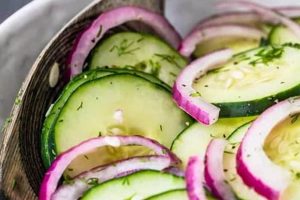
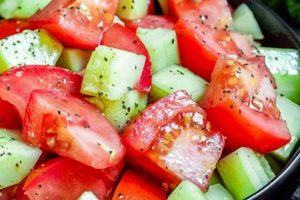
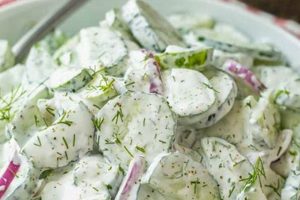
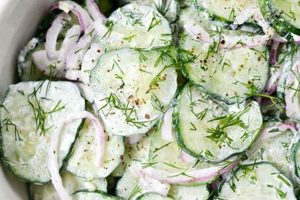
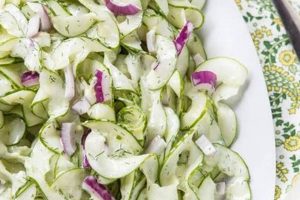
A chilled dish featuring thinly sliced cucumbers in a creamy dressing typically involves a base of sour cream, often enhanced with ingredients like dill, vinegar, onion, garlic, and seasonings. Variations may incorporate fresh herbs, spices, or other vegetables for added complexity and flavor. This simple preparation can serve as a refreshing side dish, a light lunch, or a component within a larger meal.
The cool, crisp nature of this salad makes it particularly appealing during warmer months. Its straightforward preparation requires minimal cooking, making it a convenient and accessible option for home cooks of all skill levels. The combination of tangy sour cream and hydrating cucumber offers a pleasing contrast in textures and flavors. Historically, dishes combining dairy with fresh produce have existed across various cultures, with specific variations evolving based on regional ingredients and culinary traditions.
The following sections will delve into specific variations of this classic dish, exploring ingredient selection, preparation techniques, and serving suggestions designed to enhance the culinary experience.
Tips for a Perfect Cucumber and Sour Cream Salad
Achieving optimal flavor and texture requires attention to detail throughout the preparation process. These tips offer guidance for creating a consistently satisfying culinary experience.
Tip 1: Salt the Cucumbers: Salting sliced cucumbers draws out excess moisture, preventing a watery salad. Place the cucumber slices in a colander, sprinkle with salt, and allow to sit for 15-20 minutes before rinsing and thoroughly drying.
Tip 2: Use High-Quality Sour Cream: Full-fat sour cream provides a richer flavor and creamier texture compared to low-fat or non-fat alternatives. Greek yogurt can also be substituted for a tangier flavor profile.
Tip 3: Fresh Dill is Essential: Fresh dill provides the signature herbaceous note that complements the cucumber and sour cream. Dried dill can be used as a substitute if fresh is unavailable, but use sparingly as the flavor is more concentrated.
Tip 4: Balance the Tang: A touch of acidity brightens the overall flavor. A splash of white vinegar or lemon juice is often added to achieve this balance. Adjust the amount to personal preference.
Tip 5: Thinly Slice the Cucumbers: Evenly thin cucumber slices ensure a consistent texture and allow for better absorption of the dressing. A mandoline slicer or sharp knife can achieve the desired thinness.
Tip 6: Chill Before Serving: Chilling the salad for at least 30 minutes allows the flavors to meld and enhances the refreshing qualities of the dish. Do not over-chill, as it may negatively impact the texture of the cucumbers.
Tip 7: Consider Additional Ingredients: While simplicity is key, consider adding thinly sliced red onion, minced garlic, or a pinch of red pepper flakes for added depth of flavor.
By following these guidelines, one can consistently create a cucumber and sour cream salad that is both refreshing and flavorful, showcasing the simple elegance of fresh ingredients.
These practical tips provide a foundation for culinary success, leading to a dish that satisfies the palate and complements a variety of meal occasions.
1. Fresh Cucumbers

Fresh cucumbers serve as the foundational ingredient, providing the crisp, refreshing counterpoint to the creamy richness of the sour cream. The cucumber’s inherent mild, slightly sweet flavor profile allows it to readily absorb the flavors of the dressing, creating a harmonious blend. Cucumbers lacking freshness can introduce undesirable bitterness or a watery texture, significantly detracting from the overall quality of the salad. Selecting firm, unblemished cucumbers with vibrant green skin is crucial for achieving optimal results. For instance, using a wilted or overripe cucumber will result in a less appealing salad with a compromised texture.
The choice of cucumber variety can also subtly influence the salad’s character. English cucumbers, known for their thin skin and fewer seeds, offer a delicate flavor and refined texture, while garden cucumbers, with their thicker skin and more pronounced seed core, contribute a slightly more robust flavor and texture. These nuances allow for subtle customization based on individual preferences. Consider the difference between a salad made with thinly sliced English cucumbers versus one using diced garden cucumbers the former offers a more delicate presentation, while the latter provides a heartier bite.
Selecting and handling cucumbers appropriately are essential steps in creating a successful salad. Prioritizing fresh, high-quality cucumbers ensures the desired crispness and flavor, while proper storage techniques, such as refrigeration in a breathable container, maintain optimal quality. These seemingly minor details play a significant role in elevating the final dish from simple to exceptional. Ignoring these considerations can compromise the intended balance of flavors and textures, ultimately diminishing the overall culinary experience.
2. High-Quality Sour Cream
Sour cream provides the foundational creamy element in a cucumber salad, significantly influencing the final dish’s overall flavor and texture. Selecting high-quality sour cream is paramount to achieving a balanced and enjoyable culinary experience. Subpar sour cream can negatively impact the salad’s texture and introduce off-flavors, diminishing the intended refreshing and delicate characteristics.
- Fat Content
The fat content in sour cream directly correlates with its richness and texture. Higher fat content typically yields a thicker, creamier consistency, coating the cucumbers more effectively and providing a luxurious mouthfeel. Lower-fat versions often result in a thinner, less flavorful dressing that can make the salad watery. For instance, a sour cream with 18% milk fat will deliver a richer experience compared to one with 10%.
- Freshness
Fresh sour cream possesses a clean, tangy flavor that complements the cucumbers. As sour cream ages, its flavor can become more acidic and even develop off-notes. Checking the expiration date and ensuring proper storage are crucial for maintaining freshness and preventing undesirable flavors from affecting the delicate balance of the salad. Using sour cream past its prime can introduce a rancid taste that overpowers the other ingredients.
- Ingredients
Examining the ingredient list provides insights into the sour cream’s quality. Ideally, sour cream should contain minimal additives and preservatives. A shorter, cleaner ingredient list often indicates a higher-quality product with a more natural flavor profile. Sour cream with added thickeners or stabilizers may exhibit a less desirable texture and potentially mask the fresh flavors of the other salad components. For example, the presence of carrageenan might indicate an attempt to artificially enhance the texture.
- Brand Reputation
Different brands adhere to varying production standards and utilize different ingredient sourcing practices. Opting for reputable brands known for their commitment to quality often ensures a superior product with consistent flavor and texture. While price can sometimes indicate quality, it is not the sole determinant. Researching brands and reading customer reviews can offer valuable insights into the quality and consistency of their sour cream offerings. A brand known for using high-quality milk and minimal processing will likely produce a superior sour cream for this application.
The careful selection of high-quality sour cream contributes significantly to the overall success of a cucumber salad. By considering factors like fat content, freshness, ingredients, and brand reputation, one can ensure a creamy, flavorful dressing that enhances the natural flavors of the fresh cucumbers and other ingredients. This attention to detail elevates a simple cucumber salad from ordinary to extraordinary, demonstrating a commitment to culinary excellence.
3. Fresh Dill
Fresh dill stands as a cornerstone in a cucumber and sour cream salad, elevating it from simple to exceptional. Its inclusion delivers a distinct herbaceous, slightly anise-like flavor that complements both the creamy sour cream and the cool, refreshing cucumber. This symbiotic relationship creates a flavor profile that is both familiar and invigorating. Omitting fresh dill diminishes the complexity and character of the dish, resulting in a less nuanced and potentially bland experience. For instance, a salad prepared without dill might lack the characteristic brightness that balances the richness of the sour cream.
The volatile oils present in fresh dill contribute significantly to its unique aroma and flavor. These oils are most potent when the herb is fresh, gradually dissipating over time or with improper storage. Dried dill, while a viable substitute in some culinary contexts, lacks the same vibrancy and intensity of flavor, potentially resulting in an imbalanced salad. Consider a side-by-side comparison: a salad made with fresh dill will exhibit a bright, herbaceous aroma and flavor, while one made with dried dill may have a muted, slightly hay-like quality. This difference underscores the importance of using fresh dill whenever possible.
Beyond its flavor contribution, fresh dill offers aesthetic appeal, adding a vibrant green hue that enhances the visual presentation. Its delicate, feathery fronds provide a pleasing textural contrast to the smooth sour cream and crisp cucumber. This visual and textural interplay further enhances the overall sensory experience of the dish. Practically, incorporating fresh dill is straightforward; finely chopping the fronds ensures even distribution of flavor and prevents overpowering any single bite. Furthermore, sourcing fresh dill is relatively easy, with availability in most grocery stores and farmers’ markets. Understanding the essential role of fresh dill in this classic salad allows one to fully appreciate its impact on both flavor and overall culinary satisfaction. Successfully integrating this herb elevates the dish, demonstrating an understanding of fundamental flavor pairings and culinary principles.
4. Acidic Balance

Acidic balance plays a crucial role in a successful sour cream and cucumber salad, contributing significantly to its overall flavor profile. The inherent richness of sour cream, while desirable, can become overwhelming without a counterpoint. An acidic element, such as vinegar or lemon juice, provides this necessary balance, cutting through the richness and brightening the other flavors. This interplay creates a more complex and palatable experience. Without this acidic component, the salad can taste flat and overly rich. Consider the difference between tasting plain sour cream versus sour cream with a touch of lemon juice the latter exhibits a more vibrant and balanced flavor.
The specific type of acid used can subtly influence the final flavor profile. White vinegar offers a clean, sharp acidity, while apple cider vinegar introduces a slightly sweeter, fruitier note. Lemon juice provides a citrusy brightness, and red wine vinegar contributes a more complex, nuanced tang. The choice depends on personal preference and the desired overall flavor profile. For example, a salad intended to complement a lighter dish might benefit from the brightness of lemon juice, while one accompanying a richer meal could be enhanced by the subtle fruitiness of apple cider vinegar.
Achieving the proper acidic balance requires careful consideration and often involves adjustments based on the specific ingredients used. The fat content of the sour cream, the variety of cucumber, and the addition of other ingredients, like onions or herbs, can all influence the necessary level of acidity. A small amount of acid is typically sufficient, as the goal is to enhance, not overpower, the other flavors. Start with a small amount and gradually add more, tasting frequently, until the desired balance is achieved. Over-acidification can result in a sharp, unpleasant taste, masking the delicate flavors of the cucumbers and other ingredients. This highlights the practical significance of understanding acidic balance and its impact on the overall culinary experience.
5. Proper Seasoning

Proper seasoning forms the foundation of a well-balanced sour cream and cucumber salad, elevating its inherent flavors and creating a harmonious culinary experience. Salt, the primary seasoning agent, plays a multifaceted role. Beyond enhancing existing flavors, it draws out excess moisture from the cucumbers, contributing to a crisper texture and preventing a watery salad. This process, known as osmosis, is crucial for maintaining the desired texture and preventing the dressing from becoming diluted. Neglecting this step can result in a less palatable, watery salad that lacks textural appeal. Imagine a cucumber salad where the dressing pools at the bottom due to excess cucumber waterthis illustrates the practical impact of proper salting.
Beyond salt, other seasonings can further enhance the complexity and depth of flavor. Freshly ground black pepper adds a subtle warmth and spice, complementing the cool, refreshing nature of the cucumbers and sour cream. A pinch of granulated sugar can subtly balance the tanginess of the sour cream and enhance the natural sweetness of the cucumbers. Garlic powder or onion powder can add savory depth, while a dash of paprika can contribute a hint of smokiness. However, restraint is key; over-seasoning can mask the delicate flavors of the core ingredients. A salad dominated by garlic powder, for instance, loses the refreshing balance intended by the cucumber and sour cream. The objective is to enhance, not overwhelm, the existing flavors. Consider the difference between a subtly seasoned salad that allows the freshness of the cucumbers to shine through versus one heavily seasoned with overpowering spices.
Mastering proper seasoning requires an understanding of balance and the interplay of flavors. The specific seasonings and quantities used should complement the other ingredients and contribute to a harmonious whole. This understanding transforms a simple sour cream and cucumber salad from a basic side dish to a refined culinary creation. The practical application of this knowledge translates into a more satisfying and enjoyable culinary experience, demonstrating a mastery of fundamental cooking principles and an appreciation for nuanced flavors. Furthermore, the ability to season properly extends beyond this specific dish, providing a foundation for success in a wide range of culinary endeavors.
6. Chilling Time
Chilling time represents a crucial step in preparing a sour cream and cucumber salad, significantly impacting the final dish’s flavor and textural profile. Refrigeration allows the flavors of the various componentsthe sour cream, cucumbers, dill, and other seasoningsto meld and harmonize. This integration creates a more cohesive and complex flavor profile compared to a freshly made, unchilled salad. The cool temperature also enhances the refreshing qualities of the cucumbers, making the salad particularly appealing in warmer weather. A freshly made salad, while palatable, lacks the depth and balance achieved through chilling. Consider the difference between a freshly brewed cup of coffee and one that has cooled slightly; the latter often reveals more nuanced flavor notes. Similarly, a chilled cucumber salad offers a more refined and balanced flavor experience.
The duration of chilling influences the final outcome. A brief chilling period of 30 minutes to an hour allows the flavors to begin merging while maintaining the cucumbers’ crisp texture. Extended chilling, such as overnight, results in a more pronounced melding of flavors but can potentially soften the cucumbers. The optimal chilling time depends on individual preferences and the desired textural outcome. For instance, a salad intended for immediate consumption might benefit from a shorter chilling time to preserve the cucumbers’ crispness, while one prepared for a later meal could be chilled longer for a more intense flavor fusion. Over-chilling, however, can result in a loss of texture, with the cucumbers becoming mushy and less appealing. This demonstrates the importance of understanding the cause-and-effect relationship between chilling time and textural changes in the salad.
Understanding the impact of chilling time allows for precise control over the final product. This knowledge enables one to tailor the chilling duration based on specific needs and preferences, optimizing both flavor and texture. The practical application of this understanding ensures a consistently satisfying culinary experience, whether the salad serves as a light lunch, a refreshing side dish, or a component within a larger meal. Successfully managing chilling time contributes to a more refined and enjoyable salad, demonstrating a grasp of fundamental culinary principles and a commitment to culinary excellence. Neglecting this seemingly simple step can compromise the overall quality and enjoyment of the dish.
7. Thin Slices
Slice thickness significantly influences the sensory experience of a sour cream and cucumber salad. Thinly sliced cucumbers contribute to optimal flavor absorption and textural enjoyment, creating a harmonious balance between the creamy dressing and the refreshing vegetable. Thicker slices, conversely, can result in uneven flavor distribution and a less delicate textural experience. This section explores the impact of slice thickness, highlighting its importance in achieving a successful culinary outcome.
- Surface Area and Flavor Infusion
Thinly slicing cucumbers maximizes their surface area, allowing for greater contact with the sour cream dressing. This increased contact facilitates more effective flavor absorption, ensuring each bite delivers a balanced combination of creamy richness and refreshing cucumber flavor. Thicker slices limit flavor penetration, resulting in a less flavorful experience where the cucumber and dressing remain distinct rather than melding harmoniously. Consider marinating thinly sliced versus thickly sliced meatthe thinner slices absorb the marinade more thoroughly, resulting in a more flavorful outcome.
- Texture and Mouthfeel
Thin cucumber slices offer a delicate, almost melt-in-your-mouth texture that complements the creamy richness of the sour cream dressing. This textural synergy creates a pleasant and refreshing mouthfeel. Thicker slices, on the other hand, present a more substantial, almost crunchy texture that can detract from the overall delicacy of the salad. Imagine the difference between biting into a thinly sliced carpaccio versus a thick-cut steakthe former offers a more delicate and nuanced textural experience.
- Visual Appeal and Presentation
Thinly sliced cucumbers enhance the visual appeal of the salad, creating a more elegant and refined presentation. The delicate, translucent slices allow light to pass through, contributing to a visually appealing dish. Thicker slices, while potentially rustic in appearance, can appear less refined and even clumsy. Consider the difference between a salad garnished with finely chopped herbs versus coarsely chopped onesthe former offers a more visually appealing and refined presentation.
- Ease of Eating and Serving
Thinly sliced cucumbers are easier to eat and serve, particularly in a salad format. They blend seamlessly with the other ingredients, creating a harmonious and easy-to-manage culinary experience. Thicker slices can be awkward to eat, requiring more effort to manage on a fork or spoon. This practical consideration further emphasizes the importance of thin slices in optimizing the overall dining experience. Think of the difference between eating a salad with bite-sized pieces versus large, unwieldy chunks.
The thickness of cucumber slices significantly impacts the overall enjoyment of a sour cream and cucumber salad. By prioritizing thin slices, one ensures optimal flavor infusion, a delicate texture, an appealing presentation, and ease of consumption. This attention to detail elevates the dish from a simple side to a refined culinary creation, demonstrating a commitment to both flavor and aesthetic considerations. Neglecting this seemingly minor detail can compromise the overall quality and enjoyment of the dish, underscoring the importance of understanding the interplay between technique and sensory experience in culinary arts.
Frequently Asked Questions
This section addresses common inquiries regarding cucumber and sour cream salad preparation, offering practical guidance for optimal results.
Question 1: Can alternative ingredients be substituted for sour cream?
Greek yogurt, crme frache, or even mayonnaise can be substituted for sour cream, though each alternative will yield a slightly different flavor and texture. Greek yogurt provides a tangier profile, while crme frache offers a richer, slightly nutty flavor. Mayonnaise, while less traditional, contributes a creamy texture with a less pronounced tang.
Question 2: How can excess moisture in the salad be prevented?
Salting the sliced cucumbers prior to dressing draws out excess water. Place cucumber slices in a colander, sprinkle with salt, and let sit for 15-20 minutes. Rinse and thoroughly dry before adding to the salad.
Question 3: What can be done if fresh dill is unavailable?
Dried dill can be substituted, but use sparingly, as the flavor is more concentrated. Start with a small amount and adjust to taste. Other fresh herbs, such as chives, parsley, or mint, can also be incorporated, though they will impart different flavor profiles.
Question 4: How long can the salad be stored?
Properly stored in an airtight container in the refrigerator, the salad can typically last for 2-3 days. However, the cucumbers may soften slightly over time. It is generally recommended to consume the salad within 24 hours for optimal texture and flavor.
Question 5: Can this salad be served with other dishes?
This salad complements a variety of dishes, including grilled meats, fish, sandwiches, and other salads. It can also be served as a light lunch or a refreshing side dish.
Question 6: How can the flavor profile be adjusted?
The addition of ingredients like minced garlic, chopped red onion, or a pinch of red pepper flakes can introduce complexity and depth. Adjusting the amount of vinegar or lemon juice allows customization of the tanginess. Experimentation with different herbs and spices can create unique flavor combinations.
Addressing these common questions provides a foundation for consistently successful salad preparation. Attention to detail and thoughtful consideration of ingredients optimize the final dish, enhancing the overall culinary experience.
The next section will offer variations on the classic recipe, expanding culinary possibilities and providing inspiration for customization.
Conclusion
Preparation of a successful cucumber and sour cream salad involves careful consideration of several key elements. Ingredient quality, specifically the freshness of cucumbers and the selection of sour cream, significantly impacts the final result. Proper technique, including salting the cucumbers to remove excess moisture and thinly slicing for optimal flavor absorption, contributes to both texture and taste. The judicious use of fresh dill and a balanced acidic component further enhances the flavor profile. Finally, adequate chilling time allows the flavors to meld, resulting in a more harmonious and refreshing culinary experience.
This seemingly simple dish offers a canvas for culinary exploration. Understanding the interplay of these elements allows for adaptation and customization, transforming a basic recipe into a personalized culinary expression. The pursuit of a perfect cucumber and sour cream salad underscores the importance of attention to detail and the transformative power of fresh, high-quality ingredients in even the simplest of culinary endeavors.