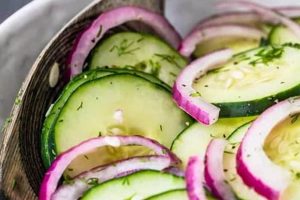
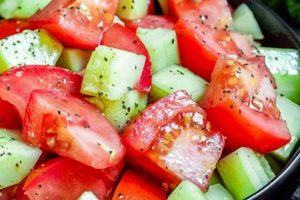
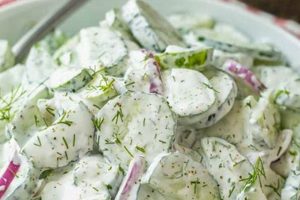
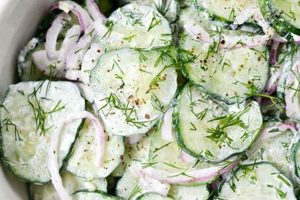
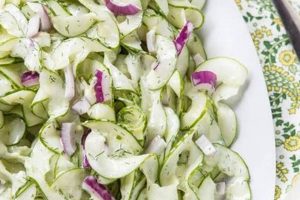
This dish typically combines the refreshing crunch of cucumbers with the creamy, spicy, and cheesy flavors reminiscent of jalapeo poppers. Common ingredients include cucumbers, cream cheese, jalapeos, cheddar cheese, bacon, and sometimes red onion, often served with a tangy dressing. Variations may incorporate different cheeses, spices, or herbs to create unique flavor profiles.
The appeal lies in the balanced combination of textures and flavors. The cool cucumber contrasts with the heat of the jalapeo, while the richness of the cream cheese and cheddar provides a satisfying base. The crispy bacon adds a savory element, and the tangy dressing ties the flavors together. This dish is suitable for potlucks, barbecues, or as a light side dish. Its adaptable nature allows for adjustments based on dietary preferences or seasonal ingredient availability, offering a refreshing alternative to traditional salads.
The following sections will delve deeper into variations of this dish, including ingredient selection, preparation methods, nutritional information, and serving suggestions.
Tips for a Successful Jalapeo Popper Inspired Cucumber Salad
Careful consideration of ingredients and preparation techniques elevates this simple salad to a flavorful and visually appealing dish.
Tip 1: Cucumber Preparation: For optimal texture, English cucumbers are recommended due to their thinner skin and reduced seed content. Seeds should be removed to prevent excess moisture in the salad. Thinly slicing or dicing the cucumbers ensures even coating and flavor distribution.
Tip 2: Jalapeo Handling: Adjusting the heat level is easily achieved by removing the seeds and membranes for a milder flavor. Finely dicing the jalapeos ensures even heat distribution throughout the salad. Gloves are recommended when handling jalapeos to avoid skin irritation.
Tip 3: Cream Cheese Selection: Full-fat cream cheese provides the richest flavor and texture. Softening the cream cheese to room temperature allows for easier mixing and smoother consistency.
Tip 4: Bacon Preparation: Crispy bacon adds a desirable textural contrast. Pre-cooked bacon crumbles offer convenience, but freshly cooked and crumbled bacon provides superior flavor.
Tip 5: Flavor Balancing: A balance of flavors is key. The tanginess of the dressing should complement the richness of the cheese and the heat of the jalapeos. A simple vinaigrette with red wine vinegar or apple cider vinegar works well.
Tip 6: Ingredient Incorporation: Gentle mixing prevents over-softening of the cucumbers and maintains their desirable crunch. Adding the bacon just before serving preserves its crispness.
Tip 7: Chilling and Serving: Chilling the salad for at least 30 minutes before serving allows the flavors to meld and enhances the refreshing qualities of the dish. Garnishing with fresh herbs, such as chives or dill, adds visual appeal and a subtle aromatic element.
By implementing these tips, one can achieve a well-balanced and flavorful cucumber salad that embodies the essence of jalapeo poppers without the need for frying or breading.
In conclusion, these guidelines offer a pathway to a consistently delicious and satisfying culinary experience.
1. Fresh Cucumbers

Fresh cucumbers serve as the foundational ingredient, providing a refreshing and crisp contrast to the richness and spice of other components. Their high water content contributes a cooling element, balancing the heat from jalapeos. The cucumber’s subtle flavor profile allows the other, more assertive flavors, such as the cream cheese, bacon, and jalapeo, to stand out while simultaneously providing a palate-cleansing effect between bites. Cucumber selection significantly impacts the final product. For instance, English cucumbers, known for their thinner skin and fewer seeds, offer a superior textural experience compared to standard slicing cucumbers. Their reduced water content also helps maintain the salad’s structural integrity, preventing it from becoming watery. Alternatively, Persian cucumbers, smaller and even less seeded, provide a concentrated cucumber flavor.
The preparation of the cucumbers also influences the overall quality of the salad. Thinly slicing or dicing the cucumbers ensures they absorb the flavors of the dressing and other ingredients while maintaining a pleasant crunch. Removing the seeds prior to slicing or dicing further enhances the textural experience by reducing excess moisture and preventing a diluted flavor profile. Salting the cucumbers and allowing them to drain before incorporating them into the salad can further enhance their crispness and prevent the salad from becoming soggy. This technique draws out excess moisture, resulting in a more concentrated cucumber flavor and a firmer texture.
In summary, the selection and preparation of fresh cucumbers play a crucial role in the overall success of this dish. Choosing the right variety and employing appropriate preparation techniques ensure the desired balance of flavor, texture, and moisture content. The interplay between the cool, crisp cucumber and the other ingredients establishes a harmonious blend of contrasting yet complementary flavors and textures, highlighting the importance of this seemingly simple ingredient.
2. Jalapeo Peppers

Jalapeo peppers constitute a crucial element, providing the characteristic heat that balances the richness of the cream cheese and the coolness of the cucumbers. Their flavor profile, beyond mere heat, contributes a subtle fruitiness and vegetal complexity that enhances the overall taste experience. Careful consideration of jalapeo selection and preparation is essential for controlling the spice level and achieving a balanced flavor profile.
- Heat Level Control
Jalapeo heat intensity varies. Removing seeds and membranes reduces spiciness. This allows for customization based on individual preferences, making the dish accessible to a wider range of palates. Leaving some or all of the seeds and membranes intact caters to those who prefer a more fiery experience. Finely mincing the jalapeos ensures even heat distribution throughout the salad.
- Flavor Beyond Heat
Jalapeos offer more than just heat. They possess a subtle, slightly sweet, and vegetal flavor that complements the other ingredients. Roasting or grilling jalapeos prior to incorporation can deepen these flavors, adding a smoky nuance to the salad. This technique also softens the jalapeos, altering their texture and offering a different sensory experience.
- Fresh vs. Pickled Jalapeos
While fresh jalapeos are typically preferred, pickled jalapeos can provide a tangy twist. Pickled jalapeos offer a different textural experience and contribute a vinegary acidity that can complement the creamy elements of the salad. However, their flavor profile differs significantly from fresh jalapeos, so this substitution should be considered carefully based on desired outcome.
- Jalapeo Interaction with Other Ingredients
The jalapeo’s heat interacts with other ingredients. The cream cheese provides a cooling counterpoint to the spice, while the tanginess of the dressing enhances the jalapeo’s flavor. Consider the interplay of flavors when adjusting the amount of jalapeo used. For example, a richer, creamier dressing might benefit from a higher proportion of jalapeo to maintain balance.
The strategic use of jalapeos elevates this simple cucumber salad from refreshing to complex. Balancing heat, flavor, and texture considerations ensures a well-rounded and satisfying dish that appeals to a broad spectrum of preferences. The jalapeo, therefore, acts not merely as a source of heat, but as a key component that contributes significantly to the overall depth and complexity of the salad’s flavor profile.
3. Cream Cheese Base
The cream cheese base forms the backbone of this salad, binding the ingredients and providing a rich, creamy counterpoint to the heat of the jalapeos and the crispness of the cucumbers. This base, typically a mixture of softened cream cheese with additional flavoring agents, emulates the filling found in traditional jalapeo poppers. Its presence contributes significantly to the overall texture and flavor profile of the salad, creating a cohesive and satisfying culinary experience. The cream cheese base acts as a blank canvas, allowing for customization through the incorporation of various herbs, spices, and other flavoring agents. This adaptability allows the salad to cater to a range of taste preferences. For instance, incorporating smoked paprika or chipotle powder can introduce smoky notes, while the addition of fresh herbs like dill or chives can impart a brighter, fresher dimension.
The quality and type of cream cheese employed significantly impact the final result. Full-fat cream cheese provides the richest flavor and smoothest texture, creating a luxurious mouthfeel. Lower-fat versions may compromise the creaminess and overall flavor intensity. The cream cheese must be adequately softened to ensure smooth incorporation with other ingredients and prevent a lumpy or uneven texture in the final product. Over-softening, however, can lead to a base that is too thin and lacks the desired body, potentially resulting in a watery salad. Striking the right balance in cream cheese consistency is therefore crucial for achieving optimal texture and flavor.
In conclusion, the cream cheese base plays a pivotal role, contributing not only richness and creaminess but also acting as a unifying element that brings together the diverse flavors and textures of the salad. Careful selection and preparation of the cream cheese base ensure a balanced and harmonious final dish that captures the essence of jalapeo poppers in a fresh and vibrant salad format. Understanding the impact of cream cheese quality and consistency allows for precise control over the final product, enabling culinary creativity and customization to suit individual preferences and desired outcomes.
4. Crispy Bacon

Crispy bacon contributes a crucial textural and flavor dimension to the jalapeo popper cucumber salad, echoing the classic jalapeo popper’s inclusion of bacon. The bacon’s smoky, salty flavor complements the spice of the jalapeos and the richness of the cream cheese, adding a savory depth that elevates the overall profile. Furthermore, its crisp texture contrasts with the creamy base and the refreshing crunch of the cucumbers, creating a multi-faceted sensory experience. This textural contrast is vital for preventing the salad from becoming overly soft or homogenous. For example, imagine a version without bacon: the dish might lack the savory balance and textural intrigue that makes it so appealing. The bacon’s fat also contributes to the flavor profile, rendering during cooking and infusing the other ingredients with its richness.
Several methods of bacon preparation achieve the desired crispness. Pan-frying allows for careful control over the cooking process, while oven-baking offers a hands-off approach suitable for larger batches. Regardless of the method, ensuring the bacon reaches a desirable level of crispness is paramount. Undercooked bacon introduces an unpleasant chewiness, while overcooked bacon becomes brittle and loses its nuanced flavor. Pre-cooked bacon crumbles offer convenience, but freshly cooked bacon provides superior flavor and texture control. Dicing the bacon before cooking allows for even distribution throughout the salad and enhances the integration of its flavor and texture with other components. Consider the impact on the overall dish: properly cooked, crispy bacon elevates the salad; improperly cooked bacon detracts from it.
Incorporating crispy bacon transforms the jalapeo popper cucumber salad from a simple side dish into a more substantial and satisfying culinary creation. The interplay of textures and flavors, driven by the bacon’s presence, adds complexity and depth, mimicking the experience of a true jalapeo popper. Challenges arise when bacon becomes soggy, often due to premature incorporation or insufficient crispness prior to mixing. Adding the bacon just before serving helps maintain its desired texture. The choice between pre-cooked bacon and freshly cooked bacon also impacts the final outcome. Freshly cooked bacon typically offers a superior flavor profile and allows for greater control over crispness. Ultimately, careful attention to bacon preparation and incorporation ensures the successful integration of this crucial element, maximizing its contribution to the overall culinary experience.
5. Tangy Dressing

Tangy dressing provides a crucial acidic balance to the richness of the cream cheese and the heat of the jalapeos in a jalapeo popper cucumber salad recipe. This acidity brightens the overall flavor profile, preventing the dish from becoming overly heavy or cloying. Without a tangy element, the richness of the cream cheese and the spice of the jalapeos could overwhelm the palate. The dressing’s tanginess also complements the fresh, cool nature of the cucumbers, creating a harmonious interplay of contrasting yet complementary flavors. A simple vinaigrette, often based on red wine vinegar or apple cider vinegar, serves as a common foundation. The specific acid chosen influences the final flavor; red wine vinegar contributes a robust, slightly fruity tang, while apple cider vinegar offers a lighter, sweeter acidity. Other acidic components, like lime juice or lemon juice, provide alternative flavor profiles and can be tailored to specific recipe variations. For instance, lime juice complements cilantro and avocado additions, creating a Southwestern-inspired variation.
Beyond mere acidity, the tangy dressing also acts as a unifying element, binding the various components of the salad together. The dressing coats the cucumbers, ensuring that each bite incorporates the flavors of the jalapeos, cream cheese, bacon, and any additional herbs or spices. The consistency of the dressing plays a significant role in its effectiveness. A dressing that is too thin fails to adequately coat the ingredients, while a dressing that is too thick can overpower the delicate flavors of the cucumbers and other components. Emulsified dressings, often incorporating a small amount of oil, provide an ideal balance of flavor, texture, and coating ability. Furthermore, the tangy dressing contributes to the overall moisture content of the salad, preventing it from becoming dry or unappetizing. This moisture also helps to distribute the flavors evenly throughout the dish. For example, a dry salad lacking sufficient dressing might experience uneven heat distribution from the jalapeos, resulting in some bites being overly spicy and others bland.
In summary, the tangy dressing is an integral component of a successful jalapeo popper cucumber salad recipe, contributing acidity, balance, and a unifying element that elevates the dish beyond a simple combination of ingredients. Careful consideration of the type of acid used, the consistency of the dressing, and its ability to effectively coat and bind the other components ensures a harmonious blend of flavors and textures. The absence or improper execution of this element can significantly detract from the overall culinary experience, highlighting the crucial role of the tangy dressing in achieving a well-balanced and flavorful final product.
6. Optional Garnishes

Optional garnishes, while not strictly essential to a jalapeo popper cucumber salad recipe, offer opportunities to enhance flavor, texture, and visual appeal. These additions contribute layers of complexity, transforming a simple salad into a more sophisticated and nuanced culinary experience. Consider the addition of fresh chives: their subtle onion flavor complements the jalapeos and adds a pop of vibrant green. Alternatively, crumbled cotija cheese introduces a salty, tangy element and a different textural dimension compared to the cream cheese base. Toasted sesame seeds provide a nutty flavor and a satisfying crunch, while a sprinkle of smoked paprika adds depth and a hint of smokiness. Even a simple garnish of fresh cilantro can brighten the flavors and add a refreshing herbal note.
The choice of garnishes allows for customization based on individual preferences and desired outcomes. A Southwestern-inspired version might benefit from the addition of chopped cilantro, avocado, and a squeeze of lime, while a more classic approach might feature crumbled bacon and a dusting of paprika. Garnishes also offer a means of addressing potential imbalances in the salad. For example, if the salad is perceived as lacking acidity, a squeeze of fresh lemon juice or a sprinkle of sumac can provide the necessary balance. Similarly, if the salad is too spicy, a dollop of sour cream or Greek yogurt can help mitigate the heat. The visual impact of garnishes should not be underestimated. A thoughtfully chosen garnish elevates the presentation of the dish, making it more visually appealing and appetizing. The vibrant green of fresh herbs, the bright red of diced tomatoes, or the deep orange of crumbled bacon can all contribute to a more visually engaging final product. This visual enhancement can significantly impact the overall dining experience.
Strategic use of optional garnishes demonstrates an attention to detail and a commitment to culinary excellence. While a jalapeo popper cucumber salad can certainly stand on its own, the judicious incorporation of garnishes can transform it from a simple side dish into a more complex and memorable culinary creation. The key lies in understanding the role of each potential garnish and selecting those that best complement and enhance the existing flavors and textures. Over-garnishing can detract from the overall balance, so restraint and careful consideration are crucial. Ultimately, optional garnishes provide a valuable tool for elevating the jalapeo popper cucumber salad recipe, allowing for customization, flavor enhancement, and increased visual appeal.
7. Chilling Time
Chilling time plays a crucial role in the final quality of a jalapeo popper cucumber salad. This period of refrigeration allows the flavors of the various componentsthe cucumbers, jalapeos, cream cheese base, bacon, and dressingto meld and harmonize, creating a more cohesive and balanced flavor profile. Chilling also enhances the refreshing qualities of the salad, making it particularly appealing in warmer weather. Understanding the impact of chilling time enables optimal flavor development and texture management.
- Flavor Development
Chilling allows the flavors of the individual ingredients to permeate the salad, creating a more complex and nuanced taste experience. The tanginess of the dressing mellows and distributes evenly throughout the cucumbers, while the heat of the jalapeos subtly infuses the cream cheese base. This melding of flavors enhances the overall balance and complexity of the salad, moving beyond the initial individual tastes to a unified flavor profile. For example, a freshly made salad might have distinct pockets of intense jalapeo heat, but after chilling, the heat distributes more evenly, creating a more consistent and enjoyable flavor experience.
- Texture Enhancement
Chilling firms the cucumbers, enhancing their crispness and providing a more satisfying textural contrast to the creamy elements of the salad. This chilling period also allows the dressing to further permeate the cucumbers, softening them slightly without compromising their desirable crunch. The interplay of texturescreamy, crisp, and potentially crunchy from added bacon or other toppingsis crucial to the overall enjoyment of the salad. A warm, wilted cucumber salad lacks the refreshing textural element that makes it so appealing. The chilling process helps to maintain the structural integrity of the cucumbers, preventing them from becoming soggy or losing their crispness.
- Temperature and Palatability
A chilled salad is simply more refreshing, particularly in warm weather. The cool temperature enhances the perception of crispness and provides a welcome contrast to the often richer, heavier elements of the dish. Serving the salad chilled also helps to temper the heat of the jalapeos, making the spice more palatable and enjoyable. This temperature contrast enhances the overall sensory experience, contributing to a more satisfying meal. Consider the difference between a chilled salad and one served at room temperature: the chilled version offers a more invigorating and palate-cleansing experience.
- Recommended Chilling Time
While even a short chilling period offers some benefits, a minimum of 30 minutes is generally recommended to allow for adequate flavor melding and texture enhancement. Longer chilling times, up to a few hours, can further intensify the flavors and create an even more refreshing salad. However, excessive chilling, beyond a few hours, can potentially lead to the cucumbers becoming overly soft or the dressing thinning out excessively. The ideal chilling time depends on the specific recipe and individual preferences, but a 30-minute minimum serves as a good starting point.
The chilling period acts as a final, crucial step in creating a successful jalapeo popper cucumber salad. It is not merely a matter of temperature control, but a vital element in flavor development, texture enhancement, and overall palatability. By allowing the flavors to meld and the textures to optimize, the chilling process elevates the dish from a simple combination of ingredients to a harmonious and refreshing culinary experience. This understanding of the importance of chilling time underscores the attention to detail required to fully realize the potential of this deceptively simple salad.
Frequently Asked Questions
This section addresses common inquiries regarding the preparation and variations of this dish.
Question 1: Can different cheeses be used?
Variations in cheese selection offer diverse flavor profiles. Monterey Jack, pepper jack, or a blend of cheeses can substitute for cheddar, each contributing unique characteristics. Smoked Gouda introduces a smoky dimension, while feta offers a salty, tangy counterpoint.
Question 2: What can be substituted for bacon?
For those who do not consume pork, chopped pancetta or prosciutto offer comparable salty, savory flavors. Vegetarian alternatives include crumbled tempeh bacon or roasted chopped nuts, such as pecans or walnuts, for added texture and flavor.
Question 3: How can spice levels be adjusted?
Removing the seeds and membranes from jalapeos reduces heat. Alternatively, milder peppers like poblanos or Anaheim peppers can substitute for a less spicy dish. Conversely, incorporating a small amount of habanero or Scotch bonnet pepper significantly increases the heat for those who prefer a spicier salad.
Question 4: Can this salad be made ahead of time?
Preparing components in advance enhances convenience. The cream cheese mixture, bacon, and chopped vegetables can be stored separately and combined shortly before serving. However, adding the dressing immediately before serving prevents the cucumbers from becoming soggy.
Question 5: How should leftovers be stored?
Leftovers should be stored in an airtight container in the refrigerator for up to three days. The texture of the cucumbers may soften slightly over time. Consuming the salad within two days is recommended for optimal quality.
Question 6: What complements this salad as a side dish?
This salad pairs well with grilled meats, such as chicken, steak, or fish. It also complements barbecued dishes, tacos, or burgers, adding a refreshing counterpoint to richer, heavier flavors. Serving it alongside rice or roasted vegetables creates a balanced and satisfying meal.
Understanding these aspects allows for customization and successful preparation, ensuring a flavorful and satisfying culinary experience.
The subsequent section explores variations on this recipe, showcasing its adaptability.
Conclusion
Exploration of this dish reveals its adaptability and versatility. From ingredient selection to preparation methods, each component contributes to the final product’s balance of flavors and textures. The cool cucumbers, spicy jalapeos, creamy cheese base, and crispy bacon create a harmonious blend, enhanced by a tangy dressing and optional garnishes. Proper chilling allows these flavors to meld, maximizing the dish’s refreshing qualities.
This dish offers a refreshing and flavorful alternative to traditional salads, suitable for various occasions. Its adaptability encourages culinary exploration and customization based on individual preferences and dietary needs. Further experimentation with ingredients and techniques can yield exciting variations, demonstrating the potential of this simple yet dynamic culinary creation.