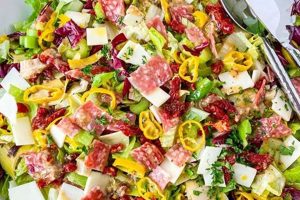
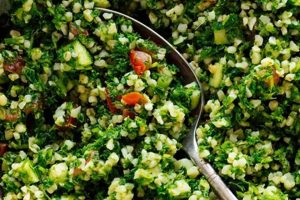
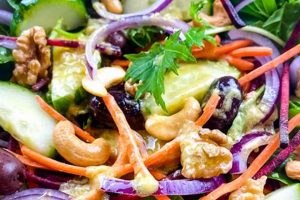
A chilled dish featuring cooked noodles, typically Asian-style wheat or rice noodles, combined with fresh tomatoes and other complementary ingredients. Variations often incorporate fresh herbs, such as basil or cilantro, along with a flavorful dressing, frequently featuring a vinaigrette base. Vegetables like cucumbers, bell peppers, or red onion add texture and complexity. This dish offers a refreshing and light meal, ideal for warm weather.
This type of salad offers a nutritious and appealing way to enjoy a variety of flavors and textures. The inherent simplicity of the dish allows for flexible adaptation to individual preferences and seasonal ingredients. Historically, cold noodle salads have held prominent places in various cuisines, particularly across Asia, adapting over time to incorporate new ingredients and techniques. The modern iteration frequently combines Eastern culinary traditions with Western palates.
The following sections will explore specific ingredient selections, preparation techniques, and variations, empowering readers to create delicious and personalized versions of this versatile dish.
Tips for a Superior Noodle Salad
Achieving optimal results requires attention to detail and an understanding of key elements. These tips offer guidance for preparing a flavorful and satisfying dish.
Tip 1: Noodle Selection: Opt for noodles that hold their shape well when cold, such as soba, udon, or rice noodles. Avoid overcooking; noodles should be al dente. Rinsing cooked noodles under cold water stops the cooking process and maintains a firm texture.
Tip 2: Tomato Preparation: Utilize ripe, flavorful tomatoes. Consider different varieties for a nuanced flavor profile. Larger tomatoes can be diced, while smaller varieties, like cherry or grape tomatoes, can be halved or quartered.
Tip 3: Balancing Flavors: Acidic elements, such as vinegar or citrus juice, balance the sweetness of the tomatoes and enhance the overall flavor profile. A touch of sweetness, like a drizzle of honey or a pinch of sugar, can further complement the dish.
Tip 4: Herbs and Aromatics: Fresh herbs provide brightness and complexity. Basil, cilantro, mint, and chives are excellent choices. Incorporating finely chopped garlic or ginger can add depth.
Tip 5: Dressing Emulsification: A stable emulsion prevents the dressing from separating. Whisk the dressing ingredients vigorously or use a blender for a smooth and creamy texture.
Tip 6: Ingredient Incorporation: Add the dressing just before serving to prevent the noodles from becoming soggy. Toss gently to ensure even distribution of ingredients and dressing.
Tip 7: Serving and Storage: Serve immediately for optimal flavor and texture. If storing, keep the noodles and dressing separate until ready to serve. Refrigerate leftover salad in an airtight container.
By following these guidelines, one can elevate a simple noodle salad into a culinary delight. Proper technique and thoughtful ingredient selection are crucial for maximizing flavor and presentation.
Equipped with this knowledge, exploring the vast possibilities of this versatile dish is encouraged.
1. Noodle Choice

Noodle selection significantly impacts the overall success of a tomato noodle salad. The chosen noodle must complement the other ingredients, particularly the tomatoes and dressing, while maintaining its texture and structural integrity. Different noodle types offer varying flavor profiles and absorb sauces differently, affecting the final dish’s balance. For instance, soba noodles, with their slightly nutty flavor, pair well with bolder, umami-rich dressings and robust tomatoes, while thin rice noodles offer a neutral backdrop for lighter, brighter flavors and delicate tomatoes. Using a thick udon noodle in a light vinaigrette with cherry tomatoes would result in a textural and flavor mismatch.
Consideration of noodle thickness, composition (wheat, rice, etc.), and cooking time is crucial. Thicker noodles require more robust flavors, while thinner noodles are better suited to lighter dressings. Wheat-based noodles, like soba or egg noodles, provide a heartier base, whereas rice noodles offer a lighter, more refreshing texture, aligning with the salad’s summery nature. Overcooked noodles become mushy and detract from the salad’s appeal. Achieving the proper al dente texture ensures a pleasant mouthfeel and prevents the noodles from clumping or becoming overly saturated with dressing. Matching the noodle’s cooking time with the desired texture is essential for a well-balanced salad.
Selecting the appropriate noodle is paramount for a harmonious and flavorful tomato noodle salad. Careful consideration of flavor profiles, textures, and cooking times contributes to a well-executed and satisfying dish. A thoughtful noodle choice enhances the interplay of ingredients and elevates the overall culinary experience. Failure to consider these factors can lead to a disjointed and less enjoyable result, highlighting the significant role noodle selection plays in this seemingly simple dish.
2. Tomato Variety
Tomato variety constitutes a critical element within a tomato noodle salad recipe. The selected tomato contributes not only to the dish’s visual appeal but also significantly influences its flavor profile, texture, and overall balance. Understanding the nuances of different tomato varieties allows for informed decisions that optimize the final product.
- Acidity and Sweetness
The balance between acidity and sweetness varies considerably among tomato varieties. Heirloom tomatoes, known for their complex flavor profiles, often exhibit a pronounced acidity that can brighten the salad. Conversely, cherry tomatoes tend toward a sweeter profile, offering bursts of juicy sweetness against the other ingredients. Balancing these flavor components is crucial for achieving a harmonious result. For example, a highly acidic tomato might require a slightly sweeter dressing to achieve equilibrium.
- Texture and Water Content
Textural variation among tomatoes also plays a significant role. Plum tomatoes, with their dense flesh and lower water content, hold their shape well in a salad, while beefsteak tomatoes, being larger and juicier, might release more liquid, potentially affecting the dressing’s consistency. This factor influences the salad’s overall texture and how the ingredients interact. A salad with watery tomatoes might benefit from a thicker dressing to prevent excessive dilution.
- Color and Visual Appeal
The visual aspect of the salad is enhanced by the tomato’s color and shape. A mix of red, yellow, and orange cherry tomatoes adds vibrancy, while larger, sliced heirloom tomatoes contribute visual interest with their varied shapes and color gradients. Visual appeal enhances the dining experience and influences perceptions of flavor. A visually appealing salad often appears more appetizing, encouraging enjoyment.
- Seasonal Availability
Seasonal variations in tomato availability impact flavor and quality. Peak-season tomatoes, grown locally and ripened on the vine, offer the most intense flavor and optimal texture. Out-of-season tomatoes, often transported long distances, may lack the same vibrancy and freshness. Utilizing in-season tomatoes whenever possible maximizes the salad’s flavor potential. A winter salad might benefit from sun-dried tomatoes or roasted tomatoes to compensate for the lack of fresh, flavorful options.
Careful consideration of tomato variety elevates the tomato noodle salad from a simple dish to a nuanced culinary experience. By understanding the interplay of acidity, sweetness, texture, visual appeal, and seasonality, one can create a salad that is both delicious and aesthetically pleasing. The chosen tomato variety acts as a cornerstone of the recipe, influencing the final product in multiple, interconnected ways.
3. Flavorful Dressing

Flavorful dressing forms an integral component of a successful tomato noodle salad recipe, acting as a unifying element that binds the individual components and elevates the overall sensory experience. The dressing contributes not only moisture and lubrication, preventing the salad from becoming dry and unappetizing, but also delivers a complex interplay of flavors that complement and enhance the inherent characteristics of the other ingredients. The careful selection and preparation of a dressing directly influence the final dish’s taste, texture, and overall appeal. A bland or poorly balanced dressing can detract from even the freshest, highest-quality tomatoes and noodles, while a well-crafted dressing transforms these simple elements into a harmonious and satisfying meal.
The specific flavor profile of the dressing should harmonize with the chosen tomato variety and noodle type. For instance, a light and tangy vinaigrette, perhaps based on rice vinegar and a touch of sesame oil, complements the delicate sweetness of cherry tomatoes and the subtle nuttiness of soba noodles. Conversely, a richer, creamier dressing based on tahini or peanut butter might overwhelm these delicate flavors, proving more suitable for heartier noodles like udon and robust tomatoes such as roasted Roma tomatoes. The dressing’s viscosity also plays a critical role; a thinner dressing coats delicate noodles more effectively, while a thicker dressing clings better to denser noodles and heartier vegetables often incorporated into these salads. Achieving balance within the dressing itself is equally important; acidity, sweetness, saltiness, and umami elements must harmonize to avoid overpowering any single flavor component. A dressing overly reliant on vinegar might become overly sharp, while excessive sweetness can mask the natural flavors of the tomatoes and other ingredients.
Effective dressing selection and preparation are crucial for maximizing the enjoyment of a tomato noodle salad. The dressing serves as a bridge, connecting the disparate flavors and textures of the various components. Thoughtful consideration of the interplay between dressing, tomato variety, and noodle type elevates this seemingly simple dish into a complex and rewarding culinary experience. Ignoring the dressing’s importance risks compromising the salad’s overall potential, underscoring the need for careful planning and execution in this critical aspect of the recipe.
4. Fresh Herbs

Fresh herbs contribute significantly to the overall sensory experience of a tomato noodle salad, providing aromatic complexity and a vibrant freshness that elevates the dish beyond a simple combination of ingredients. Their inclusion introduces a dynamic layer of flavor and visual appeal, transforming the salad into a more nuanced and engaging culinary creation. The selection and application of fresh herbs require careful consideration to maximize their impact and ensure they harmonize with the other components of the salad.
- Aromatic Enhancement
Fresh herbs offer a wide range of aromatic notes that complement and enhance the existing flavors within the salad. Basil, with its sweet, anise-like aroma, pairs well with ripe tomatoes and lighter dressings. Cilantro, offering a more pungent, citrusy note, complements bolder flavors and spicier dressings. Mint provides a refreshing coolness, while chives contribute a subtle oniony aroma. The choice of herbs should align with the overall flavor profile of the salad, creating a harmonious and balanced aromatic experience.
- Visual Appeal and Texture
Beyond their aromatic contributions, fresh herbs enhance the visual appeal of the salad, adding vibrant green hues and textural variation. The delicate leaves of basil and cilantro provide a visual contrast to the smoother textures of noodles and tomatoes, while chopped chives add a sprinkle of color. This visual enhancement contributes to a more appealing and appetizing presentation, increasing the overall enjoyment of the dish.
- Balancing Flavors
Fresh herbs can play a key role in balancing the flavors within the salad. The brightness of mint can cut through the richness of a creamy dressing, while the peppery notes of cilantro can balance the sweetness of ripe tomatoes. This balancing effect ensures that no single flavor dominates, creating a more harmonious and nuanced flavor profile.
- Incorporation Techniques
The method of incorporating fresh herbs influences their impact on the salad. Gently tearing larger leaves, like basil, preserves their delicate structure and prevents bruising, maximizing their aromatic release. Finely chopping herbs, such as chives or parsley, distributes their flavor more evenly throughout the salad. Adding herbs just before serving maintains their freshness and vibrancy, preventing them from wilting or becoming discolored.
The strategic use of fresh herbs elevates the tomato noodle salad from a simple dish to a more complex and flavorful culinary experience. Their aromatic contributions, visual appeal, and ability to balance flavors highlight their importance in achieving a well-rounded and satisfying salad. Careful consideration of herb selection and incorporation techniques maximizes their impact and ensures they harmonize with the other components of the dish, contributing to a more enjoyable and memorable dining experience.
5. Complementary Additions

Complementary additions represent a crucial aspect of a well-composed tomato noodle salad recipe. These additions, extending beyond the core components of noodles, tomatoes, and dressing, introduce layers of texture, flavor, and visual interest, elevating the dish from simple to sophisticated. Strategic incorporation of complementary ingredients enhances the overall dining experience, offering a more nuanced and satisfying meal. The following facets illustrate the importance and impact of these additions.
- Protein Enrichment
Protein additions transform the tomato noodle salad into a more substantial and complete meal. Grilled chicken or shrimp provide lean protein, contributing a savory element that complements the fresh flavors of the salad. Tofu, edamame, or chickpeas offer plant-based protein options, catering to vegetarian or vegan preferences. The inclusion of protein enhances satiety and nutritional value, broadening the salad’s appeal and making it a more satisfying meal option.
- Textural Contrast
Complementary additions contribute textural diversity, creating a more engaging culinary experience. Crispy elements, such as toasted nuts (peanuts, almonds, cashews) or croutons, contrast with the soft noodles and juicy tomatoes. Adding vegetables like shredded carrots, sliced cucumbers, or bell peppers introduces a refreshing crunch. These textural variations prevent the salad from becoming monotonous, providing a more dynamic and enjoyable mouthfeel.
- Flavor Enhancement
Complementary ingredients expand the flavor profile of the salad beyond the core components. Ingredients like chopped red onion introduce a pungent bite, while roasted corn adds a touch of sweetness. Incorporating olives or capers provides a salty, briny element. These flavor additions create a more complex and nuanced taste experience, preventing the salad from becoming one-dimensional.
- Visual Interest
Complementary additions enhance the visual appeal of the salad, making it more attractive and appetizing. Colorful vegetables, such as bell peppers or shredded red cabbage, add vibrancy. Toasted sesame seeds or black pepper provide visual contrast. A visually appealing presentation enhances the dining experience, stimulating appetite and increasing enjoyment of the meal.
The careful selection and incorporation of complementary additions elevate the tomato noodle salad from a basic dish to a more complex and satisfying culinary creation. These additions contribute not only to the salad’s nutritional value and textural complexity but also expand its flavor profile and visual appeal. By considering the interplay between these various elements, one can create a tomato noodle salad that is both delicious and aesthetically pleasing, offering a truly enhanced dining experience.
Frequently Asked Questions
This section addresses common inquiries regarding the preparation and enjoyment of tomato noodle salads, offering practical guidance for achieving optimal results.
Question 1: What type of noodles are best suited for a tomato noodle salad?
Noodles that maintain their texture when cold are ideal. Soba, udon, and various rice noodles are recommended choices. Avoid overcooking to prevent a mushy texture.
Question 2: Can canned tomatoes be used as a substitute for fresh tomatoes?
While canned tomatoes can be used in certain situations, fresh, ripe tomatoes are generally preferred for their superior flavor and texture in a cold salad. If using canned tomatoes, opt for high-quality varieties packed in their own juices and drain them thoroughly before incorporating.
Question 3: How can one prevent the noodles from becoming soggy?
Soggy noodles can be avoided by ensuring the noodles are cooked al dente, rinsed under cold water after cooking, and tossed with the dressing just before serving. Storing the noodles and dressing separately until serving also helps maintain their texture.
Question 4: What are some suitable protein additions for a more substantial meal?
Grilled chicken, shrimp, tofu, edamame, chickpeas, or hard-boiled eggs can be added to increase protein content and create a more filling salad.
Question 5: How long can leftover tomato noodle salad be stored?
Leftover salad can be stored in an airtight container in the refrigerator for up to two days. However, it’s generally recommended to consume the salad as soon as possible after preparation for optimal flavor and texture.
Question 6: Can the dressing be prepared in advance?
Dressing can be prepared in advance and stored separately in the refrigerator. However, some dressings, particularly those containing fresh herbs, are best prepared just before serving to maintain their vibrancy and prevent oxidation.
Understanding these key aspects of preparation and storage contributes to a more successful and enjoyable tomato noodle salad experience.
The following section offers a collection of varied recipes, demonstrating the versatility of this dish.
Tomato Noodle Salad Recipe
This exploration of the tomato noodle salad recipe has highlighted the crucial elements contributing to a successful and satisfying dish. From the careful selection of noodles, ensuring textural integrity and flavor compatibility, to the nuanced consideration of tomato varieties, balancing acidity, sweetness, and visual appeal, each component plays a vital role. The importance of a well-crafted dressing, unifying the diverse elements through complementary flavors and appropriate viscosity, has been underscored. Further enhancing the sensory experience are fresh herbs, contributing aromatic complexity and visual vibrancy, and complementary additions, introducing textural contrasts and expanding the flavor profile. Addressing frequently asked questions provides practical guidance for navigating common preparation and storage challenges.
The tomato noodle salad recipe, though seemingly simple, offers a canvas for culinary creativity. Understanding the interplay of these key elements empowers individuals to craft personalized variations, adapting the recipe to individual preferences and seasonal ingredient availability. This exploration encourages further experimentation and a deeper appreciation for the potential of this versatile and refreshing dish.