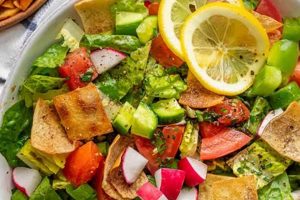
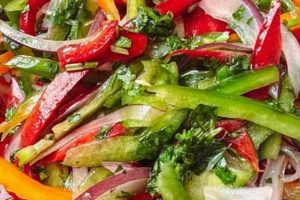
This dish typically features a finely chopped mix of fresh ingredients, often including romaine lettuce, salami, provolone cheese, tomatoes, olives, pepperoncini, and chickpeas. A vibrant vinaigrette, sometimes incorporating red wine vinegar and Dijon mustard, binds the ingredients together. Variations exist, but the core components contribute a balanced flavor profile combining salty, tangy, and fresh elements.
The appeal lies in the textural contrast and convenient format. The finely chopped ingredients offer a satisfying crunch, while the compact nature makes it ideal for quick meals or potlucks. Historically, chopped salads emerged as a way to utilize leftover ingredients creatively, transforming them into a unified and flavorful dish. This practicality and versatility contribute to its continued popularity.
Further exploration will delve into specific ingredient combinations, dressing variations, and preparation techniques. Nutritional information, tips for presentation, and potential adaptations for dietary restrictions will also be addressed.
Tips for a Superior Chopped Salad
Achieving optimal flavor and texture requires attention to detail throughout the preparation process. The following tips offer guidance for creating a truly exceptional chopped salad.
Tip 1: Ingredient Quality is Paramount: Select fresh, high-quality produce. Ripe tomatoes, crisp lettuce, and flavorful cheeses contribute significantly to the overall taste.
Tip 2: Uniformity in Chopping: Consistent chopping ensures even distribution of flavors and textures. Aim for bite-sized pieces that blend harmoniously.
Tip 3: Don’t Overdress: Add the vinaigrette gradually, tossing gently to coat the ingredients evenly. Avoid excessive dressing, which can make the salad soggy.
Tip 4: Chill Before Serving (Optional): Chilling the salad for a short period allows the flavors to meld. However, this step is optional and depends on personal preference.
Tip 5: Proper Storage of Leftovers: Store leftover salad and dressing separately to maintain freshness and prevent sogginess. Combine just before serving.
Tip 6: Explore Ingredient Variations: While classic combinations offer a reliable base, don’t hesitate to experiment with different ingredients. Consider adding artichoke hearts, roasted red peppers, or different types of salami.
Tip 7: Balance is Key: Strive for a balance of flavors and textures. Incorporate a mix of salty, tangy, sweet, and crunchy elements for a more complex and satisfying salad.
By adhering to these tips, one can elevate a simple chopped salad to a truly exceptional culinary experience. Attention to detail, from ingredient selection to dressing application, ensures a flavorful and satisfying result.
The following section provides a detailed recipe, enabling readers to put these tips into practice and create their own delicious chopped salad.
1. Fresh, High-Quality Ingredients

The success of a La Scala-style chopped salad hinges directly on the quality of its ingredients. Fresh produce offers optimal flavor and texture. Consider the impact of using ripe, juicy tomatoes compared to bland, out-of-season alternatives. The sweetness of a perfectly ripe tomato enhances the vinaigrette, while its firm texture holds up well to chopping. Similarly, crisp romaine lettuce provides a refreshing crunch, contrasting with the richness of other components. Withered lettuce detracts from both the taste and visual appeal. Selecting high-quality salami and provolone ensures a depth of flavor that elevates the entire dish.
This emphasis on freshness stems from the salad’s inherent simplicity. Because the ingredients are presented largely uncooked, their individual flavors are prominent. Any compromise in quality directly impacts the overall taste experience. For example, using inferior olive oil in the vinaigrette diminishes the salad’s brightness and can introduce unwanted bitterness. Likewise, substituting pre-shredded cheese often results in a drier, less flavorful outcome compared to freshly grated provolone. Investing in high-quality components ensures that each element contributes positively to the final product.
Ultimately, prioritizing fresh, high-quality ingredients elevates this seemingly simple salad to a culinary experience. The interplay of flavors and textures relies on the integrity of each component. While substitutions might offer convenience, they often compromise the intended balance. The pursuit of excellence in ingredient selection distinguishes a truly exceptional La Scala chopped salad.
2. Finely Chopped Produce
The “finely chopped” aspect of a La Scala-style salad is integral to its identity, impacting both texture and flavor delivery. Uniformly small pieces ensure a pleasant mouthfeel and facilitate even distribution of the vinaigrette, preventing pockets of excess dressing or dry ingredients. This fine chopping also maximizes surface area, allowing the diverse flavors to meld harmoniously. Imagine biting into a chunk of salami alongside a large piece of lettuce the flavors remain distinct. However, when both are finely chopped, each bite offers a balanced combination of salty, tangy, and fresh notes.
Consider the role of the pepperoncini. If left whole or coarsely chopped, its heat becomes localized and potentially overpowering. Finely dicing the pepperoncini disperses its piquancy throughout the salad, contributing a subtle, consistent kick to each bite. This principle applies across all ingredients. Finely chopped provolone melts slightly in the vinaigrette, coating the other elements and enhancing the overall richness. Similarly, finely chopping the romaine lettuce prevents large, unwieldy leaves from dominating the texture and allows the subtler flavors of other components to shine.
The practical significance of this technique extends beyond flavor and texture. Finely chopped ingredients pack more efficiently into each bite, creating a satisfyingly dense and flavorful experience. This density also contributes to the salad’s portability, making it ideal for packed lunches or buffets. While larger pieces might be visually appealing, they compromise the balance and convenience characteristic of a well-executed La Scala chopped salad. Achieving this fine chop requires a sharp knife and a patient hand. The effort, however, translates directly into a superior culinary experience.
3. Tangy Vinaigrette

The tangy vinaigrette serves as a unifying element in a La Scala chopped salad, binding the diverse ingredients and contributing a bright counterpoint to the richness of the cheese and cured meats. Its acidity balances the saltiness of the olives and pepperoncini, creating a harmonious flavor profile. Understanding the components and characteristics of this vinaigrette is crucial for replicating the authentic La Scala experience.
- Acidity as a Balancing Force
The primary role of the vinaigrette’s acidity, typically derived from red wine vinegar, is to cut through the richness of the other ingredients. Imagine the heaviness of salami and provolone without this acidic counterbalance. The vinaigrette brightens the overall flavor, preventing the salad from feeling overly heavy or greasy. This balance is essential for a refreshing and enjoyable culinary experience. The level of acidity can be adjusted to personal preference, but maintaining a noticeable tang is key to the La Scala profile.
- Emulsification and Texture
A stable emulsion, achieved by whisking the vinegar with oil and Dijon mustard, ensures the vinaigrette clings evenly to the chopped ingredients. This prevents the salad from becoming watery and contributes a pleasant, creamy texture. The Dijon mustard acts as an emulsifier, binding the oil and vinegar together and providing a subtle sharpness that complements the other flavors. A properly emulsified vinaigrette contributes to both the taste and the textural enjoyment of the salad.
- Flavor Complexity through Seasoning
Beyond the core ingredients, seasonings like dried oregano, garlic powder, salt, and black pepper add depth and complexity to the vinaigrette. These elements enhance the overall flavor profile without overpowering the delicate balance of acidity and richness. The choice of seasonings can be adapted to individual preferences, but restraint is advisable to avoid masking the core flavors of the salad. A well-seasoned vinaigrette elevates the salad beyond a simple combination of ingredients, transforming it into a cohesive and flavorful dish.
- Impact on Freshness and Preservation
The acidic nature of the vinaigrette also plays a role in preserving the freshness of the chopped ingredients. While not a substitute for proper refrigeration, the vinegar inhibits bacterial growth, extending the salad’s shelf life slightly. This aspect is particularly important for large batches or when preparing the salad in advance for an event. However, it’s crucial to remember that dressing the salad too far ahead of time can lead to sogginess, so timing is key.
The tangy vinaigrette is not merely a dressing; it’s an integral component of the La Scala chopped salad experience. Its acidity, emulsification, seasoning, and preservative properties contribute significantly to the salad’s balanced flavor profile, pleasant texture, and overall appeal. Mastering the art of this vinaigrette is essential for anyone seeking to replicate the authentic La Scala taste.
4. Cured Meats (Salami, Prosciutto)

Cured meats constitute a defining element of the La Scala chopped salad, contributing a complex interplay of salty, savory, and sometimes spicy notes that complement the other ingredients. Understanding their role and characteristics is essential for appreciating the nuances of this dish.
- Flavor Contribution and Depth
Salami and prosciutto, the most common cured meats in this salad, impart distinct yet complementary flavors. Salami, often seasoned with garlic, pepper, and other spices, delivers a robust, savory punch. Prosciutto, with its delicate saltiness and subtle sweetness, offers a more nuanced flavor profile. Their combined presence adds depth and complexity, contrasting with the fresh, crisp elements of the salad.
- Textural Contrast
The firm, slightly chewy texture of cured meats provides a satisfying contrast to the crisp lettuce and other vegetables. This textural interplay enhances the overall eating experience, preventing monotony and creating a dynamic mouthfeel.
- Salt Balance and Enhancement
The saltiness of cured meats contributes to the overall seasoning of the salad, enhancing the flavors of the other ingredients. This saltiness also balances the acidity of the vinaigrette, preventing the salad from tasting overly tart. Careful consideration of the salt content of the chosen cured meats is crucial for achieving a harmonious balance.
- Selection and Variation
While salami and prosciutto are traditional choices, other cured meats, such as mortadella or capicola, can be incorporated to explore different flavor profiles. The choice of cured meat influences the overall character of the salad, offering opportunities for customization and experimentation. The quality of the cured meat significantly impacts the final result; selecting high-quality products ensures optimal flavor and texture.
The inclusion of cured meats elevates the La Scala chopped salad beyond a simple vegetable dish, transforming it into a more substantial and satisfying meal. The careful interplay of flavors, textures, and salt balance distinguishes this salad, making it a flavorful and texturally dynamic culinary experience. Understanding the specific contributions of cured meats is crucial for both appreciating and replicating the authentic La Scala taste.
5. Sharp Cheese (Provolone)

Provolone cheese plays a crucial role in the La Scala chopped salad, contributing a distinct sharpness and salty richness that complements the other ingredients. Its presence is integral to the salad’s overall flavor profile and textural complexity. An exploration of its specific contributions reveals its significance within this culinary context.
- Flavor Counterpoint and Complexity
Provolone’s sharp, slightly tangy flavor provides a counterpoint to the other ingredients, particularly the richness of cured meats and the sweetness of the vegetables. This contrast creates a more complex and balanced flavor profile, preventing any single element from dominating. The sharpness also stimulates the palate, enhancing the overall sensory experience.
- Textural Contribution and Cohesion
When finely chopped, provolone contributes a smooth, slightly creamy texture that contrasts with the crispness of the vegetables and the chewiness of the meats. Furthermore, the small pieces of provolone tend to adhere to the other ingredients, helping to bind the salad together and distribute the vinaigrette more evenly.
- Salt Balance and Flavor Enhancement
Provolone’s saltiness contributes to the overall seasoning of the salad, enhancing the flavors of the other components. This saltiness must be carefully balanced with the saltiness of the cured meats and the vinaigrette to avoid an overly salty final product. The right balance allows the individual flavors to shine while creating a harmonious overall taste.
- Selection and Impact on Authenticity
The specific type of provolone used can significantly influence the final flavor profile. Aged provolone offers a more intense sharpness, while milder varieties provide a subtler flavor. Selecting a high-quality provolone is crucial for achieving the authentic La Scala taste. Lower quality cheeses may lack the characteristic sharpness and textural nuances that contribute to the salad’s complexity.
The inclusion of provolone distinguishes the La Scala chopped salad from other chopped salads, contributing a signature sharpness and richness that elevates the overall culinary experience. Its impact on flavor, texture, and salt balance is essential to the salad’s success. Careful selection and proper handling of this key ingredient ensure a truly authentic and satisfying result.
6. Briny, Salty Elements (Olives, Pepperoncini)

Briny, salty elements, primarily olives and pepperoncini, contribute a crucial dimension to the La Scala chopped salad, providing bursts of intense flavor that contrast with and complement the other ingredients. Their presence elevates the salad beyond simple freshness, adding layers of complexity and a satisfyingly piquant edge. An examination of their specific contributions reveals their integral role in the overall composition.
- Flavor Contrast and Complexity
Olives, whether green, black, or Kalamata, introduce a distinctly briny, salty flavor that cuts through the richness of the cheese and cured meats. Pepperoncini, with their subtly sweet heat, add another layer of complexity. This interplay of brininess, saltiness, and subtle heat creates a more dynamic and engaging flavor profile.
- Textural Variation
The firm, slightly chewy texture of olives and the crisp snap of pepperoncini provide textural counterpoints to the other ingredients. This variation in texture enhances the overall eating experience, preventing monotony and contributing to a more satisfying mouthfeel. The small size of these elements ensures they integrate seamlessly with the finely chopped nature of the salad.
- Salt Balance and Accentuation
The saltiness of olives contributes to the overall seasoning of the salad, but it must be carefully balanced with the saltiness of the cured meats and cheese. The goal is to enhance, not overpower, the other flavors. The subtle heat of pepperoncini offers a unique salty element without increasing sodium levels significantly, catering to broader dietary preferences.
- Visual Appeal and Culinary Tradition
The dark color of olives and the vibrant green of pepperoncini provide visual contrast against the backdrop of lettuce, cheese, and cured meats, enhancing the salad’s aesthetic appeal. Furthermore, the inclusion of these ingredients aligns with the broader culinary tradition of Italian-American cuisine, of which the La Scala chopped salad is a representative example.
The inclusion of briny, salty elements like olives and pepperoncini is a defining characteristic of the La Scala chopped salad. These seemingly minor additions contribute significantly to the complexity of flavors, textures, and overall sensory experience. Understanding their role is essential for appreciating the nuanced balance and authentic character of this dish. Furthermore, it allows for informed customization, as variations in olive type and pepperoncini preparation can further personalize the salad to individual preferences.
Frequently Asked Questions
This section addresses common inquiries regarding the preparation and enjoyment of a La Scala-style chopped salad, offering clarity and guidance for both novice and experienced cooks.
Question 1: Can other cheeses be substituted for provolone?
While provolone is traditional, other sharp cheeses like sharp cheddar, Asiago, or Parmesan can be substituted. However, this will alter the characteristic flavor profile. Milder cheeses are generally less suitable, as they may not provide sufficient contrast to the other ingredients.
Question 2: What is the best way to prevent the salad from becoming soggy?
To prevent sogginess, add the vinaigrette just before serving. Storing the dressing separately and combining only the desired portion with the salad components helps maintain crispness. Avoid overdressing, as excess moisture contributes to sogginess.
Question 3: Can this salad be made ahead of time?
The salad components can be chopped and stored separately in advance. However, it is recommended to combine them and add the dressing only shortly before serving to maintain optimal freshness and texture.
Question 4: Are there vegetarian adaptations for this recipe?
Omitting the cured meats creates a vegetarian version. Consider adding marinated artichoke hearts or roasted red peppers for additional flavor and texture. Chickpeas or cannellini beans can enhance protein content.
Question 5: How long can leftovers be stored?
Properly stored in airtight containers, leftover salad (without dressing) can typically be refrigerated for up to three days. The vinaigrette can be stored separately for a similar duration.
Question 6: What are some suitable accompaniments for this salad?
This salad can be served as a standalone light meal or as a side dish alongside grilled meats, poultry, or fish. Crusty bread complements the textures and flavors of the salad.
Understanding these common points of inquiry assists in ensuring successful preparation and a satisfying culinary outcome. Attention to detail, particularly regarding ingredient quality and dressing application, contributes significantly to the overall enjoyment of this classic dish.
The following section offers concluding remarks and suggestions for further exploration.
La Scala Chopped Salad Recipe
Exploration of the La Scala chopped salad recipe reveals a carefully orchestrated balance of flavors and textures. From the crisp freshness of romaine lettuce to the sharp bite of provolone and the savory depth of cured meats, each component contributes distinctly to the overall composition. The tangy vinaigrette, a crucial unifying element, binds these diverse ingredients, its acidity balancing the richness of the cheese and meats while enhancing the flavors of the vegetables. Further enhancing the complexity are the briny olives and piquant pepperoncini, offering bursts of intense flavor that elevate the salad beyond simple freshness. The finely chopped nature of the ingredients ensures an even distribution of flavors and textures in every bite, highlighting the careful consideration given to the construction of this dish.
The enduring appeal of the La Scala chopped salad lies not merely in its individual components, but in their harmonious interplay. This recipe represents a culinary synthesis, demonstrating how seemingly simple ingredients, when combined with precision and understanding, can create a truly exceptional dining experience. Continued exploration of variations and adaptations promises further culinary discoveries, underscoring the versatility and enduring relevance of this classic dish.