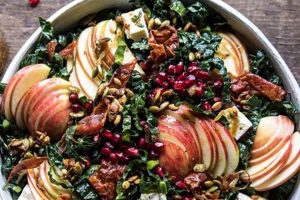
A nutritious and flavorful dish featuring raw kale as the base, often massaged with a dressing to tenderize its leaves, combined with dried cranberries for sweetness and tartness, and typically including other complementary ingredients like nuts, seeds, cheese, or other vegetables. Variations may include different dressings, additions of protein like grilled chicken or tofu, and seasonal fruits or vegetables.
This type of salad offers a wealth of nutritional benefits. Kale is a powerhouse of vitamins, minerals, and antioxidants, contributing to overall health. The addition of cranberries provides further antioxidants and a touch of sweetness, balancing the sometimes bitter taste of kale. Combining these ingredients with healthy fats and proteins creates a balanced and satisfying meal suitable for various dietary preferences, including vegetarian, vegan (depending on additions), and gluten-free options. This vibrant salad has gained popularity in recent years due to increased interest in healthy eating and the versatility of kale.
This discussion will explore various aspects of preparing such a salad, including selecting the right kale, crafting the perfect dressing, incorporating complementary ingredients, and addressing potential variations to suit individual tastes and dietary needs.
Tips for a Delicious Kale Salad with Cranberries
Optimizing the preparation process ensures a flavorful and satisfying salad experience. These tips offer guidance for creating a successful dish.
Tip 1: Massage the Kale: Massaging kale leaves with dressing tenderizes them, reducing bitterness and improving texture. This step is crucial for palatability.
Tip 2: Balance Flavors: The slight bitterness of kale pairs well with sweet and acidic elements. Dried cranberries offer sweetness and tartness, while a dressing with citrus or vinegar provides acidity.
Tip 3: Consider Complementary Ingredients: Nuts and seeds add healthy fats and textural contrast. Options include toasted almonds, pecans, pumpkin seeds, or sunflower seeds.
Tip 4: Enhance with Cheese: Crumbled feta, goat cheese, or shaved parmesan contribute salty, savory notes and creamy textures that complement the other ingredients.
Tip 5: Add Protein (Optional): Grilled chicken, roasted tofu, or chickpeas boost the protein content, transforming the salad into a complete meal.
Tip 6: Experiment with Seasonal Additions: Incorporating seasonal fruits like sliced apples or pears, or roasted vegetables like butternut squash, adds depth and complexity.
Tip 7: Dress Just Before Serving: To prevent the salad from becoming soggy, add the dressing immediately before serving. This maintains optimal texture.
By following these suggestions, one can elevate a simple kale salad with cranberries into a culinary masterpiece, maximizing both flavor and nutritional value.
These preparation strategies contribute to a delightful and healthful culinary experience. The following section concludes this exploration.
1. Kale Preparation
Optimal kale preparation is crucial for a palatable and enjoyable kale salad with cranberries. Improper handling can result in a tough, bitter, and unpleasant experience. Proper techniques transform kale into a tender, flavorful base that complements other ingredients.
- Washing and Drying:
Thorough washing removes any debris or grit. Proper drying, preferably with a salad spinner, prevents a diluted dressing and soggy salad. Excess moisture negatively impacts the overall texture and flavor balance.
- Stem Removal and Chopping:
Thick stems create an unpleasant fibrous texture. Removing them before chopping ensures a more delicate and consistent mouthfeel. Chopping the leaves into bite-sized pieces facilitates even coating with the dressing and comfortable consumption.
- Massaging:
Massaging kale with a dressing tenderizes the leaves, breaking down tough fibers and reducing bitterness. This process also helps the leaves absorb the dressing more effectively, enhancing flavor distribution throughout the salad. The duration and intensity of massaging can be adjusted based on personal preference and the type of kale used.
- Chilling (Optional):
Briefly chilling massaged kale before serving can further enhance its texture and crispness, especially in warmer climates. This step is not essential but adds a refreshing element to the final dish. Over-chilling, however, can make the kale limp.
These preparation steps contribute significantly to the overall success of a kale salad with cranberries. They ensure a pleasant textural experience and allow the kale’s inherent flavors to harmonize with the other components, creating a balanced and satisfying dish.
2. Cranberry Selection

Cranberry selection significantly influences the overall flavor profile and textural complexity of a kale salad. While dried cranberries are the most common choice, variations exist, each contributing unique characteristics to the final dish. Understanding these nuances allows for informed decisions aligned with desired taste preferences and dietary considerations.
Dried Cranberries: These offer concentrated sweetness and a chewy texture that contrasts well with the kale. Variations in sweetness, ranging from naturally sweetened to those with added sugar, should be considered based on individual preferences and the other ingredients in the salad. For example, a salad with a tangy dressing might benefit from sweeter cranberries, while a dressing with honey or maple syrup may pair better with less sweetened cranberries. The size and moisture content also contribute to textural variation; smaller, drier cranberries offer a more concentrated burst of flavor while larger, plumper cranberries provide a softer chew.
Fresh Cranberries: Although less common, fresh cranberries provide a more tart and vibrant flavor. Their firmer texture adds a different dimension compared to the chewiness of dried cranberries. They are particularly suitable for salads featuring fall or winter seasonal ingredients, where the tartness complements the flavors of roasted squash or apples. Incorporating fresh cranberries requires consideration of their intense tartness and their ability to stain other ingredients. A light blanching can reduce tartness while maintaining their fresh texture.
Frozen Cranberries: Frozen cranberries offer a convenient alternative, especially when fresh cranberries are out of season. Their flavor profile is similar to fresh, though they may have a slightly softer texture once thawed. Similar to fresh cranberries, they benefit from a light blanching to reduce tartness and improve their integration within the salad. Thawing and patting them dry prevents excess moisture from diluting the dressing.
Careful cranberry selection elevates the overall sensory experience of a kale salad. Whether using dried, fresh, or frozen cranberries, understanding their distinct characteristics allows for informed choices that harmonize with the other ingredients and result in a balanced and delightful dish. This consideration ensures a salad that is not only nutritious but also delivers a complex interplay of flavors and textures.
3. Complementary Ingredients

Complementary ingredients elevate a kale salad with cranberries beyond a simple combination of greens and fruit. They contribute textural contrasts, nuanced flavors, and additional nutritional value, transforming the salad into a more complex and satisfying culinary experience. Strategic ingredient selection is essential for achieving a harmonious balance.
- Nuts and Seeds:
Nuts and seeds introduce healthy fats, protein, and satisfying crunch. Options like toasted almonds, pecans, walnuts, pumpkin seeds, or sunflower seeds provide varying degrees of richness and textural contrast. Toasted nuts enhance their inherent flavors and create a more pronounced textural counterpoint to the kale and cranberries. The choice of nuts or seeds can influence the overall flavor profile; for example, pecans offer a buttery richness, while pumpkin seeds contribute a subtly sweet and earthy note.
- Cheese:
Cheese adds a salty, savory element and often a creamy texture. Crumbled feta, goat cheese, shaved parmesan, or shredded cheddar introduce distinct flavor profiles and textural nuances. Feta and goat cheese offer tangy and slightly salty notes, while parmesan provides a sharp, umami flavor. The choice of cheese should complement the dressing and other ingredients; a strong cheese like blue cheese might overpower a delicate vinaigrette, while a milder cheese like goat cheese pairs well with a lemon-based dressing.
- Other Fruits and Vegetables:
Incorporating other fruits and vegetables expands the flavor profile and adds visual appeal. Sliced apples or pears contribute sweetness and juiciness, while roasted butternut squash or sweet potato offer earthy sweetness and a tender texture. Seasonal variations allow for flexibility and creativity; incorporating summer fruits like berries or winter vegetables like roasted Brussels sprouts provides seasonal relevance and flavor diversity.
- Protein:
Adding protein transforms the salad into a complete meal. Grilled chicken or fish, roasted tofu, chickpeas, or lentils introduce substantial nutritional value and textural variation. The choice of protein should align with dietary preferences and desired flavor profiles. Grilled chicken provides a savory element, while roasted tofu offers a nutty and slightly smoky flavor. Chickpeas and lentils contribute plant-based protein and a hearty texture.
The careful selection and combination of complementary ingredients significantly enhance the overall experience of a kale salad with cranberries. By balancing flavors, textures, and nutritional components, these additions create a dish that is not only healthy and delicious but also offers a satisfying and multifaceted culinary experience. The interplay of these elements elevates the salad from a simple side dish to a substantial and flavorful meal.
4. Dressing Selection

Dressing selection is paramount in a successful kale salad with cranberries. The dressing serves not only to coat the ingredients but also to balance the inherent flavors of the kale and cranberries, creating a harmonious and palatable final product. An appropriate dressing complements the other components without overpowering them, enhancing the overall sensory experience. The interplay between dressing and ingredients determines the salad’s ultimate success. For example, a light vinaigrette with citrus notes balances the slight bitterness of kale and the sweetness of cranberries, while a creamy dressing based on Greek yogurt or tahini provides a richer, more substantial coating that complements roasted vegetables or added protein.
Several factors influence dressing choice. The intensity of the kale’s bitterness and the sweetness level of the cranberries are primary considerations. A more bitter kale variety might require a sweeter or more acidic dressing to achieve balance, while overly sweet cranberries may necessitate a tangier dressing. The presence of other ingredients, such as nuts, cheese, or additional fruits and vegetables, further influences dressing compatibility. A creamy dressing might clash with delicate flavors, while a light vinaigrette may not adequately coat heartier additions. Understanding these nuances allows for strategic dressing choices that enhance rather than detract from the overall flavor profile. Practical applications include adjusting the acidity, sweetness, or creaminess of a chosen dressing based on the specific ingredients used in the salad. A maple- Dijon vinaigrette, for instance, offsets the bitterness of kale with sweetness and acidity, while a tahini dressing adds richness and complements roasted sweet potatoes or chickpeas.
Effective dressing selection elevates the kale salad with cranberries from a simple combination of ingredients to a well-balanced and flavorful dish. Careful consideration of the interplay between dressing and other components ensures a harmonious and satisfying culinary experience. Challenges may include achieving the desired balance without overpowering delicate flavors or creating a dressing that complements all additions. Ultimately, informed decision-making based on ingredient characteristics and flavor profiles is key to crafting a truly exceptional salad.
5. Flavor Balance
Flavor balance is crucial for a successful kale salad with cranberries. The inherent bitterness of kale, the tartness and sweetness of cranberries, and the potential additions of other ingredients necessitate careful consideration of how these flavors interact. A well-balanced salad avoids any single flavor dominating, creating a harmonious and enjoyable experience.
- Bitterness Management:
Kale’s bitterness, while contributing to its nutritional value, can be overpowering if not properly addressed. Massaging the leaves with dressing helps break down tough fibers and mitigate bitterness. Further balance is achieved through the incorporation of sweet and acidic elements. The sweetness of cranberries and the acidity of a vinaigrette dressing counteract the bitterness, creating a more palatable flavor profile. Ignoring bitterness management results in an unpleasant, overly bitter salad that overshadows other flavors.
- Sweetness and Acidity:
The interplay between sweetness and acidity is essential. Cranberries provide both sweetness and tartness, contributing a complex flavor dimension. The dressing plays a key role in balancing these elements. A vinaigrette with citrus juice or vinegar adds brightness and cuts through the richness of any added nuts, seeds, or cheese. Careful balancing prevents the salad from becoming overly sweet or excessively tart. For example, a dressing with honey or maple syrup might require more acidic elements like lemon juice to achieve equilibrium.
- Salt and Fat Integration:
Salt and fat play crucial roles in enhancing overall flavor and creating a satisfying mouthfeel. Salty elements, such as cheese, nuts, or a salted dressing, enhance other flavors and provide a savory counterpoint to the sweetness and acidity. Healthy fats from nuts, seeds, avocado, or a creamy dressing contribute richness and help distribute flavors throughout the salad. These elements also create a more satisfying textural experience. However, excessive salt or fat can overpower the other flavors, making the salad feel heavy or greasy. Proper portioning and ingredient selection are key to successful integration.
- Textural Considerations:
While not strictly a flavor element, texture significantly influences the perception of flavor balance. The chewiness of kale, combined with the often-chewy texture of dried cranberries, benefits from the addition of contrasting textures. Crunchy nuts, seeds, or croutons provide a textural counterpoint, preventing a monotonous mouthfeel. The dressing also contributes to texture; a creamy dressing adds a smooth element, while a vinaigrette offers a lighter, more refreshing texture. The interplay of textures enhances the complexity of the salad and contributes to a more satisfying overall experience. Neglecting textural variation can result in a less engaging and potentially monotonous dish.
Achieving flavor balance in a kale salad with cranberries involves a delicate interplay of these key elements. Careful consideration of each component and how they interact is essential for creating a delicious and harmonious salad that highlights the unique characteristics of each ingredient. A well-balanced salad is not only more palatable but also offers a more complete and satisfying culinary experience.
Frequently Asked Questions
This section addresses common inquiries regarding kale salad with cranberries, providing concise and informative responses to facilitate a deeper understanding of this versatile dish.
Question 1: How can kale’s bitterness be reduced in a salad?
Massaging the kale leaves with dressing or a small amount of olive oil helps break down tough fibers and significantly reduces bitterness. This process also tenderizes the leaves, improving texture.
Question 2: What type of cranberries is best suited for this salad?
Dried cranberries are the most common choice, offering sweetness and chewiness. Fresh or frozen cranberries provide a more tart flavor but require careful balancing due to their intensity.
Question 3: What dressings complement kale and cranberries effectively?
Vinaigrettes with citrus or vinegar effectively balance the kale’s bitterness and the cranberries’ sweetness. Creamy dressings, such as those made with Greek yogurt or tahini, offer a richer alternative, particularly when paired with added protein or roasted vegetables.
Question 4: How can a kale salad with cranberries be made into a complete meal?
Adding protein, such as grilled chicken, fish, tofu, beans, or lentils, transforms the salad into a substantial and satisfying meal. Healthy fats from avocado, nuts, or seeds further enhance satiety.
Question 5: How long can this type of salad be stored?
Kale salad is best consumed fresh. However, if storing, keep the dressing separate and toss it just before serving. Stored properly in an airtight container, the undressed salad can last for up to two days in the refrigerator.
Question 6: Can other ingredients be added to a kale salad with cranberries?
A wide variety of ingredients complements kale and cranberries. Nuts, seeds, cheeses, other fruits (apples, pears), and roasted vegetables (butternut squash, sweet potato) add flavor, texture, and nutritional value.
Understanding these frequently asked questions equips individuals with the knowledge necessary to create a delicious and well-balanced kale salad with cranberries. Addressing these common concerns ensures a positive culinary experience.
The following section will offer a sample recipe to illustrate practical application of these principles.
Kale Salad Recipe with Cranberries
Exploration of kale salad recipes incorporating cranberries reveals a dish offering significant nutritional value and culinary versatility. Careful attention to kale preparation, cranberry selection, complementary ingredient choices, dressing selection, and flavor balance is essential for maximizing the dish’s potential. Massaging kale reduces bitterness, while cranberries contribute sweetness and tartness. Nuts, seeds, cheese, and other fruits or vegetables enhance flavor and texture. Dressing selection should complement the chosen ingredients, and overall flavor balance ensures a harmonious culinary experience. Understanding these elements allows for informed recipe customization to suit individual preferences and dietary needs.
Kale salad with cranberries represents a confluence of flavor, texture, and nutritional value. Continued exploration of ingredient combinations and preparation techniques promises further culinary innovation within this healthful and versatile dish, offering an evolving culinary canvas for creative expression and nutritional exploration.