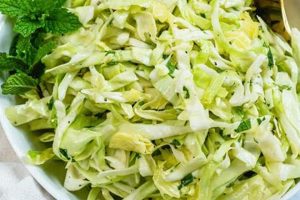
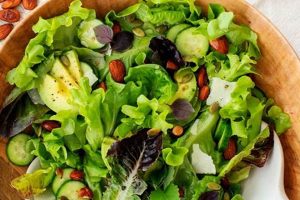
A simple kale salad typically involves minimal ingredients and preparation time. Massaged kale, a light vinaigrette, and perhaps a few additions like dried cranberries or toasted nuts can create a nutritious and flavorful dish. This approach emphasizes accessibility and speed, making it an attractive option for busy individuals or those new to cooking with kale.
Quick and healthy meal solutions are increasingly important in modern life. A straightforward kale salad addresses this need, providing a nutrient-dense option that can be assembled in minutes. Kale itself offers vitamins, minerals, and antioxidants. Simplified recipes contribute to increased vegetable consumption and promote healthier eating habits. The rise in popularity of such recipes reflects a broader societal trend toward convenient yet wholesome food choices.
This focus on efficiency and nutrition provides a foundation for exploring variations on the simple kale salad. Subsequent sections will delve into specific ingredient combinations, preparation techniques, and tips for maximizing flavor and texture.
Tips for Simple Kale Salads
Creating a delicious and effortless kale salad relies on a few key techniques. The following tips offer guidance for achieving optimal flavor and texture.
Tip 1: Massage the Kale Massaging kale leaves with a small amount of oil and acid (such as lemon juice or vinegar) tenderizes the leaves, reducing their bitterness and improving their texture. This step is crucial for a more palatable salad.
Tip 2: Choose Complementary Ingredients Pair kale with ingredients that balance its robust flavor. Consider dried fruits (cranberries, apricots), nuts (almonds, walnuts), seeds (pumpkin, sunflower), or cheeses (Parmesan, feta).
Tip 3: Balance Flavors A well-balanced vinaigrette is essential. Combine an acidic element (vinegar, citrus juice) with a fat (olive oil, avocado oil) and seasonings (salt, pepper, herbs, spices). Taste and adjust as needed.
Tip 4: Don’t Overcrowd the Salad Avoid adding too many ingredients. A few carefully chosen additions will enhance the kale’s flavor without overpowering it.
Tip 5: Prepare in Advance Kale salads can be made ahead of time. Massaging and dressing the kale in advance allows the flavors to meld, resulting in a more flavorful salad.
Tip 6: Explore Different Kale Varieties Experiment with various types of kale, such as curly kale, lacinato kale (dinosaur kale), or red Russian kale, each offering unique flavors and textures.
Tip 7: Consider Adding Protein Boost the nutritional value by including a source of protein like grilled chicken, chickpeas, or tofu. This transforms the salad into a complete meal.
By following these tips, one can easily create a nutritious and flavorful kale salad, maximizing both ease of preparation and enjoyment.
These practical insights provide a solid foundation for crafting personalized kale salads to suit individual preferences and dietary needs. The concluding section will offer final thoughts and encourage further exploration of this versatile green.
1. Quick Preparation

Quick preparation is a defining characteristic of an easy kale salad recipe. It contributes significantly to the accessibility and appeal of this dish, making it a practical choice for those seeking healthy meals without extensive time commitments. The following facets highlight key components of quick preparation in this context.
- Pre-washed and Pre-cut Kale
Using pre-washed and pre-cut kale significantly reduces preparation time. Eliminating the need to wash, dry, and chop fresh kale streamlines the process, making it convenient for busy individuals. This allows for quicker assembly and contributes directly to the “easy” aspect of the recipe.
- Simple Vinaigrettes
Easy kale salads often utilize simple vinaigrettes that require minimal ingredients and whisking. A basic lemon-olive oil dressing, for instance, can be prepared in seconds. Avoiding complex or multi-step dressings further contributes to the overall speed of the recipe.
- Minimal Ingredient Preparation
Recipes emphasizing quick preparation frequently incorporate ingredients requiring little to no processing. Toasted nuts, dried fruits, and pre-shredded cheeses are examples of additions that require no further preparation. This minimizes active cooking time and contributes to the overall efficiency.
- No-Cook Components
The absence of cooking requirements in many easy kale salads significantly reduces preparation time. Unlike salads requiring roasted vegetables or cooked proteins, these recipes focus on raw or minimally processed ingredients. This aligns directly with the goal of quick assembly and consumption.
These facets of quick preparation contribute significantly to the convenience and appeal of easy kale salads. By minimizing time-consuming steps, these recipes make healthy eating more accessible and encourage greater consumption of nutrient-rich greens. This emphasis on speed and simplicity reinforces the “easy” aspect of the recipe, making it a practical choice for individuals seeking nutritious and convenient meals.
2. Minimal Ingredients

Minimal ingredients are central to the concept of an “easy” kale salad recipe. A reduced ingredient list streamlines the shopping process, simplifies preparation, and contributes to the overall accessibility of the dish. This focus on simplicity allows for quick assembly and encourages more frequent consumption of nutritious greens.
- Focus on Fresh Produce
Easy kale salad recipes often prioritize fresh produce, with kale as the star ingredient. A few thoughtfully chosen additions, such as a simple lemon vinaigrette, highlight the natural flavors of the greens without requiring extensive ingredient sourcing or complex flavor combinations. This emphasis on fresh, whole foods contributes to both the nutritional value and the ease of preparation.
- Limited Pantry Staples
Beyond fresh produce, easy kale salads may incorporate a limited number of pantry staples. Olive oil, vinegar, salt, and pepper are common examples. Restricting the recipe to readily available ingredients eliminates the need for specialized purchases or extensive pantry stocking, further enhancing the recipe’s accessibility.
- Optional Flavor Enhancers
While a simple base of kale and vinaigrette forms the foundation, optional flavor enhancers can add complexity without significantly increasing ingredient complexity. A small quantity of dried cranberries, toasted nuts, or crumbled cheese can elevate the flavor profile while maintaining the overall simplicity of the recipe.
- Adaptability and Substitutions
Minimalist recipes often lend themselves well to substitutions. If a specific ingredient is unavailable, a readily available alternative can often be used without compromising the integrity of the dish. This flexibility further enhances the ease and accessibility of these recipes, making them adaptable to individual preferences and available resources.
The emphasis on minimal ingredients in easy kale salad recipes underscores the focus on convenience and accessibility. By streamlining the shopping list and preparation process, these recipes promote healthy eating habits without demanding extensive time or resources. This simplicity makes kale salads a more practical and appealing option for individuals seeking nutritious and convenient meals.
3. Simple Technique

Simple technique is fundamental to the “kale salad recipe easy” concept. Ease of execution lowers the barrier to entry for individuals less experienced in the kitchen, encouraging greater consumption of nutritious greens. Recipes emphasizing minimal manipulation, such as massaging kale with a basic vinaigrette, are more likely to be adopted and repeated. This straightforward approach prioritizes accessibility and speed without sacrificing flavor or nutritional value.
The connection between simple technique and recipe accessibility can be observed in the increasing popularity of “no-chop” salads. These recipes often leverage pre-cut ingredients or require only tearing larger leaves, minimizing the need for specialized equipment or knife skills. Similarly, dressings composed of readily available pantry staples, such as olive oil, lemon juice, and seasonings, eliminate complex emulsion processes or the need for specialized ingredients. This streamlining of technique directly contributes to the perceived and actual “easiness” of the recipe.
Understanding the role of simple technique in promoting healthy eating habits has practical significance. Recipes designed with minimal steps and easily mastered skills encourage culinary experimentation and empower individuals to incorporate nutritious ingredients into their diets. By reducing the perceived complexity of food preparation, the “kale salad recipe easy” approach promotes healthy lifestyle choices and contributes to improved dietary habits. This focus on simplicity broadens the appeal of kale salads, making them a more accessible and attractive option for a wider range of individuals.
4. Nutritious Greens

The “nutritious greens” aspect of an easy kale salad recipe is paramount. Kale, a cruciferous vegetable, offers a rich nutritional profile, including vitamins A, C, and K, as well as minerals like calcium and potassium. Its high fiber content contributes to digestive health. The ease of preparation associated with these recipes encourages increased consumption of such nutrient-rich greens, potentially contributing to improved overall dietary intake and health outcomes. For instance, a simple kale salad can readily become a regular part of a lunch rotation, displacing less nutrient-dense alternatives.
The accessibility of easy kale salad recipes amplifies the benefits of consuming nutritious greens. Recipes requiring minimal preparation time and readily available ingredients make healthy choices more convenient. This is particularly relevant in addressing dietary challenges related to time constraints and limited culinary skills. Furthermore, the adaptability of kale salads allows for customization based on individual dietary needs and preferences. Adding protein sources like grilled chicken or legumes enhances the nutritional value and creates a more complete meal. Incorporating diverse vegetables and fruits further expands the nutrient spectrum and adds variety to the diet.
Focusing on nutritious greens within the context of easy kale salads offers a practical and effective strategy for improving dietary habits. This approach leverages the inherent nutritional value of kale while minimizing barriers to consumption through simplified preparation. The adaptability of kale salads allows for personalization, ensuring dietary compliance and enjoyment. This focus on both nutrition and accessibility contributes significantly to the appeal and efficacy of “kale salad recipe easy” as a tool for promoting healthier eating patterns.
5. Flavorful Combinations

Flavorful combinations are essential for transforming a simple kale salad from a basic, healthy dish into a truly enjoyable culinary experience. Within the context of “kale salad recipe easy,” this involves striking a balance between maximizing flavor impact while maintaining ease of preparation. The following facets explore how strategic ingredient pairings can elevate the kale salad experience without sacrificing simplicity.
- Balancing Kale’s Earthiness
Kale possesses a distinct earthy, sometimes slightly bitter, flavor. Flavorful combinations often involve ingredients that complement or counterbalance this characteristic. Bright, acidic elements like lemon juice, vinegar, or citrus segments cut through the earthiness. Sweet components such as dried cranberries, roasted sweet potatoes, or a drizzle of maple syrup provide contrasting notes. These pairings create a more balanced and nuanced flavor profile, enhancing the overall palatability of the salad.
- Textural Contrast
Flavorful combinations extend beyond taste to encompass textural variety. The sturdy, slightly chewy texture of kale benefits from the incorporation of contrasting elements. Crispy toasted nuts, seeds, or croutons provide a satisfying crunch. Soft additions like avocado, roasted butternut squash, or crumbled cheese offer a creamy counterpoint. These textural variations create a more dynamic and engaging eating experience, further enhancing the enjoyment of the salad.
- Umami Inclusion
Incorporating umami-rich ingredients adds depth and complexity to kale salads. Shaved Parmesan cheese, toasted nuts, or a sprinkle of nutritional yeast contribute savory notes that complement the other flavors. These additions enhance the overall satisfaction derived from the salad and can contribute to a more complete and balanced flavor profile. Even a small amount of a strongly umami ingredient can significantly elevate the taste experience.
- Simplicity and Seasonality
Flavorful combinations within the context of “kale salad recipe easy” often prioritize readily available and seasonal ingredients. This aligns with the emphasis on simplicity and accessibility. Utilizing seasonal produce not only maximizes flavor but also reduces reliance on processed or out-of-season ingredients. This approach supports both culinary enjoyment and sustainable consumption practices.
By strategically combining ingredients that balance kale’s inherent flavor profile, offer textural contrast, and incorporate umami notes, “kale salad recipe easy” transforms into a flavorful and satisfying meal. These combinations, while simple to execute, significantly enhance the culinary experience and promote continued enjoyment of nutrient-rich greens. The focus on accessibility and seasonality further reinforces the practicality and appeal of these recipes, making them a sustainable choice for healthy eating.
6. Versatile Adaptations

Versatile adaptations are integral to the sustained appeal of the “kale salad recipe easy” concept. Adaptability ensures relevance across diverse dietary needs, culinary preferences, and seasonal ingredient availability. This inherent flexibility transforms a basic formula into a dynamic platform for culinary exploration, encouraging continued engagement with nutritious greens. The following facets explore the various dimensions of versatility within this context.
- Dietary Accommodations
Kale salad’s adaptability readily accommodates various dietary restrictions. Vegan adaptations might substitute nutritional yeast for cheese, while gluten-free versions ensure croutons and dressings avoid gluten-containing ingredients. Paleo versions might emphasize nuts, seeds, and lean proteins. This inherent flexibility expands accessibility and inclusivity, ensuring individuals with specific dietary needs can enjoy nutritious and flavorful kale salads tailored to their requirements.
- Seasonal Variations
Seasonal produce seamlessly integrates into kale salad recipes. Spring adaptations might feature fresh strawberries and asparagus, while summer variations could showcase juicy tomatoes and grilled corn. Autumnal versions might incorporate roasted butternut squash and pumpkin seeds, while winter salads could feature dried cranberries and toasted pecans. This responsiveness to seasonal availability maximizes flavor, supports local agriculture, and adds variety throughout the year.
- Meal Versatility
Kale salads transition effortlessly from side dish to main course. Adding grilled chicken, fish, tofu, or beans elevates the salad to a complete and satisfying meal. Incorporating grains like quinoa or farro further enhances the nutritional value and satiety. This adaptability makes kale salad a versatile option for various meal occasions, from light lunches to substantial dinners.
- Flavor Profiles
Kale’s neutral flavor profile provides a canvas for diverse flavor explorations. Asian-inspired versions might incorporate soy sauce, sesame oil, and ginger. Mediterranean adaptations could feature olives, feta cheese, and a lemon-herb vinaigrette. Southwestern variations might include black beans, corn, avocado, and a lime-cilantro dressing. This adaptability caters to a wide range of culinary preferences, preventing palate fatigue and encouraging continued consumption.
The versatility inherent in “kale salad recipe easy” ensures its continued relevance and appeal. Adaptability across dietary needs, seasons, meal occasions, and flavor profiles transforms a simple formula into a dynamic culinary tool. This flexibility promotes consistent consumption of nutrient-rich kale while accommodating individual preferences and circumstances, ultimately contributing to healthier and more enjoyable eating patterns.
Frequently Asked Questions
This section addresses common inquiries regarding easy kale salad recipes, providing concise and informative responses to facilitate successful preparation and enjoyment.
Question 1: How can kale’s bitterness be mitigated in a simple salad?
Massaging kale leaves with a small amount of oil and acid (lemon juice, vinegar) helps break down tough fibers and reduce bitterness. This process also tenderizes the leaves, improving texture.
Question 2: What are suitable flavor pairings for a simple kale salad?
Complementary flavors include dried fruits (cranberries, apricots), nuts (almonds, walnuts), seeds (pumpkin, sunflower), cheeses (Parmesan, feta), and roasted vegetables (sweet potatoes, Brussels sprouts). The goal is to balance kale’s earthiness with contrasting flavors and textures.
Question 3: Can kale salad be prepared in advance?
Yes, preparing kale salad in advance allows the flavors to meld. Massage the kale and add the dressing a few hours before serving, storing it in an airtight container in the refrigerator.
Question 4: How can a simple kale salad be made more substantial as a meal?
Adding protein sources such as grilled chicken, fish, beans, lentils, tofu, or hard-boiled eggs transforms the salad into a more complete and satisfying meal. Cooked grains like quinoa or farro can also contribute to satiety.
Question 5: What are some healthy dressing options for an easy kale salad?
Olive oil and lemon juice provide a simple, healthy base for a vinaigrette. Other options include tahini dressings, avocado-based dressings, or vinaigrettes made with apple cider vinegar or balsamic vinegar. Avoid creamy dressings high in saturated fat and added sugars.
Question 6: How can different varieties of kale be utilized in easy salads?
Curly kale is readily available and works well in most recipes. Lacinato kale (dinosaur kale) has a more robust flavor and slightly chewier texture. Red Russian kale offers a milder flavor and vibrant color. Experiment with different varieties to find preferred flavors and textures.
Understanding these common points of inquiry allows for successful preparation and enjoyment of easy kale salads. Prioritizing both nutrition and accessibility contributes to sustainable healthy eating habits.
The subsequent section will offer concluding thoughts and encourage further culinary exploration with this versatile green.
Conclusion
Exploration of the “kale salad recipe easy” concept reveals a practical approach to incorporating nutrient-rich greens into everyday diets. Prioritizing simplicity, accessibility, and flavor optimization, these recipes offer a pathway to increased vegetable consumption without demanding extensive culinary expertise or time investment. Key elements include minimal ingredients, straightforward techniques, and adaptable flavor combinations, all contributing to sustainable healthy eating habits. The versatility of kale salads allows for seamless integration across diverse dietary needs and culinary preferences, maximizing individual enjoyment and adherence to nutritional goals.
The ease of preparation, combined with kale’s inherent nutritional value, positions “kale salad recipe easy” as a valuable tool for promoting long-term dietary wellness. Continued exploration of kale’s versatility and creative flavor pairings promises further enhancement of culinary experiences and encourages a deeper appreciation for the role of simple, nutritious ingredients in fostering healthy lifestyles. This approach empowers individuals to take control of their dietary choices and embrace a more healthful and sustainable relationship with food.