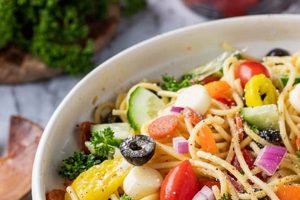
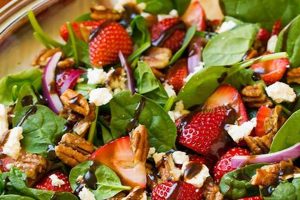
A layered salad is a visually appealing and practical dish created by arranging distinct ingredients in horizontal layers within a clear container. This construction allows for individual components, such as vegetables, proteins, cheeses, and dressings, to remain separate until serving, preserving their textures and flavors. A classic example features a base of lettuce topped with layers of tomatoes, cucumbers, onions, hard-boiled eggs, bacon bits, and croutons, with a creamy dressing added just before consumption.
This method offers several advantages. It prevents the sogginess that can occur in pre-tossed salads, especially when prepared in advance. The layered presentation also allows for customized portioning, enabling individuals to select their preferred combination of ingredients. Historically, layered salads, often referred to as “composed salads,” emerged as a centerpiece dish for celebratory occasions, reflecting a focus on both aesthetics and practicality in meal preparation. Their continued popularity stems from their versatility and adaptability to diverse cuisines and dietary preferences.
Further exploration of this culinary form will encompass ingredient selection, layering techniques, dressing recommendations, and suitable occasions for serving, providing a complete guide to creating and enjoying these visually striking and flavorful dishes.
Tips for Creating Layered Salads
Constructing a successful layered salad involves careful consideration of both ingredients and assembly techniques. The following tips offer guidance for achieving optimal results.
Tip 1: Select a sturdy base. Begin with robust ingredients that can support the weight of subsequent layers. Crisp lettuce, such as romaine or iceberg, or grains like quinoa or farro provide a solid foundation.
Tip 2: Consider ingredient density. Layer denser items towards the bottom and lighter components on top. This prevents delicate ingredients from being crushed and maintains an appealing presentation.
Tip 3: Emphasize color and texture contrast. Incorporate a variety of colors and textures to create visual interest. Combine leafy greens with brightly colored vegetables, crunchy nuts, and creamy cheeses.
Tip 4: Choose dressings wisely. Opt for thicker dressings that will remain separate from other ingredients and prevent premature sogginess. Add the dressing just before serving.
Tip 5: Utilize airtight containers. Store layered salads in airtight containers to maintain freshness and prevent ingredient mixing. Glass jars or clear plastic containers showcase the layered effect.
Tip 6: Prepare components in advance. Chop vegetables, cook proteins, and prepare dressings ahead of time to streamline the assembly process. This also allows flavors to meld.
Tip 7: Layer ingredients strategically. Distribute ingredients evenly to ensure each serving contains a balanced mix of flavors and textures. Consider creating repeating patterns for aesthetic appeal.
By following these guidelines, one can create visually stunning and flavorful layered salads suitable for various occasions, from casual lunches to festive gatherings. The versatility and make-ahead nature of these salads make them a convenient and satisfying culinary choice.
The following section will provide specific examples and recipes for various layered salad combinations, demonstrating the practical application of these principles.
1. Visual Appeal

Visual appeal is a crucial element of layered salads, elevating them from simple meals to aesthetically pleasing culinary creations. The layered presentation offers an opportunity to showcase vibrant colors, diverse textures, and carefully arranged ingredients, enhancing the dining experience.
- Color Contrast
Contrasting colors create visual interest and stimulate appetite. Employing a variety of colorful vegetables, such as deep red tomatoes, bright green cucumbers, and vibrant orange carrots, against a backdrop of leafy greens enhances the salad’s attractiveness. Consider color pairings and complementary hues for optimal visual impact.
- Textural Variation
A combination of textures adds depth and complexity to the visual presentation. Incorporating crunchy elements like nuts or croutons alongside softer components like cheeses and cooked vegetables offers a visually engaging contrast. This variation also enhances the overall sensory experience of consuming the salad.
- Ingredient Arrangement
The strategic arrangement of ingredients contributes significantly to visual appeal. Creating distinct, even layers and visible patterns within the container enhances the salad’s aesthetic value. Consider the size and shape of ingredients when layering to achieve a balanced and harmonious presentation.
- Container Choice
The choice of container plays a crucial role in showcasing the layered effect. Clear glass or plastic containers allow for full visibility of the colorful layers, maximizing the visual impact. The shape and size of the container should complement the salad’s ingredients and intended serving style.
By considering these facets of visual appeal, layered salads transform into captivating culinary displays. The interplay of color, texture, arrangement, and container choice elevates the dining experience, demonstrating that aesthetic presentation is as crucial as flavor and freshness in creating a truly enjoyable salad.
2. Ingredient Selection

Ingredient selection is paramount in crafting a successful layered salad. Considerations extend beyond mere flavor preference and encompass factors influencing texture, structural integrity, and the prevention of premature spoilage. Choosing appropriate ingredients is crucial for maintaining distinct layers, preventing sogginess, and ensuring a visually appealing and palatable final product. For instance, using sturdy, crisp lettuces like romaine or iceberg as a base provides a strong foundation, while incorporating softer ingredients like tomatoes or cucumbers higher up prevents crushing. Delicate greens, such as spinach or butter lettuce, are less suitable for layered salads due to their tendency to wilt under the weight of other components. Similarly, ingredients with high water content, like watermelon or pineapple, should be avoided or strategically placed to minimize moisture release and prevent the salad from becoming watery.
Ingredient selection also plays a vital role in flavor balance and overall enjoyment. A well-composed layered salad offers a variety of flavors and textures in every bite. Combining contrasting elements, such as crunchy nuts, creamy cheeses, sweet fruits, and savory proteins, creates a complex and satisfying culinary experience. Attention to complementary flavor profiles ensures a harmonious blend of tastes. Additionally, considering dietary restrictions or preferences is essential when selecting ingredients. Adapting layered salads to accommodate vegetarian, vegan, gluten-free, or other dietary needs broadens their appeal and versatility. Substituting plant-based proteins for meat, using gluten-free grains, or omitting specific allergens allows for customization without compromising flavor or visual appeal.
Effective ingredient selection is fundamental to a successful layered salad. It impacts not only the visual appeal and flavor profile but also the structural integrity and longevity of the dish. Careful consideration of ingredient characteristics, such as texture, water content, and flavor compatibility, is crucial. Furthermore, adapting ingredient choices to accommodate dietary needs ensures inclusivity and expands the versatility of this culinary format. By prioritizing thoughtful ingredient selection, layered salads become more than just a collection of components; they transform into cohesive, visually appealing, and flavorful culinary creations.
3. Layering Technique

Layering technique is fundamental to the structure, presentation, and overall success of a layered salad. It dictates not only the visual appeal but also the preservation of individual ingredient integrity and the prevention of premature mixing or sogginess. Effective layering ensures that each component retains its distinct flavor and texture until consumption, contributing to a balanced and enjoyable culinary experience.
- Base Layer Stability
A stable base layer is crucial for supporting the weight of subsequent ingredients and preventing collapse. Hearty, crisp ingredients like chopped romaine lettuce, shredded cabbage, or grains such as quinoa or farro provide a robust foundation. Choosing a base that can withstand the weight and moisture of other components ensures the salad maintains its structure and prevents the bottom layers from becoming compressed or soggy.
- Ingredient Density Gradation
Layering ingredients according to their density is essential for preventing structural damage and maintaining visual appeal. Denser items, such as cooked grains, beans, or chopped vegetables, should form the lower layers, while lighter, more delicate ingredients like leafy greens, herbs, or crumbled cheese should be placed towards the top. This graduated density approach prevents heavier components from crushing or bruising more delicate items, preserving their texture and appearance.
- Moisture Content Management
Managing moisture content is critical for preventing sogginess and maintaining the integrity of individual ingredients. Ingredients with high water content, such as tomatoes or cucumbers, should be strategically placed to minimize their contact with moisture-sensitive components. Placing a barrier layer, such as a thin layer of cooked grains or chopped nuts, between high-moisture and delicate ingredients can help absorb excess moisture and prevent sogginess. Additionally, dressings should be added just before serving to avoid premature wilting or softening of ingredients.
- Aesthetic Arrangement
The aesthetic arrangement of ingredients contributes significantly to the visual appeal of a layered salad. Creating distinct, even layers with visible color and textural contrasts enhances the presentation. Consider using repeating patterns or strategically placing contrasting colors and textures adjacent to one another to create visual interest. Additionally, the choice of container plays a role in showcasing the layering technique and maximizing visual impact. Clear glass or plastic containers allow for full visibility of the carefully arranged layers.
These facets of layering technique are integral to creating a successful layered salad. Proper layering not only contributes to visual appeal but also plays a crucial role in preserving ingredient integrity, preventing sogginess, and ultimately enhancing the overall culinary experience. By understanding and applying these techniques, one can create layered salads that are both visually stunning and deliciously satisfying.
4. Flavor Balance
Flavor balance is a critical aspect of a successful layered salad, differentiating a simple collection of ingredients from a cohesive and enjoyable culinary creation. It involves the thoughtful combination of diverse tastessweet, sour, salty, bitter, and umamito create a harmonious and satisfying flavor profile. Achieving this balance elevates the layered salad beyond its visual appeal, ensuring a delightful sensory experience.
- Contrast and Complement
Flavor balance relies on the interplay of contrasting and complementary tastes. The inclusion of acidic elements, such as vinegar-based dressings or pickled vegetables, can balance the richness of creamy cheeses or fatty proteins. Similarly, the sweetness of dried fruits or roasted vegetables can offset the bitterness of leafy greens or pungent onions. This interplay of contrasting flavors creates depth and complexity, preventing any single taste from dominating.
- Texture Integration
Texture plays a significant role in perceived flavor balance. The crispness of fresh vegetables, the creaminess of avocado or cheese, and the crunch of nuts or croutons contribute to a multi-dimensional sensory experience. Integrating diverse textures enhances the overall flavor profile and adds interest to each bite. A salad with only soft textures might feel bland, even with balanced flavors, while varying textures can make each element stand out.
- Ingredient Distribution
The layering technique itself influences flavor balance. Even distribution of ingredients throughout the layers ensures that each serving contains a representative mix of flavors. Strategic placement of contrasting elementsfor example, a layer of salty olives next to a layer of sweet roasted pepperscan create pockets of balanced flavor within the salad. This prevents monotony and delivers a more complex and enjoyable taste experience with each mouthful.
- Dressing Application
The timing and type of dressing significantly impact flavor balance. Dressings not only contribute their own flavors but also act as a unifying element, binding the individual ingredients into a cohesive whole. Adding the dressing just before serving prevents premature sogginess and allows for a more controlled flavor distribution. The choice of dressing should complement the existing flavors in the salad, enhancing rather than overpowering them.
Flavor balance in a layered salad is an intricate interplay of contrasting tastes, textures, ingredient distribution, and dressing application. Careful consideration of these factors transforms a layered salad from a visually appealing dish into a truly satisfying culinary experience, demonstrating that thoughtful flavor composition is as crucial as presentation in creating a well-balanced and enjoyable meal.
5. Freshness Preservation

Freshness preservation is paramount in layered salads, directly impacting the final product’s quality, flavor, and overall enjoyment. Unlike tossed salads where ingredients mingle and dressings are incorporated immediately, the layered approach necessitates strategies to maintain the integrity and crispness of individual components until consumption. This involves understanding how different ingredients react to storage, air exposure, and moisture, as well as employing techniques to mitigate these factors.
- Container Selection
Proper container selection is crucial for maintaining an optimal storage environment. Airtight containers minimize oxidation and prevent the absorption of unwanted odors from the refrigerator. Clear containers offer the added benefit of showcasing the layered presentation, but regardless of material, a secure lid is essential to prevent air circulation and maintain freshness. Size is also a factor; choosing a container that snugly fits the salad minimizes excess air space, further reducing the risk of oxidation and wilting.
- Ingredient Preparation and Storage
Proper preparation and storage of individual ingredients before layering significantly influence overall freshness. Washing and thoroughly drying ingredients removes excess moisture that can lead to premature spoilage. Storing certain components, such as chopped vegetables, in airtight containers or wrapped in moisture-absorbing paper towels within the refrigerator helps maintain their crispness. Delicate greens, particularly susceptible to wilting, benefit from gentle handling and storage in a crisper drawer lined with paper towels.
- Layering Strategy and Moisture Control
Strategic layering plays a crucial role in moisture management and freshness preservation. Placing high-moisture ingredients, such as tomatoes or cucumbers, above less moisture-sensitive components like grains or proteins prevents the transfer of excess moisture and maintains textural integrity. Utilizing absorbent layers, such as shredded carrots or cooked quinoa, can further mitigate moisture migration and protect delicate ingredients. Additionally, avoiding dressing application until just before serving prevents premature wilting and sogginess.
- Temperature Management
Consistent and appropriate temperature management is fundamental to preserving freshness. Refrigeration at optimal temperatures slows down enzymatic activity and bacterial growth, extending the shelf life of the salad. Avoiding temperature fluctuations by minimizing the time the salad spends outside the refrigerator is essential. For optimal food safety and quality, consume layered salads within a recommended timeframe, typically within 2-3 days of preparation, depending on the ingredients used.
These facets of freshness preservation are integral to the success of a layered salad. They demonstrate that careful planning and execution, from ingredient selection and preparation to layering strategy and storage, are essential for maintaining optimal quality, flavor, and visual appeal. By prioritizing freshness preservation, the layered salad maintains its integrity and provides a satisfying culinary experience until the moment of consumption.
6. Serving Practicality

Serving practicality represents a significant advantage of layered salads, contributing to their popularity for various occasions. The inherent structure of these salads, with ingredients separated until consumption, offers distinct benefits regarding portioning, customization, and transportability. This practicality extends from individual lunches to large gatherings, simplifying serving logistics and enhancing the overall dining experience. Consider a potluck scenario: transporting a tossed salad often results in a soggy, unappetizing mess upon arrival. A layered salad, however, arrives intact, with each component maintaining its freshness and texture, ready for individual assembly and dressing.
The layered approach simplifies portion control and allows for individual preferences. Unlike tossed salads where ingredient distribution can be uneven, layered salads offer a clear view of each component, enabling diners to select their desired proportions. This aspect is particularly beneficial for accommodating dietary restrictions or preferences. For instance, a layered salad containing separate sections of meat, cheese, vegetables, and nuts allows vegetarians to easily omit the meat and cheese while ensuring a balanced and satisfying meal composed of preferred elements. This customization eliminates the need for separate salads or complex serving arrangements, streamlining the process and minimizing food waste.
The practical benefits of layered salads extend beyond portioning and customization to encompass ease of transport and make-ahead convenience. The layered structure minimizes the risk of spills and maintains ingredient integrity during transport, making them ideal for picnics, potlucks, or packed lunches. Furthermore, layered salads can be prepared in advance, eliminating last-minute meal preparation stress. Assembling the salad components ahead of time allows flavors to meld and simplifies serving, particularly beneficial for larger gatherings or busy weeknight meals. This inherent practicality contributes to the versatility and enduring appeal of layered salads, solidifying their place as a convenient and adaptable culinary choice for a variety of occasions.
Frequently Asked Questions
This section addresses common inquiries regarding layered salads, offering practical guidance and clarifying potential misconceptions to ensure successful preparation and enjoyable consumption.
Question 1: What is the ideal container for a layered salad?
Clear glass or plastic containers with airtight lids are recommended. Transparency showcases the layered presentation, while airtight seals maintain ingredient freshness and prevent spills during transport.
Question 2: How long can a layered salad be stored?
Properly stored in an airtight container in the refrigerator, a layered salad typically maintains optimal quality for 2-3 days. However, the specific shelf life depends on the ingredients used. Salads containing highly perishable items, such as cooked chicken or seafood, should be consumed within 24 hours.
Question 3: Can layered salads be frozen?
Freezing is generally not recommended for layered salads. Freezing can negatively impact the texture and flavor of many ingredients, particularly fresh vegetables and leafy greens, resulting in a less appealing salad upon thawing.
Question 4: What are the best dressings for layered salads?
Thicker dressings, such as creamy dressings or vinaigrettes emulsified with a touch of honey or mustard, are ideal. These dressings are less likely to seep into other layers and maintain their integrity until serving. The specific dressing choice should complement the chosen ingredients and overall flavor profile of the salad.
Question 5: How can sogginess be prevented in layered salads?
Sogginess can be prevented by carefully selecting ingredients, layering strategically, and managing moisture content. Avoid ingredients with excessively high water content, or place them strategically between layers of more absorbent ingredients. Adding the dressing just before serving is crucial to prevent premature wilting and maintain the crispness of individual components.
Question 6: Are there specific dietary adaptations for layered salads?
Layered salads are highly adaptable to various dietary needs. Substituting plant-based proteins for meat, using gluten-free grains, or omitting specific allergens allows for customization without compromising flavor or visual appeal. The layered format makes it easy to accommodate individual preferences and restrictions within a single salad.
Understanding these key aspects of layered salad preparation and storage ensures a successful and enjoyable culinary experience. By addressing these common concerns, one can confidently create visually appealing, flavorful, and convenient layered salads for any occasion.
The next section will delve into specific layered salad recipes, providing practical examples and inspiration for creating your own culinary masterpieces.
Recipe Layered Salad
This exploration of recipe layered salads has highlighted their unique attributes, from the foundational principles of ingredient selection and layering technique to the crucial considerations of flavor balance and freshness preservation. The inherent practicality of this salad format, coupled with its adaptability to diverse dietary preferences and occasions, underscores its enduring appeal in culinary practice. The visual impact of distinct layers, combined with the strategic incorporation of varied textures and complementary flavors, elevates the layered salad beyond mere sustenance to a considered culinary expression.
The layered salad concept offers a versatile framework for culinary creativity. Its adaptability encourages exploration of diverse ingredient combinations and flavor profiles, allowing for continuous innovation within this established format. By understanding the underlying principles and techniques discussed, culinary enthusiasts can confidently embark on their own creative journeys, crafting layered salads that are not only visually captivating but also deliver a harmonious and satisfying sensory experience.