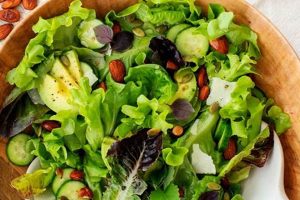
A truly traditional Italian salad emphasizes fresh, high-quality ingredients and simple preparation. It typically features a vibrant mix of seasonal vegetables, such as ripe tomatoes, crisp cucumbers, and peppery arugula, lightly dressed with extra virgin olive oil, vinegar, and a pinch of salt. Additions like olives, bell peppers, or red onion might be included depending on regional variations and seasonal availability. Unlike American-style salads, creamy dressings, cheeses, and meats are generally absent.
This minimalist approach highlights the natural flavors of the produce. The focus on fresh, local ingredients reflects a deep-rooted connection to the land and a respect for seasonal eating, core principles of Italian culinary tradition. Such salads offer a refreshing and healthy complement to larger meals, providing essential vitamins and minerals without overwhelming the palate. Historically, these simple salads were a staple of the Italian peasant diet, showcasing resourcefulness and an appreciation for simplicity.
The following sections will delve into specific regional variations, explore the selection and preparation of key ingredients, and provide guidance on crafting the perfect vinaigrette.
Tips for Crafting an Excellent Italian Salad
Achieving an exceptional Italian salad relies on understanding a few key principles. These guidelines will help elevate simple ingredients into a harmonious and flavorful dish.
Tip 1: Prioritize Seasonality: Select produce at its peak ripeness. In-season vegetables offer optimal flavor and texture. Visit local markets for the freshest options available.
Tip 2: Embrace Simplicity: Resist the urge to overcomplicate. A few high-quality ingredients, properly prepared, are all that’s needed.
Tip 3: Use High-Quality Olive Oil: The olive oil serves as the foundation of the dressing. Invest in a good extra virgin olive oil for the best flavor.
Tip 4: Season Carefully: Salt plays a crucial role in enhancing the flavors of the vegetables. Season lightly, tasting as you go.
Tip 5: Dress Just Before Serving: To prevent the salad from becoming soggy, toss with the dressing immediately before serving.
Tip 6: Consider Regional Variations: Explore different Italian regions’ traditional additions, such as olives, capers, or specific types of vinegar.
Tip 7: Handle Ingredients Gently: Treat delicate greens and vegetables with care to avoid bruising or damaging them.
By following these tips, one can achieve a salad that embodies the essence of Italian cuisine: simple, fresh, and flavorful.
These fundamental principles provide a foundation for creating a truly authentic and satisfying culinary experience. The following section offers a selection of classic regional variations.
1. Fresh, Seasonal Produce

The cornerstone of an authentic Italian salad lies in the utilization of fresh, seasonal produce. This principle reflects a deep respect for the natural rhythms of the agricultural year and a commitment to maximizing flavor and nutritional value. The emphasis on seasonality distinguishes the Italian approach from salads reliant on out-of-season ingredients shipped long distances.
- Emphasis on Local Sourcing
Traditional Italian cuisine prioritizes locally sourced ingredients. This reduces transportation time, ensuring peak freshness and minimizing environmental impact. Farmers’ markets and local vendors are often the best resources for procuring in-season produce, allowing for direct interaction with growers and fostering a connection to the land. This practice results in salads bursting with the flavors of the local terroir.
- Respecting the Natural Cycle
Italian culinary traditions emphasize aligning with the natural growing seasons. Tomatoes in summer, radicchio in winter, and artichokes in spring exemplify this philosophy. This approach ensures optimal ripeness and flavor, as vegetables are harvested at their peak, rather than prematurely for transport. It also promotes biodiversity and reduces reliance on energy-intensive agricultural practices.
- Highlighting Simple Flavors
The focus on fresh, seasonal ingredients allows the natural flavors of the produce to shine. Minimal intervention is required when the vegetables themselves offer vibrant tastes and textures. A simple dressing of olive oil, vinegar, and salt enhances, rather than masks, these inherent qualities. This approach underscores the Italian appreciation for simplicity and the inherent goodness of natural ingredients.
- Regional Variations in Produce
Italys diverse regional climates and agricultural traditions contribute to a wide variety of seasonal produce. Specific regions are known for particular specialties, such as the blood oranges of Sicily or the Treviso radicchio of Veneto. These regional variations influence the composition of local salads, showcasing the unique flavors of each area. Exploring these regional differences provides insight into the rich tapestry of Italian culinary heritage.
By adhering to the principle of seasonality, Italian salads achieve a level of flavor and freshness rarely matched by those relying on out-of-season ingredients. This commitment to using the best produce available at the peak of its ripeness underscores the Italian appreciation for quality, simplicity, and the close relationship between food and the natural world. It elevates the simple salad from a side dish to a celebration of the season’s bounty.
2. High-Quality Olive Oil

High-quality olive oil is not merely an ingredient but a defining element of an authentic Italian salad. Its presence elevates the simple combination of fresh vegetables into a culinary experience. The quality of the olive oil directly impacts the overall flavor profile of the salad, influencing both taste and aroma.
- Flavor Profile
Extra virgin olive oil, the highest quality grade, boasts a complex flavor profile ranging from fruity and peppery to grassy and herbaceous. These nuances contribute depth and complexity to the salad, complementing the natural flavors of the vegetables. A lower-quality oil lacks these distinct characteristics, resulting in a blander, less satisfying experience. Selecting an olive oil with a flavor profile that complements the chosen vegetables enhances the overall harmony of the salad.
- Acidity Levels
Authentic extra virgin olive oil exhibits low acidity, a key indicator of quality. Lower acidity contributes to a smoother, more delicate flavor. High acidity can impart a harsh or bitter taste, detracting from the freshness of the vegetables. Checking the label for acidity levels ensures selection of a high-quality oil that enhances, rather than overwhelms, the salad.
- Production Methods
Traditional production methods, such as cold-pressing, preserve the integrity and flavor of the olive oil. These methods minimize heat and processing, resulting in an oil richer in antioxidants and flavor compounds. Mass-produced oils often undergo extensive processing, which can degrade the flavor and nutritional value. Understanding the production methods employed provides insight into the quality and authenticity of the olive oil.
- Regional Variations
Different regions of Italy produce olive oils with distinct characteristics, reflecting variations in climate, soil, and olive cultivars. Tuscan olive oil, for example, is known for its peppery notes, while Sicilian olive oil often exhibits a fruitier profile. Exploring these regional variations allows for a deeper understanding of Italian culinary traditions and offers opportunities to create salads with unique flavor profiles.
The careful selection of high-quality olive oil elevates the authentic Italian salad from a simple dish to a culinary expression of Italian heritage and appreciation for quality ingredients. The nuances of flavor, acidity, production methods, and regional variations contribute to a sensory experience that showcases the harmonious interplay of fresh produce and exceptional olive oil.
3. Simple Vinaigrette

The simple vinaigrette stands as a defining characteristic of an authentic Italian salad. Unlike heavier dressings common in other culinary traditions, the Italian approach emphasizes a light touch, allowing the fresh flavors of the produce to take center stage. This minimalist dressing, typically composed of high-quality olive oil, vinegar, and salt, exemplifies the Italian culinary principle of simplicity and respect for natural ingredients.
- Balance of Acidity and Fat
A successful vinaigrette achieves a harmonious balance between the acidity of the vinegar and the richness of the olive oil. This balance prevents the dressing from overpowering the delicate flavors of the vegetables. The ratio of oil to vinegar can vary depending on personal preference and the specific types of oil and vinegar used, but a common starting point is a 3:1 ratio of oil to vinegar. This balance enhances the overall flavor profile of the salad, creating a harmonious interplay of contrasting tastes.
- Quality of Ingredients
Just as with the produce, the quality of the ingredients in the vinaigrette significantly impacts the final result. Extra virgin olive oil, with its complex flavor profile, forms the foundation of the dressing. The choice of vinegar, whether red wine vinegar, balsamic vinegar, or a regional specialty, introduces another layer of flavor complexity. Sea salt, rather than table salt, provides a cleaner, brighter taste. High-quality ingredients elevate the simple vinaigrette from a basic dressing to a key component of the salad.
- Emulsification
While not strictly necessary, emulsifying the vinaigrette creates a smoother, more cohesive texture. Whisking the oil and vinegar together vigorously creates a temporary emulsion, preventing the dressing from separating and ensuring even distribution across the salad. This process also helps the flavors meld together more effectively, creating a more unified taste experience.
- Seasonality and Regional Variations
The composition of the vinaigrette can be adapted to reflect seasonal availability and regional preferences. Lemon juice can be used in place of vinegar during citrus season. The addition of herbs, such as oregano or basil, introduces another layer of aromatic complexity. Regional variations might include the addition of Dijon mustard or honey. These adaptations highlight the versatility of the simple vinaigrette and its ability to complement a wide range of flavors and ingredients.
The simple vinaigrette is more than just a dressing; it is an integral component of the authentic Italian salad experience. Its delicate balance of acidity and richness, reliance on high-quality ingredients, and adaptability to seasonal and regional variations exemplify the core principles of Italian cuisine: simplicity, freshness, and respect for the natural flavors of quality produce.
4. Minimal Seasonings
Minimal seasoning is a hallmark of authentic Italian salads, reflecting a culinary philosophy centered on highlighting the natural flavors of fresh, high-quality ingredients. Rather than masking or altering these inherent flavors, the goal is to enhance them subtly. This restraint distinguishes the Italian approach from salad traditions that rely on complex or heavy dressings and seasonings.
The principle of minimal seasoning stems from a deep respect for the ingredients themselves. When produce is at its peak ripeness and sourced locally, its inherent flavors are vibrant and complex. Excessive seasoning risks overpowering these delicate nuances. A simple dressing of extra virgin olive oil, vinegar, and sea salt provides the necessary framework to elevate the flavors without obscuring them. This allows the sweetness of ripe tomatoes, the peppery bite of arugula, and the crispness of cucumbers to shine through. For example, a Caprese salad, with its simple combination of tomatoes, mozzarella, and basil, exemplifies this principle. The minimal seasoning of olive oil, salt, and pepper allows the inherent sweetness of the tomatoes and the creamy richness of the mozzarella to harmonize beautifully. Introducing additional spices or herbs would detract from this delicate balance.
Understanding the importance of minimal seasoning is crucial for anyone seeking to create an authentic Italian salad. It requires a shift in perspective from adding flavors to showcasing existing ones. This approach emphasizes the quality of the ingredients as the primary driver of flavor. The practical significance lies in achieving a lighter, more refreshing salad that celebrates the inherent flavors of fresh produce. The challenge lies in resisting the urge to over-season, trusting that the simplicity of high-quality ingredients, minimally dressed, offers a superior culinary experience.
5. Regional Variations
Regional variations play a crucial role in defining the diverse landscape of authentic Italian salads. Italy’s distinct geographical regions, each with its unique microclimate, agricultural traditions, and culinary heritage, contribute to a wide array of salad interpretations. These variations are not merely stylistic choices but reflect a deep connection between local ingredients, seasonal availability, and historical culinary practices. Examining these regional nuances provides valuable insight into the complexity and richness of Italian cuisine.
The availability of specific ingredients influences regional salad compositions. Coastal regions, for instance, often feature seafood in their salads, while inland areas might incorporate cured meats or cheeses produced locally. Sicilian salads frequently include citrus fruits, reflecting the island’s abundant citrus groves. The use of specific herbs and spices also varies regionally. Ligurian salads often incorporate basil, a staple of the region’s cuisine, while Calabrian salads might feature chili peppers, reflecting the region’s preference for spicy flavors. These examples demonstrate how regional variations are driven by the availability of local ingredients, resulting in salads that showcase the unique flavors of each area.
Understanding these regional variations is essential for appreciating the depth and breadth of authentic Italian salad recipes. It allows one to move beyond a generic understanding of “Italian salad” and recognize the nuanced expressions of regional culinary identities. The practical significance lies in the ability to create salads that are not only flavorful but also reflective of specific Italian culinary traditions. This understanding also provides a framework for exploring the broader context of Italian cuisine, recognizing the close relationship between food, culture, and geography. While the core principles of simplicity and fresh ingredients remain constant, regional variations add a layer of complexity and diversity that enriches the Italian culinary experience. Further exploration of these regional differences offers a pathway to a deeper appreciation of Italian food culture and its inherent connection to the land.
Frequently Asked Questions
The following addresses common inquiries regarding authentic Italian salads, clarifying potential misconceptions and providing further insight into this culinary tradition.
Question 1: What distinguishes an authentic Italian salad from other salad types?
Authentic Italian salads prioritize fresh, seasonal ingredients and a simple vinaigrette, highlighting the natural flavors of the produce. They typically avoid heavy dressings, cheeses, or numerous toppings, which can mask the taste of the core ingredients. Emphasis is placed on quality over quantity.
Question 2: Can an authentic Italian salad include meat or cheese?
While some regional variations may incorporate cured meats or cheeses, these are generally exceptions rather than the rule. The traditional focus remains on fresh vegetables lightly dressed. Adding protein shifts the focus away from the produce, which is the heart of an authentic Italian salad.
Question 3: Is balsamic vinegar always used in authentic Italian salad dressings?
While balsamic vinegar can be used, it’s not the sole option. Red wine vinegar, white wine vinegar, and even lemon juice are common choices, depending on regional preferences and the specific salad ingredients. High-quality extra virgin olive oil remains the foundational element of the dressing.
Question 4: Are there specific types of lettuce considered most authentic?
Rather than focusing on specific lettuce types, authentic Italian salads emphasize a variety of seasonal greens and vegetables. Arugula, radicchio, and endive are common choices, but other vegetables like tomatoes, cucumbers, and bell peppers are equally important components.
Question 5: How important is the quality of the olive oil?
The quality of the olive oil is paramount. Extra virgin olive oil, with its complex flavor profile, forms the base of the dressing and significantly influences the overall taste of the salad. Investing in high-quality olive oil is essential for achieving an authentic flavor.
Question 6: How can one adapt authentic Italian salad principles to different seasons?
Adapting to different seasons involves embracing the available produce. Utilize in-season vegetables and fruits to create salads that reflect the current harvest. This approach ensures optimal flavor and aligns with the Italian emphasis on seasonality.
Understanding these fundamental principles allows for the creation of authentic Italian salads that showcase the inherent flavors of fresh, seasonal ingredients. The emphasis on simplicity, quality, and regional variation offers a foundation for culinary exploration and enjoyment.
This concludes the frequently asked questions section. The following section will provide a selection of authentic Italian salad recipes.
Authentic Italian Salad Recipes
Exploration of authentic Italian salad recipes reveals a culinary tradition deeply rooted in simplicity, seasonality, and regional diversity. Emphasis on fresh, high-quality ingredients, minimally dressed with extra virgin olive oil and nuanced with regional specialties, distinguishes these salads. From the delicate balance of a simple vinaigrette to the careful selection of in-season produce, each element contributes to a harmonious culinary experience. Regional variations, reflecting Italy’s diverse agricultural landscape, further enrich this tradition, offering a spectrum of flavors and textures.
Authentic Italian salad recipes offer more than just a culinary delight; they represent a cultural heritage celebrating the symbiotic relationship between food and the natural world. Embracing these principles allows for a deeper appreciation of Italian gastronomy and provides a pathway to creating flavorful, healthy, and culturally significant dishes. Continued exploration of regional variations and seasonal adaptations promises further culinary discoveries and a deeper understanding of this time-honored tradition.