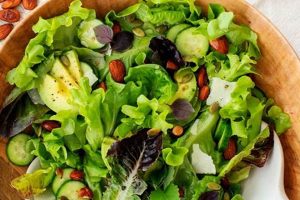
A salad featuring romaine lettuce as its base, emphasizing a crisp texture, typically achieved through proper storage and preparation techniques, forms the core of this culinary concept. Such salads often incorporate ingredients and dressings chosen to complement and enhance the romaine’s natural crispness. An example includes a salad combining chilled, chopped romaine with croutons, Parmesan cheese, and a classic Caesar dressing.
The appeal of a texturally satisfying salad lies in its refreshing and invigorating qualities. The crispness offers a pleasant contrast to other ingredients and adds a dimension of enjoyment to the eating experience. Historically, romaine lettuce, with its sturdy leaves and refreshing flavor, has been a popular choice for salads, its durability lending itself well to various preparations. Its nutritional value, including vitamins A and K, and its satisfying crunch contribute to its continued popularity in healthy and flavorful dishes.
Further exploration will delve into specific techniques for achieving optimal crispness, recommended complementary ingredients, and diverse dressing options to create a variety of appealing and nutritious salads centered around this versatile leafy green.
Tips for Achieving Optimal Romaine Crispness
Maximizing the textural appeal of romaine lettuce involves careful attention to preparation and storage methods. The following tips offer guidance for ensuring a satisfyingly crisp and refreshing salad experience.
Tip 1: Proper Storage is Key
Romaine should be stored in a refrigerator’s crisper drawer, ideally wrapped loosely in a damp paper towel and placed within a perforated plastic bag. This helps maintain hydration and prevents premature wilting.
Tip 2: Chilling Enhances Crispness
Refrigerating the romaine for at least 30 minutes prior to preparation maximizes its inherent crunch. Briefly submerging the leaves in ice water can further enhance this effect.
Tip 3: Thorough Drying is Essential
Excess moisture can lead to sogginess. After washing, thoroughly dry the romaine leaves using a salad spinner or gently patting them dry with paper towels.
Tip 4: Strategic Ingredient Selection
Ingredients such as croutons, nuts, or seeds contribute additional textural complexity, complementing the romaine’s crunch. However, avoid overly juicy ingredients that might compromise the overall crispness.
Tip 5: Timing of Dressing Application
Adding dressing immediately before serving prevents the leaves from becoming soggy. Consider serving dressing on the side to allow individual control over dressing quantity.
Tip 6: Consider the Cut
Larger, roughly chopped romaine pieces tend to retain crispness better than finely shredded leaves. The desired size can be adjusted based on personal preference and the specific salad composition.
Tip 7: Temperature Considerations
Serving the salad chilled, and using chilled ingredients like other vegetables or proteins, further enhances the refreshing quality of the crunchy romaine.
By following these guidelines, one can elevate a simple romaine salad into a truly satisfying culinary experience, highlighting the delightful textural contrast of crisp leaves against complementary ingredients.
These techniques, when combined with thoughtfully chosen accompaniments, contribute to an elevated dining experience.
1. Fresh, crisp romaine

The foundation of a successful crunchy romaine salad recipe lies in the quality of the romaine lettuce itself. Fresh, crisp romaine provides the essential textural element that defines the dish. Without this crucial component, the desired “crunch” cannot be achieved, regardless of other ingredients or techniques employed. The following facets explore the importance of this key ingredient.
- Sourcing and Selection
Selecting romaine with vibrant green leaves, free from browning or wilting, is paramount. Locally sourced romaine, when in season, often offers superior freshness. Farmers’ markets can provide access to recently harvested lettuce, maximizing crispness. Careful examination at the point of purchase ensures the selection of optimal lettuce for the recipe.
- Storage and Preservation
Maintaining crispness requires proper storage. Refrigeration in a crisper drawer, ideally wrapped in a damp paper towel and placed within a perforated plastic bag, helps retain moisture and prevents wilting. Avoiding storing romaine near ethylene-producing fruits, such as apples or bananas, further preserves freshness.
- Preparation Techniques
Proper preparation techniques are crucial. Washing and thoroughly drying the leaves prevents sogginess. Chilling the romaine before preparing the salad enhances its crispness. The cutting technique also plays a role; larger, roughly chopped pieces generally retain texture better than finely shredded leaves. Appropriate cutting maximizes the satisfying crunch.
- Impact on Overall Salad Quality
The freshness and crispness of the romaine directly influence the overall salad’s appeal. A salad built on wilted or less-than-fresh romaine will lack the desired textural contrast and may be less palatable. This underscores the essential role of fresh, crisp romaine in achieving a successful and enjoyable crunchy romaine salad.
The emphasis on fresh, crisp romaine highlights its integral role in the crunchy romaine salad recipe. Each step, from sourcing to preparation, contributes to the final product’s textural and flavor profile. Ultimately, the success of the dish hinges on the quality and proper handling of this key ingredient.
2. Complementary Ingredients
Complementary ingredients play a crucial role in enhancing the overall sensory experience of a crunchy romaine salad recipe. These additions contribute not only to textural complexity but also to flavor balance and visual appeal. The careful selection of such ingredients can elevate a simple salad from basic sustenance to a satisfying and multi-dimensional culinary creation. The interaction between these components and the crisp romaine base creates a dynamic interplay of textures and tastes. Consider, for example, the addition of croutons. Their crisp, often garlicky, nature amplifies the existing crunch of the romaine while introducing a contrasting texture and savory element. Similarly, toasted nuts or seeds, such as sunflower or pumpkin seeds, contribute both textural variation and nutritional value, augmenting the healthful aspects of the salad. The inclusion of ingredients like shredded Parmesan cheese, crumbled bacon, or roasted chickpeas offers further opportunities to explore both complementary and contrasting flavors and textures.
The effectiveness of complementary ingredients hinges on a thoughtful approach to flavor pairings and textural interplay. Ingredients that introduce excessive moisture, such as overly ripe tomatoes, can compromise the romaine’s desired crispness. Conversely, elements that are excessively dry might detract from the overall balance. The goal is to create a harmonious blend of flavors and textures that complement the romaine’s inherent qualities without diminishing its crucial crunch. The quantity of complementary ingredients should also be carefully considered; an overabundance can overwhelm the romaine, while too little can leave the salad feeling incomplete. The practical application of these principles allows for a wide range of creative possibilities, catering to individual preferences and dietary needs. A vegan option, for instance, might incorporate roasted tofu or tempeh for added protein and textural variation, while a more traditional approach might feature grilled chicken or fish.
Ultimately, the successful integration of complementary ingredients in a crunchy romaine salad recipe depends on understanding their individual characteristics and how they interact with the romaine base. This understanding allows for the creation of a dish that is not only texturally satisfying but also nutritionally balanced and visually appealing. By considering the interplay of flavors, textures, and quantities, one can elevate the crunchy romaine salad from a simple dish to a sophisticated and enjoyable culinary experience.
3. Flavorful Dressing

Flavorful dressing represents a critical component of a crunchy romaine salad recipe, acting as a unifying element that binds the ingredients while contributing significantly to the overall sensory experience. The dressing’s role extends beyond mere flavor enhancement; it influences texture, balances contrasting elements, and can even contribute to the visual appeal of the final dish. A well-chosen dressing elevates the inherent qualities of the romaine and other ingredients, transforming a collection of components into a cohesive and satisfying culinary creation.
- Balancing Flavor Profiles
Dressings provide an opportunity to balance and enhance the flavors within the salad. For a crunchy romaine salad, the dressing should complement the romaine’s slightly bitter and vegetal notes without overpowering its delicate flavor. A classic Caesar dressing, with its creamy, savory, and subtly tangy profile, offers a well-established example of successful flavor balancing. Vinaigrettes, with their customizable nature, allow for precise tailoring of acidity, sweetness, and herbaceousness to create a harmonious flavor profile that complements the romaine and other salad components. The balance achieved through a thoughtful dressing choice contributes significantly to the overall enjoyment of the salad.
- Textural Considerations
The texture of the dressing plays a crucial role in the overall perception of a crunchy romaine salad. A creamy dressing, like a ranch or blue cheese dressing, can add a contrasting textural element that complements the crisp romaine, while a lighter vinaigrette maintains the emphasis on the salad’s crunch. Excessive use of a heavy dressing can, however, compromise the romaine’s crispness, leading to a less satisfying textural experience. The interplay between dressing texture and the desired crunch of the romaine should be carefully considered during recipe development.
- Enhancing Visual Appeal
Dressings contribute to the visual appeal of a salad by adding color, gloss, and textural contrast. A vibrant green goddess dressing, for instance, enhances the visual freshness of the romaine, while a creamy dressing adds a contrasting element that highlights the varying textures within the salad. The visual presentation of the salad can significantly impact its perceived appeal, and the dressing plays a key role in creating an attractive and appetizing dish.
- Unifying the Ingredients
Dressings function as a unifying agent, binding the disparate ingredients of a crunchy romaine salad into a cohesive whole. They coat the romaine and other components, distributing flavor and creating a consistent sensory experience with each bite. The dressing acts as a bridge, connecting the individual flavors and textures of the ingredients, resulting in a harmonious and integrated culinary composition. This unifying effect is crucial in transforming individual components into a complete and satisfying dish.
The careful consideration of dressing choice in a crunchy romaine salad recipe is essential for achieving a balanced and enjoyable culinary outcome. By addressing flavor profiles, textural nuances, visual presentation, and ingredient unification, a well-selected dressing elevates the simple act of consuming a salad to a sophisticated and satisfying experience. The interplay between the dressing and the other components, particularly the crisp romaine, determines the ultimate success of the dish.
4. Proper Storage

Proper storage stands as a critical determinant of success in a crunchy romaine salad recipe. The desired textural integrity of romaine lettuceits crispnessis directly and significantly impacted by storage conditions. Failure to implement appropriate storage techniques results in undesirable outcomes: wilting, loss of structural integrity, and diminished textural appeal. Conversely, correct storage preserves the desired crunch, contributing fundamentally to the recipe’s success. This cause-and-effect relationship underscores the significance of proper storage as an integral component of achieving the desired culinary outcome.
Consider the scenario where romaine is stored at room temperature or in a high-humidity environment. Rapid deterioration ensues, manifesting as wilting and loss of turgor pressure within the lettuce leaves. This directly translates to a loss of crispness, rendering the romaine unsuitable for a salad where textural appeal is paramount. In contrast, storing romaine in a refrigerator’s crisper drawer, ideally wrapped loosely in a damp paper towel and sealed within a perforated plastic bag, maintains optimal humidity and temperature. Such conditions preserve the lettuce’s cellular structure, ensuring the desired crispness is retained. This comparative example illustrates the practical implications of varying storage methods.
The connection between proper storage and a successful crunchy romaine salad recipe transcends mere preference; it represents a fundamental principle of food science. Understanding and applying this principle ensures the desired textural outcome. Challenges in achieving ideal storage conditions, such as limited refrigerator space or fluctuating temperatures, can be addressed through strategic planning and the utilization of appropriate storage containers and techniques. Ultimately, recognizing the direct and significant impact of proper storage on the final product contributes to a higher level of culinary success and a more satisfying dining experience.
5. Timely Preparation

Timely preparation represents a crucial factor in achieving the desired textural outcome of a crunchy romaine salad recipe. The delicate nature of romaine lettuce necessitates careful attention to the timing of various preparation stages. Delaying critical steps can compromise the structural integrity of the lettuce, resulting in a loss of crispness and a less satisfying culinary experience. Conversely, adherence to a well-timed preparation process ensures the romaine remains crisp and refreshing, contributing significantly to the overall success of the dish.
- Washing and Drying
Washing and thoroughly drying the romaine leaves well in advance of serving, yet not so far in advance that they risk drying out, is essential. Excess moisture promotes wilting and diminishes the desired crunch. Conversely, insufficient drying leads to a soggy salad. Proper timing ensures the romaine remains crisp while minimizing the risk of spoilage or textural degradation. This step safeguards the structural integrity of the lettuce, contributing directly to the desired outcome.
- Chilling
Chilling the romaine before assembling the salad enhances its inherent crispness. However, prolonged exposure to cold temperatures can cause damage, potentially leading to freezer burn if stored improperly. Therefore, the timing of the chilling process must be carefully managed. Chilling the leaves for approximately 30 minutes prior to serving typically achieves optimal crispness without compromising the lettuce’s delicate structure. This pre-emptive chilling optimizes the textural qualities of the romaine, maximizing its contribution to the final dish.
- Dressing Application
The timing of dressing application significantly impacts the romaine’s crispness. Adding the dressing too early results in the leaves absorbing excess moisture, leading to sogginess. Conversely, adding the dressing too late might result in uneven flavor distribution. The ideal approach involves adding the dressing immediately before serving. This ensures the romaine remains crisp while allowing the flavors of the dressing to evenly coat the leaves. This precise timing balances flavor and texture, maximizing the overall dining experience.
- Ingredient Incorporation
Incorporating other ingredients, such as croutons or other textural elements, at the appropriate time plays a crucial role in maintaining the romaine’s crispness and preventing the dish from becoming soggy. Delaying the addition of moisture-rich ingredients until just before serving helps preserve the textural integrity of all components. Similarly, adding overly dry ingredients too far in advance can draw moisture from the romaine, diminishing its crunch. Strategic timing in ingredient incorporation preserves the distinct characteristics of each element, contributing to a balanced and enjoyable salad.
The careful orchestration of these timely preparation steps contributes directly to the successful execution of a crunchy romaine salad recipe. Each stage, from washing and drying to ingredient incorporation, plays a crucial role in maintaining the romaine’s desired crispness and ensuring a satisfying culinary experience. Failure to adhere to these timing principles can compromise the delicate balance of textures and flavors, diminishing the overall quality of the final dish. The emphasis on timely preparation underscores its essential role in achieving the quintessential crunchy romaine salad.
Frequently Asked Questions
This section addresses common inquiries regarding the preparation and enjoyment of a crunchy romaine salad, offering practical guidance for achieving optimal results.
Question 1: How can wilting be prevented after washing romaine lettuce?
Thorough drying after washing is crucial. Utilize a salad spinner or gently pat leaves dry with paper towels. Proper storage, as previously detailed, further inhibits wilting.
Question 2: What dressings best complement the flavor and texture of romaine?
Classic Caesar and vinaigrette dressings provide excellent pairings. Creamy dressings, while potentially complementary, should be used judiciously to avoid compromising crispness.
Question 3: Can pre-washed, bagged romaine be used for this recipe?
While convenient, pre-washed romaine may exhibit reduced crispness compared to freshly washed heads. If using bagged romaine, prioritize those with visibly crisp leaves and consume promptly after opening.
Question 4: How can one enhance the nutritional value of a crunchy romaine salad?
Incorporating ingredients such as other vegetables, lean proteins, nuts, and seeds augments nutritional content. Variety not only boosts nutritional value but also expands flavor and textural profiles.
Question 5: How long can a prepared crunchy romaine salad be stored?
Ideally, consume the salad immediately after preparation to maximize crispness. If storage is necessary, store undressed components separately and combine just prior to serving. Dressed salads should be consumed within a few hours to maintain optimal quality.
Question 6: What alternatives to croutons can maintain textural interest without gluten?
Toasted nuts, seeds, or roasted chickpeas provide gluten-free alternatives that contribute desirable crunch and nutritional benefits. These options offer diverse flavor profiles and complement the romaine’s inherent qualities.
Addressing these common inquiries provides a foundational understanding of how to successfully prepare and enjoy a crunchy romaine salad. Emphasis on ingredient quality, proper storage, and timely preparation techniques ensures a satisfying culinary experience.
This comprehensive guide equips individuals with the knowledge and techniques necessary to consistently create a refreshing and texturally delightful crunchy romaine salad.
Crunchy Romaine Salad Recipe
Achieving a truly satisfying crunchy romaine salad recipe hinges on a multifaceted approach. Ingredient selection, highlighted by the emphasis on fresh, crisp romaine, forms the foundation. Complementary ingredients, chosen for both textural and flavor compatibility, build upon this base, while a carefully selected dressing harmonizes and unifies the components. Proper storage and timely preparation techniques prove essential in preserving the romaine’s desired texture, ensuring the final product delivers the anticipated crispness. Each element contributes significantly to the overall culinary experience.
Culinary exploration extends beyond mere sustenance; it represents an opportunity for creativity and sensory engagement. The crunchy romaine salad recipe, seemingly simple in its composition, offers a platform for such exploration. Attention to detail, informed by an understanding of ingredient interactions and the impact of preparation techniques, elevates this dish from basic fare to a nuanced culinary expression. This pursuit of culinary excellence enriches not only the dining experience but also the appreciation for the inherent qualities of fresh, wholesome ingredients. The potential for variation within this seemingly straightforward recipe encourages continued experimentation and a deeper engagement with the art of culinary creation.