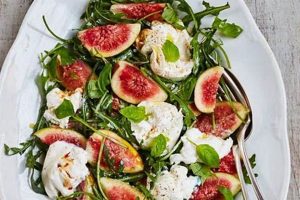
Elevated preparations of the classic Italian salad featuring fresh mozzarella, tomatoes, and basil move beyond the simple arrangement of ingredients. These variations might incorporate high-quality, artisanal cheeses like burrata or buffalo mozzarella, heirloom tomatoes in a variety of colors and flavors, and fresh, fragrant basil varieties such as Genovese or Thai basil. Enhancements frequently involve gourmet finishing touches like balsamic glazes, pesto swirls, or a drizzle of high-quality olive oil. An example could include a layered presentation with roasted tomatoes, marinated mozzarella balls, and a balsamic reduction.
The appeal of more elaborate versions lies in the opportunity to showcase seasonal ingredients at their peak, creating a visually appealing and flavorful dish. By using premium components and thoughtful presentation, this appetizer or side dish becomes suitable for more formal occasions. The historical context remains rooted in the simplicity of the original caprese salad, emphasizing fresh, high-quality ingredients, but modern interpretations allow for culinary creativity and exploration of flavor combinations.
This discussion will further explore variations on this theme, covering ingredient selection, preparation techniques, and presentation suggestions to create visually stunning and delectable salads. Specific recipes will be provided to illustrate the versatility and adaptability of this culinary classic.
Tips for Elevating Caprese Salad
Creating a truly exceptional caprese salad involves careful attention to detail, from ingredient selection to presentation. The following tips offer guidance for enhancing this classic dish.
Tip 1: Ingredient Quality is Paramount: Opt for ripe, flavorful tomatoes, preferably heirloom varieties for visual appeal and nuanced taste. Select fresh, high-quality mozzarella, such as buffalo mozzarella or burrata, for a richer flavor and creamier texture.
Tip 2: Explore Flavorful Basil Varieties: Experiment with different basil types, such as lemon basil or Thai basil, to add unique aromatic notes. Ensure the basil is fresh and vibrant.
Tip 3: Enhance with a Balsamic Glaze: A reduction of balsamic vinegar adds a touch of sweetness and acidity that complements the other ingredients. Consider a high-quality, aged balsamic for a deeper flavor profile.
Tip 4: Consider Marinated Mozzarella: Marinating mozzarella balls in herbs and olive oil infuses them with additional flavor. This can be done a few hours in advance for optimal flavor development.
Tip 5: The Importance of Olive Oil: Select a premium extra virgin olive oil with a delicate flavor that won’t overpower the other ingredients. A light drizzle is all that’s needed.
Tip 6: Creative Presentation Matters: Arrange the ingredients thoughtfully, considering color and texture. Skewers, layered presentations, or individual portions can elevate the visual appeal.
Tip 7: Seasoning is Key: Use a good quality sea salt and freshly cracked black pepper to enhance the natural flavors of the ingredients. Avoid over-seasoning.
By focusing on these key elements, one can transform a simple caprese salad into a sophisticated and memorable culinary experience.
These tips provide a foundation for creating exceptional caprese salads. The following section will delve into specific recipe examples demonstrating the versatility and potential of this classic dish.
1. High-quality Ingredients

The foundation of any exceptional caprese salad, especially a “fancy” rendition, lies in the selection of superior ingredients. Using top-tier components elevates the dish from simple to sophisticated, impacting both flavor and presentation. The following facets illustrate the significance of ingredient quality in achieving this transformation.
- Tomatoes:
Beyond standard varieties, consider heirloom tomatoes. Their diverse colors, shapes, and flavor profiles, ranging from sweet to tangy, add depth and visual interest. Examples include Brandywine, Cherokee Purple, and Green Zebra, each contributing a unique element to the salad. The choice of tomato significantly impacts the final taste and aesthetic.
- Mozzarella:
Fresh mozzarella is essential. However, opting for premium varieties like burrata, with its creamy interior, or buffalo mozzarella, known for its rich, slightly tangy flavor, elevates the dish. These cheeses offer a textural and flavor complexity not found in standard mozzarella.
- Basil:
Fresh basil is indispensable. Exploring different varieties, like Genovese, Thai, or lemon basil, introduces nuanced aromatic notes. The vibrant green color and fragrant aroma of fresh basil are essential components of the sensory experience.
- Olive Oil:
Extra virgin olive oil is crucial. A high-quality oil with a delicate flavor enhances the other ingredients without overpowering them. The oil should complement, not compete with, the flavors of the tomatoes, mozzarella, and basil. Opting for a robust, peppery oil might overwhelm the delicate balance.
The cumulative effect of these high-quality ingredients transforms a basic caprese salad into a refined culinary experience. The interplay of flavors and textures, enhanced by the premium nature of each component, results in a dish worthy of special occasions.
2. Varied Tomato Selection

A diverse selection of tomatoes is crucial for elevating a caprese salad from simple to sophisticated. Variety introduces a complexity of flavors, textures, and visual appeal not achievable with a single type. The impact extends beyond mere aesthetics; it contributes significantly to the overall gustatory experience. For example, incorporating heirloom tomatoes like Black Krim, with its deep, smoky flavor, alongside the bright sweetness of a Sun Gold cherry tomato, and the tangy bite of a Green Zebra creates a dynamic interplay that engages the palate.
This variety allows for a more nuanced exploration of the tomato’s role in the salad. The sweetness of certain varieties can balance the richness of the mozzarella, while the acidity of others complements the basil and balsamic glaze. The textural differences, from the firm flesh of a Roma tomato to the juicy burst of a cherry tomato, further enhance the dining experience. Furthermore, the visual impact of varied colors and shapes transforms the salad into a work of art, appealing to the eye as much as the palate. The careful selection and arrangement of different tomatoes creates a visually stunning and flavorful composition, essential for a truly “fancy” caprese salad.
In conclusion, the strategic use of varied tomato selections is integral to creating a caprese salad worthy of the “fancy” designation. This approach not only enhances the aesthetic appeal but also contributes significantly to the complexity and depth of flavor. The interplay of sweetness, acidity, and texture achieved through this diversity elevates the dish from a simple combination of ingredients to a sophisticated culinary creation.
3. Gourmet Mozzarella

Gourmet mozzarella plays a pivotal role in distinguishing a standard caprese salad from a truly “fancy” rendition. The choice of mozzarella directly impacts the texture, flavor profile, and overall culinary experience. Standard mozzarella, while acceptable in basic preparations, lacks the nuanced characteristics that elevate the dish. Gourmet options, on the other hand, offer a range of complexities that significantly enhance the final product. For instance, burrata, with its creamy, decadent center, adds a richness and textural contrast that standard mozzarella cannot replicate. Buffalo mozzarella, derived from water buffalo milk, imparts a subtle tanginess and a more robust, almost buttery flavor that complements the sweetness of ripe tomatoes. These gourmet varieties contribute a depth of flavor and textural intrigue essential for a sophisticated caprese salad.
The practical significance of using gourmet mozzarella becomes evident in the final presentation. The visual appeal is heightened by the unique shapes and textures of these cheeses. Burrata, with its characteristic pouch-like form, offers an elegant presentation, while the delicate texture of buffalo mozzarella adds a visual richness. Moreover, the enhanced flavor profile of these cheeses creates a more complex and satisfying sensory experience. The interplay of flavors between the gourmet mozzarella, ripe tomatoes, and fresh basil is elevated, resulting in a dish that transcends the ordinary. A simple example illustrates this: a caprese salad made with standard mozzarella might be pleasant, but one made with burrata and heirloom tomatoes offers a symphony of flavors and textures that elevates the dish to a gourmet level.
In summary, the selection of gourmet mozzarella is a crucial factor in creating a “fancy” caprese salad. The choice transcends mere aesthetics; it directly impacts the overall flavor profile, texture, and visual appeal. Utilizing premium mozzarella varieties like burrata or buffalo mozzarella not only enhances the individual components but also elevates the synergistic relationship between ingredients, resulting in a dish that is both visually stunning and gastronomically satisfying. This careful selection of ingredients ultimately distinguishes a simple caprese salad from a truly refined culinary creation.
4. Fresh Basil Types

The selection of fresh basil significantly influences the flavor profile of a fancy caprese salad. Beyond the commonly used sweet basil (Genovese), a variety of basil types offer unique aromatic notes and visual appeal, elevating the dish beyond the traditional. For instance, Thai basil, with its licorice-like aroma and anise undertones, provides a distinct flavor profile that complements the sweetness of ripe tomatoes and the richness of mozzarella. Lemon basil, as the name suggests, contributes a citrusy brightness that adds a refreshing layer of complexity. Similarly, opal basil, with its deep purple hue, not only offers a beautiful visual contrast but also delivers a slightly spicier flavor compared to sweet basil. These nuanced variations demonstrate how basil selection can dramatically affect the overall sensory experience of a caprese salad.
The practical application of this knowledge lies in the ability to tailor the basil choice to complement other ingredients and create a harmonious flavor profile. Consider a caprese salad featuring heirloom tomatoes with varying levels of acidity and sweetness. Pairing these with lemon basil might enhance the brightness of the tomatoes and balance the richer flavors of burrata. Conversely, using Thai basil with standard tomatoes and mozzarella could introduce a more complex, aromatic dimension to a classic presentation. The interplay between the chosen basil and the other ingredients creates a synergistic effect, impacting the final flavor profile significantly. Furthermore, the visual appeal of different basil varieties, with their varying shades of green and purple, adds an aesthetic dimension to the dish, enhancing its overall presentation.
In conclusion, the selection of fresh basil extends beyond mere garnish; it represents a crucial decision that directly impacts the overall quality and complexity of a fancy caprese salad. Understanding the nuanced flavors and aromas of different basil varieties allows for a more deliberate and creative approach to recipe development. By considering the interplay between basil and other ingredients, one can elevate the caprese salad from a simple combination of components to a truly sophisticated culinary experience.
5. Flavorful Enhancements
Flavorful enhancements represent a critical element in distinguishing a basic caprese salad from a more sophisticated, “fancy” preparation. These additions move beyond the core ingredients of tomato, mozzarella, and basil, introducing layers of complexity and nuance that elevate the overall culinary experience. They contribute not only to the taste but also to the aroma, texture, and visual appeal of the dish, transforming it from simple to extraordinary. The following facets illustrate the transformative power of flavorful enhancements in a caprese salad context.
- Balsamic Glaze:
A reduction of balsamic vinegar intensifies its sweetness and adds a tangy complexity that complements the other ingredients. A high-quality balsamic glaze provides a syrupy texture and a depth of flavor that elevates the salad. For instance, a fig-infused balsamic glaze can introduce subtle fruity notes that harmonize with the sweetness of ripe tomatoes. The glaze also contributes visual appeal with its dark, glossy appearance, drizzled artfully over the salad.
- Infused Olive Oils:
Infused olive oils, such as those infused with herbs like rosemary or chili flakes, offer an opportunity to introduce subtle yet distinctive flavors. A rosemary-infused oil can complement the herbaceous notes of fresh basil, while a chili-infused oil adds a touch of heat that contrasts with the creamy mozzarella. These specialized oils not only enhance the taste but also contribute to the salad’s aroma, creating a more immersive sensory experience.
- Marinated Mozzarella:
Marinating mozzarella balls in a mixture of herbs, spices, and olive oil infuses them with flavor, enhancing their role in the salad. For example, marinating mozzarella in pesto adds a layer of herbaceous complexity, while a marinade of garlic and chili flakes introduces a spicy kick. The marinade also contributes to the texture of the mozzarella, making it softer and more flavorful.
- Finishing Salts:
Sprinkling a finishing salt, such as flaky sea salt or smoked salt, over the salad provides a textural and flavorful flourish. Flaky sea salt offers a pleasant crunch and a clean, briny taste, while smoked salt introduces a smoky depth that complements the other ingredients. The judicious use of finishing salt enhances the overall flavor profile without overwhelming the delicate balance of the salad.
These flavorful enhancements, when applied thoughtfully, transform the caprese salad into a more complex and sophisticated dish. They demonstrate that a “fancy” caprese salad is not merely about premium ingredients but also about the nuanced interplay of flavors and textures achieved through careful additions. The balsamic glaze provides sweetness and acidity, infused oils introduce aromatic complexity, marinated mozzarella offers enhanced flavor and texture, and finishing salts provide a final touch of sophistication. These elements work in concert to elevate the caprese salad from a simple appetizer to a truly memorable culinary experience.
6. Elegant Presentation
Elegant presentation distinguishes a “fancy” caprese salad from a simple one. Visual appeal elevates the perceived value and enhances the overall dining experience. A thoughtfully arranged salad signifies attention to detail and elevates the dish beyond mere sustenance. This connection between presentation and perceived quality influences how the diner experiences the flavors. For example, a caprese salad composed of high-quality ingredients but haphazardly plated appears less appealing than one with the same ingredients arranged artfully. The careful placement of tomato slices, mozzarella, and basil, perhaps with a drizzle of balsamic glaze, transforms the dish into a visually captivating experience.
Several techniques contribute to elegant presentation. Using a variety of tomato colors and sizes creates visual interest. Slicing mozzarella into uniform shapes or using smaller ciliegine mozzarella balls offers a refined touch. Arranging elements in a visually appealing pattern, such as overlapping slices or a circular design, further enhances the presentation. The use of white space on the plate also contributes to a sense of elegance, preventing a cluttered appearance. Consider serving individual portions on smaller plates or arranging the salad on a platter with garnishes like edible flowers or a sprinkle of microgreens. These details, while seemingly minor, significantly impact the overall perception of the dish. A caprese salad served on a chipped plate with wilted basil, regardless of the quality of ingredients, will not convey the same sense of refinement as one presented thoughtfully.
In conclusion, elegant presentation is integral to the concept of a “fancy” caprese salad. It signifies care and attention to detail, enhancing the dining experience and elevating the perceived value of the dish. Thoughtful plating, the use of varied colors and textures, and attention to small details transform the caprese salad from a simple dish into a visually stunning culinary creation. This understanding allows for a more sophisticated approach to food preparation, emphasizing the importance of visual appeal in the overall enjoyment of a meal. The practical application of these principles elevates even the simplest of dishes, demonstrating the powerful connection between presentation and perception in culinary arts.
7. Thoughtful Seasoning
Thoughtful seasoning is the crucial final step that elevates a caprese salad from simple to “fancy.” It’s the element that harmonizes the flavors, enhances the inherent sweetness of the tomatoes, and balances the richness of the mozzarella. More than just a sprinkle of salt and pepper, thoughtful seasoning considers the nuances of each ingredient and how they interact, demonstrating a culinary expertise that distinguishes a truly refined dish.
- Salt Selection:
The type of salt significantly impacts the final flavor. Table salt provides basic salinity, but sea salt, with its larger crystals and mineral complexity, offers a more nuanced flavor profile. Flaky sea salt, such as Maldon, provides a delicate crunch and a burst of salinity. Smoked salt can add a depth of flavor that complements the other ingredients, particularly when paired with roasted tomatoes. The choice of salt should consider the other components of the salad and the desired overall flavor profile.
- Freshly Cracked Black Pepper:
Freshly cracked black pepper provides a brighter, more pungent aroma and flavor compared to pre-ground pepper. Its subtle heat and complex aromatics enhance the other ingredients without overpowering them. The coarseness of the grind can also be adjusted to suit individual preferences, offering further control over the final seasoning.
- Balancing Acidity:
A touch of acidity can brighten the flavors of a caprese salad. A squeeze of fresh lemon juice or a light drizzle of high-quality balsamic vinegar can enhance the sweetness of the tomatoes and balance the richness of the mozzarella. This careful balancing act prevents the salad from becoming overly rich or one-dimensional.
- Herbaceous Enhancements:
Freshly chopped herbs, beyond the essential basil, can add another layer of complexity. A sprinkle of chives or chervil can introduce subtle oniony or anise notes that complement the existing flavors. These additions should be used sparingly, as their purpose is to enhance, not overpower, the primary ingredients.
In the context of a “fancy” caprese salad recipe, thoughtful seasoning is not an afterthought but a deliberate and crucial step. It demonstrates culinary finesse and an understanding of how flavors interact. The correct salt, freshly cracked pepper, a touch of acidity, and perhaps a subtle herbaceous enhancement, all contribute to a final product that is balanced, nuanced, and ultimately more sophisticated. This attention to detail elevates the caprese salad from a simple combination of ingredients to a carefully crafted culinary experience.
Frequently Asked Questions
This section addresses common inquiries regarding the preparation and enjoyment of elevated caprese salads.
Question 1: What distinguishes a “fancy” caprese salad from a basic one?
The distinction lies primarily in the quality of ingredients and the attention to detail in preparation and presentation. “Fancy” versions utilize premium ingredients like heirloom tomatoes, gourmet mozzarella (burrata, buffalo mozzarella), and high-quality olive oil. Presentation emphasizes visual appeal through thoughtful arrangement and the incorporation of flavorful enhancements such as balsamic glaze or pesto.
Question 2: Can a “fancy” caprese salad be made ahead of time?
While best served immediately, some components can be prepared in advance. Mozzarella can be marinated, balsamic glaze can be made, and tomatoes can be sliced. However, it’s recommended to assemble the salad just before serving to maintain optimal freshness and prevent the tomatoes from becoming watery.
Question 3: What are suitable accompaniments for a “fancy” caprese salad?
Crusty bread, such as ciabatta or focaccia, provides a perfect complement for soaking up flavorful oils and balsamic glaze. The salad also pairs well with grilled meats or fish, serving as a refreshing counterpoint to richer dishes.
Question 4: How can one adapt a “fancy” caprese salad for different dietary needs?
Vegan adaptations can utilize plant-based mozzarella alternatives. Gluten-free options involve ensuring the chosen bread accompaniment is gluten-free. Adjustments to the balsamic glaze or other additions can accommodate specific sensitivities or preferences.
Question 5: What is the best way to store leftover caprese salad ingredients?
Store unused tomatoes, mozzarella, and basil separately in airtight containers in the refrigerator. Consume leftover ingredients within two days for optimal quality. Avoid storing the fully assembled salad, as the tomatoes will release excess moisture.
Question 6: Where can one find high-quality ingredients for a “fancy” caprese salad?
Local farmers’ markets, specialty grocery stores, and Italian delis are excellent sources for premium tomatoes, mozzarella, and fresh basil. Online retailers specializing in gourmet food products can also provide access to high-quality ingredients.
Understanding these common points of interest contributes to a more successful and enjoyable experience in creating and serving elevated caprese salads.
The following section will explore specific recipe variations, providing practical examples of how to incorporate these principles into delicious and visually appealing caprese salad creations.
Fancy Caprese Salad Recipe
Exploration of the “fancy caprese salad recipe” concept reveals that elevation of this classic dish hinges on ingredient quality, thoughtful preparation, and elegant presentation. Premium components, such as heirloom tomatoes, gourmet mozzarella varieties (burrata, buffalo mozzarella), and fresh, varied basil, form the foundation. Flavorful enhancements, including balsamic glazes, infused olive oils, and marinated mozzarella, add depth and complexity. Consideration of visual appeal through strategic plating and the use of varied colors and textures further distinguishes a sophisticated preparation. Finally, thoughtful seasoning, incorporating appropriate salt selection and freshly cracked pepper, harmonizes the flavors and completes the dish.
The “fancy caprese salad recipe” signifies more than a mere assembly of ingredients; it represents a culinary opportunity to showcase fresh, high-quality components in a visually stunning and palate-pleasing manner. Further experimentation with flavor combinations and presentation styles offers continued potential for culinary creativity, ensuring the enduring appeal of this classic dish in refined culinary contexts.