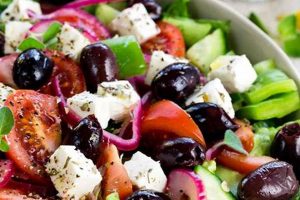
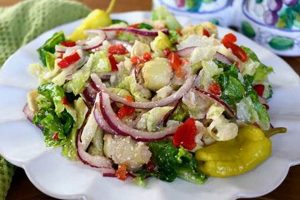
Combinations of fresh spinach, crumbled feta cheese, and other complementary ingredients form the foundation of a versatile and nutritious salad category. For example, a simple version might include spinach, feta, sliced red onion, Kalamata olives, and a lemon vinaigrette. Variations can incorporate ingredients such as cucumbers, tomatoes, bell peppers, chickpeas, or grilled chicken or fish, offering a wide range of flavor profiles and nutritional value.
These salads offer a balance of flavors and textures. The slight bitterness of spinach complements the salty, tangy feta, creating a foundation that can be enhanced with sweet, acidic, or savory additions. Such combinations are not only flavorful but also provide essential vitamins, minerals, and antioxidants. Historically, both spinach and feta have been dietary staples in Mediterranean regions, and their combined use in salads reflects this culinary heritage. Their enduring popularity stems from their adaptability and contribution to a healthy diet.
Further exploration of this salad category will cover specific recipe variations, ingredient selection guidance, preparation techniques, and suggestions for complementary dressings and accompaniments.
Tips for Spinach and Feta Salads
Optimizing ingredient selection and preparation techniques elevates spinach and feta salads from simple to exceptional. The following tips offer guidance for creating flavorful and visually appealing salads.
Tip 1: Baby Spinach Selection: Opt for fresh, crisp baby spinach leaves. Avoid bunches with wilted or yellowed leaves. Thorough washing and drying are essential to prevent a soggy salad.
Tip 2: Feta Variety: Experiment with different feta varieties. Traditional Greek feta offers a tangy, salty flavor, while milder options are also available. Crumbling the feta ensures even distribution throughout the salad.
Tip 3: Complementary Ingredients: Enhance flavor and texture with additions such as sliced cucumbers, halved cherry tomatoes, Kalamata olives, or roasted red peppers. Consider incorporating protein sources like grilled chicken, chickpeas, or cannellini beans.
Tip 4: Dressing Choices: A simple vinaigrette often best complements the delicate flavors of spinach and feta. Lemon, red wine vinegar, or balsamic vinegar bases are excellent choices. A light drizzle is sufficient to coat the leaves without overpowering them.
Tip 5: Ingredient Balance: Strive for a balance of flavors and textures. The saltiness of the feta should be balanced by other ingredients, and a variety of textures, from crisp to creamy, create a more enjoyable experience.
Tip 6: Freshness is Key: Prepare and serve the salad as close to serving time as possible to maintain optimal freshness and prevent the spinach from wilting.
Tip 7: Presentation Matters: Arrange the salad components thoughtfully. Consider color and texture variations for visual appeal. A sprinkle of toasted nuts or seeds can add a final touch.
By following these guidelines, one can consistently create flavorful and nutritious spinach and feta salads suitable for various occasions.
These tips offer a starting point for exploration. Culinary creativity and personal preferences can further personalize these salads.
1. Fresh, High-Quality Spinach
Fresh, high-quality spinach forms the foundation of successful spinach and feta salads. Its vibrant green color, tender texture, and slightly bitter flavor provide a canvas for the other ingredients. Wilted or yellowed spinach detracts from both the visual appeal and the overall flavor profile. The quality of spinach directly impacts the salad’s freshness and palatability. For instance, a salad made with crisp, freshly picked spinach offers a delightful contrast to the salty feta and other additions, while a salad made with limp spinach can be unappetizing. Selecting young, tender leaves ensures a pleasant eating experience, free from tough stems or fibrous textures.
Beyond its sensory qualities, fresh spinach contributes significant nutritional value. It’s a rich source of vitamins A and C, as well as iron and antioxidants. Using high-quality spinach maximizes these nutritional benefits. Furthermore, fresh spinach holds its shape better than older leaves, preventing a soggy salad. This is particularly important when combining it with ingredients like feta and dressings, which can release moisture over time. A salad built on fresh, robust spinach maintains its appealing texture and appearance even after being dressed.
Prioritizing fresh, high-quality spinach elevates spinach and feta salads from simple to exceptional. It ensures a visually appealing, flavorful, and nutritious dish. Careful selection contributes not only to the taste and texture but also to the overall culinary experience. Choosing the best spinach lays the groundwork for a successful salad, demonstrating an attention to detail crucial in culinary endeavors. This discerning approach impacts not just the individual dish but reflects a broader understanding of quality ingredients and their role in creating memorable meals.
2. Authentic Feta Cheese
Authentic feta cheese, derived from specific origins and production methods, plays a crucial role in defining the character of spinach and feta salads. Its distinct characteristics contribute significantly to the overall flavor profile and textural experience. Understanding the nuances of authentic feta enhances appreciation for its contribution to these salads.
- Origin and Production:
True feta originates from specific regions, traditionally Greece, and adheres to particular production methods. Made from sheep’s milk, or a blend of sheep and goat milk, it undergoes a specific aging process in brine. These factors contribute to its characteristic tangy, salty flavor and crumbly texture. Non-authentic feta cheeses, often made from cow’s milk, may lack the distinct flavor profile and textural nuances crucial for an authentic spinach and feta salad experience.
- Flavor Profile:
Authentic feta contributes a unique salty, tangy flavor that complements the mild spinach. The intensity of the saltiness and tang can vary based on the age and origin of the feta. This distinct flavor profile distinguishes it from other cheeses and adds depth to the salad. For instance, a feta with a more pronounced tang might pair well with sweeter additions like sun-dried tomatoes, while a milder feta could complement cucumber and dill. The specific feta chosen influences the overall balance of the salad.
- Textural Contribution:
The crumbly texture of authentic feta contrasts with the smooth spinach leaves, adding a pleasing textural dimension. This crumbly characteristic also allows the feta to distribute evenly throughout the salad, ensuring each bite contains a balanced combination of flavors. This textural element is essential for enhancing the sensory experience of the salad.
- Nutritional Value:
Authentic feta contributes to the nutritional profile of the salad. As a source of calcium and protein, it complements the vitamins and minerals found in spinach. This combination offers a balanced and nutritious meal option. The specific nutritional content can vary depending on the milk source and production method, further emphasizing the importance of selecting authentic feta.
The choice of authentic feta elevates spinach and feta salads beyond simple combinations of ingredients. It introduces a depth of flavor, texture, and nutritional value that distinguishes these salads. The specific characteristics of authentic feta interact with the other salad components, creating a harmonious balance that enhances the overall dining experience. Substituting other cheeses may compromise the intended flavor profile and textural complexity of the salad.
3. Balanced Flavor Profiles

Balanced flavor profiles are essential for successful salad recipes featuring feta cheese and spinach. The inherent saltiness of feta and the slight bitterness of spinach require careful consideration of other ingredients to achieve a harmonious blend. A balanced profile avoids any single flavor dominating the experience, instead creating a complex and nuanced taste. This balance is achieved through the strategic incorporation of contrasting yet complementary flavors. For example, the sweetness of sun-dried tomatoes or ripe berries can offset the saltiness of feta, while the acidity of a lemon vinaigrette can cut through the richness of the cheese and brighten the spinach. The peppery bite of red onion or the earthiness of walnuts provide further complexity, creating a multi-dimensional flavor experience.
The importance of balanced flavor profiles extends beyond mere palatability. It influences the perceived freshness and quality of the salad. A dish dominated by saltiness, for example, can taste unbalanced and heavy, while a bland salad lacks vibrancy and appeal. Achieving balance allows the individual characteristics of each ingredient to shine while contributing to a unified whole. Consider a salad with spinach, feta, strawberries, candied pecans, and a balsamic vinaigrette. The sweetness of the berries complements the salty feta, the crunch of the pecans contrasts with the tender spinach, and the tangy balsamic glaze ties all the elements together, creating a harmonious and satisfying experience. This balance ensures that no single element overwhelms the others, resulting in a more complex and enjoyable salad.
A thorough understanding of flavor interactions allows for greater control over the final product. Recognizing the inherent characteristics of core ingredients like feta and spinach enables strategic selection of complementary components. This knowledge empowers culinary creativity and ensures a consistently delicious and satisfying salad. Successfully balancing these flavor profiles elevates the dish beyond a simple combination of ingredients, transforming it into a carefully constructed culinary experience. The interplay of contrasting flavors and textures creates a dynamic and memorable salad, demonstrating the practical significance of understanding flavor balance in culinary endeavors.
4. Complementary Ingredients

Complementary ingredients are essential for elevating spinach and feta salads from simple to exceptional. These additions contribute not only to flavor complexity but also to textural variety and nutritional balance. The inherent characteristics of spinach and fetathe slight bitterness of the former and the salty tang of the lattercreate a foundation upon which a wide range of complementary flavors and textures can be built. Consider the interplay of sweet and savory: roasted red peppers or sun-dried tomatoes introduce a sweetness that balances the feta’s saltiness, while the addition of Kalamata olives or artichoke hearts provides a savory counterpoint. This interplay of contrasting flavors creates a more dynamic and satisfying sensory experience.
Textural variety is equally crucial. While spinach offers a soft, leafy texture, and feta provides a crumbly saltiness, the incorporation of crunchy elements like toasted nuts, seeds, or croutons adds a welcome contrast. Similarly, the addition of juicy components such as sliced cucumbers, cherry tomatoes, or segments of orange introduces a burst of freshness and further enhances the textural complexity. These additions prevent the salad from becoming monotonous and contribute to a more engaging culinary experience. For example, a salad with spinach, feta, roasted beets, candied walnuts, and a citrus vinaigrette exemplifies the power of complementary ingredients. The earthy beets, sweet and crunchy walnuts, and bright citrus dressing all interact harmoniously with the spinach and feta, creating a balanced and multi-dimensional flavor profile.
Beyond flavor and texture, complementary ingredients contribute to the nutritional value of spinach and feta salads. Incorporating protein-rich components like grilled chicken, chickpeas, or quinoa transforms the salad into a complete and satisfying meal. The addition of other vegetables, such as bell peppers, carrots, or avocado, further enhances the nutritional density, providing a wider range of vitamins, minerals, and antioxidants. Understanding the nutritional contributions of various complementary ingredients allows for the creation of salads tailored to specific dietary needs and preferences. This careful consideration of complementary ingredients elevates spinach and feta salads from simple side dishes to complex and nutritious culinary creations, demonstrating a deep understanding of flavor balance, textural interplay, and nutritional value.
5. Appropriate Dressings
Appropriate dressings play a crucial role in spinach and feta salads, acting as a unifying element that harmonizes the individual components while enhancing their inherent flavors. The choice of dressing significantly impacts the overall balance and palatability of the salad. A well-chosen dressing complements, rather than masks, the flavors of the spinach and feta. Overly heavy or intensely flavored dressings can easily overpower the delicate spinach and the salty tang of the feta, resulting in a less nuanced and enjoyable experience. Conversely, a bland or watery dressing fails to provide the necessary cohesion and flavor enhancement, leaving the salad tasting disjointed and incomplete. The ideal dressing provides a bridge between the ingredients, creating a cohesive flavor profile while allowing the individual components to shine.
Several factors influence dressing selection. The intensity of the feta, the presence of other ingredients, and the desired overall flavor profile all play a role. For a simple spinach and feta salad, a light vinaigrette with lemon juice or red wine vinegar often proves ideal. The acidity brightens the spinach and cuts through the richness of the feta without overpowering either. If the salad incorporates sweeter elements, such as dried cranberries or roasted sweet potatoes, a balsamic vinaigrette offers a complementary sweetness and tang. Salads with bolder ingredients, like grilled chicken or roasted vegetables, may benefit from a more robust dressing, such as a creamy tahini dressing or a herbed yogurt dressing. However, even with bolder dressings, restraint is key, as the goal remains to enhance rather than dominate the inherent flavors of the salad components. For instance, a spinach salad with feta, grilled chicken, and roasted red peppers might pair well with a lemon-herb vinaigrette, while a spinach salad with feta, strawberries, and candied pecans could benefit from a light poppy seed dressing.
The practical significance of selecting appropriate dressings lies in the creation of a balanced and harmonious culinary experience. A well-dressed salad offers a complex interplay of flavors and textures, where each ingredient contributes to the overall profile without overwhelming the others. Understanding the interplay between dressings and salad components allows for informed decision-making, ensuring a consistently delicious and satisfying result. The choice of dressing ultimately determines whether a spinach and feta salad reaches its full potential, demonstrating the crucial role of this often-overlooked component in culinary endeavors. This attention to detail elevates the dish from a simple combination of ingredients to a carefully crafted culinary creation.
Frequently Asked Questions
This section addresses common inquiries regarding salads featuring spinach and feta cheese, providing concise and informative responses.
Question 1: How can one prevent spinach from wilting in a salad?
Consuming the salad promptly after preparation is ideal. If advance preparation is necessary, storing spinach separately and adding it just before serving helps maintain freshness. Thoroughly drying spinach after washing also prevents premature wilting.
Question 2: What are suitable feta cheese alternatives for those sensitive to dairy?
Plant-based feta alternatives, typically made from soy or nuts, offer comparable textures and flavors. Nutritional yeast, sprinkled over the salad, can provide a cheesy flavor note. However, flavor profiles will differ from traditional feta.
Question 3: Can spinach and feta salads be prepared in advance for large gatherings?
Preparing components separately and combining them just before serving is recommended. Store dressings, feta, and other ingredients individually and toss the spinach with the dressing immediately prior to serving to maintain optimal freshness.
Question 4: How can nutritional value be maximized in these salads?
Incorporating a variety of nutrient-rich ingredients enhances the nutritional profile. Adding components such as nuts, seeds, chickpeas, or other vegetables increases vitamin, mineral, and protein content. Using a variety of colorful vegetables also boosts antioxidant intake.
Question 5: Are there specific feta varieties recommended for these salads?
Traditional Greek feta, made from sheep’s milk, offers a classic flavor profile. However, variations made with cow’s milk or goat’s milk provide different nuances. Experimentation with various feta types can broaden the flavor experience.
Question 6: What dressings best complement strong-flavored additions like olives or sun-dried tomatoes?
A robust vinaigrette, perhaps with added herbs or spices, can balance strong flavors. Lemon-herb or oregano-infused dressings complement olives, while balsamic vinaigrettes pair well with sun-dried tomatoes. The intensity of the dressing should complement the other ingredients without overpowering them.
Prioritizing fresh ingredients, employing proper storage techniques, and understanding flavor pairings contribute significantly to the enjoyment and nutritional value of spinach and feta salads.
This concludes the frequently asked questions section. The following section will offer a curated selection of specific recipes.
Salad Recipes with Feta Cheese and Spinach
Exploration of salad recipes incorporating spinach and feta cheese reveals the importance of ingredient quality, flavor balance, and textural variety. Fresh, vibrant spinach provides a nutritious foundation, while authentic feta contributes a distinct salty, tangy character. Complementary ingredients, ranging from crunchy nuts and seeds to sweet fruits and savory vegetables, enhance both flavor profiles and nutritional value. Appropriate dressings, carefully selected to complement rather than overpower, unify the components into a harmonious whole. Understanding these elements allows for informed choices that elevate these salads from simple combinations to complex culinary creations. Recipes emphasizing these principles demonstrate the potential of spinach and feta as versatile ingredients in a wide array of salad preparations.
Culinary experimentation with spinach and feta combinations offers continued opportunities for flavor discovery and nutritional enhancement. Potential exists for innovative pairings, dressings, and preparation techniques. Continued exploration of these elements promises further refinement of salad recipes featuring these versatile ingredients, ensuring their enduring appeal in culinary traditions.