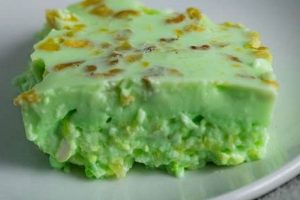
A pistachio-pineapple dessert salad, often featuring whipped topping, miniature marshmallows, and instant pudding, has become a popular potluck staple. Variations exist, incorporating ingredients like pecans, cherries, or different pudding flavors, allowing for personalized interpretations of this classic dish.
This easy-to-prepare dessert’s appeal stems from its simple ingredients, quick assembly, and pleasing flavor profile. Its creamy texture, sweetness, and nutty crunch contribute to its widespread popularity, particularly during holidays and gatherings. The dishs origins are debated, with no definitive connection to the Watergate Hotel despite its name. Its emergence in the 1970s coincided with the Watergate scandal, likely leading to the moniker.
The following sections delve into specific variations, including a classic rendition, vegan alternatives, and adjustments for dietary restrictions. Detailed instructions, ingredient lists, and helpful tips ensure successful preparation, whether a novice or experienced cook.
Tips for a Perfect Pistachio-Pineapple Dessert Salad
Achieving optimal results with this classic dish relies on attention to detail and a few key techniques. The following tips offer guidance for creating a dessert salad that is both visually appealing and delicious.
Tip 1: Ingredient Quality Matters: Utilizing high-quality ingredients significantly impacts the final product. Opt for fresh pistachios, unsweetened pineapple, and name-brand instant pudding for optimal flavor and texture.
Tip 2: Drainage is Key: Thoroughly draining the canned pineapple prevents a watery consistency. Pressing the pineapple against a strainer removes excess juice, ensuring a balanced texture.
Tip 3: Chill for Optimal Flavor: Chilling the prepared salad for at least two hours allows the flavors to meld and the texture to set. This crucial step enhances the overall enjoyment of the dessert.
Tip 4: Whipped Topping Considerations: While traditional recipes often call for whipped topping from a tub, homemade whipped cream offers a lighter, fresher alternative. Stabilized whipped cream holds its shape well and prevents weeping.
Tip 5: Nut Preparation: Toasting the pistachios before adding them to the salad enhances their flavor and provides a satisfying crunch. Roughly chopping the nuts ensures even distribution throughout the dish.
Tip 6: Presentation Matters: Serving the salad in a clear glass bowl allows the vibrant colors and textures to shine. Garnishing with additional chopped pistachios or maraschino cherries adds an elegant touch.
Tip 7: Storage: Store leftovers in an airtight container in the refrigerator for up to three days. The texture may soften slightly over time, but the flavor remains enjoyable.
By following these tips, one can create a dessert salad that impresses guests and satisfies any sweet tooth. Careful preparation and attention to detail elevate this simple dish to a culinary masterpiece.
The following section provides a classic recipe, followed by variations and adaptations for dietary needs and preferences.
1. Pistachio Pudding
Pistachio pudding forms the foundational flavor profile of Watergate salad, lending its distinctive pale green hue and characteristic taste. This instant pudding mix, typically combined with milk and whipped topping, creates a creamy base that binds the other ingredients. The pistachio flavor, while artificial in most commercial mixes, provides a unique sweetness that complements the tartness of the pineapple and the sweetness of the marshmallows. Without pistachio pudding, the dessert transforms into a different entity altogether, losing its defining characteristic. For example, substituting vanilla or chocolate pudding alters the taste and visual appeal significantly, resulting in a dish that, while potentially palatable, deviates from the recognized Watergate salad profile.
The importance of pistachio pudding extends beyond flavor; it contributes to the overall texture and consistency. The pudding acts as a binding agent, holding the disparate elements together in a cohesive mixture. This allows for even distribution of ingredients and prevents the salad from becoming watery or separating. Furthermore, the pudding’s creamy texture contrasts with the crunch of nuts and chewiness of marshmallows, providing a multi-sensory experience. Consider a scenario where the pudding is omitted: the remaining ingredients would lack cohesion and the desired creamy texture, resulting in a less appealing dish. This illustrates the crucial role pistachio pudding plays in achieving the signature Watergate salad experience.
Understanding the significance of pistachio pudding within Watergate salad allows for informed recipe adaptations and ingredient substitutions. While purists may insist on strict adherence to the classic recipe, others may explore variations using sugar-free pudding or incorporating additional pistachio flavorings. Recognizing the pudding’s central role informs these choices, ensuring the final product retains the essence of Watergate salad while accommodating individual preferences or dietary needs. Challenges may arise when attempting vegan or dairy-free versions, requiring careful selection of alternative thickeners and flavorings to replicate the pudding’s contribution. Ultimately, appreciation for the interplay of ingredients, particularly the foundational role of pistachio pudding, facilitates successful creation and enjoyment of this iconic dessert.
2. Crushed Pineapple
Crushed pineapple provides a crucial element of sweetness and tang within a Watergate salad, contrasting the creamy, nutty components. Its presence offers both flavor and textural complexity, impacting the overall balance and appeal of the dish. An exploration of its specific contributions illuminates its essential role within this classic dessert.
- Flavor Profile
Canned crushed pineapple introduces a distinct sweetness balanced by a tart acidity. This counteracts the richness of the pistachio pudding and whipped topping, preventing the dessert from becoming overly sweet. The pineapple’s bright, tropical flavor enhances the overall sensory experience, adding a refreshing dimension to the other ingredients. Imagine a Watergate salad without pineapple: the flavor profile would become one-dimensional, lacking the complexity and balance that the fruit provides. This highlights its importance in creating a well-rounded and enjoyable dessert.
- Textural Contribution
The texture of crushed pineapple offers a subtle chewiness and moistness, contrasting with the creamy pudding, fluffy marshmallows, and crunchy nuts. This textural diversity elevates the eating experience, adding another layer of interest beyond flavor. Its soft, yet slightly fibrous consistency helps bind the ingredients together, preventing the salad from becoming too loose or watery. Consider a version using larger pineapple chunks: the texture would be significantly different, potentially disrupting the desired balance and mouthfeel.
- Practical Considerations
The convenience of canned crushed pineapple contributes to the ease of preparation that characterizes Watergate salad. Its readily available format eliminates the need for fresh pineapple processing, saving time and effort. Draining the canned pineapple effectively is critical for maintaining the desired consistency; excess juice can make the salad watery. This practical element underscores the ingredient’s suitability for quick and easy dessert preparation.
- Nutritional Value
While primarily appreciated for its flavor and textural contributions, crushed pineapple also offers some nutritional benefits. It contains vitamin C, manganese, and dietary fiber. However, the overall nutritional value of Watergate salad remains moderate due to the other ingredients. Substituting fresh pineapple might marginally increase the nutritional content, but the difference is generally minimal.
The interplay of these facetsflavor, texture, practicality, and nutritiondemonstrates the significance of crushed pineapple in a successful Watergate salad. Understanding its role allows for informed decisions regarding ingredient selection and preparation techniques, ensuring a delicious and satisfying final product. While variations may exist, the core contribution of crushed pineapple remains central to this classic dessert’s enduring appeal.
3. Miniature Marshmallows

Miniature marshmallows contribute a distinct textural element to Watergate salad, differentiating it from other similar desserts. Their presence introduces a specific lightness and airiness, impacting both the mouthfeel and overall sensory experience. An examination of their various facets within the recipe reveals their integral role.
- Textural Contrast
Miniature marshmallows offer a soft, pillowy texture that contrasts with the creamy pudding, the slight chewiness of the pineapple, and the crunch of the nuts. This interplay of textures creates a more dynamic and engaging eating experience. The marshmallows prevent the salad from becoming dense or overly rich, adding a light, airy component. Imagine a version without marshmallows: the texture would be significantly different, lacking the characteristic lightness and variety that they provide.
- Sweetness and Binding
While not the primary source of sweetness, miniature marshmallows contribute to the overall sweetness profile of the salad. Their ability to absorb moisture also aids in binding the ingredients, helping to create a cohesive mixture. This subtle binding effect complements the role of the pudding, further ensuring the salad maintains its form and doesn’t become watery. This functional aspect underscores the importance of their presence beyond mere textural contribution.
- Visual Appeal
The small, white marshmallows dispersed throughout the green pistachio pudding base enhance the visual appeal of the salad. They create a speckled appearance that adds interest and contrasts with the other ingredients. This visual element further contributes to the overall enjoyment of the dessert, making it more appealing and appetizing. Their size and shape contribute to the ease of incorporation and even distribution within the mixture.
- Historical Context and Variations
The inclusion of miniature marshmallows reflects the dessert’s origins in the mid-20th century, a time when these ingredients gained popularity in American cuisine. While some modern interpretations might omit them for aesthetic or dietary reasons, their presence remains a hallmark of the traditional recipe. Understanding this historical context provides insight into the evolution of the dish and the rationale behind its ingredient list. Variations might include using larger marshmallows, though this alters the texture and classic presentation.
The combined effect of these facetstexture, sweetness, visual appeal, and historical contextdemonstrates the integral role of miniature marshmallows in Watergate salad. While seemingly a simple ingredient, their contribution significantly impacts the overall experience of the dessert, shaping its identity and distinguishing it from other similar dishes. An awareness of these contributions allows for informed decisions when adapting the recipe or exploring variations, ensuring the final product retains the essence of this classic dessert.
4. Whipped Topping
Whipped topping plays a crucial role in Watergate salad, contributing significantly to its texture, flavor, and overall appeal. Its inclusion is not merely a decorative flourish but a functional component that binds the ingredients, adds creaminess, and balances the sweetness. Understanding its impact requires examining its multifaceted contributions.
The primary function of whipped topping lies in its ability to create a smooth, creamy texture that complements the other ingredients. The lightness of the whipped topping offsets the denser elements like the pistachio pudding and crushed pineapple, preventing the salad from becoming heavy or cloying. This textural balance is essential for the characteristic mouthfeel of Watergate salad. Consider a scenario where whipped topping is omitted: the salad would likely be thicker, less airy, and lack the desired lightness. This illustrates the topping’s crucial role in achieving the intended texture.
Beyond texture, whipped topping contributes to the overall flavor profile by adding a subtle sweetness and richness. This complements the distinct flavors of the pistachio pudding and pineapple, creating a harmonious balance. The whipped topping’s neutral flavor also acts as a canvas, allowing the other ingredients’ flavors to shine without being overpowered. Furthermore, the whipped topping aids in binding the disparate elements of the salad together, helping to create a cohesive mixture that holds its shape. This binding effect ensures the salad remains stable and visually appealing. Challenges can arise if the whipped topping is not properly incorporated or if an insufficient quantity is used, potentially resulting in a watery or separated salad. One practical application of this understanding is the ability to adjust the amount of whipped topping to achieve a desired consistency, accommodating personal preferences for a lighter or richer salad.
In conclusion, the seemingly simple addition of whipped topping profoundly impacts the success of Watergate salad. Its contributions to texture, flavor, and structural integrity are essential for achieving the desired result. Appreciating this interplay of ingredients allows for informed decision-making during preparation, ensuring a consistently delicious and satisfying dessert experience. Further exploration could examine the impact of different types of whipped topping, such as homemade versus store-bought, or consider alternatives for dietary restrictions, such as coconut whipped cream. Such investigations further refine the understanding of this classic dessert and its adaptable nature.
5. Chopped Nuts

Chopped nuts represent a crucial textural component within Watergate salad, providing a contrasting element to the creamy, soft ingredients. Their inclusion elevates the sensory experience, adding a satisfying crunch and contributing to the overall balance of the dish. An examination of their specific contributions illuminates their importance.
- Textural Contrast and Enhancement
The primary role of chopped nuts lies in their ability to provide a textural counterpoint to the predominantly soft and creamy elements of Watergate salad. The nuts introduce a satisfying crunch that disrupts the otherwise uniform texture, creating a more engaging and dynamic eating experience. This contrast prevents the salad from feeling overly smooth or monotonous, adding a layer of complexity. Common choices like pistachios and pecans offer a distinct firmness, while walnuts contribute a slightly softer, yet still perceptible crunch. Imagine a version without nuts: the textural profile would be significantly less interesting, lacking the desirable interplay of soft and crunchy elements.
- Flavor Enhancement and Depth
Beyond texture, chopped nuts contribute to the flavor profile of Watergate salad. Nuts like pistachios offer a distinct, slightly sweet and nutty taste that complements the pistachio pudding. Pecans provide a richer, buttery flavor, while walnuts introduce earthier notes. The choice of nut influences the overall flavor balance, allowing for subtle variations. The toasting of nuts prior to incorporation further intensifies their flavor, adding depth and complexity to the dessert. Omitting nuts would result in a simpler, less nuanced flavor profile.
- Visual Appeal and Presentation
Chopped nuts contribute to the visual presentation of Watergate salad. Their varied colors and shapes add visual interest to the predominantly green and white base. Sprinkling chopped nuts on top of the salad creates an attractive garnish, enhancing its aesthetic appeal. The visual contrast they provide further elevates the dining experience, making the dish more enticing. The size and uniformity of the chop influence the visual texture, allowing for customized presentation.
- Nutritional Considerations
Nuts offer nutritional benefits, contributing healthy fats, protein, and fiber to Watergate salad. While the dessert is not primarily considered a health food, the inclusion of nuts adds a modest nutritional boost. Different nuts offer varying nutritional profiles; for example, walnuts are rich in omega-3 fatty acids. However, the overall nutritional impact remains moderate due to the other ingredients. While not a primary motivator for their inclusion, the nutritional contribution of chopped nuts represents a positive aspect of their presence.
The interplay of texture, flavor, visual appeal, and nutritional value underscores the significance of chopped nuts within Watergate salad. Their presence elevates this simple dessert, transforming it into a more complex and satisfying culinary experience. Understanding these contributions allows for informed choices regarding nut selection and preparation techniques, ensuring a balanced and delicious final product. Further exploration might include examining the impact of different nut varieties, roasting methods, or considering nut-free alternatives for those with allergies. This continued exploration enriches the appreciation of this classic dessert and its adaptable nature.
6. Simple Preparation
The ease of preparation is a defining characteristic of Watergate salad, contributing significantly to its widespread popularity. This simplicity stems from the recipe’s reliance on readily available, pre-made ingredients and a straightforward assembly process. The lack of complex techniques or specialized equipment makes it accessible to cooks of all skill levels, from novice to experienced. This accessibility broadens the appeal of the dessert, allowing it to feature prominently in various settings, from casual potlucks to holiday gatherings. Consider a typical scenario: a busy individual needs a quick dessert option for a potluck. Watergate salad’s simple preparation, often requiring only mixing a few ingredients in a bowl, aligns perfectly with this need, allowing for a minimal time investment while still delivering a satisfying outcome.
The recipe’s inherent simplicity facilitates adaptability and personalization. Ingredient quantities can be easily adjusted to accommodate different serving sizes or personal preferences. Variations, such as substituting different nuts or adding additional fruits, can be implemented without significantly altering the preparation process. This flexibility allows for creative interpretations of the classic recipe while maintaining its fundamental ease of assembly. For example, a family may prefer pecans over pistachios; substituting one for the other doesn’t increase the complexity of the preparation. This adaptability contributes to the enduring appeal of Watergate salad, allowing it to cater to individual tastes and preferences without demanding advanced culinary skills.
The simplicity of Watergate salad’s preparation does not equate to a compromise on flavor or presentation. Despite its minimal effort, the combination of ingredients produces a visually appealing and flavorful dessert. The bright green of the pistachio pudding, the contrasting white of the marshmallows and whipped topping, and the added textures of nuts and pineapple create a visually appealing dish. This demonstrates that simplicity in preparation can coexist with culinary satisfaction. However, attention to detail remains important; properly draining the pineapple and ensuring even distribution of ingredients contributes to the final presentation and texture. Understanding the balance between simplicity and attention to detail allows one to consistently produce a satisfying and visually appealing Watergate salad.
Frequently Asked Questions
This section addresses common inquiries regarding the preparation and characteristics of this pistachio-pineapple dessert salad.
Question 1: What is the origin of the name “Watergate salad”?
Despite its name, the salad has no proven connection to the Watergate Hotel or the political scandal. Its emergence in the 1970s merely coincided with the events, likely leading to the association. Several recipes, including one using pistachio pudding, were circulating during that time, further fueling speculation.
Question 2: Can this dessert be made ahead of time?
Preparing the salad a day in advance is possible. However, the texture may change slightly upon refrigeration. For optimal texture and flavor, making it a few hours before serving is recommended.
Question 3: Are there variations on the classic recipe?
Numerous variations exist, including the addition of ingredients like pecans, walnuts, or maraschino cherries. Different pudding flavors, such as vanilla or butterscotch, can create alternative taste profiles.
Question 4: How should leftover salad be stored?
Leftovers should be stored in an airtight container within a refrigerator for up to three days. Texture may soften slightly over time.
Question 5: Can this dessert be made vegan?
Vegan adaptations are achievable. Substituting the whipped topping with plant-based alternatives and using vegan marshmallows and pudding mixes are viable options.
Question 6: Is Watergate salad suitable for individuals with nut allergies?
The classic recipe contains nuts. Omitting nuts or substituting with sunflower seeds or chocolate chips offer nut-free variations. Careful attention to ingredient labels is essential to ensure the absence of nut-based products.
Understanding the nuances of this dessert, including its historical context, ingredient variations, and storage recommendations, enhances the overall culinary experience. Addressing these common inquiries clarifies potential uncertainties and encourages informed culinary choices.
The subsequent section explores detailed recipes and ingredient lists for various interpretations, providing step-by-step guidance for successful preparation.
Watergate Salad Recipe
This exploration of Watergate salad recipes has delved into the dessert’s historical context, ingredient composition, and variations. From the seemingly simple combination of pistachio pudding, crushed pineapple, miniature marshmallows, whipped topping, and chopped nuts emerges a complex interplay of flavors and textures. The analysis of each ingredient’s contribution underscores its importance in achieving the desired balance and overall sensory experience. Furthermore, the adaptability of the recipe, accommodating dietary restrictions and personal preferences, highlights its enduring appeal and versatility.
Watergate salad, despite its enigmatic name and relatively recent origin, occupies a distinct place in culinary history. Its ease of preparation, coupled with its satisfying flavor profile, ensures its continued presence at gatherings and celebrations. Further exploration of regional variations and innovative adaptations promises to enrich the culinary landscape and perpetuate the enjoyment of this classic dessert for generations to come. An informed understanding of its components empowers culinary enthusiasts to appreciate not only the final product but also the nuanced interplay of ingredients that contribute to its enduring popularity.