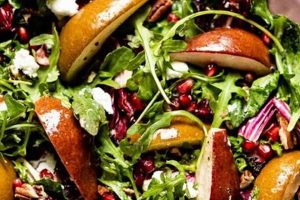
This type of salad combines the peppery bite of arugula with the sweetness of strawberries, often complemented by other ingredients like nuts, cheese, and a vinaigrette. A simple example might include baby arugula, sliced fresh strawberries, crumbled goat cheese, toasted pecans, and a balsamic vinaigrette.
The contrasting flavors and textures create a balanced and refreshing dish. The nutritional value is also significant, as this combination provides vitamins, minerals, and antioxidants. Historically, the use of fruits and vegetables in salads reflects culinary traditions that emphasize fresh, seasonal ingredients. The increasing popularity of such combinations speaks to a growing awareness of health and a desire for more complex flavor profiles.
This article will further explore variations on this salad, including different cheeses, nuts, and dressings. Techniques for selecting and preparing the freshest ingredients will also be covered, as well as suggestions for presentation and serving.
Tips for a Perfect Salad
Optimizing flavor and presentation requires attention to detail. The following tips offer guidance for creating a truly exceptional salad.
Tip 1: Ingredient Quality is Paramount: Select fresh, ripe strawberries and vibrant, unwilted arugula. Peak season produce yields the best flavor.
Tip 2: Balance Sweetness and Pepperiness: Adjust the ratio of strawberries to arugula according to preference. More berries increase sweetness, while more arugula emphasizes peppery notes.
Tip 3: Strategic Ingredient Pairing: Consider complementary flavors. Goat cheese provides tanginess, feta offers saltiness, and blue cheese adds a pungent dimension. Toasted nuts like almonds, pecans, or walnuts introduce satisfying crunch and richness.
Tip 4: Dressing Matters: A simple balsamic vinaigrette is classic, but other options include lemon vinaigrette, poppy seed dressing, or even a light honey-mustard dressing. The dressing should complement, not overpower, the other ingredients.
Tip 5: Proper Storage and Preparation: Store strawberries unwashed until ready to use. Wash and dry arugula thoroughly, and remove any tough stems. Dress the salad just before serving to prevent wilting.
Tip 6: Enhance Visual Appeal: Arrange the salad components thoughtfully on the plate or in a bowl. Consider adding edible flowers or a sprinkle of balsamic glaze for an elegant touch.
Tip 7: Experiment with Variations: Add protein like grilled chicken or shrimp for a more substantial meal. Explore other fruits like blueberries or raspberries for a different flavor profile.
By following these tips, one can elevate a simple combination of ingredients into a memorable culinary experience. The careful selection and preparation of each element ensures a harmonious blend of flavors, textures, and visual appeal.
These insights provide a foundation for crafting a salad that delights both the palate and the eye. The following section will explore further variations and serving suggestions.
1. Fresh, High-Quality Ingredients
The success of an arugula and strawberry salad hinges directly on the quality of its core components. Freshness, in particular, is paramount due to the delicate nature of both arugula and strawberries. Arugula, when not fresh, can become bitter and tough, overpowering the other flavors. Strawberries past their prime lose their sweetness and juicy texture, becoming mushy and bland. This direct relationship between ingredient quality and the final product highlights the importance of sourcing the best possible produce. For example, locally grown, in-season strawberries, bursting with natural sweetness, will elevate the salad significantly more than out-of-season berries shipped long distances. Similarly, vibrant, unwilted arugula with a deep green color indicates optimal freshness and flavor.
Using high-quality ingredients extends beyond the primary components. The supporting ingredients, such as nuts, cheese, and the vinaigrette, must also meet a standard of freshness. Rancid nuts or stale cheese can introduce off-flavors that detract from the overall balance. A vinaigrette made with fresh herbs and high-quality oil will have a brighter, more vibrant flavor than one made with inferior ingredients. Consider sourcing cheese from a local cheesemonger or using freshly cracked peppercorns for the vinaigrette. These choices, while seemingly minor, contribute significantly to the overall quality and enjoyment of the salad. For instance, a locally sourced goat cheese, with its creamy texture and subtle tang, pairs beautifully with fresh strawberries, offering a depth of flavor not achievable with mass-produced alternatives.
Prioritizing fresh, high-quality ingredients is therefore not merely a suggestion, but a fundamental requirement for a truly exceptional arugula and strawberry salad. The impact of ingredient quality on the final dish is undeniable. Subpar ingredients will invariably result in a mediocre salad, regardless of preparation technique. Conversely, the freshest, highest-quality ingredients provide a strong foundation for a flavorful and memorable culinary experience. Selecting ingredients with care, understanding their seasonality, and supporting local producers whenever possible allows one to maximize flavor and create a dish that reflects the inherent quality of its components.
2. Balanced Flavor Profiles
Balance is essential to a successful arugula and strawberry salad. The inherent peppery nature of arugula requires a counterpoint, a role often filled by the sweetness of ripe strawberries. This interplay of contrasting flavors forms the foundation of the dish. Without such balance, one element risks dominating the other, resulting in a less nuanced and potentially less enjoyable experience. For example, overly peppery arugula can overwhelm the delicate sweetness of the strawberries, while an excess of strawberries might render the arugula’s contribution negligible. Careful consideration of the ratio of arugula to strawberries, therefore, becomes a crucial aspect of recipe development.
Further complexity and balance are achieved through the introduction of additional ingredients. Nuts, such as toasted pecans or walnuts, provide a textural counterpoint to the leafy greens and soft berries, while also contributing a subtle earthy flavor. Cheese, whether a tangy goat cheese, a salty feta, or a pungent blue cheese, introduces another layer of flavor, deepening the overall profile of the salad. The choice of cheese impacts the balance significantly. A strong blue cheese may require fewer strawberries to maintain equilibrium, while a milder goat cheese might allow for a greater proportion of berries. Even the vinaigrette contributes to the balance. A balsamic vinaigrette, with its sweet and acidic notes, can both complement the strawberries and cut through the richness of nuts and cheese. A lemon vinaigrette, on the other hand, offers a brighter, more citrusy counterpoint.
Achieving a well-balanced flavor profile requires not only careful ingredient selection but also an understanding of how these ingredients interact with one another. It necessitates a nuanced approach, recognizing that the final flavor is not merely a sum of its parts, but a complex interplay of contrasting and complementary elements. Successfully balancing these elements elevates the salad from a simple combination of ingredients to a harmonious culinary composition. This attention to balance underscores the sophistication of the seemingly simple arugula and strawberry salad, demonstrating that thoughtful construction can yield truly remarkable results.
3. Complementary Textures

Textural diversity is a key element in a successful arugula and strawberry salad. The interplay of various textures enhances the sensory experience, adding depth and complexity beyond flavor alone. The foundational elementspeppery arugula and juicy strawberriesoffer a pleasant contrast in both mouthfeel and structure. However, a truly satisfying salad benefits from the introduction of additional textural components.
- Crunchy Elements:
Nuts, such as toasted almonds, pecans, or walnuts, provide a crucial textural contrast to the softer elements of the salad. Their crispness offers a satisfying counterpoint to the delicate leaves of arugula and the yielding texture of strawberries. This interplay of textures keeps the palate engaged, preventing monotony and adding interest to each bite. Seeds, such as sunflower or pumpkin seeds, can also contribute a crunchy element. The choice of nut or seed influences the overall flavor profile as well; for instance, pecans offer a richer, buttery flavor compared to the more neutral taste of sunflower seeds.
- Creamy Components:
Cheese introduces a creamy texture that complements the crispness of the nuts and the other ingredients. Goat cheese, with its soft, crumbly texture and tangy flavor, pairs particularly well with strawberries. Feta cheese, although firmer, offers a salty, creamy counterpoint. Other options include ricotta salata or even a small amount of crumbled blue cheese for a more pungent flavor profile. Avocado, though not a dairy product, can also contribute a creamy, smooth texture.
- Crisp and Tender Greens:
While arugula provides a foundational peppery flavor and slightly tender texture, incorporating other greens can further enhance the textural complexity. Baby spinach offers a softer, milder alternative, while a few leaves of romaine or radicchio introduce a more substantial crunch. Combining different greens not only diversifies the textures but also creates a more visually appealing salad.
- Other Textural Enhancements:
Additional ingredients can contribute further textural nuances. Crispy croutons offer a contrasting crunch similar to nuts, while thinly sliced red onion adds a sharp bite. Even the choice of dressing can influence texture. A thicker, creamier dressing clings to the ingredients differently than a light vinaigrette, affecting the overall mouthfeel. Consider adding roasted chickpeas for a hearty crunch or toasted quinoa for a delicate crispness.
By strategically incorporating these various textures, one can create a multi-dimensional salad that is both exciting and satisfying. The interplay of textures elevates the arugula and strawberry salad from a simple combination of ingredients to a more complex and engaging culinary experience. The thoughtful consideration of texture, combined with a balanced flavor profile, ensures a salad that delights the senses on multiple levels.
4. Appropriate Dressing Choice

Dressing selection significantly impacts the overall balance and enjoyment of an arugula and strawberry salad. The dressing should complement the existing flavors and textures, enhancing the inherent sweetness of the strawberries and the peppery bite of the arugula without overpowering either. An overly assertive dressing can mask the delicate interplay of these core ingredients, while an inadequate dressing can leave the salad tasting bland and uninspired. The choice, therefore, requires careful consideration of the other components and the desired flavor profile.
- Vinaigrettes:
Light and acidic vinaigrettes are often preferred for this type of salad. A classic balsamic vinaigrette, with its sweet and tangy notes, complements both the strawberries and arugula. Variations, such as a white balsamic vinaigrette, offer a slightly less assertive acidity. Other vinaigrettes, such as a lemon or raspberry vinaigrette, can introduce complementary citrus or fruity notes. The proportion of oil to vinegar in the vinaigrette influences the richness and mouthfeel; a higher oil content results in a richer, more emulsified dressing.
- Creamy Dressings:
While less common, creamy dressings can also work well, particularly if the salad includes cheese or other rich components. A light poppy seed dressing or a yogurt-based dressing can provide a creamy counterpoint to the crisp arugula. However, it’s essential to choose a creamy dressing that is not overly heavy or rich, as this can overwhelm the delicate flavors of the salad. A lighter, less assertive creamy dressing allows the other components to shine through.
- Balancing Sweetness and Acidity:
The balance of sweetness and acidity in the dressing is crucial. A dressing that is too sweet can clash with the natural sweetness of the strawberries, while excessive acidity can make the salad taste overly sharp. This balance can be adjusted by adding a touch of honey or maple syrup to increase sweetness, or a squeeze of lemon juice to enhance acidity. Taste-testing the dressing separately and adjusting as needed is crucial to achieving the desired balance.
- Considering Additional Ingredients:
The choice of dressing should also take into account any additional ingredients in the salad. If the salad includes nuts, cheese, or other flavorful components, the dressing should complement these flavors without creating conflicts. For instance, a salad with strong blue cheese might benefit from a simpler vinaigrette to avoid overwhelming the palate, while a salad with milder goat cheese could handle a more complex dressing with herbs or spices. The dressing should unify the flavors, creating a harmonious whole.
Ultimately, the appropriate dressing choice depends on personal preference and the specific composition of the salad. However, prioritizing balance, complementing existing flavors, and avoiding overly assertive dressings are key principles that contribute to a harmonious and enjoyable dining experience. By carefully considering these factors, one can select a dressing that elevates the arugula and strawberry salad, enhancing its inherent flavors and textures.
5. Thoughtful Presentation
Thoughtful presentation elevates an arugula and strawberry salad from a simple dish to a visually appealing culinary creation. Visual appeal significantly influences dining experience, stimulating appetite and enhancing enjoyment. A well-presented salad demonstrates care and attention to detail, conveying a sense of refinement that complements the balanced flavors and textures. Consider the impact of a carelessly tossed salad versus one meticulously arranged: the former might appear unappetizing, while the latter invites engagement and anticipation. Specific techniques enhance presentation. Instead of simply piling ingredients into a bowl, one might arrange the arugula, strawberries, cheese, and nuts in distinct sections, creating visual contrast and highlighting the individual components. A sprinkle of balsamic glaze adds a touch of elegance, while edible flowers introduce a vibrant pop of color. The choice of serving vessel also matters. A shallow bowl allows for better visibility and easier access to all ingredients, showcasing the arrangement. A rustic wooden platter provides a natural backdrop, emphasizing the freshness of the ingredients.
The practical implications of thoughtful presentation extend beyond aesthetics. Strategic placement of ingredients ensures an even distribution of flavors and textures in each bite. For instance, scattering crumbled goat cheese evenly across the salad prevents pockets of intense tanginess, ensuring a balanced flavor experience. Similarly, arranging the strawberries cut-side up showcases their vibrant color and allows for easier access. These subtle considerations enhance the diner’s interaction with the salad, creating a more satisfying experience. Presentation also plays a crucial role in portion control and perceived value. A thoughtfully presented salad, even with a modest portion size, can appear more substantial and appealing than a larger, carelessly plated salad. This aspect is particularly relevant in professional settings or when serving guests.
In summary, thoughtful presentation is integral to the overall success of an arugula and strawberry salad. It transforms a simple combination of ingredients into a visually captivating and enjoyable culinary experience. By considering the visual arrangement, color palette, and serving vessel, one can elevate the perceived value and enhance the diner’s enjoyment. This attention to detail underscores the importance of presentation as a key element in crafting a truly exceptional salad, demonstrating that visual appeal, when combined with balanced flavors and textures, creates a holistic and satisfying dining experience.
Frequently Asked Questions
This section addresses common inquiries regarding arugula and strawberry salad preparation.
Question 1: Can other greens be substituted for arugula?
While arugula’s peppery flavor is characteristic of this salad, substitutions are possible. Spinach provides a milder flavor, while baby kale offers a slightly more robust taste. Consider the impact on the overall flavor balance when substituting.
Question 2: What type of strawberry is best suited for this salad?
Ripe, in-season strawberries offer the best flavor. Look for berries with a vibrant red color and a sweet aroma. Different varieties, such as Chandler or Seascape, may offer subtle flavor variations.
Question 3: How can one prevent the arugula from wilting?
Thoroughly dry the arugula after washing and store it in a container lined with paper towels. Dress the salad immediately before serving to minimize contact with the dressing.
Question 4: Can this salad be made ahead of time?
While the components can be prepared in advance, it’s best to combine them just before serving to prevent wilting and maintain optimal texture. Store the dressing separately.
Question 5: What are suitable protein additions to make this salad a complete meal?
Grilled chicken, shrimp, or salmon complement this salad well. Toasted nuts or seeds also provide protein and healthy fats. Consider adding chickpeas or lentils for a vegetarian option.
Question 6: How can the nutritional value of this salad be maximized?
Incorporating a variety of ingredients increases nutritional value. Adding different nuts and seeds boosts healthy fats, while including other vegetables, such as bell peppers or cucumbers, provides additional vitamins and minerals.
Understanding these aspects facilitates successful preparation and enjoyment. Careful consideration of ingredient selection, dressing choice, and presentation ensures a flavorful and satisfying salad.
For further exploration, the subsequent section will delve into specific recipe variations.
Arugula and Strawberry Salad Recipe
Exploration of this salad recipe reveals a dish greater than the sum of its parts. Emphasis on fresh, high-quality ingredients, balanced flavor profiles, complementary textures, appropriate dressing selection, and thoughtful presentation elevates this seemingly simple combination to a sophisticated culinary experience. Ingredient quality dictates the foundation of flavor, while the interplay of sweet and peppery notes establishes a dynamic flavor profile. Textural contrasts, achieved through nuts, cheese, or other additions, provide further complexity. Dressing choice requires careful consideration, acting as a unifying element rather than a dominant force. Finally, thoughtful presentation transforms the salad into a visually appealing creation, enhancing enjoyment and perceived value.
This exploration provides a framework for culinary creativity, encouraging adaptation and personalization. Potential variations are vast, offering opportunities to explore diverse flavor combinations and presentations. The underlying principles of balance and quality remain paramount, regardless of specific ingredient choices. Ultimately, this recipe serves as a testament to the potential of fresh, seasonal ingredients, transformed through thoughtful preparation into a dish that delights the senses.