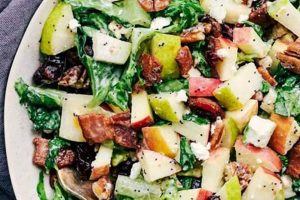
This classic layered salad typically features peas, often canned or frozen, combined with layers of mayonnaise-based dressing, crisp bacon, cheddar cheese, and often hard-boiled eggs, onion, and lettuce. Variations exist, substituting or adding ingredients like bell peppers, water chestnuts, or different cheeses. An example might include a base of lettuce, followed by peas, a layer of mayonnaise dressing, bacon, cheese, chopped onion, and a final topping of hard-boiled egg.
The dish’s appeal lies in its convenience, affordability, and make-ahead nature, making it ideal for potlucks, picnics, and holidays. The layered presentation is visually attractive and allows individual flavors to remain distinct while complementing each other. This layered approach also helps extend the salad’s lifespan in the refrigerator, as ingredients maintain freshness longer. Its popularity has endured for decades, becoming a staple of American cuisine, particularly in the mid-20th century when convenience foods gained traction.
The following sections will delve into variations on this popular dish, offering detailed instructions and exploring the origins and cultural significance of layered salads in culinary traditions.
Tips for a Successful Layered Pea Salad
Achieving a visually appealing and flavorful layered salad requires attention to detail and a few key techniques. These tips offer guidance for optimal results.
Tip 1: Ingredient Quality: Use fresh, high-quality ingredients. Opt for crisp lettuce, freshly cooked and crumbled bacon, and sharp cheddar cheese for the best flavor.
Tip 2: Proper Drainage: Thoroughly drain canned peas and other vegetables to prevent a watery salad. Excess moisture can dilute the dressing and compromise the structural integrity of the layers.
Tip 3: Consistent Layer Thickness: Strive for even layers to ensure a balanced flavor profile and attractive presentation. This also facilitates even chilling and prevents certain layers from becoming soggy.
Tip 4: Chilling Time: Allow the salad to chill for at least two hours before serving. Chilling allows the flavors to meld and the layers to set properly, resulting in a more cohesive dish.
Tip 5: Dressing Considerations: Use a good quality mayonnaise and consider adding a touch of sour cream or plain yogurt for a tangier flavor. Season the dressing well with salt, pepper, and other desired spices.
Tip 6: Ingredient Variations: Don’t be afraid to experiment with different ingredients. Consider adding chopped red onion, bell peppers, water chestnuts, or substituting different cheeses based on preference.
Tip 7: Serving and Storage: Serve the salad chilled in a clear glass bowl to showcase the layers. Store leftovers covered in the refrigerator for up to three days. Note that the texture may change slightly upon storage.
By following these guidelines, one can create a layered salad that is both visually appealing and delicious, ensuring a satisfying culinary experience.
With these tips in mind, the subsequent section will provide a selection of popular variations on the classic recipe, offering further inspiration for culinary exploration.
1. Layered Construction

Layered construction is fundamental to the seven-layer pea salad, defining its structure, texture, and flavor profile. This technique goes beyond mere presentation; it significantly impacts the overall culinary experience.
- Visual Appeal:
Distinct layers create visual interest, showcasing the variety of ingredients and colors. This layered presentation transforms a simple salad into an attractive dish suitable for any occasion, from casual meals to festive gatherings. The contrasting textures and colors entice the appetite and contribute to a more satisfying dining experience.
- Flavor Preservation:
Layering prevents the mingling of flavors that might occur in a tossed salad. This allows each ingredient’s distinct taste to shine through. For instance, the crispness of the lettuce remains intact, while the creamy dressing doesn’t overwhelm the delicate flavor of the peas. This separation enhances the overall complexity of the salad.
- Textural Contrast:
The layered approach allows for a combination of different texturescrunchy, creamy, softin each bite. The contrast between crispy bacon, tender peas, and creamy dressing contributes to a more dynamic and enjoyable sensory experience. This interplay of textures elevates the salad beyond a simple combination of ingredients.
- Extended Freshness:
Proper layering, combined with adequate chilling, can extend the salad’s freshness. Because the ingredients are not tossed together, they are less likely to become soggy or wilt quickly. This is particularly advantageous for preparing the salad in advance, making it a convenient option for potlucks and gatherings.
The layered construction method, therefore, elevates the seven-layer pea salad from a basic mixture of ingredients to a carefully crafted dish, showcasing the interplay of flavors, textures, and visual appeal. This technique is crucial to the salad’s enduring popularity and its status as a classic dish.
2. Fresh Ingredients
Ingredient freshness significantly impacts the overall quality of a seven-layer pea salad. While convenience often leads to using canned or frozen components, prioritizing fresh ingredients elevates the salad’s flavor profile, texture, and visual appeal. This emphasis on freshness transforms the dish from a simple side to a vibrant, flavorful culinary experience.
Consider the impact of fresh versus canned peas. Fresh peas offer a sweetness and tenderness unmatched by their canned counterparts. Similarly, crisp lettuce provides a refreshing counterpoint to the richness of the other ingredients, whereas wilted lettuce detracts from the salad’s appeal. Using freshly cooked and crumbled bacon introduces a smoky, savory element that pre-packaged bacon bits often lack. Freshly grated cheddar cheese melts more smoothly and delivers a more nuanced flavor compared to pre-shredded cheese. These seemingly small choices significantly influence the final product.
Prioritizing fresh ingredients elevates the sensory experience of the seven-layer pea salad. The vibrant colors of fresh produce enhance visual appeal, while the crisp textures and distinct flavors create a more dynamic and satisfying culinary experience. While practicality sometimes necessitates substitutions, understanding the impact of fresh ingredients allows for informed decisions and encourages maximizing freshness whenever possible. This awareness contributes to a more vibrant and flavorful outcome, reinforcing the connection between ingredient quality and culinary excellence.
3. Balanced Flavors

Balance is crucial in a successful seven-layer pea salad. This balance refers to the interplay of sweet, savory, creamy, crunchy, and acidic elements, creating a harmonious flavor profile. A well-executed salad avoids any single flavor dominating, allowing each component to contribute to the overall taste experience. The sweetness of peas, for example, is balanced by the saltiness of bacon and the sharpness of cheddar cheese. The creamy mayonnaise dressing complements the crisp lettuce and crunchy bacon. A touch of acidity, often from a splash of vinegar in the dressing, further enhances the flavor complexity, preventing the salad from becoming overly rich.
Consider a scenario where the dressing is overly sweet. This sweetness could overpower the other flavors, masking the savory bacon and sharp cheese. Conversely, an excessively tangy dressing might clash with the sweetness of the peas. Achieving balance requires careful consideration of ingredient proportions and flavor intensities. The goal is to create a symphony of flavors where each element complements the others, resulting in a satisfying and well-rounded taste experience. This balance distinguishes a mediocre salad from a truly exceptional one.
Understanding the importance of balanced flavors empowers one to tailor the recipe to individual preferences. One might prefer a more savory salad, emphasizing the bacon and cheese while reducing the sweetness from the peas. Alternatively, a focus on freshness might involve incorporating additional vegetables, such as chopped bell peppers or cucumbers, to enhance the crispness and introduce subtle vegetal notes. Mastering this balance allows for endless customization while adhering to the fundamental principles of a well-constructed seven-layer pea salad. This understanding transforms the act of preparation into an exercise in culinary creativity, enhancing both the process and the final product.
4. Proper Chilling

Proper chilling is essential for a successful seven-layer pea salad. Chilling allows the flavors to meld and the layers to set, enhancing both the taste and texture of the dish. A chilled salad offers a more cohesive flavor profile, allowing the individual ingredientspeas, bacon, cheese, and dressingto harmonize. The cool temperature also enhances the crispness of the vegetables and prevents the mayonnaise-based dressing from becoming overly rich or oily. Without adequate chilling, the salad may lack structural integrity, with layers collapsing and flavors remaining disparate. For example, a salad served immediately after assembly might taste like a collection of separate ingredients rather than a unified dish. The bacon might be overly crisp, the peas bland, and the dressing too assertive.
The chilling process also affects the texture of the salad. A well-chilled salad offers a pleasant contrast between the crunchy vegetables, creamy dressing, and other ingredients. Insufficient chilling can lead to a softer, less appealing texture, with the vegetables wilting and the dressing thinning. Imagine a scenario where the lettuce becomes soggy and the peas lose their firmness. The salad’s overall appeal diminishes significantly without the intended textural contrast. Chilling firms the layers and enhances the textural interplay, contributing to a more enjoyable dining experience.
In summary, proper chilling plays a crucial role in optimizing both the flavor and texture of a seven-layer pea salad. The melding of flavors, enhanced crispness, and textural contrast achieved through adequate chilling elevate this simple dish from a basic combination of ingredients to a cohesive and satisfying culinary creation. Neglecting this critical step compromises the overall quality and enjoyment of the salad, demonstrating the practical significance of understanding the impact of temperature on layered dishes.
5. Visual Appeal
Visual appeal plays a significant role in the overall enjoyment of a seven-layer pea salad. This dish relies on a carefully constructed presentation to enhance its attractiveness and create a sense of anticipation. The visual element is integral to the dish’s identity and contributes significantly to its perceived value and palatability.
- Distinct Layers:
The clearly defined layers are the hallmark of this salad. Each layer’s distinct color and texture contribute to the overall visual appeal. The contrast between the vibrant green peas, crisp white onion, rich bacon, and creamy dressing creates a visually striking presentation. This layered effect differentiates it from traditional tossed salads and contributes to its festive character, making it ideal for potlucks and gatherings.
- Color Contrast:
Color contrast is essential for visual interest. The use of ingredients with varying colors, such as the green of peas, the white of hard-boiled eggs and onions, the reddish-brown of bacon, and the orange of cheddar cheese, enhances the salad’s vibrancy. A monochromatic salad would lack the visual appeal that makes this dish so attractive. The strategic use of color elevates the salad from a simple dish to a visually appealing culinary creation. For instance, garnishing with freshly chopped parsley or paprika can further enhance the color contrast and visual appeal.
- Serving Vessel:
The choice of serving dish further enhances the visual presentation. A clear glass bowl is traditionally preferred, as it showcases the distinct layers to their full advantage. The transparency of the bowl allows the vibrant colors and textures of each layer to be fully appreciated. Using an opaque bowl would obscure the layered effect, diminishing the salad’s visual impact. The serving vessel acts as a frame for the culinary artwork, further enhancing the dining experience.
- Garnishing:
While often omitted, a simple garnish can elevate the visual appeal. A sprinkle of paprika, chopped fresh parsley, or a few strategically placed pea pods can add a touch of elegance and enhance the color contrast. Garnishing adds a finishing touch that completes the visual presentation, demonstrating attention to detail and enhancing the overall sensory experience. A thoughtfully chosen garnish can tie the colors and textures together, creating a harmonious and visually appealing final product.
These visual elements combine to create a dish that is as appealing to the eye as it is to the palate. The visual appeal of the seven-layer pea salad is a key factor in its enduring popularity, contributing to its festive nature and making it a welcome addition to any buffet or gathering. The deliberate layering, color contrast, choice of serving vessel, and thoughtful garnishing all contribute to a visually striking and memorable culinary experience.
6. Versatile Variations

The seven-layer pea salad, while traditionally defined by its core ingredients, offers remarkable versatility. Adaptability to diverse tastes and dietary needs ensures its continued relevance in contemporary cuisine. Exploring these variations reveals the inherent flexibility of this classic dish, allowing for personalized interpretations without sacrificing its fundamental appeal.
- Ingredient Swaps:
Substituting ingredients allows for customization based on personal preferences and dietary restrictions. Swapping cheddar for a milder cheese like Colby or Monterey Jack caters to those who prefer less intense flavors. Substituting bacon with chopped ham or cooked chicken breast offers a leaner protein option. Replacing mayonnaise with a Greek yogurt-based dressing reduces fat and calories while adding a tangy twist. These substitutions demonstrate the adaptability of the recipe, allowing for personalized interpretations without compromising the dish’s layered structure.
- Textural Adaptations:
Modifying textures provides opportunities to cater to varied palates. Incorporating chopped water chestnuts adds a satisfying crunch. Roasting the peas before layering introduces a deeper, slightly caramelized flavor and a firmer texture. Using crumbled blue cheese instead of cheddar adds a creamy, pungent element. These textural adjustments create a more dynamic sensory experience, adding depth and complexity to the traditional recipe.
- Seasonal Adjustments:
Seasonal variations introduce fresh, locally sourced ingredients. Substituting fresh peas for frozen or canned during peak season elevates the salad’s flavor profile. Adding layers of seasonal vegetables, such as sliced cucumbers in the summer or roasted sweet potatoes in the fall, expands the flavor palette and reflects seasonal availability. These seasonal adaptations connect the dish to the natural world, incorporating fresh, vibrant ingredients that complement the traditional flavors.
- Dietary Considerations:
Adapting the recipe to accommodate specific dietary needs expands accessibility. Creating a vegan version using a plant-based mayonnaise and omitting the bacon and cheese maintains the layered concept while catering to vegan preferences. Gluten-free adaptations focus on ingredient selection, ensuring all components, including dressings and seasonings, are gluten-free. These modifications ensure inclusivity and demonstrate the adaptability of the recipe to a wide range of dietary requirements.
The versatility of the seven-layer pea salad highlights its enduring appeal. These variations, ranging from simple ingredient swaps to more substantial modifications, demonstrate the adaptability of the recipe while preserving its fundamental layered structure and balance of flavors. This inherent flexibility allows the seven-layer pea salad to remain a relevant and enjoyable dish across diverse palates and culinary traditions.
7. Make-Ahead Convenience

Make-ahead convenience represents a significant advantage of the seven-layer pea salad, contributing to its popularity, particularly for gatherings and events. The ability to prepare the salad in advance reduces stress on the day of serving and allows hosts to focus on other aspects of event preparation. The layered construction, with minimal ingredient interaction before serving, prevents premature softening or wilting, maintaining the salad’s structural integrity and flavor profile even after several hours of refrigeration. This characteristic distinguishes it from other salads that require last-minute assembly to prevent undesirable textural changes. Consider a potluck scenario: a pre-assembled seven-layer pea salad travels well and requires no on-site preparation, unlike a tossed salad that requires dressing and tossing immediately before serving.
This make-ahead convenience offers practical benefits beyond event hosting. Busy weeknight meals benefit from the ability to prepare a substantial portion of the meal ahead of time. A chilled seven-layer pea salad awaits, requiring no further preparation when time is limited. Furthermore, meal prepping for the week incorporates this dish seamlessly, offering a nutritious and flavorful option that maintains its quality throughout the week. The stability of the layered salad in the refrigerator simplifies meal planning and reduces daily cooking demands, contributing to a more organized and efficient approach to meal preparation.
In conclusion, the make-ahead convenience inherent in the seven-layer pea salad significantly enhances its practicality and appeal. This characteristic simplifies meal preparation for both large gatherings and everyday meals, reducing time constraints and allowing for greater flexibility. Understanding the connection between this convenience and the salad’s construction underscores its value as a versatile and reliable dish in various culinary contexts. This characteristic, combined with its adaptability and balanced flavor profile, solidifies the seven-layer pea salad’s position as a classic dish suitable for diverse occasions and culinary needs.
Frequently Asked Questions
This section addresses common inquiries regarding the seven-layer pea salad, offering concise and informative responses to clarify potential uncertainties and enhance overall understanding.
Question 1: Can frozen peas be used?
While fresh peas offer optimal flavor and texture, frozen peas can be substituted. Ensure they are fully thawed and thoroughly drained before layering to prevent excess moisture in the salad.
Question 2: How long can the salad be stored?
Properly stored in an airtight container in the refrigerator, the salad can last for up to three days. However, optimal quality is best within the first two days.
Question 3: Is it necessary to chill the salad before serving?
Chilling is crucial for flavor development and optimal texture. Allowing the salad to chill for at least two hours allows the flavors to meld and the layers to set properly.
Question 4: Can the bacon be substituted?
Bacon can be replaced with other protein sources such as cooked ham, crumbled cooked chicken, or even crispy chickpeas for a vegetarian option. Adjust seasonings accordingly.
Question 5: What type of cheese works best?
Sharp cheddar cheese is traditional, but variations include Colby, Monterey Jack, or even a crumbled blue cheese for a more pungent flavor profile.
Question 6: Can this salad be made vegan?
Vegan adaptations utilize plant-based mayonnaise and omit the bacon and cheese. Consider adding roasted or marinated tofu for protein and nutritional yeast for a cheesy flavor.
Addressing these common questions aims to provide clarity and facilitate a more informed approach to preparing and enjoying this classic layered salad. Understanding these nuances enhances one’s ability to tailor the recipe to specific preferences and dietary needs.
The following section will explore additional tips and variations for crafting a truly exceptional seven-layer pea salad, further enhancing culinary expertise.
Seven Layer Pea Salad Recipe
Exploration of the seven layer pea salad recipe reveals a dish characterized by its layered construction, balanced flavors, and adaptable nature. From the importance of fresh ingredients and proper chilling to the visual appeal and versatile variations, each aspect contributes to the enduring popularity of this classic dish. Make-ahead convenience further enhances its appeal, solidifying its role as a practical and satisfying option for various occasions. Understanding the interplay of these elements empowers culinary exploration and personalized interpretations, ensuring a consistently delightful outcome.
The seven layer pea salad recipe stands as a testament to the enduring appeal of simple yet well-crafted dishes. Its adaptability ensures continued relevance in evolving culinary landscapes, offering a canvas for creative expression while maintaining its fundamental appeal. Continued exploration of variations and flavor profiles promises to further enrich the legacy of this classic dish, ensuring its continued presence on tables for generations to come.