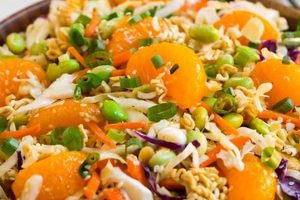
A guide to preparing a dish featuring this distinctive fruit typically involves selecting ripe persimmons, combining them with complementary ingredients like other fruits, vegetables, nuts, or cheese, and often incorporating a flavorful dressing. For example, a simple version might include sliced Fuyu persimmons, crumbled goat cheese, toasted pecans, and a light vinaigrette.
Dishes centered on this autumnal fruit offer a unique culinary experience, blending sweetness with subtle tannins. The nutritional benefits of persimmons, rich in vitamins A and C, contribute to the appeal. Historically, persimmons have been enjoyed in various cultures, particularly in East Asia, where they hold symbolic meaning and are featured in both sweet and savory preparations.
This exploration will delve into selecting the right variety, crafting complementary flavor profiles, and offering diverse preparation techniques, from basic salads to more complex culinary creations.
Tips for Persimmon Salad Success
Creating a balanced and flavorful persimmon salad requires attention to detail and an understanding of this unique fruit. The following tips offer guidance for optimal results.
Tip 1: Variety Selection: Opt for Fuyu persimmons for their non-astringent, sweet flavor and firm texture, ideal for slicing and adding to salads. Hachiya persimmons, while flavorful, require complete ripening to lose their astringency and are better suited for purees or cooked applications.
Tip 2: Ripeness: Choose firm Fuyu persimmons with a deep orange color. Avoid overly soft or bruised fruit. Allow Hachiya persimmons to ripen fully until they are almost jelly-like.
Tip 3: Flavor Pairing: Persimmons pair well with a range of flavors. Consider combining them with peppery arugula, creamy goat cheese, crunchy walnuts, or tangy citrus vinaigrette.
Tip 4: Balancing Sweetness and Acidity: The natural sweetness of persimmons benefits from a touch of acidity. Incorporate acidic elements like citrus segments, pomegranate seeds, or a vinaigrette with lemon juice or balsamic vinegar.
Tip 5: Texture Contrast: Create textural interest by adding crunchy elements like toasted nuts, seeds, or croutons. Contrasting soft persimmons with crisp components enhances the overall sensory experience.
Tip 6: Dressing Application: Dress the salad lightly to avoid overwhelming the delicate persimmon flavor. A simple vinaigrette or a drizzle of high-quality olive oil often suffices.
Tip 7: Seasonal Considerations: Persimmons are a seasonal fruit, typically available in the fall and winter. Embrace seasonal pairings by incorporating other autumnal ingredients like roasted squash, cranberries, or pecans.
By following these guidelines, one can create a persimmon salad that showcases the fruit’s unique flavor profile and elevates it to a culinary masterpiece.
These tips offer a starting point for exploration and experimentation with this versatile ingredient. The subsequent sections will delve deeper into specific recipe variations and offer further inspiration.
1. Ripe Persimmon Selection

Ripe persimmon selection is paramount to a successful persimmon salad. The persimmon’s flavor profile and texture significantly influence the final dish. An unripe persimmon, particularly the astringent Hachiya variety, can render the salad unpleasant due to its mouth-puckering tannins. Conversely, an overripe persimmon, regardless of variety, contributes an undesirable mushiness. The optimal persimmon exhibits a vibrant color specific to its variety, yields slightly to gentle pressure, and lacks bruises or blemishes. For Fuyu persimmons, a firm yet yielding texture is preferred, while Hachiyas should be soft and almost jelly-like when fully ripe for salad use (after removing the astringency through various methods). This careful selection ensures the fruit contributes the appropriate sweetness and texture to the overall composition.
Consider two scenarios: a salad featuring firm, sweet Fuyu persimmons paired with peppery arugula and a light vinaigrette; and a salad incorporating unripe, astringent Hachiya persimmons with the same ingredients. The first offers a balanced, flavorful experience. The second results in a dish dominated by unpleasant tannins, overshadowing other components. This illustrates the direct impact of persimmon ripeness on the final product. Selecting appropriately ripe fruit allows its unique flavor to complement other ingredients, creating a harmonious blend of textures and tastes.
Proper persimmon selection is therefore not merely a preliminary step, but a defining factor in a persimmon salad’s success. Understanding variety-specific ripeness indicators empowers one to create a balanced, enjoyable dish. Overlooking this crucial element can compromise the salad’s overall quality, highlighting the integral connection between fruit selection and culinary outcome.
2. Complementary Ingredients

Complementary ingredients are essential for a successful persimmon salad, transforming a simple ingredient list into a cohesive, flavorful dish. Persimmons, with their unique sweet and slightly tannic flavor profile, offer a versatile base. However, their flavor can be enhanced and balanced by thoughtful ingredient pairings. These pairings consider not only flavor but also texture and color, resulting in a multi-sensory experience.
Consider the interplay of textures. The soft, yielding texture of a ripe persimmon contrasts beautifully with crisp elements like toasted pecans or walnuts. Leafy greens, such as peppery arugula or bitter radicchio, introduce textural contrast and complexity. Creamy cheeses, like goat cheese or feta, offer a smooth counterpoint to the persimmon’s subtle texture. These contrasting textures create a dynamic mouthfeel, elevating the salad beyond a simple combination of ingredients.
Flavor pairings play an equally crucial role. The persimmon’s sweetness welcomes acidic components, such as citrus segments or a vinaigrette with lemon juice or balsamic vinegar. Salty elements, like crumbled blue cheese or prosciutto, further enhance the flavor profile. Herbs and spices, such as mint, basil, or cinnamon, can add depth and complexity. For example, a salad featuring sliced persimmons, crumbled goat cheese, toasted pecans, and a light citrus vinaigrette demonstrates the synergy achieved through balanced flavor pairings. The sweetness of the persimmon is complemented by the tangy vinaigrette, the creamy goat cheese adds richness, and the pecans provide a satisfying crunch.
In conclusion, the strategic selection of complementary ingredients elevates a persimmon salad from a basic dish to a culinary creation. The interplay of textures and flavors produces a harmonious balance, showcasing the persimmon’s unique characteristics while creating a satisfying and memorable dining experience. Understanding these interactions is crucial for constructing a persimmon salad that delivers both nutritional value and sensory appeal.
3. Balanced Flavor Profiles

Balanced flavor profiles are fundamental to a successful persimmon salad recipe. The persimmon’s distinctive character, a blend of sweetness and subtle astringency, necessitates careful consideration of complementary flavors. A well-balanced profile enhances the persimmon’s inherent qualities without masking them, creating a harmonious and nuanced culinary experience. This balance relies on the interplay of several key flavor components.
- Sweetness:
Persimmons offer inherent sweetness, varying in intensity depending on ripeness and variety. This existing sweetness provides a foundation for the flavor profile. Balancing this sweetness prevents the salad from becoming cloying. Ingredients like honey or maple syrup can further enhance sweetness, if needed, but often the fruit’s natural sugars suffice. Overly sweet dressings, however, may detract from the overall balance.
- Acidity:
Acidity plays a crucial role in counterbalancing the persimmon’s sweetness. Incorporating acidic elements like citrus segments (orange, grapefruit), pomegranate seeds, or a vinaigrette with lemon juice or balsamic vinegar brightens the flavor profile. This contrast prevents the sweetness from becoming overpowering and adds a refreshing element. The level of acidity should complement, not dominate, the persimmon’s flavor.
- Saltiness:
Salty components provide another layer of complexity and balance. Crumbled feta or blue cheese, a sprinkle of sea salt, or the inclusion of cured meats like prosciutto offer salty notes that enhance the overall flavor profile. Salt also amplifies the perception of sweetness, creating a more dynamic interplay of flavors. However, excessive salt can overpower the delicate persimmon, so judicious use is essential.
- Bitterness/Spice:
A touch of bitterness or spice can add depth and intrigue to the salad. Peppery arugula or radicchio, or a sprinkle of black pepper, offer a contrasting bitterness that complements the sweetness of the persimmon. Spices like cinnamon or ginger, used sparingly, can contribute warmth and complexity, particularly in salads with autumnal themes. These elements should be used judiciously to enhance, not overwhelm, the flavor profile.
The successful integration of these flavor components creates a synergistic effect, allowing the persimmon to shine while ensuring a balanced and complex flavor profile. A persimmon salad lacking this balance may taste overly sweet, bland, or have a disjointed flavor experience. By carefully considering and balancing these elements, the persimmon salad transforms into a nuanced and satisfying dish that showcases the fruit’s unique attributes.
4. Textural Variations

Textural variations contribute significantly to the overall enjoyment of persimmon salads. The inherent soft, sometimes slippery, texture of ripe persimmons benefits from the incorporation of contrasting elements. This interplay of textures creates a more dynamic and satisfying sensory experience, elevating the salad beyond a simple combination of ingredients. A salad consisting solely of soft ingredients can feel monotonous, while the strategic introduction of contrasting textures adds complexity and interest.
Several textural elements can enhance a persimmon salad. Crunchy components, such as toasted nuts (pecans, walnuts, almonds), seeds (pumpkin, sunflower), or croutons, provide a stark contrast to the persimmon’s softness. Leafy greens, like crisp romaine or peppery arugula, introduce a refreshing, vegetal crispness. Adding elements with a creamy texture, like goat cheese, feta, or ricotta salata, offers another layer of textural contrast. Even incorporating thinly sliced red onion or fennel can introduce a subtle crispness. Consider a salad with sliced persimmons, crumbled goat cheese, toasted walnuts, and baby spinach. The interplay of the soft persimmon, creamy cheese, crunchy walnuts, and tender spinach demonstrates how textural variety elevates the overall experience.
Understanding the role of textural variations allows for intentional construction of persimmon salads that deliver a more complete sensory experience. The balance of textures not only enhances enjoyment but also adds visual appeal. A visually interesting salad, with a variety of shapes, sizes, and textures, is more appealing and appetizing. Therefore, attention to textural variation represents a crucial step in creating a persimmon salad that is both flavorful and engaging.
5. Appropriate Dressings

Appropriate dressings play a crucial role in persimmon salad recipes, impacting the final dish’s overall balance and flavor profile. Persimmons possess a delicate sweetness and subtle tannic notes, requiring dressings that complement rather than overpower these inherent qualities. An overly assertive or heavy dressing can mask the persimmon’s unique flavor, while a well-chosen dressing enhances its characteristics and ties the other salad components together harmoniously. The interaction between the dressing and the persimmon itself, as well as other ingredients, requires careful consideration.
The choice of dressing should consider the other salad components. A light vinaigrette, often with a citrus base (lemon, orange, or grapefruit), complements the persimmon’s sweetness while adding a refreshing acidity. A balsamic vinaigrette introduces a tangy sweetness that harmonizes with the persimmon’s flavor, especially when paired with ingredients like walnuts or goat cheese. A simple dressing of high-quality olive oil and a touch of sea salt allows the persimmon’s natural flavor to shine, particularly in salads with minimal ingredients. Conversely, creamy dressings, like ranch or blue cheese, tend to overwhelm the persimmon’s delicate flavor and are generally less suitable. Consider a persimmon salad with arugula, pecans, and goat cheese. A citrus vinaigrette enhances the peppery arugula, complements the creamy goat cheese, and provides a counterpoint to the persimmon’s sweetness, creating a cohesive flavor profile. If a creamy dressing were used, the nuances of the other ingredients would be lost, and the persimmon’s flavor would be masked.
Selecting an appropriate dressing is essential for creating a balanced and flavorful persimmon salad. The dressing should enhance, not overpower, the persimmon’s unique flavor profile. A successful dressing choice considers the persimmon’s inherent qualities and its interaction with other ingredients, resulting in a cohesive and enjoyable culinary experience. Overlooking the importance of dressing selection can compromise the salad’s overall quality, emphasizing the integral role of a well-chosen dressing in persimmon salad recipes.
Frequently Asked Questions
This section addresses common inquiries regarding persimmon salad preparation and ingredient selection.
Question 1: Which persimmon variety is best suited for salads?
Fuyu persimmons are generally preferred for salads due to their non-astringent nature and firm texture, which holds up well when sliced. Hachiya persimmons require complete ripening to lose their astringency and are better suited for purees or cooked applications.
Question 2: How can astringency in Hachiya persimmons be removed for salad use?
Hachiya persimmons lose their astringency when fully ripe, almost jelly-like. This can be expedited by placing them in a sealed bag with an apple or banana, which releases ethylene gas, promoting ripening. Alternatively, freezing ripe Hachiyas also removes astringency.
Question 3: What flavors pair well with persimmons in a salad?
Persimmons complement a range of flavors, including peppery greens like arugula, creamy cheeses such as goat cheese or feta, crunchy nuts like pecans or walnuts, and acidic elements like citrus fruits or balsamic vinegar.
Question 4: What type of dressing is recommended for persimmon salads?
Light vinaigrettes, particularly those with a citrus or balsamic base, are ideal for persimmon salads. Heavy or creamy dressings can mask the persimmon’s delicate flavor. A simple drizzle of high-quality olive oil with a touch of sea salt also works well.
Question 5: How should persimmons be stored?
Ripe Fuyu persimmons can be stored at room temperature or in the refrigerator for a few days. Unripe Hachiya persimmons should be left to ripen at room temperature. Once ripe, both varieties can be stored in the refrigerator to extend their shelf life.
Question 6: Can persimmon salads be prepared in advance?
While some components, like the dressing or toasted nuts, can be prepared ahead of time, it is generally recommended to assemble the salad close to serving. This prevents the persimmon slices from becoming overly soft or the greens from wilting, maintaining optimal texture and flavor.
Careful selection of persimmon variety, appropriate pairings, and balanced dressings contribute significantly to a successful and enjoyable salad.
The following section provides specific persimmon salad recipes, incorporating these principles into practical applications.
Recipe Persimmon Salad
Exploration of persimmon salad recipes reveals the importance of careful ingredient selection, balanced flavor profiles, and textural variations. Persimmon variety, ripeness, and complementary ingredients like peppery greens, creamy cheeses, and crunchy nuts contribute significantly to the final dish. Balancing the persimmon’s sweetness with acidity and saltiness through appropriate dressings, such as light vinaigrettes or a simple olive oil drizzle, is crucial. Understanding these elements allows for the creation of a harmonious and enjoyable culinary experience.
Persimmon salads offer a unique opportunity to showcase the versatility of this distinctive fruit. Further culinary exploration with persimmons, incorporating varied ingredients and flavor combinations, promises to yield exciting and innovative dishes. The potential for creativity within persimmon-based cuisine remains vast and invites continued experimentation.