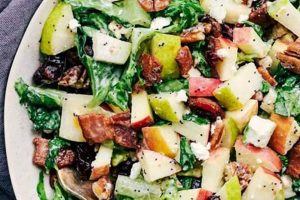
Combining leafy greens, fruits, and nuts offers a delightful culinary experience. Dishes featuring the sweetness of strawberries paired with the earthy crunch of walnuts over fresh produce provide a balanced mix of flavors and textures, creating a satisfying and nutritious meal option. Examples include spinach salads with balsamic vinaigrette, arugula salads with goat cheese, and mixed green salads with poppy seed dressing, all enhanced by the aforementioned fruit and nut combination.
These combinations offer significant nutritional benefits. Strawberries are rich in Vitamin C and antioxidants, while walnuts provide healthy fats, fiber, and protein. The blend contributes to a diet rich in essential nutrients, promoting overall well-being. Historically, the use of fresh fruits and nuts in salads reflects culinary traditions that emphasize incorporating seasonal ingredients for optimal flavor and nutritional value.
The following sections will explore specific recipes, variations, and preparation techniques to maximize the enjoyment and health benefits derived from these versatile ingredients. Further discussion will address ingredient selection, dressing pairings, and presentation suggestions.
Tips for Combining Strawberries and Walnuts in Salads
Optimal preparation techniques and ingredient pairings enhance the flavor profile and nutritional value of dishes incorporating these ingredients.
Tip 1: Selecting Strawberries: Opt for fresh, ripe berries with a vibrant red color and a pleasant aroma. Avoid bruised or overly soft fruit.
Tip 2: Preparing Walnuts: Toasting walnuts briefly in a dry pan enhances their flavor and adds a desirable crunch. Avoid over-toasting, which can result in a bitter taste.
Tip 3: Balancing Flavors: Pair the sweetness of strawberries and the earthiness of walnuts with complementary ingredients. Consider tart cheeses like goat cheese or feta, and slightly bitter greens such as arugula or spinach.
Tip 4: Dressing Selection: Light vinaigrettes, such as balsamic or poppy seed, complement the delicate flavors of the fruit and nuts. Avoid heavy, creamy dressings that can overwhelm the other ingredients.
Tip 5: Ingredient Proportions: Strive for a balanced ratio of fruits, nuts, and greens. Too many strawberries can make the salad overly sweet, while too many walnuts can overpower the other flavors.
Tip 6: Adding Protein: Enhance the nutritional value and satiety of the salad by adding a lean protein source such as grilled chicken, fish, or tofu.
Tip 7: Seasonal Variations: Consider seasonal variations. During spring and summer, pair strawberries with fresh spinach and a light vinaigrette. In the fall, incorporate roasted butternut squash and a maple-balsamic dressing.
Careful consideration of these factors ensures a delicious and nutritionally balanced culinary experience. These techniques maximize the flavor and health benefits of each component.
By following these guidelines, one can create delightful culinary combinations that showcase the versatility and nutritional value of these ingredients.
1. Fresh, Ripe Strawberries

Strawberry quality significantly impacts the overall success of a salad incorporating strawberries and walnuts. Fresh, ripe strawberries contribute not only essential flavor but also desirable texture and visual appeal. Selecting and handling strawberries appropriately is crucial for maximizing their contribution to the dish.
- Flavor Profile
Ripe strawberries offer a balanced sweetness that complements the earthy notes of walnuts and the savory elements of salad greens. Underripe berries introduce an undesirable tartness, while overripe berries possess a diminished flavor profile and a mushy texture. The sweetness of perfectly ripe strawberries enhances the complexity of the salad, creating a more satisfying culinary experience.
- Textural Contribution
Firm, ripe strawberries provide a pleasant contrast to the crunch of walnuts and the tenderness of leafy greens. Their juicy texture adds a refreshing element to the salad. Overripe or bruised berries, however, compromise the structural integrity of the salad, leading to an unappetizing presentation.
- Visual Appeal
The vibrant red hue of fresh, ripe strawberries enhances the salad’s aesthetic appeal. Their glossy surface reflects light, adding a touch of vibrancy to the dish. This visual element contributes significantly to the overall enjoyment of the salad, making it more enticing.
- Nutritional Value
Fresh, ripe strawberries are at their peak nutritional value, offering optimal levels of vitamins, minerals, and antioxidants. Incorporating these nutrient-rich berries into a salad contributes to its overall health benefits, aligning with the goal of creating a nutritious and flavorful meal.
The selection of fresh, ripe strawberries is therefore paramount to achieving a successful salad that balances flavor, texture, visual appeal, and nutritional value. Their contribution extends beyond mere sweetness, playing a crucial role in the overall culinary experience.
2. Lightly Toasted Walnuts

Lightly toasted walnuts represent a crucial element in salads featuring strawberries and walnuts. The toasting process enhances the inherent flavor profile of walnuts, creating a deeper, more nuanced taste that complements the sweetness of strawberries. Untoasted walnuts, while offering nutritional value, possess a milder flavor that may be overshadowed by other ingredients. The application of gentle heat transforms the walnuts’ chemical composition, intensifying their natural oils and creating a richer, nuttier flavor.
This amplified flavor profile interacts synergistically with the strawberries, creating a balanced flavor dynamic. The slight bitterness that develops during toasting contrasts with the sweetness of the berries, preventing the salad from becoming cloying. Furthermore, toasting enhances the textural contribution of walnuts. The heat drives off excess moisture, resulting in a crisper texture that contrasts pleasantly with the softer textures of the strawberries and leafy greens. A real-world example of this interplay can be observed in a spinach salad with strawberries, toasted walnuts, goat cheese, and a balsamic vinaigrette. The toasted walnuts provide a crucial textural and flavor counterpoint to the other ingredients.
Understanding the significance of lightly toasted walnuts allows for the creation of more complex and satisfying salads. Over-toasting, however, can introduce undesirable bitterness. Therefore, careful control of the toasting process is essential. The practical application of this understanding enables the creation of balanced, flavorful salads that highlight the complementary nature of strawberries and walnuts, maximizing both their nutritional and sensory contributions to the overall dish.
3. Complementary Ingredients

Ingredient selection beyond strawberries and walnuts significantly impacts the overall balance and complexity of these salads. Complementary ingredients enhance the core flavors, providing contrasting textures and enriching the nutritional profile. Strategic pairings elevate the salad from a simple combination of ingredients to a well-rounded culinary experience.
- Cheese Selection
Cheese provides a creamy, savory counterpoint to the sweetness of strawberries and the earthiness of walnuts. Tangy cheeses like feta or goat cheese work particularly well, their sharp notes cutting through the richness of the nuts and the sweetness of the fruit. A blue cheese, with its pungent flavor, adds another layer of complexity. For example, a salad with crumbled goat cheese, strawberries, walnuts, and spinach offers a balanced flavor profile, where each ingredient enhances the others.
- Leafy Greens
The choice of leafy greens provides the foundation of the salad, influencing both texture and flavor. Baby spinach offers a mild, slightly sweet taste that complements strawberries, while peppery arugula provides a contrasting bitterness. Heartier greens like kale or romaine lettuce offer a robust texture that stands up well to the other ingredients. Consider a salad with peppery arugula, strawberries, candied walnuts, and gorgonzolathe greens offset the sweetness of the berries and candied nuts, while the gorgonzola adds a creamy, pungent dimension.
- Other Fruits and Vegetables
Adding other fruits and vegetables introduces textural and flavor variety. Sliced avocado provides creaminess, while cucumber adds a refreshing crunch. Thinly sliced red onion provides a sharp bite that cuts through the richness. Consider a summer salad with strawberries, walnuts, avocado, cucumber, and red oniona combination delivering a refreshing and complex flavor profile.
- Protein Sources
Including a protein source transforms the salad into a complete meal. Grilled chicken or fish provide lean protein, while chickpeas or lentils offer a vegetarian option. These additions enhance the salad’s nutritional value and create a more satisfying dining experience. A grilled chicken salad with strawberries, walnuts, spinach, and a light vinaigrette exemplifies this, offering a balanced and nutritious meal.
These complementary ingredients, when thoughtfully combined, elevate salads featuring strawberries and walnuts from simple to sophisticated. Each element plays a crucial role in the overall composition, contributing to a well-balanced, nutritionally complete, and ultimately satisfying culinary creation. Further exploration of specific recipes and variations can illustrate these principles in practice, demonstrating the versatility and potential of this combination.
4. Balanced Dressings
Dressing selection significantly influences the overall success of salads featuring strawberries and walnuts. A balanced dressing complements the inherent flavors of the ingredients without overpowering the delicate balance of sweet, nutty, and savory notes. An overly acidic or heavy dressing can mask the subtle flavors of the strawberries and walnuts, while a bland dressing fails to enhance the overall taste experience. Therefore, careful consideration of dressing components, flavor profiles, and viscosity is crucial.
- Acidity
Acidity provides brightness and helps to cut through the richness of the nuts and the sweetness of the fruit. Vinaigrettes, with their base of vinegar or citrus juice, offer a refreshing counterpoint. However, excessive acidity can overwhelm the delicate flavors of the strawberries. A balsamic vinaigrette, for instance, provides a balanced level of acidity that complements both strawberries and walnuts. The subtle sweetness of balsamic vinegar harmonizes with the strawberries, while its tartness contrasts with the richness of the walnuts.
- Sweetness
A touch of sweetness in the dressing can enhance the natural sweetness of the strawberries and create a more complex flavor profile. Honey, maple syrup, or a fruit-infused vinegar can provide this element. However, excessive sweetness can make the salad cloying. A light honey-mustard vinaigrette, for example, offers a balanced touch of sweetness that complements the strawberries without overpowering the other flavors.
- Oil Selection
The type of oil used in the dressing influences both flavor and texture. Extra virgin olive oil offers a robust, fruity flavor, while walnut oil provides a complementary nuttiness. Lighter oils, such as grapeseed oil, offer a neutral flavor that allows the other ingredients to shine. A walnut oil-based vinaigrette further enhances the walnut flavor in the salad, while a lighter oil allows the strawberry flavor to take center stage.
- Viscosity
The dressing’s viscosity affects how it coats the ingredients. A thicker dressing clings to the salad components, ensuring that each bite incorporates the dressing’s flavor. A thinner vinaigrette provides a lighter touch, allowing the individual flavors of the ingredients to remain distinct. A creamy dressing might overpower the delicate flavors, whereas a light vinaigrette allows the strawberries and walnuts to shine through.
A well-balanced dressing elevates salads featuring strawberries and walnuts, unifying the diverse flavors and textures into a harmonious whole. Understanding the interplay of acidity, sweetness, oil selection, and viscosity allows for the creation of dressings that enhance, rather than mask, the natural flavors of these ingredients. This careful consideration ultimately results in a more satisfying and nuanced culinary experience.
5. Appropriate Proportions
Achieving a harmonious balance of flavors and textures in salads featuring strawberries and walnuts hinges on appropriate ingredient proportions. Careful consideration of the relative quantities of each component ensures that no single element dominates, allowing the nuanced interplay of sweet, nutty, savory, and acidic notes to shine through. Understanding the impact of ingredient ratios is crucial for creating a successful and satisfying salad.
- Balancing Sweetness and Earthiness
The proportion of strawberries to walnuts directly influences the balance between sweetness and earthiness. Too many strawberries can result in an overly sweet salad, while an excess of walnuts can overpower the other flavors with their richness. A balanced ratio allows the natural sweetness of the berries to complement the earthy notes of the nuts, creating a harmonious flavor profile. For example, a salad with a 1:1 ratio of strawberries to walnuts might be ideal for those who prefer a more balanced flavor, while a 2:1 ratio of strawberries to walnuts would cater to those who prefer a sweeter salad.
- The Role of Leafy Greens
Leafy greens provide the foundation of the salad, and their proportion relative to the other ingredients affects both texture and flavor. Too few greens can result in a salad that feels heavy and rich, while too many can dilute the impact of the strawberries and walnuts. The ideal proportion depends on the type of greens used; delicate greens like spinach might require a higher proportion than heartier greens like kale. A salad with a larger proportion of spinach might require fewer strawberries and walnuts to maintain balance compared to a salad using kale as a base.
- Incorporating Complementary Ingredients
The proportions of complementary ingredients, such as cheese or other fruits and vegetables, further influence the overall balance of the salad. These additions should enhance, not overshadow, the core flavors of strawberries and walnuts. For instance, a small amount of crumbled goat cheese can add a pleasant tang without overpowering the other ingredients, while an excessive amount might make the salad overly rich. A salad with a small amount of crumbled goat cheese provides a balanced flavor profile, while adding a large quantity might overshadow the strawberries and walnuts.
- Impact of Dressing Quantity
Even the amount of dressing contributes to the overall balance. Too much dressing can mask the delicate flavors of the salad components, while too little can leave the salad dry and unappetizing. The ideal amount depends on the viscosity and flavor intensity of the dressing. A lighter vinaigrette might require a slightly higher proportion than a thicker, more flavorful dressing. A salad with a light vinaigrette might benefit from a slightly higher dressing-to-salad ratio compared to a salad with a thicker, more intense dressing.
Appropriate proportions in salads with strawberries and walnuts are essential for creating a balanced and satisfying culinary experience. Careful consideration of the relative quantities of each ingredient, from the core components to the complementary additions and even the dressing, ensures that the diverse flavors and textures harmonize, resulting in a dish that is both delicious and visually appealing. This principle of balance extends beyond individual recipes, highlighting the importance of thoughtful ingredient ratios in all culinary endeavors.
Frequently Asked Questions
This section addresses common inquiries regarding the preparation and enjoyment of salads featuring strawberries and walnuts.
Question 1: How can one prevent strawberries from becoming soggy in a salad?
Adding strawberries just before serving prevents them from releasing excess moisture and maintains their texture. Alternatively, coating them lightly in a neutral oil can create a barrier against moisture absorption.
Question 2: What are suitable walnut alternatives for individuals with nut allergies?
Seeds like sunflower or pumpkin seeds offer a similar textural element and nutritional value. Roasted chickpeas can also provide a satisfying crunch.
Question 3: Can these salads be prepared in advance?
While the components can be prepared separately, combining all ingredients just prior to serving maintains optimal texture and prevents the strawberries from becoming soggy.
Question 4: How can one enhance the flavor of walnuts in these salads?
Briefly toasting walnuts in a dry pan intensifies their flavor and adds a desirable crunch. Alternatively, candying walnuts offers a sweeter, more decadent touch.
Question 5: What dressings complement the flavors of strawberries and walnuts best?
Light vinaigrettes, such as balsamic, poppy seed, or citrus-based dressings, complement the sweetness of the berries and the earthiness of the nuts without overpowering their delicate flavors.
Question 6: How can nutritional value be maximized in these salads?
Incorporating a variety of leafy greens, adding lean protein sources like grilled chicken or fish, and including other nutrient-rich vegetables enhances the nutritional density of the salad.
Careful preparation and thoughtful ingredient selection enhance the enjoyment and nutritional benefits of salads incorporating strawberries and walnuts.
The following section offers specific recipe suggestions showcasing these principles.
Salad Recipes with Strawberries and Walnuts
Exploration of salad recipes incorporating strawberries and walnuts reveals the potential for culinary innovation and nutritional excellence. Careful consideration of ingredient selection, preparation techniques, and balanced flavor pairings elevates these salads beyond simple combinations. The interplay of sweet, nutty, and savory notes, complemented by textural contrasts, offers a sophisticated dining experience. Emphasis on fresh, ripe strawberries and lightly toasted walnuts maximizes flavor and nutritional value. Complementary ingredients, such as tangy cheeses, diverse leafy greens, and a variety of other fruits and vegetables, further enhance the complexity and nutritional density of these salads. Appropriate proportions ensure a harmonious balance, while judicious dressing selection provides a unifying element without masking individual flavors.
Culinary exploration of strawberry and walnut salad combinations offers a pathway to both gastronomic satisfaction and nutritional well-being. Continued experimentation with diverse ingredients and flavor profiles promises further development of innovative and healthful culinary creations. The versatility of these core ingredients allows for adaptation to seasonal variations and individual preferences, ensuring a consistently satisfying and enriching culinary experience.