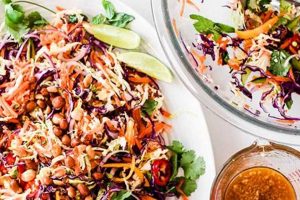
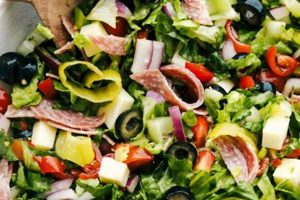
A vibrant and crunchy dish featuring shredded red cabbage as its centerpiece, combined with other complementary ingredients, typically includes a dressing. Variations range from simple vinegar-based slaw to more complex creations incorporating fruits, nuts, and other vegetables. For instance, a common preparation might involve thinly sliced red cabbage tossed with shredded carrots, apple cider vinegar, and a touch of sweetener.
This type of salad offers nutritional benefits due to the high antioxidant content of red cabbage. Its rich color signals the presence of anthocyanins, beneficial plant compounds associated with various health benefits. Historically, cabbage has been a dietary staple in many cultures, appreciated for its versatility and affordability. Its use in salads provides a refreshing and healthful way to incorporate this nutritious vegetable into one’s diet.
Further exploration of this culinary topic will delve into the diverse range of ingredients, preparation methods, and cultural influences that shape the character of these salads. From creamy dressings to tangy vinaigrettes, the possibilities are vast, offering a spectrum of flavors to suit every palate.
Tips for Creating Exceptional Red Cabbage Salads
Achieving optimal flavor and texture in a red cabbage salad requires attention to detail. The following tips offer guidance for creating a truly remarkable dish.
Tip 1: Proper Cabbage Preparation: Thinly slicing or shredding the cabbage is crucial for achieving a pleasant texture. A sharp knife or mandoline slicer is recommended. Avoid overly thick pieces, which can be tough.
Tip 2: Massaging the Cabbage: After slicing, gently massaging the cabbage with a pinch of salt helps to tenderize the leaves and release some of their moisture, resulting in a more palatable salad.
Tip 3: Balancing Flavors: The natural peppery flavor of red cabbage benefits from balancing elements. Acidity from vinegar or citrus juice, sweetness from honey or maple syrup, and a touch of salt create a harmonious flavor profile.
Tip 4: Consider Complementary Ingredients: Enhance the flavor and texture by incorporating other vegetables, fruits, or nuts. Shredded carrots, diced apples, toasted walnuts, or dried cranberries are excellent additions.
Tip 5: Dressing Selection: The choice of dressing significantly impacts the overall taste. Creamy dressings, vinaigrettes, or even a simple lemon-tahini dressing can complement the salad beautifully.
Tip 6: Proper Storage: For optimal freshness, store the prepared salad in an airtight container in the refrigerator. It’s best to add the dressing just before serving to prevent the salad from becoming soggy.
Tip 7: Experiment with Herbs and Spices: Fresh herbs like parsley, dill, or mint can add brightness to the salad. A pinch of ground cumin, coriander, or caraway seeds can also enhance the flavor complexity.
By following these tips, one can elevate a simple red cabbage salad into a truly exceptional culinary experience, maximizing both flavor and nutritional value.
The following section will conclude with a summary of key takeaways and suggestions for further exploration of red cabbage salad variations.
1. Fresh, Crisp Cabbage

Fresh, crisp cabbage is paramount to a successful purple cabbage salad recipe. The texture of the cabbage significantly impacts the overall sensory experience. A crisp, firm cabbage provides a satisfying crunch, contrasting with other ingredients and adding textural depth. Conversely, wilted or limp cabbage results in a less appealing, potentially unappetizing salad. This textural element contributes to the perceived freshness and quality of the dish. For example, a salad featuring crisp, thinly sliced cabbage alongside julienned carrots and a light vinaigrette offers a refreshing contrast in textures, whereas a salad with softened, wilted cabbage diminishes the intended culinary experience.
The freshness of the cabbage also influences the flavor profile. Fresh cabbage possesses a mild, slightly peppery taste that complements other salad components. As cabbage ages, its flavor can become more pronounced, bordering on bitter, potentially overwhelming the balance of flavors within the salad. Furthermore, fresh cabbage retains more nutrients, contributing to the overall health benefits of the dish. Practical applications of this understanding involve selecting cabbage heads that are firm, compact, and vibrant in color, indicating freshness. Avoiding pre-cut or packaged shredded cabbage, which may have been exposed to air and moisture, resulting in a loss of crispness, is also advisable.
Selecting fresh, crisp cabbage directly correlates with the success of a purple cabbage salad recipe. The cabbage’s textural and flavor contributions are integral to the overall culinary experience. Prioritizing fresh cabbage and proper storage methods ensures the creation of a vibrant, flavorful, and enjoyable salad. This understanding empowers consumers to make informed choices when selecting ingredients and preparing this healthful and versatile dish. The importance of fresh, crisp cabbage extends beyond mere aesthetics; it represents a key factor in achieving a truly satisfying and nutritionally valuable culinary creation.
2. Balanced Flavor Profile

A balanced flavor profile is essential for a successful purple cabbage salad recipe. The inherent flavor of purple cabbage, slightly peppery and earthy, necessitates careful consideration of complementary ingredients and dressings. A harmonious balance prevents any single flavor from dominating, resulting in a more complex and enjoyable culinary experience. An overly sweet dressing, for instance, can mask the subtle nuances of the cabbage and other components, while an excessively acidic dressing can make the salad unpalatable. The goal is to create a symphony of flavors where each element complements the others, enhancing the overall taste.
Consider a salad composed of shredded purple cabbage, julienned carrots, toasted slivered almonds, and dried cranberries. This combination offers a variety of textures and flavors. A vinaigrette featuring apple cider vinegar provides acidity to cut through the richness of the nuts and dried fruit, while a touch of maple syrup adds a subtle sweetness that balances the tartness of the vinegar. The earthy notes of the cabbage harmonize with the sweetness of the carrots and cranberries, creating a well-rounded flavor profile. Alternatively, a creamy dressing based on Greek yogurt or tahini can provide a different yet equally balanced experience, particularly when combined with ingredients such as chopped cucumbers, fresh dill, and a squeeze of lemon juice. The creamy richness contrasts with the crisp vegetables and herbs, while the lemon brightens the overall taste.
Achieving a balanced flavor profile requires an understanding of the interplay between different taste elements: sweet, sour, salty, bitter, and umami. In a purple cabbage salad, these elements can be introduced through a variety of ingredients and dressings. The practical application of this understanding allows for the creation of salads tailored to individual preferences. One might prefer a tangier salad with a higher proportion of vinegar in the dressing, while another might favor a sweeter, nuttier profile with the addition of honey and toasted pecans. The key lies in recognizing the impact of each ingredient on the overall flavor profile and adjusting proportions accordingly to achieve the desired balance. This attention to detail elevates the purple cabbage salad from a simple side dish to a culinary creation that offers both nutritional value and gustatory satisfaction.
3. Complementary Ingredients

Complementary ingredients are essential for elevating a purple cabbage salad recipe beyond its basic form. These additions introduce textural contrasts, enhance the flavor profile, and contribute nutritional complexity. Careful selection of complementary ingredients ensures a well-rounded and satisfying culinary experience, transforming a simple salad into a vibrant and flavorful dish.
- Fruits:
Fruits introduce sweetness and contrasting textures. Apples, sliced thinly or diced, offer a crisp, juicy counterpoint to the cabbage. Dried cranberries or chopped dates provide chewy sweetness and concentrated flavor. Citrus segments, such as oranges or grapefruits, contribute a burst of tangy acidity that balances the earthiness of the cabbage. The choice of fruit should consider the overall flavor profile desired, whether it leans towards sweet, tangy, or a combination thereof. For example, a combination of apples and walnuts creates a classic autumnal flavor profile, while the addition of mandarin oranges lends a brighter, more citrusy note.
- Nuts and Seeds:
Nuts and seeds offer textural complexity and healthy fats. Toasted walnuts, pecans, or almonds provide a satisfying crunch and nutty flavor that complements the cabbage. Sunflower seeds or pumpkin seeds offer a milder flavor and lighter crunch. These additions also contribute to the nutritional value of the salad, providing protein, fiber, and essential fatty acids. The choice of nuts or seeds influences the overall flavor profile and caloric density of the salad. Toasted nuts enhance the flavor profile through the Maillard reaction, creating a deeper, more complex taste.
- Vegetables:
Other vegetables enhance both flavor and nutritional value. Shredded carrots provide sweetness and color contrast. Thinly sliced red onion adds a pungent bite. Chopped bell peppers introduce a crisp, vegetal sweetness. The selection of vegetables should consider both flavor and texture, aiming for a balance that complements the purple cabbage. For example, combining shredded carrots and diced red onion offers a balance of sweetness and sharpness, while the addition of chopped bell peppers enhances the overall textural complexity.
- Herbs and Spices:
Fresh herbs and spices add depth and complexity to the flavor profile. Fresh cilantro, parsley, or mint provide brightness and herbaceous notes. A pinch of ground cumin, coriander, or caraway seeds can introduce warm, earthy undertones. These additions should be used judiciously to complement, not overpower, the other flavors in the salad. For instance, fresh dill pairs well with a lemon-tahini dressing, while a sprinkle of cumin complements the earthy notes of the cabbage.
The strategic incorporation of complementary ingredients elevates the purple cabbage salad from a simple side dish to a multifaceted culinary creation. The interplay of flavors, textures, and colors creates a more engaging and satisfying dining experience. Furthermore, these additions contribute to the nutritional density of the salad, aligning with health-conscious dietary choices. By understanding the role of complementary ingredients, one can tailor a purple cabbage salad recipe to individual preferences, maximizing both flavor and nutritional value.
4. Appropriate Dressing Selection

Appropriate dressing selection is crucial for a successful purple cabbage salad recipe. The dressing serves not only to moisten the ingredients but also to enhance and unify the flavors. An appropriate dressing complements the natural flavors of the cabbage and other components, creating a harmonious balance. Conversely, an ill-suited dressing can overwhelm the delicate flavors, resulting in a less satisfying culinary experience. The interplay between the dressing and the salad ingredients determines the overall taste and perceived quality of the dish. For instance, a creamy, rich dressing may overpower a salad with delicate ingredients like fresh herbs and fruits, while a light vinaigrette might not provide enough moisture or flavor for a heartier salad with roasted vegetables and nuts.
Several factors influence dressing selection. The inherent flavor profile of the purple cabbage, slightly peppery and earthy, requires a dressing that either complements or contrasts these notes. A tangy vinaigrette with apple cider vinegar or lemon juice can cut through the richness of added ingredients like nuts or cheese, while also enhancing the brightness of the cabbage. A creamy dressing based on Greek yogurt or tahini can provide a contrasting textural element and complement ingredients like cucumbers and fresh dill. The overall composition of the salad also plays a role. A salad with a variety of textures and flavors may benefit from a simpler dressing that acts as a unifying element, whereas a salad with fewer ingredients might require a more complex dressing to add depth and complexity. A practical example is a salad with purple cabbage, shredded carrots, and toasted sunflower seeds. A light vinaigrette with a touch of honey would complement the earthy notes of the cabbage and the sweetness of the carrots without masking the nutty flavor of the seeds. Conversely, a heavy mayonnaise-based dressing would likely overwhelm the delicate flavors of the ingredients.
Understanding the impact of dressing selection on the overall success of a purple cabbage salad recipe allows for informed decision-making. Consideration of the cabbage’s inherent flavor profile, the other ingredients incorporated, and the desired balance of flavors allows for the creation of a cohesive and enjoyable dish. Challenges may arise in balancing the acidity, sweetness, and richness of the dressing, necessitating careful adjustments to achieve the desired flavor profile. Ultimately, appropriate dressing selection is integral to maximizing the culinary potential of the purple cabbage salad, transforming it from a simple side dish to a complex and satisfying culinary experience.
5. Proper Preparation Techniques

Proper preparation techniques are essential for maximizing the quality and enjoyment of a purple cabbage salad recipe. These techniques influence the texture, flavor, and overall aesthetic appeal of the final dish. Careful attention to detail during preparation ensures that the inherent qualities of the cabbage and other ingredients are preserved and enhanced, contributing to a more satisfying culinary experience. Neglecting proper techniques can result in a less palatable and visually appealing salad, diminishing the intended culinary outcome.
- Slicing and Shredding:
The way cabbage is cut significantly impacts the final texture of the salad. Thinly slicing or shredding creates a delicate texture that is easy to eat and allows the dressing to coat the leaves evenly. Thickly cut cabbage, on the other hand, can be tough and less palatable. Using a sharp knife or a mandoline slicer ensures consistent and precise cuts. For example, finely shredded cabbage creates a light and airy salad, while thicker slices provide more substance and bite. The choice of cutting technique depends on the desired texture and the overall composition of the salad. In a slaw-style salad, finely shredded cabbage is preferred, while a salad with larger pieces of other vegetables might benefit from slightly thicker cabbage slices.
- Massaging the Cabbage:
Gently massaging the shredded cabbage with a pinch of salt helps to tenderize the leaves and release some of their moisture. This process reduces the cabbage’s sometimes harsh raw flavor and creates a more palatable texture. Massaging also helps the cabbage absorb the dressing more effectively, resulting in a more evenly flavored salad. For instance, massaging the cabbage for a few minutes before adding the dressing allows the leaves to soften slightly without becoming wilted, contributing to a more pleasant texture. This technique is particularly beneficial for salads that will be served immediately, as it allows the flavors to meld more quickly.
- Ingredient Order and Timing:
The order in which ingredients are added to the salad and the timing of dressing application are crucial for maintaining optimal texture and preventing the salad from becoming soggy. Adding more delicate ingredients, such as fresh herbs or fruits, just before serving prevents them from wilting or becoming discolored. Similarly, adding the dressing just before serving prevents the salad from becoming waterlogged. For example, if a salad contains toasted nuts, adding them at the last minute preserves their crunch. Adding the dressing too early can cause the cabbage and other vegetables to release excess moisture, resulting in a less appealing texture. Understanding the properties of each ingredient and how they react to the dressing and other components is essential for achieving the desired texture and flavor balance.
- Washing and Drying:
Thoroughly washing and drying the cabbage and other ingredients removes any dirt or debris and ensures optimal freshness and crispness. Excess moisture can dilute the dressing and make the salad soggy, so proper drying is essential. Using a salad spinner effectively removes excess water after washing. This step also helps to prevent bacterial growth and maintains the quality of the ingredients. For example, if the cabbage is not dried thoroughly, the dressing may not adhere properly, resulting in uneven flavor distribution and a less appealing texture. Proper washing and drying techniques contribute to both the aesthetic appeal and the overall quality of the finished salad.
These proper preparation techniques are integral to creating a successful purple cabbage salad recipe. They contribute to the overall texture, flavor, and aesthetic appeal of the dish, ensuring a more enjoyable culinary experience. Attention to detail in each step, from slicing and shredding to washing and drying, maximizes the quality of the ingredients and contributes to a more vibrant, flavorful, and visually appealing salad.
6. Nutritional Value

Nutritional value represents a significant aspect of purple cabbage salad recipes, extending beyond mere culinary enjoyment. Understanding the nutritional composition of these salads provides insights into their potential health benefits and informs dietary choices. Purple cabbage, the central ingredient, contributes a wealth of vitamins, minerals, and antioxidants, making these salads a nutrient-dense option. The additional ingredients further enhance the nutritional profile, offering a diverse range of essential nutrients.
- Vitamins and Minerals:
Purple cabbage is a rich source of Vitamin C, a potent antioxidant that supports immune function and collagen production. It also provides Vitamin K, essential for blood clotting and bone health. Furthermore, purple cabbage contains significant amounts of folate, crucial for cell growth and development, and Vitamin B6, important for brain development and function. The inclusion of other vegetables, such as carrots or bell peppers, further diversifies the vitamin and mineral content. For instance, carrots contribute Vitamin A, essential for vision and immune function, while bell peppers offer additional Vitamin C. The combined vitamin and mineral content of these salads contributes to overall health and well-being.
- Antioxidants:
The vibrant purple hue of red cabbage signifies the presence of anthocyanins, potent antioxidants that protect cells from damage caused by free radicals. These antioxidants have been linked to various health benefits, including reduced inflammation and a lower risk of chronic diseases. The specific type and quantity of anthocyanins in purple cabbage contribute to its high antioxidant capacity. Consuming salads rich in these antioxidants can contribute to a diet that supports cellular health and reduces oxidative stress. Other ingredients, such as berries or nuts, can further enhance the antioxidant profile of the salad.
- Fiber:
Purple cabbage is a good source of dietary fiber, which promotes digestive health and helps regulate blood sugar levels. Fiber adds bulk to the diet, promoting satiety and aiding in weight management. The inclusion of other fibrous ingredients, such as apples or nuts, further increases the fiber content of the salad. Adequate fiber intake is essential for maintaining a healthy digestive system and preventing constipation. Purple cabbage salads, particularly those with a variety of vegetables and fruits, can contribute significantly to daily fiber requirements.
- Low in Calories and Fat:
Purple cabbage salads tend to be naturally low in calories and fat, making them a suitable choice for those seeking to manage their weight or maintain a healthy diet. The high water content of cabbage contributes to its low caloric density. Choosing a light dressing, such as a vinaigrette, further reduces the calorie and fat content. This allows for a satisfying and nutrient-rich meal without excessive caloric intake. Furthermore, the fiber content contributes to satiety, reducing the likelihood of overeating. These factors make purple cabbage salad a valuable component of a balanced and health-conscious diet.
The nutritional value of a purple cabbage salad recipe extends beyond its individual components. The combined effect of these nutrients contributes to a synergistic effect, promoting overall health and well-being. The versatility of these salads allows for customization based on individual dietary needs and preferences, maximizing both flavor and nutritional benefit. From supporting immune function to promoting digestive health, purple cabbage salads represent a valuable addition to a balanced and nutritious diet.
Frequently Asked Questions
This section addresses common inquiries regarding purple cabbage salad recipes, providing concise and informative responses.
Question 1: How can one prevent purple cabbage salad from becoming soggy?
Sogginess often results from premature dressing application. Adding the dressing immediately before serving prevents the cabbage and other ingredients from releasing excess moisture. Thoroughly drying all ingredients after washing also helps maintain crispness.
Question 2: What are suitable alternatives to vinegar-based dressings?
Creamy dressings offer a textural contrast. Greek yogurt or tahini-based dressings provide healthy fats and complement ingredients such as cucumbers and fresh herbs. Nut-based dressings, like cashew cream, offer a rich, dairy-free alternative.
Question 3: How long can purple cabbage salad be stored?
Prepared salad, without dressing, can be stored in an airtight container in the refrigerator for up to three days. Adding the dressing immediately before serving preserves optimal texture and flavor.
Question 4: Can one reduce the peppery flavor of purple cabbage?
Massaging shredded cabbage with a pinch of salt helps tenderize the leaves and mellow the peppery flavor. Briefly blanching the cabbage in boiling water can also reduce the intensity.
Question 5: What are some suitable protein additions for a more substantial meal?
Grilled chicken or fish, chickpeas, lentils, or toasted nuts provide protein and enhance the nutritional value. These additions contribute to satiety and create a more complete meal.
Question 6: How can one maximize the nutritional benefits of purple cabbage salad?
Incorporating a variety of colorful vegetables and fruits increases the vitamin and mineral content. Adding healthy fats from nuts, seeds, or avocados enhances nutrient absorption. Choosing a minimally processed dressing avoids added sugars and unhealthy fats.
Addressing these common inquiries empowers individuals to create and enjoy purple cabbage salads that are both flavorful and nutritionally beneficial. Careful attention to preparation methods and ingredient selection optimizes the culinary experience.
The following section offers concluding thoughts on incorporating purple cabbage salads into a balanced diet.
Purple Cabbage Salad Recipe
Exploration of purple cabbage salad recipes reveals a versatile culinary landscape. Emphasis on fresh, crisp cabbage, balanced flavor profiles, and complementary ingredients underscores the potential for creating vibrant and nutritious dishes. Proper preparation techniques, including slicing, massaging, and timely dressing application, maximize textural and flavor integrity. Nutritional analysis highlights the significant contributions of vitamins, minerals, antioxidants, and fiber, positioning purple cabbage salads as valuable components of health-conscious diets. Addressing frequently asked questions offers practical guidance for optimizing preparation and storage methods.
Purple cabbage salad recipes offer a canvas for culinary creativity while simultaneously delivering notable nutritional benefits. Continued exploration of ingredient combinations and flavor profiles promises further enhancement of both culinary experiences and dietary well-being. Integrating these salads into regular meal planning represents a proactive step toward embracing a more healthful and flavorful lifestyle.