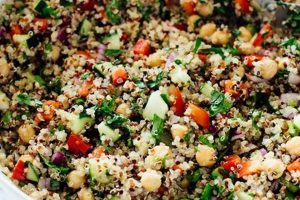
A dish featuring cooked quinoa as its base, combined with diced avocado and other complementary ingredients, constitutes this culinary creation. A typical example might include black beans, corn, chopped red onion, cilantro, and a lime-based vinaigrette. Variations can incorporate ingredients like tomatoes, bell peppers, roasted sweet potatoes, or grilled chicken or fish for added protein.
This combination offers a nutritious and flavorful meal option. Quinoa provides a complete protein source and is rich in fiber and minerals. Avocado contributes healthy fats, vitamins, and a creamy texture. The inclusion of fresh vegetables and herbs further enhances the nutritional profile and adds vibrant flavors. This type of salad has gained popularity as a healthy and satisfying meal or side dish, suitable for various dietary preferences, including vegetarian and gluten-free.
The following sections will explore various aspects of this dish, including specific recipes, nutritional information, tips for ingredient selection and preparation, and creative variations to suit individual tastes and dietary needs.
Tips for a Perfect Quinoa and Avocado Salad
Creating a flavorful and texturally appealing salad hinges on proper ingredient selection and preparation techniques. The following tips provide guidance for achieving optimal results.
Tip 1: Rinse the Quinoa: Rinsing quinoa under cold water before cooking removes saponins, which can impart a bitter flavor. This step ensures a cleaner, more palatable taste.
Tip 2: Cook Quinoa Properly: Follow package instructions for cooking quinoa, typically a 2:1 ratio of water to quinoa. Fluff with a fork after cooking for optimal texture.
Tip 3: Select Ripe Avocados: Choose avocados that yield slightly to gentle pressure but are not overly soft. This indicates optimal ripeness for both flavor and texture.
Tip 4: Prevent Avocado Browning: To prevent browning, add avocado to the salad close to serving time. A light coating of lemon or lime juice can further deter oxidation.
Tip 5: Balance Flavors: Combine ingredients with complementary flavors and textures. The creaminess of avocado pairs well with the nuttiness of quinoa, the acidity of citrus, and the freshness of herbs.
Tip 6: Enhance with Seasoning: Elevate the flavor profile with appropriate seasonings. Sea salt, black pepper, cumin, and chili powder are excellent choices.
Tip 7: Consider Texture: Incorporate ingredients with varied textures. Chopped nuts, toasted seeds, or crunchy vegetables add appealing contrast to the soft quinoa and avocado.
By following these guidelines, one can create a delicious and nutritious salad featuring a harmonious blend of flavors and textures.
The subsequent section offers a selection of recipes incorporating these principles, providing further inspiration for culinary exploration.
1. Fluffy Quinoa

Fluffy quinoa plays a crucial role in a successful quinoa salad with avocado. Its texture contributes significantly to the overall dish’s palatability and enjoyment. Achieving this desired texture requires proper cooking techniques and an understanding of quinoa’s unique properties. The following facets explore the components and implications of fluffy quinoa within this specific culinary context.
- Proper Cooking Technique
Rinsing quinoa before cooking removes saponins, which contribute to bitterness. Using the correct water-to-quinoa ratio, typically 2:1, ensures proper hydration and cooking. Once cooked, fluffing with a fork separates the grains, preventing a mushy texture and promoting lightness.
- Textural Contrast
The light and airy texture of fluffy quinoa contrasts with the creamy avocado and other potential salad components, creating a more dynamic and appealing sensory experience. This interplay of textures enhances the overall enjoyment of the dish.
- Absorption of Flavors
Fluffy quinoa absorbs the flavors of the dressing and other ingredients more effectively than clumped or overcooked quinoa. This characteristic enhances the overall flavor profile of the salad, allowing the individual components to complement each other harmoniously. For example, a lime vinaigrette will distribute evenly throughout fluffy quinoa, ensuring consistent flavor in each bite.
- Visual Appeal
The separated grains of fluffy quinoa create a visually appealing presentation, enhancing the overall aesthetic of the salad. This contributes to a more appetizing dish, showcasing the individual ingredients and their vibrant colors.
The characteristics of fluffy quinoaproper cooking technique, textural contrast, flavor absorption, and visual appealare essential for creating a well-balanced and enjoyable quinoa salad with avocado. Mastering these elements elevates the dish from a simple combination of ingredients to a culinary experience.
2. Ripe Avocado
Ripe avocado plays a critical role in a successful quinoa salad recipe. The avocado’s ripeness directly impacts the flavor, texture, and overall palatability of the dish. An underripe avocado offers a bland flavor and firm, unyielding texture, detracting from the desired creamy consistency. Conversely, an overripe avocado can result in a mushy texture and potentially off-flavors, negatively impacting the salad’s sensory experience. The ideal ripeness offers a balance of creamy texture and rich, buttery flavor that complements the nutty quinoa and other ingredients. This balance is crucial for achieving a harmonious and enjoyable culinary experience.
Consider two scenarios: a salad made with underripe avocado lacks the characteristic creaminess and flavor, resulting in a less satisfying meal. In contrast, a salad incorporating perfectly ripe avocado contributes a rich, buttery flavor and smooth texture, enhancing the overall enjoyment and satisfaction. This difference highlights the importance of selecting ripe avocados. Practical application of this understanding involves gently pressing the avocado to assess ripenessit should yield slightly to pressure without feeling overly soft. Visual cues, such as a dark purplish-black skin, can also indicate ripeness, although touch provides the most reliable assessment.
Achieving the ideal ripeness optimizes the avocado’s contribution to the quinoa salad. It ensures the desired flavor profile and textural harmony, ultimately resulting in a more satisfying and enjoyable culinary creation. Challenges can arise from variations in avocado ripening rates, necessitating careful selection and potentially allowing avocados to ripen further at room temperature if needed. Understanding the importance of ripe avocado and implementing appropriate selection practices are key to maximizing the quality and enjoyment of this nutritious and flavorful salad.
3. Fresh Ingredients

Fresh ingredients are essential for maximizing the flavor, nutritional value, and overall quality of a quinoa salad with avocado. The emphasis on freshness stems from the inherent delicate flavors of both quinoa and avocado, which are best complemented by vibrant, crisp, and recently harvested produce. Utilizing fresh ingredients elevates this dish from simple sustenance to a vibrant culinary experience. The following facets explore the integral role of freshness within this specific culinary context.
- Flavor Enhancement
Fresh ingredients contribute bright, vibrant flavors that complement the subtle nuttiness of quinoa and the creamy richness of avocado. Examples include freshly chopped cilantro, tomatoes, bell peppers, and red onion. These ingredients add layers of flavor complexity absent when using older, less vibrant produce. The difference between a salad made with freshly picked herbs and one using dried or older herbs is substantial, impacting the overall taste and aroma significantly.
- Textural Integrity
Fresh ingredients retain their crispness and texture, providing a pleasing contrast to the soft quinoa and creamy avocado. Wilted or less-than-fresh produce detracts from this textural interplay. For example, crisp cucumber and juicy tomatoes offer a refreshing counterpoint to the softer elements. This contrast in textures contributes to a more satisfying and enjoyable sensory experience.
- Nutritional Value
Fresh ingredients retain higher levels of vitamins and nutrients compared to their older counterparts. Including a variety of fresh vegetables maximizes the nutritional density of the salad, contributing to a healthier and more beneficial meal. The degradation of nutrients over time underscores the importance of freshness in maximizing the health benefits of the salad.
- Visual Appeal
Vibrant, fresh ingredients enhance the visual appeal of the salad, creating a more appetizing and enjoyable dining experience. The bright colors of fresh produce contribute to a more visually appealing presentation. A salad made with fresh, vibrant ingredients is inherently more attractive than one made with dull, less vibrant produce. This visual appeal enhances the overall dining experience.
Incorporating fresh, high-quality ingredients is paramount for maximizing the potential of a quinoa salad with avocado. The synergistic interplay of flavor enhancement, textural integrity, nutritional value, and visual appeal elevates this dish from a basic combination of ingredients to a truly satisfying and wholesome culinary creation. Choosing ingredients at their peak freshness ensures the optimal realization of this potential, ultimately leading to a more flavorful, nutritious, and enjoyable culinary experience.
4. Balanced Flavor Profile

A balanced flavor profile is crucial for a successful quinoa salad with avocado. The inherent flavors of quinoa and avocadonutty and creamy, respectivelyprovide a foundation requiring careful consideration of complementary and contrasting tastes. Achieving this balance elevates the dish beyond a simple combination of ingredients, creating a harmonious and enjoyable culinary experience. A well-balanced profile engages the palate with a complex interplay of tastes, ensuring satisfaction and encouraging further exploration of flavor combinations.
- Acidity
Acidity plays a vital role in balancing the richness of avocado and the subtle earthiness of quinoa. Citrus juices, such as lime or lemon, provide brightness and cut through the fattiness of the avocado. Vinegars, like apple cider or red wine vinegar, offer a tangy complexity. This acidic counterpoint prevents the salad from feeling too heavy or rich. For instance, a lime vinaigrette adds a zesty freshness that enhances the overall flavor profile.
- Saltiness
Salt enhances the flavors of the other ingredients and provides a foundational savory element. Sea salt or kosher salt are preferred for their clean taste. Proper seasoning is essential to bring out the natural flavors of the quinoa, avocado, and other components. Over-salting can mask these delicate flavors, while under-salting can result in a bland dish. A pinch of sea salt accentuates the natural sweetness of the corn and the earthiness of the black beans, creating a more complex flavor profile.
- Spice/Heat (Optional)
A touch of spice or heat can add another dimension to the flavor profile. A pinch of chili flakes, a diced jalapeo, or a dash of hot sauce can provide a pleasant warmth that complements the other flavors. This element is optional and should be adjusted to individual preferences. A small amount of diced jalapeo adds a subtle kick without overpowering the other flavors, creating a more dynamic and engaging sensory experience.
- Herbaceousness
Fresh herbs contribute brightness and complexity to the salad. Cilantro, parsley, mint, or dill can add a refreshing element that complements the other flavors. The choice of herbs should complement the other ingredients and the overall flavor profile being targeted. Freshly chopped cilantro adds a bright, citrusy note that complements the lime vinaigrette and other fresh ingredients.
Balancing these flavor componentsacidity, saltiness, optional spice, and herbaceousnesswithin a quinoa salad with avocado is crucial for creating a harmonious and satisfying dish. The interplay of these elements elevates the salad beyond its individual components, resulting in a more complex and enjoyable culinary experience. Consider a salad with a creamy avocado base, the nutty quinoa, the acidic lime vinaigrette, the salty feta cheese, the spicy jalapeo, and the fresh cilantrothe balance of these flavors creates a symphony of tastes that delights the palate.
5. Vibrant Presentation
Visual appeal significantly influences the perceived enjoyment and palatability of food. A vibrant presentation elevates a quinoa salad with avocado from a simple meal to a visually engaging culinary experience. Strategic use of color, texture, and arrangement transforms the dish, enticing the appetite and enhancing overall satisfaction. This section explores the key facets contributing to a visually appealing quinoa and avocado salad.
- Color Palette
A diverse color palette enhances visual appeal. The natural colors of quinoa and avocadopale yellow and green, respectivelyserve as a neutral base. Incorporating brightly colored ingredients, such as red bell peppers, orange sweet potatoes, deep green spinach, or vibrant purple cabbage, creates visual interest and stimulates the appetite. The contrast between these colors against the neutral backdrop enhances the visual appeal, making the salad more enticing.
- Textural Variation
Varying textures add visual depth and create a more engaging sensory experience. The soft textures of quinoa and avocado benefit from the inclusion of crunchy elements like chopped nuts, toasted seeds, or raw vegetables. This interplay of textures provides visual contrast and adds an element of surprise with each bite. For example, adding toasted pepitas or slivered almonds introduces a satisfying crunch that complements the softer textures of the quinoa and avocado, enhancing the overall visual and textural experience.
- Strategic Arrangement
Thoughtful arrangement of ingredients enhances visual appeal. Instead of simply tossing all ingredients together, consider layering or strategically placing elements to create visual interest. For example, arranging avocado slices around the perimeter of the bowl and sprinkling chopped herbs over the top adds a touch of elegance. This deliberate arrangement elevates the presentation and demonstrates attention to detail.
- Serving Dish Selection
The choice of serving dish can further enhance the visual presentation. A simple white bowl allows the vibrant colors of the salad to stand out, while a wooden bowl adds a rustic touch. The size and shape of the bowl should complement the salad’s volume and style. Selecting a serving dish that complements the colors and textures of the salad contributes to a more cohesive and visually appealing presentation.
By considering color palette, textural variation, strategic arrangement, and serving dish selection, a quinoa salad with avocado transforms into a visually captivating culinary creation. This attention to presentation elevates the dining experience, making the salad more appealing and enjoyable. The interplay of these visual elements enhances the inherent flavors and textures of the dish, resulting in a more satisfying and memorable meal.
6. Nutritional Benefits

Nutritional value represents a significant advantage of a quinoa salad with avocado. This dish combines nutrient-dense ingredients, creating a synergy that contributes to overall health and well-being. Quinoa, a complete protein source, provides all nine essential amino acids crucial for muscle building and repair. It also offers a substantial amount of dietary fiber, promoting digestive health and satiety. Avocado contributes healthy monounsaturated fats, supporting cardiovascular health and aiding in nutrient absorption. Furthermore, avocados are rich in vitamins and minerals, including potassium, vitamin K, and folate. The inclusion of fresh vegetables further enhances the nutritional profile, providing vitamins, minerals, and antioxidants. For instance, adding bell peppers and spinach introduces vitamins A and C, contributing to immune function and skin health. This combination of ingredients creates a nutritionally balanced meal that provides sustained energy and supports various bodily functions.
The nutritional synergy derived from combining these ingredients offers several practical advantages. This salad provides a balanced source of macronutrientsprotein, carbohydrates, and healthy fatsessential for maintaining energy levels and supporting overall bodily functions. The high fiber content promotes digestive regularity and contributes to feelings of fullness, potentially aiding in weight management. The abundance of vitamins and minerals supports various bodily functions, including immune function, bone health, and cell regeneration. This nutritional density makes the salad a suitable meal option for individuals following diverse dietary patterns, including vegetarian, vegan, and gluten-free diets. For example, an individual seeking a plant-based, high-protein meal option could benefit significantly from the nutritional profile of this salad.
In summary, the nutritional benefits of a quinoa salad with avocado stem from the synergistic combination of nutrient-dense ingredients. This combination offers a balanced source of macronutrients, fiber, vitamins, and minerals, supporting various health aspects, from sustained energy levels and digestive health to immune function and cardiovascular health. Understanding these nutritional benefits allows individuals to make informed dietary choices and appreciate the value of incorporating this dish into a healthy and balanced eating pattern. Potential challenges might involve sourcing high-quality ingredients and ensuring proper storage to maintain freshness and maximize nutrient retention. However, the nutritional rewards derived from consuming this salad significantly outweigh these minor challenges.
Frequently Asked Questions
This section addresses common inquiries regarding quinoa salads with avocado, providing concise and informative responses to facilitate a deeper understanding of this culinary creation.
Question 1: Can quinoa be substituted with other grains in this salad?
While quinoa offers a unique nutritional profile and texture, other grains like couscous, farro, or brown rice can be substituted. However, this substitution may alter the overall flavor and nutritional content of the dish.
Question 2: How long can this salad be stored in the refrigerator?
Properly stored in an airtight container, the salad can typically be refrigerated for up to three days. However, the avocado may brown over time. Adding lemon or lime juice to the avocado can help delay this process.
Question 3: What dressings complement a quinoa salad with avocado?
Citrus-based vinaigrettes, such as lemon or lime, pair well with the flavors of quinoa and avocado. Other complementary options include a light tahini dressing or a vinaigrette incorporating herbs like cilantro or dill.
Question 4: Can this salad be made ahead of time for a large gathering?
The quinoa and other vegetables can be prepared in advance. However, it is recommended to add the avocado shortly before serving to prevent browning and maintain optimal texture.
Question 5: How can one adapt this salad for specific dietary restrictions, such as vegan or gluten-free?
This salad is naturally gluten-free. For vegan variations, ensure all added ingredients, such as dressings or toppings, are also vegan-friendly. Honey, for instance, would need to be replaced with maple syrup or agave nectar.
Question 6: What are some strategies for preventing the avocado from browning in the salad?
Adding lemon or lime juice to the avocado helps prevent browning. Storing the salad in an airtight container and minimizing air exposure further delays discoloration.
Understanding these frequently asked questions facilitates successful preparation and enjoyment of quinoa salad with avocado. Careful consideration of these points ensures a flavorful, nutritious, and visually appealing dish.
Further exploration of recipe variations and serving suggestions can be found in the following section.
Conclusion
Exploration of this culinary combination reveals a dish offering both nutritional value and culinary versatility. Key elements highlighted include the importance of ingredient quality, specifically ripe avocados and fresh produce, along with the significance of a balanced flavor profile achieved through acidity, appropriate seasoning, and complementary herbs. Proper cooking techniques for quinoa, ensuring a fluffy texture, contribute significantly to the overall dish’s success. Visual presentation, incorporating color and textural variations, further enhances the dining experience. Nutritional analysis underscores the dish’s value as a source of complete protein, healthy fats, fiber, vitamins, and minerals.
This exploration encourages culinary experimentation and appreciation for the versatility offered by this dish. Adaptability to diverse dietary preferences and ease of preparation further solidify its value within a modern culinary landscape. Continued exploration of flavor combinations and ingredient variations holds potential for further enriching culinary experiences.