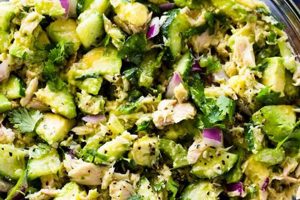
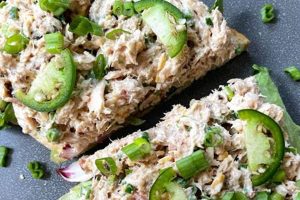
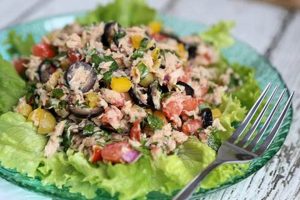
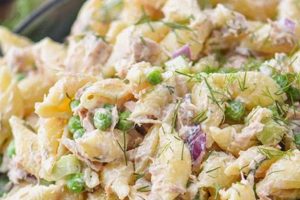
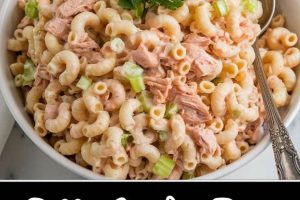
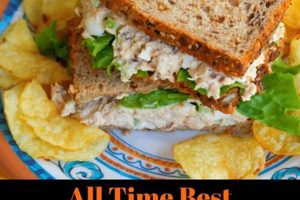
A chilled mixture typically combines flaked tuna, mayonnaise, and celery, often enhanced with other ingredients like onion, relish, or hard-boiled eggs. Variations can include different types of mayonnaise, additions such as grapes or apples, and seasonings ranging from simple salt and pepper to more complex spice blends. This dish is commonly served as a sandwich filling, on crackers, or as a salad course.
Quick to prepare and requiring minimal cooking, this type of dish offers a convenient and protein-rich meal option. Its adaptable nature allows for endless customization based on individual preferences and dietary needs. Historically, canned tuna became widely available in the early 20th century, making dishes of this kind increasingly popular and accessible. This accessibility, combined with its nutritional value, has solidified its place as a lunchtime staple.
Further exploration will delve into specific ingredient choices, preparation techniques, and serving suggestions to create flavorful and satisfying versions of this versatile dish. Nutritional information and potential health benefits will also be addressed.
Tips for Exceptional Tuna Salad
Optimizing ingredient selection and preparation methods elevates this simple dish to a culinary delight. Attention to detail ensures a flavorful and satisfying experience.
Tip 1: Quality Tuna Selection: Opting for high-quality canned tuna packed in water or oil significantly impacts the final flavor. Albacore tuna offers a delicate flavor, while skipjack provides a firmer texture and bolder taste.
Tip 2: Mayonnaise Matters: Experimenting with different types of mayonnaise, such as light, regular, or flavored varieties, allows customization of the salad’s richness and overall taste profile. Aioli or Greek yogurt can be substituted for a lighter alternative.
Tip 3: Enhancing with Fresh Ingredients: Incorporating finely diced celery, red onion, and fresh herbs, such as dill or parsley, adds brightness and complexity.
Tip 4: Balancing Flavors: Achieving a harmonious balance of flavors requires careful consideration of acidic and savory components. Lemon juice or vinegar provide a welcome tartness, while Dijon mustard adds a subtle tang.
Tip 5: Texture Considerations: Chopping ingredients uniformly creates a pleasant consistency. For added textural contrast, consider incorporating chopped nuts, such as walnuts or pecans, or water chestnuts.
Tip 6: Seasoning Strategically: Seasoning beyond salt and pepper can elevate the flavor profile. Consider paprika, cayenne pepper, or a dash of hot sauce for added depth.
Tip 7: Chilling for Optimal Flavor: Allowing the salad to chill in the refrigerator for at least 30 minutes allows the flavors to meld and develop fully.
By following these tips, one can consistently create a delicious and satisfying tuna salad experience, transforming a simple dish into something truly exceptional.
This exploration of ingredient selection, flavor balancing, and preparation techniques provides a solid foundation for creating a superior tuna salad. The following section will offer specific recipe variations for further inspiration.
1. High-quality Canned Tuna

High-quality canned tuna plays a pivotal role in the overall success of a cold tuna salad recipe. Tuna quality directly impacts flavor, texture, and nutritional value. Substandard tuna, often characterized by a strong fishy odor or mushy texture, can negatively affect the final dish, rendering it unappetizing. Conversely, premium tuna, typically packed in water or high-quality oil, possesses a cleaner flavor and firmer texture, elevating the salad’s sensory experience. For example, using albacore tuna, known for its delicate flavor, results in a lighter, more refined salad compared to one made with skipjack, which has a more robust, briny taste. This difference allows for customization based on desired flavor profiles.
The choice of packing liquid also influences the final product. Tuna packed in water offers a leaner option, while tuna packed in oil contributes richness and a smoother texture. Oil-packed tuna often has added flavor from the oil itself, such as olive oil or vegetable oil. Draining excess liquid, regardless of the packing medium, is crucial to prevent a watery salad. Furthermore, the quality of tuna influences its nutritional content. Higher-grade tuna tends to contain more omega-3 fatty acids, a beneficial fat crucial for heart health. Selecting premium tuna ensures not only a superior culinary outcome but also maximizes nutritional benefits.
Understanding the nuances of canned tuna selection empowers informed decisions when preparing cold tuna salad. Recognizing the interplay between tuna quality, packing liquid, and the desired flavor profile allows for a tailored culinary experience. While cost considerations may factor into purchasing decisions, opting for high-quality canned tuna ultimately results in a more satisfying and nutritious final product. This attention to detail elevates the seemingly simple cold tuna salad from a basic meal to a more considered and enjoyable culinary creation.
2. Appropriate Mayonnaise

Mayonnaise serves as a crucial binding agent and flavor component in cold tuna salad. Its quality and type significantly influence the final product’s texture, taste, and overall appeal. Selecting the appropriate mayonnaise is essential for achieving a balanced and enjoyable culinary experience. The wrong choice can result in a salad that is too thick, too thin, or overwhelmed by an undesirable flavor profile.
- Mayonnaise Types:
Various mayonnaise types exist, each offering unique characteristics. Traditional mayonnaise, typically made with egg yolks, oil, and vinegar, provides a rich, creamy texture and tangy flavor. Light mayonnaise, containing less oil and often egg whites, offers a lower-fat option but can compromise creaminess. Flavored mayonnaises, such as olive oil or lemon-infused varieties, impart distinct tastes that can complement or clash with the tuna. Vegan mayonnaise, made with plant-based ingredients, provides an alternative for those with dietary restrictions. Understanding these distinctions allows for informed selection based on desired flavor and dietary needs.
- Quantity Considerations:
The amount of mayonnaise used directly affects the salad’s consistency. Too little mayonnaise results in a dry, crumbly mixture, while excessive mayonnaise creates a heavy, overly rich salad. The ideal quantity depends on personal preference and the desired texture, ranging from a light coating to a more substantial emulsion. Starting with a smaller amount and gradually adding more allows for careful control over the final consistency. Ingredient ratios significantly impact the overall balance and enjoyment of the dish.
- Flavor Pairing:
Mayonnaise flavor should complement the other ingredients in the salad. Classic mayonnaise pairs well with traditional tuna salad components like celery, onion, and relish. However, a flavored mayonnaise, such as a spicy chipotle or a herbed dill variety, might better suit a salad with bolder flavors or additions like jalapeos or fresh herbs. Careful consideration of flavor profiles ensures a harmonious blend and prevents clashes. This balance allows the individual components to shine while contributing to a cohesive whole.
- Freshness and Storage:
Using fresh, properly stored mayonnaise is critical for food safety and optimal flavor. Expired mayonnaise can harbor bacteria and negatively impact the taste and texture of the salad. Refrigerating opened mayonnaise and adhering to expiration dates ensure both safety and quality. Proper handling maintains the integrity of the mayonnaise and contributes to a safe and enjoyable dining experience.
Considering these facets of mayonnaise selection ensures a well-balanced and flavorful cold tuna salad. The interplay between mayonnaise type, quantity, flavor pairing, and freshness significantly impacts the final product. A thoughtful approach to mayonnaise selection elevates this simple dish, transforming it from a basic meal to a more refined culinary creation.
3. Fresh, Crisp Vegetables

Fresh, crisp vegetables contribute significantly to the texture, flavor, and nutritional value of cold tuna salad. Their inclusion elevates the dish beyond a simple protein and mayonnaise mixture, adding complexity and freshness. Understanding the role and selection of appropriate vegetables is crucial for a well-balanced and enjoyable salad.
- Textural Contrast:
Vegetables introduce textural variety to the often soft consistency of tuna and mayonnaise. Celery, a common addition, provides a satisfying crunch, while diced red onion offers a subtle sharpness. Finely chopped bell peppers introduce a mild sweetness and a slightly softer crunch. These contrasting textures create a more dynamic and engaging culinary experience, preventing the salad from feeling monotonous.
- Flavor Enhancement:
Beyond texture, vegetables contribute distinct flavors that complement the tuna. The subtle bitterness of celery, the pungent bite of red onion, and the sweetness of bell peppers or chopped carrots all interact with the savory tuna and creamy mayonnaise, creating a more complex and nuanced flavor profile. The careful selection and balance of these flavors are key to a well-rounded and satisfying salad.
- Nutritional Value:
Incorporating fresh vegetables increases the nutritional value of cold tuna salad. Vegetables provide essential vitamins, minerals, and dietary fiber often lacking in canned tuna and mayonnaise. This addition contributes to a more balanced and healthful meal option, making the salad a more nutritious choice. The specific nutritional contribution varies depending on the chosen vegetables.
- Visual Appeal:
The vibrant colors of fresh vegetables enhance the visual appeal of cold tuna salad. The bright green of celery, the deep red of onion, and the vibrant hues of bell peppers create a more visually stimulating dish, increasing its overall appeal. A visually appealing presentation makes the salad more enticing and enjoyable.
The strategic inclusion of fresh, crisp vegetables significantly enhances cold tuna salad. These additions contribute not only textural and flavor complexity but also increased nutritional value and visual appeal. Careful consideration of vegetable selection and their interplay with other ingredients elevates this simple dish, transforming it into a more balanced and satisfying meal.
4. Balanced Seasonings
Balanced seasonings are essential for a flavorful cold tuna salad recipe. They enhance the inherent flavors of the core ingredients tuna, mayonnaise, and vegetables without overpowering the delicate balance. Proper seasoning elevates the dish from bland to vibrant, creating a more satisfying culinary experience. Understanding the nuances of seasoning allows for customization and consistent flavor optimization.
- Salt and Pepper Foundation:
Salt and freshly ground black pepper form the foundational seasoning in most cold tuna salads. Salt enhances the savory notes of the tuna and other ingredients, while pepper adds a subtle bite and complexity. The amount of each depends on personal preference and the saltiness of other components, such as the mayonnaise or any added ingredients like olives or pickles. Accurate seasoning with salt and pepper is crucial for a balanced flavor profile.
- Acidity’s Brightening Effect:
A touch of acidity brightens the flavors of cold tuna salad, cutting through the richness of the mayonnaise and enhancing the other ingredients. Lemon juice or a splash of white wine vinegar are common choices, adding a refreshing tang. The acidity also helps balance the overall flavor profile, preventing the salad from becoming too heavy or cloying. The judicious use of acid is essential for a well-rounded and vibrant flavor.
- Herbaceous Enhancements:
Fresh herbs contribute significantly to the complexity and aroma of cold tuna salad. Dill, parsley, chives, and tarragon are popular choices, each imparting its unique flavor profile. Dill adds a slightly tangy, anise-like flavor, while parsley provides a fresh, herbaceous note. Chives offer a mild onion flavor, and tarragon contributes a subtle licorice note. The selection of herbs depends on personal preference and the desired flavor profile. Freshly chopped herbs are preferred for their vibrant flavor and aroma.
- Spice and Heat Integration:
Incorporating spices or a touch of heat can add another layer of complexity to cold tuna salad. A pinch of cayenne pepper, a dash of hot sauce, or a sprinkle of paprika can elevate the flavor profile, providing a subtle warmth or a more pronounced heat. The level of spice should be carefully considered to avoid overpowering the other flavors. Judicious use of spices allows for customization and adds a unique dimension to the salad.
The careful balance of these seasoning elements is essential for creating a delicious cold tuna salad. The interplay of salt, pepper, acidity, herbs, and optional spices elevates the dish, transforming it from a simple mixture of ingredients into a flavorful and satisfying culinary experience. Understanding the impact of each seasoning component allows for customization and ensures a consistently delicious result.
5. Proper Chilling Time
Proper chilling time is a crucial element in preparing cold tuna salad, significantly impacting flavor development and overall enjoyment. Chilling allows the various ingredients, each with distinct flavor profiles, to meld and harmonize, creating a more cohesive and balanced taste. This dedicated chilling period transforms the salad from a simple mixture of ingredients into a more nuanced culinary creation. The following facets explore the importance of this often-overlooked step.
- Flavor Melding:
Chilling allows the individual flavors of the tuna, mayonnaise, vegetables, and seasonings to meld together. This fusion creates a more complex and balanced flavor profile than immediately consuming the salad after preparation. The chilling period allows the flavors to mature and interact, resulting in a more harmonious and enjoyable taste experience.
- Texture Enhancement:
Chilling firms the texture of the salad, making it easier to handle and more appealing to consume. The cold temperature also enhances the crispness of the vegetables, providing a pleasant textural contrast to the creaminess of the mayonnaise and the flakiness of the tuna. This balance of textures contributes to a more satisfying sensory experience.
- Food Safety:
Chilling helps maintain the safety of the cold tuna salad, particularly during warmer months. Mayonnaise-based salads are susceptible to bacterial growth at room temperature. Proper chilling inhibits bacterial proliferation, ensuring the salad remains safe for consumption. Adhering to recommended chilling times is crucial for preventing foodborne illnesses.
- Enhanced Sensory Experience:
The cold temperature of a properly chilled tuna salad enhances the overall sensory experience. The coolness provides a refreshing contrast, especially in warm weather. The chilled temperature also accentuates the flavors and textures of the salad, making it more palatable and enjoyable. This heightened sensory experience contributes to a more satisfying meal.
The seemingly simple act of chilling significantly impacts the final quality of cold tuna salad. Allowing sufficient time for flavor melding, texture enhancement, and food safety optimization elevates the dish, contributing to a more enjoyable and satisfying culinary experience. This crucial step should not be overlooked in the pursuit of a truly delicious cold tuna salad.
6. Creative additions (optional)

While a classic cold tuna salad recipe relies on core ingredients, creative additions offer opportunities to personalize flavor profiles and introduce textural complexity. These additions, while optional, can significantly elevate the dish, transforming it from a simple staple into a more dynamic culinary experience. Careful consideration of complementary flavors and textures is key to successful integration of these optional elements.
- Fruits and Nuts:
Incorporating fruits like grapes, chopped apples, or dried cranberries introduces a sweet and tangy counterpoint to the savory tuna and mayonnaise. This contrast adds depth and complexity to the flavor profile. Similarly, adding chopped nuts, such as walnuts, pecans, or almonds, provides a satisfying crunch and nutty flavor, enhancing textural contrast.
- Spices and Herbs:
Beyond the standard seasonings, experimenting with spices and herbs can dramatically alter the flavor profile. Curry powder, smoked paprika, or a dash of chili flakes introduce warmth and complexity. Fresh herbs like cilantro, mint, or basil offer vibrant, fresh notes. These additions cater to diverse palates and culinary preferences.
- Savory Enhancements:
Ingredients like chopped olives, capers, or crumbled bacon introduce salty, briny, or smoky notes, adding depth and complexity. These savory additions complement the tuna and mayonnaise, creating a more robust and flavorful salad. Consider chopped pickles or jalapeos for added tang or heat.
- Textural Variations:
Beyond nuts, ingredients like chopped water chestnuts, sunflower seeds, or shredded carrots contribute textural variety. These additions introduce different levels of crunch and chewiness, enhancing the overall sensory experience. Crumbled crispy fried onions or crushed potato chips can also add an unexpected textural element.
These optional additions offer a pathway to personalize cold tuna salad, transforming it from a basic dish into a customized culinary creation. The integration of complementary flavors and textures expands the possibilities of this versatile recipe, allowing for endless variations to suit individual preferences and culinary explorations. Thoughtful selection of these additions can significantly enhance the overall dining experience.
7. Serving Method Variety
Serving method variety elevates the versatility of cold tuna salad beyond its standard role as a sandwich filling. Different presentations impact perceived flavor profiles and offer opportunities to cater to diverse dietary preferences and social contexts. The method of serving influences portion control, presentation aesthetics, and the overall dining experience. For instance, serving tuna salad on lettuce cups provides a lower-carbohydrate alternative to bread, aligning with health-conscious choices. Similarly, using endive leaves or cucumber slices as vessels offers a lighter, more refreshing presentation suitable for summer meals or appetizers.
Beyond individual servings, cold tuna salad adapts well to larger formats suitable for gatherings. Scooping the salad onto crackers or small toasts provides convenient finger food for casual parties. Presenting the salad as a dip, accompanied by a variety of vegetables, chips, or breads, transforms it into a shareable appetizer. More formally, a molded tuna salad, chilled and garnished, can serve as a centerpiece for luncheons or buffets. This adaptability underscores the practical significance of understanding serving method variety in maximizing the potential of this versatile dish. Serving size and accompaniments should be carefully considered based on the context and the nutritional goals of the meal.
Expanding serving methods beyond traditional sandwiches broadens the appeal and practicality of cold tuna salad. Understanding the interplay between presentation and perception allows for customization and adaptation to diverse dining scenarios. Whether prioritizing health, convenience, or aesthetics, thoughtful consideration of serving methods maximizes the potential of this adaptable dish. This awareness transforms cold tuna salad from a simple meal component into a versatile culinary tool adaptable to a range of occasions and preferences.
Frequently Asked Questions
This section addresses common inquiries regarding cold tuna salad preparation, storage, and variations. Clarity on these points ensures optimal results and promotes safe handling practices.
Question 1: How long can cold tuna salad be stored in the refrigerator?
Properly stored in an airtight container, cold tuna salad typically remains safe for consumption for three to five days in a refrigerator maintained at 40F (4C) or below. Beyond this timeframe, the risk of bacterial growth increases significantly.
Question 2: What are the best types of tuna to use for cold tuna salad?
Albacore tuna offers a delicate flavor, while skipjack provides a firmer texture and a more robust taste. Solid or chunk light tuna, typically a blend of skipjack and yellowfin, is a versatile and cost-effective option.
Question 3: Can cold tuna salad be frozen?
Freezing is generally not recommended. Mayonnaise, a primary ingredient, separates and loses its creamy texture upon thawing, resulting in a less desirable consistency. The texture of the tuna itself can also be negatively affected by freezing.
Question 4: How can one reduce the caloric content of cold tuna salad?
Substituting Greek yogurt or light mayonnaise for traditional mayonnaise significantly reduces caloric content without compromising flavor. Adding more vegetables, such as celery, cucumbers, and bell peppers, increases volume and nutritional value while decreasing the overall calorie density.
Question 5: What are common signs that cold tuna salad has spoiled?
A sour or unpleasant odor, a slimy texture, or any visible mold growth indicates spoilage. If any of these signs are present, the salad should be discarded immediately. Adhering to recommended storage times minimizes spoilage risk.
Question 6: How can one prevent cold tuna salad from becoming watery?
Thoroughly draining the tuna before mixing it with other ingredients is crucial. Excess liquid from the can contributes to a watery consistency. Additionally, adding the vegetables gradually and assessing the moisture level before adding more mayonnaise allows for better control over the final texture.
Understanding these frequently asked questions facilitates safe handling practices and ensures optimal flavor and texture. Informed preparation contributes to a more satisfying culinary experience.
The following section offers a collection of diverse cold tuna salad recipes, ranging from classic preparations to more innovative variations.
Conclusion
Exploration of this culinary staple reveals the interplay of ingredient quality, preparation techniques, and serving methods in achieving optimal results. Emphasis on fresh ingredients, proper seasoning, and appropriate chilling times contributes significantly to flavor development and overall enjoyment. Understanding these elements allows for customization and consistent production of a superior dish.
Careful consideration of these factors transforms a simple mixture of ingredients into a versatile and satisfying culinary creation. This knowledge empowers informed choices, maximizing the potential of this classic dish and ensuring a consistently delightful dining experience.