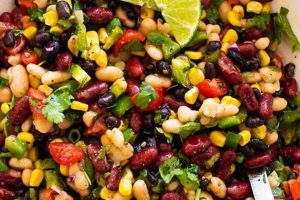
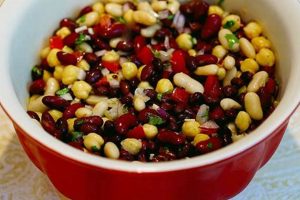
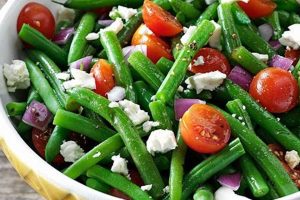
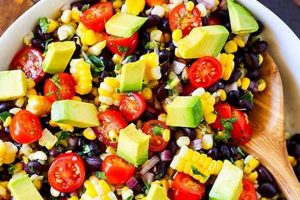
Combinations of various beans, often including legumes like chickpeas and lentils, with complementary vegetables, herbs, and dressings characterize this culinary category. A classic example might involve kidney beans, black beans, corn, red onion, and a vinaigrette dressing.
These dishes offer nutritional value through protein, fiber, and complex carbohydrates. They are versatile, adaptable to diverse palates and dietary needs (vegetarian, vegan, gluten-free), and can be served chilled, making them ideal for warm weather or meal prepping. Historically, bean salads have roots in various cultures, evolving from simple preparations to more elaborate and flavorful combinations over time.
This exploration will delve further into the world of these versatile dishes, examining ingredient variations, preparation techniques, and tips for creating flavorful and balanced combinations. Nutritional information and suggested pairings will also be discussed.
Tips for Creating Exceptional Bean Salads
Crafting a delicious and visually appealing bean salad requires attention to detail. These tips offer guidance for achieving optimal results.
Tip 1: Bean Selection and Preparation: Utilize a variety of beans for textural and flavor complexity. Canned beans offer convenience; ensure they are rinsed thoroughly. Dried beans require soaking and cooking; follow package instructions for optimal tenderness.
Tip 2: Balancing Flavors: Achieve a harmonious blend of flavors by incorporating acidic elements (vinegar, citrus juice), sweetness (chopped dates, a touch of maple syrup), and savory notes (fresh herbs, spices).
Tip 3: Enhancing Texture: Incorporate textural variety through crunchy vegetables (diced bell peppers, celery, red onion), toasted nuts, or seeds.
Tip 4: Dressing Considerations: The dressing should complement the other ingredients, not overpower them. A simple vinaigrette is often ideal. Allow the salad to marinate for at least 30 minutes for optimal flavor development.
Tip 5: Fresh Herbs and Spices: Elevate the flavor profile with fresh herbs (parsley, cilantro, mint) and spices (cumin, chili powder, smoked paprika). Add herbs just before serving to maintain their vibrancy.
Tip 6: Proper Storage: Store leftover salad in an airtight container in the refrigerator for up to three days. The flavors may meld and intensify over time.
Tip 7: Creative Variations: Explore variations by incorporating roasted vegetables, grilled corn, crumbled cheese, or cooked grains like quinoa or farro.
By following these guidelines, one can create a bean salad that is both nutritious and flavorful, suitable for a light lunch, a side dish, or a potluck contribution.
These tips provide a solid foundation for exploring the diverse world of bean salads. Experimentation and adaptation to personal preferences are encouraged.
1. Bean Variety
Bean variety is fundamental to successful bean salad recipes, impacting not only nutritional value but also flavor, texture, and visual appeal. Careful selection and combination of different beans contribute significantly to the overall culinary experience.
- Nutritional Considerations
Different beans offer diverse nutritional profiles. Kidney beans are rich in iron and protein, while black beans provide high levels of fiber and antioxidants. Incorporating a variety ensures a broader spectrum of nutrients within the salad.
- Textural Diversity
Bean size and texture vary considerably. Larger beans, like cannellini or lima beans, offer a creamy texture, while smaller beans, such as black beans or adzuki beans, provide a firmer bite. Combining different textures creates a more dynamic and appealing salad.
- Flavor Profiles
Each bean possesses a unique flavor profile. Chickpeas have a nutty flavor, while pinto beans are slightly earthy. The interplay of these distinct flavors contributes to a more complex and interesting overall taste.
- Visual Appeal
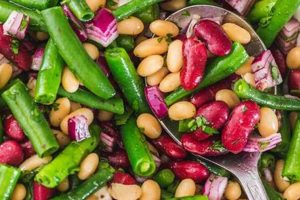
The varied colors of different beans, from the deep black of black beans to the vibrant green of French green beans, enhance the visual appeal of the salad. A mix of colors creates a more attractive and appetizing dish.
By strategically selecting and combining a variety of beans, one can create a bean salad that is not only nutritious and flavorful but also visually appealing and texturally satisfying. This attention to bean variety elevates the dish beyond a simple combination of ingredients, transforming it into a culinary creation that engages multiple senses.
2. Complementary Ingredients

Complementary ingredients are essential to well-crafted bean salads, transforming them from simple mixtures into dynamic, flavorful dishes. These additions provide textural contrast, introduce balancing flavors, and enhance visual appeal. Their careful selection significantly impacts the overall sensory experience. For instance, the acidity of diced red onion cuts through the richness of beans, while the sweetness of corn kernels provides a counterpoint to savory herbs. The crispness of bell peppers contrasts with the soft texture of cooked beans. These combinations demonstrate the integral role complementary ingredients play in achieving a balanced and satisfying dish.
Consider the interplay between complementary ingredients and the chosen beans. Black beans, with their earthy flavor, pair well with bright, acidic ingredients like chopped cilantro and lime juice. Chickpeas, possessing a nutty flavor profile, benefit from the addition of roasted vegetables, such as sweet potatoes or bell peppers, which add a caramelized sweetness and depth. The selection of complementary ingredients should always consider the inherent characteristics of the beans themselves. This synergistic relationship allows for a more nuanced and enjoyable culinary experience. Understanding these flavor pairings allows for endless variation and customization.
Strategic incorporation of complementary ingredients elevates bean salads. These additions not only enhance flavor and texture but also provide nutritional diversity. Balancing flavors, colors, and textures ensures a well-rounded and appealing dish. Awareness of these interactions allows for the creation of bean salads tailored to specific preferences and dietary needs. The careful interplay of ingredients transforms a basic bean salad into a sophisticated and satisfying culinary creation.
3. Flavorful Dressings

Flavorful dressings are integral to successful bean salad recipes, acting as a unifying element that binds the diverse ingredients and elevates the overall taste experience. The dressing is not merely a condiment but a crucial component that influences the final flavor profile, texture, and enjoyment of the dish. A well-chosen dressing enhances the inherent flavors of the beans and complementary ingredients, creating a cohesive and balanced culinary creation. A bland or poorly matched dressing can detract from the overall quality, rendering the salad unappealing despite the quality of the other components.
The impact of the dressing extends beyond mere flavor enhancement. It also contributes to the texture and moisture content of the salad. A vinaigrette, for example, provides a light and tangy coating, while a creamy dressing adds richness and binds the ingredients together. Consider a classic three-bean salad: a simple vinaigrette, composed of olive oil, vinegar, and herbs, enhances the natural sweetness of the beans while providing a refreshing acidity. In contrast, a black bean and corn salad might benefit from a creamy cilantro-lime dressing, which complements the earthy flavors of the beans and adds a vibrant, zesty dimension.
Understanding the interplay between the dressing and the other ingredients is crucial for creating a harmonious and flavorful bean salad. The dressing should complement, not overpower, the other flavors. Acidity, sweetness, and savory notes within the dressing should be balanced to create a cohesive taste experience. Furthermore, the dressing’s consistency should be considered. A thinner dressing might be more suitable for a salad with delicate ingredients, while a thicker dressing can better coat heartier components. Careful consideration of these factors ensures that the dressing enhances, rather than detracts from, the overall enjoyment of the bean salad. Mastering the art of dressing selection and preparation elevates bean salads from simple side dishes to culinary highlights.
4. Texture Variation
Texture variation plays a crucial role in the overall enjoyment of bean salad recipes. A successful bean salad engages not only the palate but also provides a satisfying tactile experience. A monotonous texture can render a salad, regardless of its flavor profile, less appealing. Strategic incorporation of diverse textures elevates the dish, adding complexity and interest.
- Crunchy Elements
Crunchy elements provide a stark contrast to the often-soft texture of cooked beans. These can include raw vegetables such as diced bell peppers, celery, carrots, or red onion. Toasted nuts or seeds, such as sunflower seeds, pumpkin seeds, or slivered almonds, offer another layer of crunch. These additions create a dynamic textural interplay, preventing the salad from feeling overly soft or mushy.
- Soft and Creamy Components
While crunchy elements are essential, maintaining some soft and creamy textures is equally important for balance. Cooked beans themselves contribute to this, but the addition of avocado, crumbled cheese (such as feta or goat cheese), or even cooked grains like quinoa can further enhance the creamy aspect of the salad. This interplay of textures prevents the salad from becoming overly crunchy or dry.
- Firm and Chewy Textures
Incorporating firm and chewy elements adds another dimension to the textural profile. Examples include dried fruits, such as cranberries or chopped dates, or cooked grains like farro or barley. These textures offer a pleasant contrast to both the crunchy and creamy components, contributing to a more complex and satisfying mouthfeel.
- The Role of Dressing
The dressing itself can influence the perceived texture of the salad. A vinaigrette provides a light coating that allows the individual textures of the ingredients to shine through. A creamy dressing, on the other hand, can bind the ingredients together and create a smoother, more cohesive texture. The choice of dressing should complement the other textural elements, contributing to the overall balance and enjoyment.
The interplay of these varying textures within a bean salad is essential for a truly satisfying culinary experience. A well-balanced bean salad offers a delightful combination of crunchy, creamy, chewy, and soft elements, engaging multiple senses and elevating the dish beyond a simple combination of ingredients. Careful consideration of texture, alongside flavor and visual appeal, is key to creating a bean salad that is both delicious and enjoyable to eat.
5. Fresh Herbs
Fresh herbs are essential for elevating bean salad recipes from simple to exceptional. Their aromatic contributions provide a bright, vibrant counterpoint to the earthy flavors of beans, creating a more complex and nuanced flavor profile. The judicious use of fresh herbs can transform a basic bean salad into a culinary delight, adding depth, freshness, and a touch of sophistication. Beyond flavor, fresh herbs contribute visual appeal with their vibrant green hues, enhancing the overall presentation.
- Aromatic Enhancement
Fresh herbs impart distinctive aromas that significantly influence the overall sensory experience. Cilantro, with its bright, citrusy notes, pairs well with black beans and corn. Mint adds a refreshing coolness, complementing cucumber and chickpeas. Parsley, with its slightly peppery flavor, provides a versatile option for a variety of bean combinations. The aromatic complexity introduced by fresh herbs elevates the salad, making it more enticing and flavorful.
- Flavor Balancing
Fresh herbs contribute more than just aroma; they also play a key role in balancing the overall flavor profile. The slight bitterness of parsley can temper the sweetness of corn or the richness of a creamy dressing. The pungent notes of dill can cut through the density of beans, adding a refreshing brightness. This careful balancing of flavors is crucial for creating a harmonious and enjoyable salad.
- Visual Appeal
The vibrant green hues of fresh herbs contribute significantly to the visual appeal of a bean salad. A sprinkle of chopped parsley, cilantro, or chives adds a pop of color, making the salad more visually appealing and appetizing. This visual enhancement is particularly important for salads served cold, where vibrant colors are key to attracting the eye.
- Nutritional Benefits
Beyond their culinary contributions, many fresh herbs offer nutritional benefits. Parsley, for example, is a good source of vitamins K and C. Cilantro is rich in antioxidants. Incorporating fresh herbs not only enhances the flavor and appearance of the salad but also adds a nutritional boost, making it a healthier and more wholesome dish.
The strategic use of fresh herbs is a hallmark of well-crafted bean salads. Their aromatic and flavor contributions, combined with their visual appeal and nutritional benefits, transform these dishes from simple sides to culinary centerpieces. Understanding the nuanced interplay between fresh herbs and other ingredients allows for the creation of bean salads that are both delicious and visually appealing, showcasing the versatility and potential of this culinary staple.
6. Proper Seasoning
Proper seasoning is paramount in bean salad recipes. It elevates the inherent flavors of individual ingredients, creating a cohesive and balanced final product. Seasoning is not merely an afterthought; it is an integral step that significantly impacts the overall taste experience. Without proper seasoning, a bean salad can taste flat and uninspired, even with high-quality ingredients. The interplay of salt, pepper, acids, and other seasonings creates depth and complexity, transforming a simple mixture into a flavorful dish.
Consider the impact of salt. It not only enhances sweetness but also tempers bitterness and rounds out other flavors. A pinch of salt can bring out the natural sweetness of corn in a black bean and corn salad. Acids, such as lemon juice or vinegar, provide brightness and cut through the richness of beans and other ingredients. A touch of acidity can balance the earthy flavors of a lentil salad. Pepper adds a subtle heat and complexity, while spices like cumin or chili powder can introduce deeper, more nuanced flavor profiles. A well-seasoned bean salad demonstrates a thoughtful balance of these elements, where each seasoning plays a specific role in enhancing the overall flavor profile.
Mastering proper seasoning requires an understanding of flavor interactions and balance. It’s a dynamic process involving continuous tasting and adjustment. A simple three-bean salad, for example, might benefit from a straightforward seasoning of salt, pepper, and a touch of Dijon mustard for a subtle tang. A more complex Mediterranean-inspired bean salad might incorporate herbs like oregano and mint, along with lemon zest and a pinch of red pepper flakes for a vibrant, layered flavor profile. The key is to taste frequently throughout the preparation process, adjusting seasonings as needed to achieve a harmonious and well-balanced final product. This attention to detail transforms a basic bean salad into a flavorful and satisfying dish.
7. Presentation & Serving
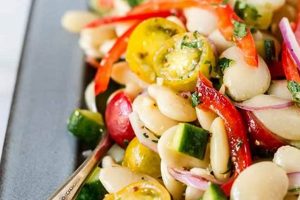
Presentation and serving significantly influence the perception and enjoyment of bean salad recipes. Visual appeal stimulates appetite, while appropriate serving methods maintain optimal temperature and texture, maximizing enjoyment. A thoughtfully presented salad entices diners, while careless presentation can diminish the perceived value of even the most flavorful recipe. Consider a vibrant Mediterranean bean salad served in a clear glass bowl, allowing the colorful layers of beans, vegetables, and herbs to shine through. This presentation immediately elevates the dining experience. Conversely, the same salad served in a drab, opaque container may appear less appetizing, diminishing the diner’s anticipation and enjoyment.
Practical considerations also govern serving methods. Bean salads, often served chilled, benefit from pre-chilling serving bowls to maintain optimal temperature. Serving utensils should be chosen to facilitate easy portioning without damaging delicate ingredients. For individual portions, smaller bowls or ramekins offer a more elegant presentation than serving directly from a large container. The quantity served should also be appropriate for the context. A small, elegantly plated portion complements a main course, while a larger serving in a communal bowl suits a buffet or picnic setting. Adapting presentation and serving to the specific dining occasion enhances the overall experience.
Effective presentation and serving elevate bean salad recipes from simple fare to culinary highlights. Visual appeal and practical considerations are intertwined, each contributing to the overall perception and enjoyment. The interplay of color, texture, and serving vessel creates a holistic dining experience that extends beyond mere sustenance. Attention to these details demonstrates care and consideration, transforming a basic bean salad into a memorable culinary experience.
Frequently Asked Questions
This section addresses common inquiries regarding bean salad recipes, offering practical guidance for preparation, storage, and variations.
Question 1: How long can bean salad be stored in the refrigerator?
Properly stored in an airtight container, bean salad typically lasts for 3-5 days in the refrigerator. Discard any salad exhibiting signs of spoilage, such as mold or an off odor.
Question 2: Can dried beans be used instead of canned beans?
Dried beans are suitable for bean salads but require pre-soaking and cooking. Follow package instructions for optimal tenderness. Ensure beans are fully cooked before incorporating them into the salad.
Question 3: How can one reduce the sodium content in bean salad?
Rinsing canned beans thoroughly under cold water can significantly reduce sodium content. Using low-sodium or no-salt-added canned beans is also recommended. Adjust seasoning accordingly to maintain flavor balance.
Question 4: Can bean salad be frozen?
Freezing is generally not recommended for bean salad as it can negatively impact texture, causing beans and vegetables to become mushy upon thawing. Freshly prepared salads offer optimal flavor and texture.
Question 5: What are some suitable variations for vegetarian or vegan diets?
Bean salads are inherently vegetarian and often vegan-friendly. Ensure dressings and other added ingredients align with dietary restrictions. Avoid cheese or other animal-derived products for vegan variations.
Question 6: How can one prevent bean salad from becoming too dry?
Adequate dressing is key to preventing dryness. Ensure the salad is well-coated but not swimming in dressing. Adding a small amount of olive oil or a splash of water can also help maintain moisture.
These frequently asked questions offer helpful insights into bean salad preparation and storage. Understanding these points allows for optimal enjoyment and culinary success.
This concludes the frequently asked questions section. The following segment will offer a collection of sample recipes.
Bean Salad Recipes
This exploration has delved into the multifaceted world of bean salad recipes, examining the nuances of ingredient selection, preparation techniques, and flavor balancing. From the importance of bean variety and complementary ingredients to the role of flavorful dressings, texture variation, and fresh herbs, the path to crafting exceptional bean salads lies in understanding the interplay of these key elements. Proper seasoning and thoughtful presentation further elevate these dishes, transforming them from simple sides to culinary highlights.
Bean salad recipes offer a canvas for culinary creativity, adaptable to diverse palates and dietary needs. Continued exploration of flavor combinations and ingredient variations promises a vibrant and evolving culinary landscape. The potential for innovation within this seemingly simple dish is vast, offering a continuous source of culinary discovery and enjoyment.