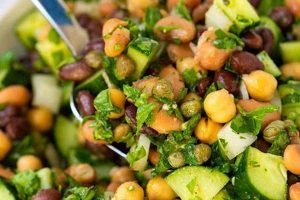
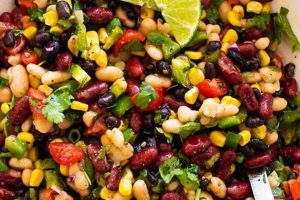
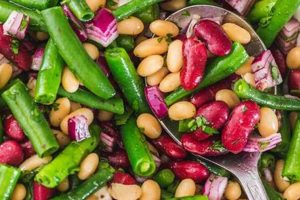
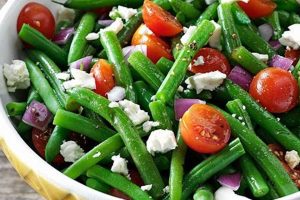
Dishes featuring green beans (often referred to as string beans) as the primary ingredient, chilled and tossed with various complementary components, constitute a popular salad category. These salads frequently incorporate other vegetables, herbs, and a flavorful dressing. A classic example includes blanched green beans combined with thinly sliced red onion, toasted almonds, and a vinaigrette.
Green bean salads offer a refreshing and nutritious option, particularly during warmer months. They provide a good source of vitamins, minerals, and fiber. Their adaptability to diverse flavor profiles, from tangy and vibrant to creamy and savory, contributes to their appeal. Historically, preserving green beans through pickling and fermenting paved the way for early iterations of these salads, evolving into the versatile dishes known today.
This article will further explore variations of these salads, encompassing diverse ingredients, preparation methods, and serving suggestions. It will also address the nutritional benefits and offer guidance on selecting and preparing fresh green beans.
Tips for Exceptional Green Bean Salads
Achieving optimal flavor and texture in green bean salads relies on a few key techniques. The following tips offer guidance for creating delicious and visually appealing dishes.
Tip 1: Blanch Green Beans Properly: Blanching enhances color, texture, and flavor. Submerge beans in boiling water briefly, then immediately transfer to ice water to stop cooking. This process preserves a crisp texture and vibrant green hue.
Tip 2: Consider Bean Variety: Different green bean varieties offer unique flavor profiles. Haricots verts offer a delicate, subtle flavor, while Romano beans provide a robust, nutty taste. Experiment to find a preferred variety.
Tip 3: Balance Flavors: A successful salad balances flavors. Pair the earthy beans with contrasting elements such as bright acidity from vinegar or citrus, salty cheeses, or sweet fruits like dried cranberries or grapes.
Tip 4: Toast Nuts and Seeds: Toasting nuts and seeds enhances their flavor and adds a satisfying crunch. Almonds, pecans, walnuts, and sunflower seeds are excellent choices.
Tip 5: Dress Strategically: Dress the salad just before serving to prevent the beans from becoming soggy. A light coating of dressing is sufficient.
Tip 6: Explore Flavor Combinations: Don’t be afraid to experiment with diverse flavors. Asian-inspired dressings with sesame oil and soy sauce, Mediterranean influences with feta and olives, or classic Dijon vinaigrette all provide delightful options.
Tip 7: Use Fresh, High-Quality Ingredients: The foundation of a great salad lies in the quality of its ingredients. Select fresh, crisp green beans and other produce for the best results.
By incorporating these tips, one can elevate green bean salads from simple side dishes to star attractions, maximizing flavor and textural appeal.
These tips provide a foundation for creating a diverse range of green bean salads. Further exploration of specific recipes and variations will follow.
1. Ingredient Selection
Ingredient selection significantly impacts the final flavor profile and overall quality of string bean salads. Careful consideration of each component contributes to a balanced and enjoyable culinary experience. The interplay between textures and tastes determines the success of the dish. For instance, the crispness of fresh green beans contrasts with the creamy texture of feta cheese or the crunch of toasted nuts. Selecting ingredients based on seasonality further enhances flavor; peak-season produce offers the most vibrant tastes and optimal nutritional value. Furthermore, the interplay of colors adds visual appeal, making the salad more enticing.
Beyond the core ingredient of green beans, choices regarding complementary vegetables, proteins, and flavor enhancers offer ample opportunity for customization. Adding tomatoes and cucumbers introduces refreshing lightness, while incorporating grilled chicken or shrimp elevates the salad into a more substantial meal. Ingredients like red onion, fresh herbs (such as dill or mint), and crumbled bacon contribute distinct flavor dimensions, transforming the salad from simple to complex. Thoughtful selection also allows for catering to specific dietary needs and preferences; vegetarian or vegan adaptations can easily be achieved by substituting or omitting certain ingredients.
Ultimately, successful ingredient selection requires a balance of flavor, texture, and visual appeal. Understanding the role of each ingredient and its contribution to the overall composition allows for creating a harmonious and delicious string bean salad. This process also provides opportunities to experiment with diverse flavor profiles, ranging from classic combinations to innovative creations. Strategic selection ultimately elevates the dish, maximizing both its culinary and nutritional value.
2. Preparation Methods
Preparation methods significantly influence the final texture, flavor, and overall appeal of string bean salads. Proper techniques ensure that green beans retain their vibrant color and crispness while other ingredients contribute their optimal characteristics to the dish. Understanding these methods allows for greater control over the final product and enhances the culinary experience.
- Blanching:
Blanching involves briefly submerging green beans in boiling water, followed by immediate immersion in ice water. This process preserves color, halts enzymatic activity that can lead to degradation, and sets the desired texture, maintaining a pleasant snap. Insufficient blanching results in raw, tough beans, while excessive blanching produces a mushy, unappetizing texture. Proper blanching is crucial for a successful salad.
- Trimming and Cutting:
Trimming and cutting influence both aesthetics and texture. Removing the ends and cutting beans into uniform lengths creates a more visually appealing presentation and ensures even cooking. Different cuts, such as French-cut (thinly sliced lengthwise), bias-cut (angled slices), or simply snapping beans into shorter segments, can add visual interest and influence how the beans absorb dressing and integrate with other ingredients.
- Marination and Maceration:
While less common than blanching, marinating or macerating green beans can infuse them with additional flavors. A brief soak in a vinaigrette or a mixture of herbs and spices can enhance complexity and create more dynamic flavor profiles. This step, however, should be approached with caution to avoid compromising the texture of the beans.
- Ingredient Preparation:
Proper preparation extends beyond the green beans themselves. Chopping other vegetables, such as onions, peppers, or tomatoes, to a similar size ensures even distribution throughout the salad and a balanced bite. Toasting nuts and seeds enhances their flavor and adds a desirable crunch. These seemingly minor steps contribute significantly to the overall quality and enjoyment of the dish.
Mastery of these preparation methods elevates string bean salads from simple side dishes to culinary highlights. The interplay of these techniques contributes to the creation of a cohesive dish with optimal texture, flavor, and visual appeal, showcasing the versatility and potential of the humble green bean.
3. Flavor Combinations
Flavor combinations are essential to crafting compelling and balanced string bean salad recipes. The inherent earthiness of green beans provides a versatile canvas for a wide range of flavor profiles, from bright and acidic to savory and rich. Strategic combinations elevate the dish beyond a simple side, creating complex and satisfying culinary experiences. The success of these recipes hinges on the harmonious interplay of various taste elements.
- Acidity:
Acidity plays a crucial role in cutting through the richness of other ingredients and brightening the overall flavor profile. Vinegar-based dressings, lemon juice, or other acidic components provide a refreshing counterpoint to the earthiness of green beans. For example, a lemon-dill vinaigrette adds a vibrant tang, while a balsamic glaze introduces a subtle sweetness and depth. The judicious use of acidity prevents the salad from feeling heavy or bland.
- Salt and Savory Elements:
Salt enhances and balances other flavors, while savory elements add depth and complexity. Ingredients like salty cheeses (feta, parmesan), olives, cured meats (pancetta, prosciutto), or soy sauce contribute a savory dimension. Consider a combination of feta cheese, Kalamata olives, and a red wine vinaigrette for a Mediterranean-inspired salad. The balance of salt and savory notes complements the green beans without overpowering their delicate flavor.
- Sweetness and Texture:
Sweetness provides a nuanced counterpoint to savory and acidic elements, while textural contrasts create a more engaging culinary experience. Dried fruits (cranberries, golden raisins), toasted nuts (almonds, pecans), or a touch of honey or maple syrup in the dressing introduce subtle sweetness. The contrasting textures of crunchy nuts, chewy dried fruit, and crisp green beans create a dynamic interplay that elevates the overall enjoyment of the dish. For instance, toasted pecans and dried cranberries add sweetness and textural complexity to a salad with a Dijon vinaigrette.
- Aromatics and Spices:
Aromatics and spices introduce layers of complexity and depth to string bean salads. Fresh herbs (dill, mint, parsley), garlic, shallots, or spices like red pepper flakes contribute distinct aromatic notes and enhance the overall flavor profile. A combination of fresh dill, chopped shallots, and a lemon vinaigrette creates a bright and refreshing salad, while a sprinkle of red pepper flakes adds a touch of heat. The careful use of aromatics and spices allows for nuanced flavor customization.
These elements, when combined thoughtfully, transform simple string bean salads into complex and flavorful dishes. Understanding the interplay of acidity, salt, sweetness, texture, and aromatics allows for creative exploration and the development of unique and satisfying recipes. The versatility of green beans as a base ingredient provides a canvas for endless flavor combinations, catering to a wide range of palates and preferences.
4. Dressing Choices
Dressing choices profoundly influence the overall flavor profile and enjoyment of string bean salads. The dressing acts as a unifying element, binding the various ingredients and imparting a cohesive flavor experience. A well-chosen dressing complements the natural earthiness of green beans while enhancing the other components of the salad. The interplay between the dressing and the other ingredients is crucial; a harmonious balance ensures that no single flavor dominates, but rather that each element contributes to a complex and satisfying whole. Consider a classic vinaigrette: the acidity provides brightness, while the oil adds richness and helps distribute the flavor evenly throughout the salad. A creamy dressing, on the other hand, offers a different textural and flavor dimension, coating the beans and clinging to other ingredients. The wrong dressing can mask the delicate flavors of the salad or create an unbalanced, unappetizing result.
The versatility of string bean salads allows for a wide range of dressing options, each contributing a unique character to the dish. A vibrant lemon-herb vinaigrette enhances the fresh, green flavors of the beans and other vegetables, while a creamy dill dressing adds a richer, more savory dimension. An Asian-inspired sesame-ginger dressing introduces a nuanced umami element, complementing the beans with a savory depth. Specific ingredients within the salad often dictate the most suitable dressing choice. For instance, a salad featuring Mediterranean flavors, such as feta cheese and olives, benefits from a lighter, brighter vinaigrette, while a salad incorporating bacon or toasted nuts might pair well with a slightly sweeter, more robust dressing. Understanding these relationships allows for informed choices that maximize the potential of each ingredient and create a harmonious final product.
Successful dressing selection requires careful consideration of the overall flavor profile desired and the specific ingredients included in the salad. Factors such as acidity, sweetness, creaminess, and the presence of herbs or spices within the dressing should complement and enhance, not overpower, the other components. Experimentation with different dressings allows for the discovery of new flavor combinations and personalized preferences. However, adhering to fundamental principles of balance and flavor pairing ensures a consistently enjoyable and satisfying culinary outcome. The dressing serves as the conductor, orchestrating the individual flavors into a harmonious symphony.
5. Serving Suggestions
Serving suggestions enhance the versatility of string bean salad recipes, transforming them from simple side dishes to integral components of diverse meals. Appropriate presentation and pairings elevate the dining experience, showcasing the adaptability of these salads across various culinary contexts. Consideration of serving temperature, accompanying dishes, and overall meal composition maximizes the enjoyment and perceived value of the salad.
- Temperature Considerations
String bean salads are typically served chilled, enhancing their refreshing qualities, particularly during warmer months. However, variations exist; some recipes benefit from being served at room temperature, allowing subtle flavors to emerge more fully. Serving temperature influences both perceived flavor and textural experience. A chilled salad provides a crisp, refreshing contrast to richer dishes, while a room-temperature salad offers a more nuanced flavor profile.
- Complementary Pairings
String bean salads exhibit remarkable adaptability, complementing a wide range of main courses. They pair well with grilled meats, fish, poultry, or vegetarian entrees. A light and tangy green bean salad provides a refreshing counterpoint to a rich, savory main course, while a heartier salad with roasted vegetables or grains can serve as a more substantial accompaniment. The salad’s flavor profile should complement, not clash with, the main dish. For example, a Mediterranean-inspired string bean salad pairs well with grilled fish, while a salad with Asian flavors complements chicken or tofu stir-fries.
- Presentation and Plating
Thoughtful presentation elevates the dining experience. Serving the salad in an attractive bowl or platter enhances its visual appeal. Garnishing with fresh herbs, toasted nuts, or edible flowers adds a touch of elegance and reinforces the salad’s flavor profile. Consider the overall meal composition when plating; the salad can be served as a separate course, alongside the main dish, or even incorporated into a larger composed salad. A visually appealing presentation enhances the perceived value and enjoyment of the meal.
- Meal Context and Occasion
The suitability of a string bean salad varies depending on the meal context and occasion. A simple, refreshing salad is ideal for a casual weeknight dinner, while a more elaborate version, with premium ingredients and thoughtful presentation, suits a special occasion or holiday gathering. The chosen recipe and serving style should align with the overall tone and formality of the meal. Consider the seasonality of ingredients and the preferences of diners when selecting and serving a string bean salad.
Understanding these serving suggestions allows for maximizing the potential of string bean salad recipes. Appropriate consideration of temperature, pairings, presentation, and meal context transforms these salads from simple accompaniments to integral components of a complete and satisfying dining experience. Strategic choices in these areas elevate the perceived value and enjoyment of the dish, showcasing its culinary versatility and adaptability.
6. Nutritional Benefits
String bean salad recipes offer significant nutritional advantages, contributing to a healthy and balanced diet. Understanding the nutritional composition of these salads allows for informed dietary choices and highlights their role in promoting overall well-being. The combination of fresh ingredients, often minimally processed, provides a range of essential vitamins, minerals, and dietary fiber.
- Vitamin and Mineral Content
Green beans are a good source of vitamins K, C, and A, along with folate and manganese. These micronutrients play crucial roles in various bodily functions, from blood clotting and immune system support to bone health and cell growth. Additional ingredients, such as bell peppers, tomatoes, and onions, further contribute to the vitamin and mineral content of these salads, providing a diverse range of essential nutrients.
- Dietary Fiber
String bean salads are a good source of dietary fiber, which aids in digestion, promotes satiety, and contributes to healthy cholesterol levels. Fiber supports digestive health by adding bulk to the stool and promoting regular bowel movements. The fiber content in these salads contributes to feelings of fullness, which can aid in weight management. Furthermore, dietary fiber plays a role in regulating cholesterol levels, reducing the risk of heart disease.
- Low Calorie and Fat Content
String bean salads are generally low in calories and fat, making them a suitable choice for individuals seeking to manage weight or maintain a healthy lifestyle. The low calorie density allows for consumption of a substantial portion without excessive caloric intake. The limited fat content, particularly saturated and unhealthy fats, further contributes to the health benefits of these salads. Choosing healthy dressing options, such as vinaigrettes made with olive oil, further supports these benefits.
- Antioxidant Properties
Green beans and many common string bean salad ingredients, like tomatoes and red onions, contain antioxidants, compounds that protect cells from damage caused by free radicals. Antioxidants play a crucial role in reducing oxidative stress, which is implicated in various chronic diseases. Including a variety of colorful vegetables in these salads maximizes the intake of different types of antioxidants, providing broader health benefits.
Incorporating string bean salad recipes into one’s diet provides a flavorful and convenient way to increase nutrient intake and support overall health. The combination of vitamins, minerals, fiber, low calorie and fat content, and antioxidant properties contributes to a wide range of health benefits. These salads offer a nutritious and versatile addition to any meal plan, promoting well-being through a delicious and accessible culinary experience.
Frequently Asked Questions
This section addresses common inquiries regarding string bean salads, providing concise and informative responses to clarify potential uncertainties and enhance understanding of these versatile dishes.
Question 1: How long can string bean salad be stored?
Properly stored, in an airtight container refrigerated, string bean salad typically lasts for 3-5 days. Discard any salad exhibiting signs of spoilage, such as an off odor or slimy texture.
Question 2: Can frozen green beans be used in these salads?
While fresh green beans are generally preferred for optimal texture and flavor, frozen beans can be substituted. Ensure they are thoroughly thawed and drained before incorporating them into the salad. Blanching may not be necessary.
Question 3: How can one prevent string bean salad from becoming watery?
Excess moisture can be minimized by thoroughly drying the blanched green beans before adding them to the salad. Additionally, dressing the salad just before serving helps prevent the beans from becoming soggy.
Question 4: What are suitable alternatives to vinegar-based dressings?
Alternatives to vinegar-based dressings include creamy dressings based on yogurt, buttermilk, or tahini. These offer different flavor profiles and textural experiences while still complementing the green beans.
Question 5: Are there specific dietary considerations for these salads?
String bean salads can generally be adapted to accommodate various dietary restrictions. Vegan or vegetarian versions can be created by omitting or substituting ingredients like cheese or meat. Adjustments to the dressing may also be necessary.
Question 6: How can one enhance the flavor of string bean salad?
Flavor enhancement can be achieved through several methods, including toasting nuts and seeds, using high-quality ingredients, balancing flavor components (acidity, salt, sweetness), and incorporating fresh herbs or spices.
Understanding these common inquiries allows for more informed preparation and enjoyment of string bean salads. These insights contribute to a successful culinary outcome, maximizing flavor, texture, and overall satisfaction.
The following section will delve into specific string bean salad recipes, offering practical examples and variations for culinary exploration.
Conclusion
Exploration of string bean salad recipes reveals a versatile culinary category offering numerous variations and flavor profiles. From ingredient selection and preparation methods to dressing choices and serving suggestions, the potential for customization is extensive. Emphasis on balancing flavors, textures, and visual appeal yields consistently satisfying results. Nutritional analysis underscores the health benefits of incorporating these salads into a balanced diet, given their rich vitamin, mineral, and fiber content.
String bean salads represent more than a simple side dish; they embody a culinary canvas for creativity and flavor exploration. Continued experimentation with ingredients, dressings, and presentation methods promises further evolution and refinement within this enduring culinary tradition, solidifying its place as a refreshing and healthful dietary staple.