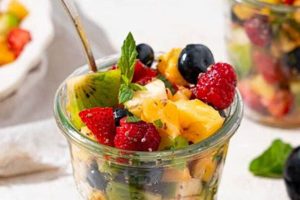
Combining the peppery bite of arugula with the sweetness of various fruits creates a unique culinary experience. Imagine a vibrant mix of fresh berries, juicy melon, and crisp greens, perhaps enhanced with a light vinaigrette or a sprinkle of feta cheese. Such dishes offer a refreshing contrast in textures and flavors.
These salads offer a compelling way to incorporate more fruits and vegetables into one’s diet. Arugula, a cruciferous vegetable, contributes vitamins and minerals, while the fruit component provides essential nutrients and antioxidants. Historically, bitter greens and fruits have been paired in various cuisines, highlighting the enduring appeal of this flavor combination.
This exploration will delve into various aspects of preparing these dishes, including selecting complementary fruits, crafting balanced dressings, and presenting the salad for optimal enjoyment.
Tips for Creating Exceptional Arugula Fruit Salads
Crafting a well-balanced arugula fruit salad involves careful consideration of ingredients and preparation techniques. The following tips offer guidance for achieving optimal flavor and presentation.
Tip 1: Balance Flavor Profiles: Select fruits that complement arugula’s peppery taste. Sweet berries, such as strawberries and blueberries, provide a pleasant contrast, while tart fruits like grapefruit or green apple add a refreshing tang. Consider the overall balance of sweet, tart, and peppery elements.
Tip 2: Textural Variety: Incorporate fruits with diverse textures. Soft fruits like melon or mango can be paired with firmer options like grapes or sliced pear. The contrast adds interest and complexity.
Tip 3: Dressing Selection: Choose a dressing that enhances the salad without overpowering the delicate flavors. Light vinaigrettes with citrus or balsamic bases often work well. Consider a touch of honey or maple syrup for added sweetness.
Tip 4: Cheese Pairing: Consider adding cheese for a savory element. Crumbled feta, goat cheese, or shaved Parmesan can complement the flavors of both arugula and fruit.
Tip 5: Proper Storage: Store arugula and fruits separately to maintain freshness. Dress the salad just before serving to prevent the greens from wilting.
Tip 6: Seasonal Ingredients: Utilize seasonal fruits for optimal flavor and nutritional value. Adapt recipes based on what is readily available in the market.
Tip 7: Mindful Presentation: Arrange the salad attractively on a platter or in individual bowls. Consider garnishes like toasted nuts, edible flowers, or a sprinkle of fresh herbs.
By following these suggestions, one can create visually appealing and flavorful salads that showcase the unique combination of arugula and fruit.
The following section will explore specific recipe examples, providing further inspiration for culinary experimentation.
1. Arugula Selection

Arugula selection significantly impacts the overall quality of arugula fruit salads. Choosing the right arugula ensures a pleasant balance of flavors and textures, crucial for a successful dish. This section explores key facets of arugula selection.
- Arugula Age and Size
Younger, smaller arugula leaves offer a more tender texture and milder flavor, ideal for delicate fruit pairings. Mature, larger leaves possess a more pronounced peppery taste, suitable for salads with bolder flavors. Baby arugula, for example, pairs well with sweet berries and light vinaigrettes, while mature arugula complements stronger cheeses and tart fruits.
- Freshness and Appearance
Vibrant green color and crisp texture indicate fresh arugula. Avoid leaves with wilting, discoloration, or blemishes. Freshness ensures optimal flavor and nutritional value, contributing to the overall appeal of the salad.
- Pre-washed vs. Unwashed
Pre-washed arugula offers convenience but may have a shorter shelf life. Unwashed arugula requires thorough rinsing before consumption but often retains freshness longer. The choice depends on individual preferences and storage capabilities.
- Organic vs. Conventionally Grown
Organic arugula is cultivated without synthetic pesticides and fertilizers, potentially impacting flavor and nutritional content. Conventionally grown arugula may offer a more affordable option. Selection depends on individual priorities and dietary preferences.
Careful consideration of these factors ensures the chosen arugula complements the fruit and other salad components, creating a harmonious and enjoyable culinary experience. Selecting appropriate arugula elevates the salad from simple to sophisticated, reflecting an understanding of flavor nuances and ingredient quality.
2. Fruit Pairings
Fruit pairings represent a crucial element in arugula fruit salad recipes, significantly influencing the final dish’s balance and complexity. The interplay between arugula’s peppery flavor and the chosen fruits’ sweetness and acidity determines the overall sensory experience. Strategic fruit selection elevates the salad beyond a simple combination of ingredients, transforming it into a nuanced culinary creation. For instance, pairing strawberries and blueberries with arugula offers a classic sweet-and-peppery contrast, while incorporating tart raspberries or blackberries introduces a layer of complexity.
The success of these recipes often relies on understanding complementary flavor profiles. Sweet fruits like mango or melon provide a mellow counterpoint to arugula’s sharpness, while tart fruits such as grapefruit or green apple contribute a refreshing tang. Consideration must also be given to textural variety. Soft fruits like peaches or plums juxtapose nicely with firmer options like grapes or sliced pears, creating an engaging interplay of textures. A salad featuring watermelon, feta, and mint alongside arugula offers a refreshing summer combination, while a fall-inspired version might incorporate roasted butternut squash, dried cranberries, and pecans for a richer, more savory experience.
Mastering fruit pairings allows for endless variations within arugula fruit salad recipes. Seasonal availability influences choices, promoting culinary creativity and adaptability. Challenges may arise when balancing contrasting flavors and textures, but careful consideration of individual fruit characteristics and their interaction with arugula allows one to achieve harmonious and flavorful results. Ultimately, understanding the nuances of fruit pairings unlocks the full potential of these recipes, transforming simple salads into sophisticated culinary expressions.
3. Complementary Dressings
Complementary dressings represent a crucial element in arugula fruit salad recipes. The dressing’s role extends beyond simply coating the ingredients; it contributes significantly to the overall flavor profile, balancing the peppery notes of arugula with the sweetness and acidity of the fruit. A well-chosen dressing enhances and unifies the diverse components, creating a harmonious culinary experience.
- Acidity Level
The acidity of the dressing plays a vital role in balancing the sweetness of the fruit and the peppery bite of the arugula. Vinaigrettes with a citrus base, such as lemon or lime, offer a bright, refreshing acidity that complements summer fruits like berries and melon. Balsamic vinegar provides a deeper, more complex acidity that pairs well with autumnal fruits like figs and pears. Careful consideration of acidity levels ensures the dressing enhances, rather than overpowers, the other flavors.
- Oil Selection
The choice of oil influences the dressing’s texture and flavor. Extra virgin olive oil offers a robust flavor that complements stronger cheeses and bolder fruits. A lighter oil, like grapeseed or avocado oil, allows the delicate flavors of the fruits and arugula to shine through. The oil also contributes to the mouthfeel of the salad, adding richness and viscosity.
- Sweetness and Seasoning
A touch of sweetness in the dressing can further balance the flavors. Honey, maple syrup, or a small amount of agave nectar can complement the fruit’s natural sugars. Seasoning with salt and freshly ground pepper enhances the overall flavor profile and rounds out the dressing. The balance of sweet and savory elements contributes to a well-rounded and satisfying taste experience.
- Emulsification and Texture
A stable emulsion ensures the dressing coats the salad ingredients evenly, providing a consistent flavor in each bite. Whisking the dressing vigorously or using a blender creates a smooth, emulsified texture. Alternatively, a simple vinaigrette with a separate layer of oil can offer a lighter, more delicate coating. The desired texture depends on personal preference and the specific ingredients in the salad.
The careful selection and preparation of a complementary dressing elevates arugula fruit salad recipes from simple to sophisticated. Understanding the interplay between acidity, oil, sweetness, and texture allows for the creation of dressings that enhance the inherent qualities of the ingredients, resulting in a well-balanced and flavorful culinary composition.
4. Optional additions

Optional additions represent opportunities to enhance complexity and personalize arugula fruit salad recipes. These additions, while not essential to the core concept, contribute significantly to texture, flavor, and overall nutritional value. Careful consideration of these components allows for customization based on individual preferences and dietary needs. Nuts, seeds, cheeses, and proteins can be incorporated to create more substantial and satisfying salads.
Nuts and seeds, such as toasted almonds, pecans, or sunflower seeds, introduce textural contrast and healthy fats. Crumbled cheeses, like feta, goat, or blue cheese, contribute salty, creamy, or tangy notes depending on the variety. Grilled chicken or fish can transform the salad into a complete meal, adding protein and further depth of flavor. Even a sprinkle of red pepper flakes can introduce a subtle heat, while fresh herbs like mint or basil provide aromatic complexity. For example, adding candied pecans and crumbled goat cheese to a salad with berries and arugula creates a balanced interplay of sweet, savory, and tangy flavors, while incorporating grilled salmon introduces a rich protein element. These additions not only enhance the sensory experience but also contribute to the nutritional density of the dish.
Understanding the role of optional additions allows for a more nuanced approach to arugula fruit salad recipes. They offer flexibility to cater to diverse palates and dietary requirements, transforming a simple salad into a tailored culinary creation. The selection and combination of these additions require careful consideration of their impact on the overall balance of flavors and textures, ensuring a harmonious and satisfying result. However, the potential for excessive additions exists, potentially masking the delicate interplay between the arugula and fruit. Thus, a judicious approach, focusing on enhancing rather than overwhelming the core ingredients, remains essential for achieving optimal culinary results.
5. Seasonality
Seasonality plays a crucial role in optimizing arugula fruit salad recipes. Utilizing fruits at their peak ripeness guarantees optimal flavor and nutritional value, significantly impacting the overall quality of the salad. Understanding seasonal variations allows for the creation of dynamic recipes that reflect the freshest produce available.
- Flavor Optimization
Fruits harvested in season exhibit their fullest flavor potential. A summer strawberry possesses a sweetness and depth that a winter strawberry often lacks. Incorporating seasonal fruits ensures that the sweetness, tartness, or other characteristic flavors of the fruit are at their peak, complementing the peppery arugula more effectively. For example, a summer salad might showcase ripe peaches and juicy berries, while a fall version might feature crisp apples and pears. This approach results in a more vibrant and balanced flavor profile.
- Nutritional Value
Fruits harvested in season tend to retain higher nutrient levels. Shorter transit times from farm to table minimize nutrient degradation, maximizing the vitamin and antioxidant content of the fruit. This aspect adds a nutritional dimension to the salad beyond mere flavor enhancement. Consuming seasonally also supports local farmers and sustainable agricultural practices, fostering a connection between the food consumed and its origins.
- Recipe Adaptability
Embracing seasonality encourages flexibility and creativity in recipe development. As the seasons change, so too do the available fruits, prompting exploration of different flavor combinations and textures. Spring might inspire a salad with fresh strawberries and asparagus, while summer calls for juicy watermelon and feta. This adaptability ensures variety and keeps the culinary experience fresh and engaging throughout the year.
- Cost-Effectiveness
Seasonal fruits are often more abundant and readily available, leading to lower prices. Utilizing in-season produce maximizes value and reduces reliance on imported or out-of-season options. This cost-effectiveness allows for greater experimentation with different fruits without straining budgets, making it easier to incorporate a wider variety of fresh produce into one’s diet.
By prioritizing seasonality, arugula fruit salad recipes transcend simple culinary creations, becoming a celebration of nature’s bounty. This approach maximizes flavor, nutrition, and adaptability while promoting sustainable consumption. The connection to seasonal rhythms enhances the overall dining experience, connecting the individual to the natural cycles of food production.
Frequently Asked Questions
This section addresses common inquiries regarding the preparation and enjoyment of arugula fruit salads.
Question 1: How does one prevent arugula from wilting in a fruit salad?
To prevent wilting, store arugula separately from the fruit and dress the salad immediately before serving. Moisture from the fruit can accelerate wilting if the ingredients are combined prematurely.
Question 2: Which fruits pair best with arugula’s peppery flavor?
Fruits with sweetness and acidity offer a pleasing contrast to arugula. Consider berries, grapes, citrus fruits, apples, and pears. The specific combination depends on individual preference and the desired flavor profile.
Question 3: What types of dressings complement arugula fruit salads?
Light vinaigrettes with citrus or balsamic bases often work well. Avoid heavy, creamy dressings that might overpower the delicate flavors of the fruit and arugula.
Question 4: Can cheese be added to these salads?
Cheese can enhance the flavor profile. Crumbled feta, goat cheese, or shaved Parmesan are popular choices. The selection depends on the other ingredients and the desired balance of flavors.
Question 5: How long can one store an arugula fruit salad?
For optimal quality, consume the salad immediately after preparation. Storing dressed salads can lead to wilting and textural changes.
Question 6: How can one adapt recipes for seasonal variations?
Utilize fruits that are in season for optimal flavor and nutritional value. Explore farmers’ markets and local produce for inspiration and variety.
Addressing these common questions provides a solid foundation for creating successful and satisfying arugula fruit salads. Careful consideration of ingredient selection, preparation techniques, and storage practices ensures an enjoyable culinary experience.
The following section will offer a curated selection of specific recipes.
Arugula Fruit Salad Recipes
Exploration of arugula fruit salad recipes reveals a dynamic interplay of flavors, textures, and nutritional benefits. Careful selection of arugula, strategic fruit pairings, and complementary dressings contribute to a balanced and satisfying culinary experience. Optional additions further enhance complexity and personalization, while attention to seasonality optimizes flavor and nutritional value. Understanding these elements allows for informed culinary choices, transforming simple salads into sophisticated expressions of flavor.
The versatility of arugula fruit salad recipes encourages culinary creativity and adaptation. Continued exploration of ingredient combinations and preparation techniques offers opportunities for further refinement and innovation within this culinary domain. Emphasis on fresh, high-quality ingredients and mindful preparation elevates these salads beyond basic sustenance, transforming them into expressions of culinary artistry and appreciation for the natural world.