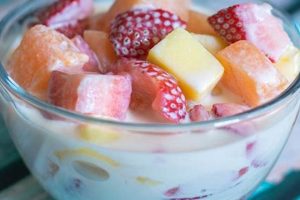
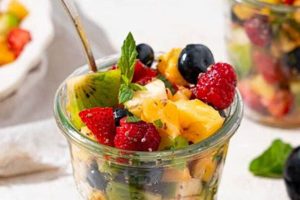
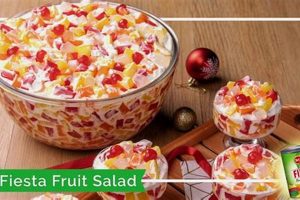
A luscious topping for fruit salad often involves whipped cream. This versatile ingredient can be used as is, or enhanced with flavorings such as vanilla extract, almond extract, or citrus zest. Sweetened whipped cream provides a creamy, decadent counterpoint to the fresh fruit, adding a textural and flavor dimension. For example, a simple fruit salad comprised of berries and melon can be elevated with a dollop of lightly sweetened whipped cream.
The addition of whipped cream contributes richness and visual appeal to a fruit salad, transforming a simple dish into a delightful dessert. Historically, cream has been a symbol of luxury and indulgence, further enhancing the perceived value of the dish. The smooth texture contrasts pleasantly with the varied textures of the fruit, creating a more satisfying sensory experience. This can be especially appealing for individuals who prefer a creamier element in their desserts or those seeking a richer mouthfeel.
This article will explore various recipes featuring fruit salad complemented by whipped cream, ranging from simple, everyday preparations to more elaborate, celebratory presentations. It will also discuss variations, such as using flavored whipped creams and incorporating other toppings, allowing readers to personalize their fruit salad creations.
Tips for Enhancing Fruit Salad with Whipped Cream
Elevating fruit salad with whipped cream involves careful consideration of flavor pairings, textures, and presentation. The following tips offer guidance for optimizing the combination.
Tip 1: Use Fresh, High-Quality Ingredients: The flavor of the whipped cream topping is significantly influenced by the quality of the cream used. Opting for heavy cream or whipping cream with a high fat content will yield the best results, producing a stable, airy whip.
Tip 2: Balance Sweetness: Adjust the sweetness of the whipped cream based on the sweetness of the fruit. For tart fruits like berries, a slightly sweeter whipped cream may be preferred, while less sweet cream complements naturally sweet fruits like melons or bananas.
Tip 3: Incorporate Flavor Enhancements: Vanilla extract, almond extract, citrus zest, or spices like cinnamon or nutmeg can be added to the whipped cream to create unique flavor profiles that complement specific fruit combinations.
Tip 4: Consider Texture: A stable, stiffly whipped cream holds its shape well, offering a pleasing contrast to the softer textures of the fruit. Avoid over-whipping, which can result in a grainy texture.
Tip 5: Chill Ingredients Thoroughly: Both the cream and the mixing bowl should be chilled before whipping. This ensures a stable, voluminous whipped cream. Similarly, serving the fruit salad chilled enhances the overall refreshing quality of the dish.
Tip 6: Presentation Matters: The visual appeal of the dish can be enhanced by piping the whipped cream onto individual servings of fruit salad or creating a decorative swirl on top of a larger bowl. Garnishes, such as fresh mint sprigs or chocolate shavings, can add further elegance.
Tip 7: Time Appropriately: Whipped cream is best served fresh. If making the whipped cream in advance, store it in an airtight container in the refrigerator and add it to the fruit salad just before serving to prevent it from wilting or becoming watery.
By following these tips, one can create a fruit salad with whipped cream that is both visually appealing and delectable, offering a harmonious blend of flavors and textures.
These guidelines provide a foundation for exploring diverse flavor combinations and presentation styles, ultimately resulting in a personalized and satisfying culinary experience. The next section will explore specific recipe variations in greater detail.
1. Fresh, Ripe Fruit

The foundation of any successful fruit salad topped with whipped cream lies in the quality of the fruit itself. Fresh, ripe fruit provides the essential flavor base upon which the other components build. Without this crucial element, the dish falls flat, regardless of the quality of the cream or other additions.
- Flavor Complexity:
Ripe fruit exhibits a complex interplay of sweetness, tartness, and aromatic compounds that contribute depth to the overall flavor profile. Underripe fruit lacks sweetness and may possess undesirable astringency. Overripe fruit, while sweet, can be mushy and lack the vibrant acidity that balances the richness of the whipped cream. A fruit salad composed of peak-season strawberries, for example, provides a burst of juicy sweetness balanced by a pleasant tartness, creating a harmonious counterpoint to the creamy topping.
- Textural Contrast:
Varied textures within a fruit salad create a more engaging sensory experience. Firm fruits like apples or grapes provide a crisp counterpoint to softer fruits like berries or bananas. This textural diversity complements the smooth, airy texture of the whipped cream. Consider a salad combining crisp apple slices, juicy grapes, and segments of tender oranges, each offering a distinct textural element that enhances the overall enjoyment.
- Visual Appeal:
Vibrant, naturally colored fruit enhances the visual appeal of the dish. The bright hues of fresh fruit create an enticing presentation, especially when contrasted against the pristine white of the whipped cream. A combination of red strawberries, green kiwi, and orange cantaloupe provides a visually striking arrangement, while dull, bruised, or discolored fruit detracts from the overall aesthetic.
- Nutritional Value:
Fresh, ripe fruit contributes essential vitamins, minerals, and antioxidants. While whipped cream adds richness, the fruit provides nutritional substance, making the dish a more wholesome dessert option. Incorporating a variety of fruits, such as blueberries, raspberries, and blackberries, known for their antioxidant properties, elevates the nutritional profile of the dish.
The selection of fresh, ripe fruit is paramount to creating a fruit salad with whipped cream that is not only visually appealing but also delivers a balanced and satisfying flavor experience. The interplay of textures, the vibrant colors, and the nutritional benefits provided by fresh fruit enhance the richness of the whipped cream, culminating in a delightful and wholesome dessert.
2. High-Quality Cream

High-quality cream plays a crucial role in creating a successful fruit salad with whipped cream. The quality of the cream directly impacts the texture, stability, and overall flavor of the whipped topping. Heavy cream or whipping cream, characterized by a higher fat content (typically 36-40%), is essential for achieving the desired airy lightness and stable structure. Creams with lower fat content will not whip as effectively, resulting in a thinner, less stable topping that is prone to weeping or collapsing.
The higher fat content in heavy cream allows for the incorporation of air during the whipping process. As the cream is whipped, air bubbles become trapped within the fat molecules, creating a network that gives whipped cream its characteristic light and fluffy texture. This structure is essential for maintaining the whipped cream’s shape and preventing it from deflating or becoming watery, especially when paired with the moisture-rich environment of a fruit salad. A fruit salad topped with high-quality whipped cream maintains its visual appeal and textural integrity, offering a delightful contrast to the fruit. Conversely, using a lower-quality cream can lead to a dense, heavy topping that detracts from the overall experience.
Understanding the importance of high-quality cream empowers one to create a fruit salad with whipped cream that truly elevates the dish. The superior texture and stability provided by high-quality cream ensure a visually appealing and palatable dessert. This knowledge translates to a more satisfying culinary experience, highlighting the symbiotic relationship between ingredient quality and the overall success of a recipe. Investing in high-quality cream ensures the whipped topping enhances, rather than detracts from, the fresh fruit, resulting in a harmonious blend of flavors and textures.
3. Balanced Sweetness
Balanced sweetness is paramount in a successful fruit salad with whipped cream. The interplay of sugar levels in the fruit and the whipped cream determines the overall palatability of the dish. A harmonious balance enhances the natural flavors of the fruit, while an imbalance can lead to a cloyingly sweet or overly tart result. Careful consideration of the sweetness of the fruit and the level of sugar added to the whipped cream is essential for achieving a delightful sensory experience.
- Natural Fruit Sugars
Fruits possess varying degrees of natural sweetness. Berries, for instance, can range from tart raspberries to sweeter strawberries. Melons also exhibit a range of sweetness, from the subtly sweet honeydew to the intensely sweet cantaloupe. Understanding these variations allows for informed decisions regarding the sweetness of the whipped cream. A less sweet whip complements inherently sweet fruits, while a sweeter whip balances the tartness of less sweet varieties. This interplay creates a balanced flavor profile, allowing the distinct flavors of each fruit to shine.
- Added Sugar in Whipped Cream
The amount of sugar added to the whipped cream directly influences the overall sweetness of the dish. Granulated sugar, powdered sugar, or alternative sweeteners can be incorporated to adjust the sweetness level. For naturally sweet fruits, a lightly sweetened or even unsweetened whipped cream might suffice. Conversely, tart fruits benefit from a sweeter whipped cream to balance their acidity. Taste testing is crucial to achieve the desired balance, ensuring the whipped cream complements rather than overpowers the fruit.
- Flavor Enhancement through Acidity
Balancing sweetness involves not only the addition of sugar but also the consideration of acidity. A touch of acidity can brighten the flavors and prevent the dish from becoming cloyingly sweet. A squeeze of lemon or lime juice in the whipped cream can provide a refreshing counterpoint to the sweetness of both the fruit and the cream. This interplay of sweet and tart elements creates a more complex and nuanced flavor profile. Incorporating slightly tart fruits like raspberries or kiwi can also contribute to this balance.
- Impact on Overall Palatability
The balance of sweetness significantly affects the overall palatability of the fruit salad. An overly sweet dish can be overwhelming, masking the delicate flavors of the fruit. Conversely, a dish lacking sweetness can taste bland and unappealing. The goal is to achieve a harmonious balance that allows the natural sweetness of the fruit to shine while being complemented by the creamy richness of the whipped topping. This balance ensures a satisfying and enjoyable culinary experience.
A well-balanced sweetness profile is crucial for creating a truly enjoyable fruit salad with whipped cream. By considering the natural sweetness of the fruit, carefully adjusting the sugar level in the whipped cream, and incorporating elements of acidity, a harmonious flavor profile can be achieved. This careful orchestration of flavors transforms a simple dessert into a symphony of taste and texture, maximizing both enjoyment and satisfaction.
4. Complementary Flavors
Complementary flavors elevate fruit salad with whipped cream from simple to sophisticated. Flavor pairings enhance the inherent qualities of both the fruit and the cream, creating a synergistic taste experience. Consideration of flavor profiles allows for nuanced combinations that amplify enjoyment. For instance, the bright, citrusy notes of a mandarin orange pair well with the warm spice of ginger in the whipped cream. This combination offers a complex flavor profile that elevates the overall taste experience beyond the simple sweetness of the fruit and cream alone. Similarly, the sweetness of strawberries finds a delightful counterpoint in the subtle herbal notes of basil-infused whipped cream. Such pairings introduce layers of flavor, transforming a basic dessert into a culinary delight.
Understanding the interplay of flavors offers a range of possibilities for customization. Vanilla, a classic addition to whipped cream, provides a warm, comforting backdrop for a variety of fruits, particularly berries and stone fruits. The addition of extracts like almond or peppermint can further enhance specific fruit combinations, offering a unique twist. Incorporating spices such as cinnamon or nutmeg into the whipped cream can complement autumnal fruits like apples and pears. The choice of flavor pairings offers an opportunity to create a personalized taste experience tailored to individual preferences. Thoughtful consideration of flavor combinations ensures each element contributes to a harmonious and balanced flavor profile, maximizing enjoyment.
Mastering the art of complementary flavors enhances the culinary experience of fruit salad with whipped cream. The careful selection of flavor pairings transforms a simple dessert into a multi-sensory experience. This understanding allows for creative exploration and customization, empowering individuals to create dishes that reflect individual preferences and elevate everyday ingredients into extraordinary culinary creations. Successfully integrating complementary flavors not only enhances the immediate enjoyment of the dish but also fosters a deeper appreciation for the nuances of flavor and the potential for culinary artistry.
5. Proper Whipping Technique
Proper whipping technique is crucial for creating a fruit salad with whipped cream that is both visually appealing and texturally pleasing. The stability and lightness of the whipped cream depend heavily on the method employed. Incorrect technique can result in a dense, heavy, or unstable topping that detracts from the overall dish. A properly whipped cream, on the other hand, provides a light, airy counterpoint to the fruit, enhancing the overall sensory experience.
- Temperature Control
Chilling the cream and the bowl beforehand is essential for proper whipping. Cold temperatures help the fat globules solidify, allowing them to trap air more effectively. This creates a stable emulsion that holds its shape. Room temperature cream will not whip to the same volume and is more likely to separate. The temperature of the cream directly impacts the final volume and stability of the whipped cream, ensuring a light, airy topping that complements the fruit salad.
- Whipping Speed and Timing
Starting slowly and gradually increasing the speed allows for even incorporation of air into the cream. Over-whipping can cause the fat globules to clump together, resulting in a grainy texture and potentially butter. Conversely, under-whipping yields a thin, runny consistency that lacks the desired lightness and stability. Proper attention to speed and duration ensures a smooth, voluminous whipped cream that enhances the presentation and enjoyment of the fruit salad.
- Sugar Incorporation
Adding sugar gradually, once the cream has started to thicken, ensures even distribution and prevents the cream from becoming overly sweet. Adding sugar too early can inhibit the whipping process, leading to a less stable and less voluminous product. The timing of sugar addition plays a key role in achieving the desired sweetness and texture of the whipped cream, balancing the flavors of the fruit salad.
- Observing Visual Cues
Recognizing the visual cues of properly whipped cream is vital. Soft peaks, which gently curl over when the whisk is lifted, indicate a suitable consistency for folding into other ingredients or using as a light topping. Stiff peaks, which hold their shape firmly, are ideal for piping and decorating. Over-whipped cream appears grainy and dry. Careful observation throughout the whipping process ensures the desired texture and stability for the specific application in the fruit salad.
Mastering proper whipping technique is essential for creating a visually appealing and texturally satisfying fruit salad with whipped cream. Attention to temperature, speed, timing, and visual cues ensures a light, airy, and stable whipped cream that complements the fruit and enhances the overall dessert experience. A properly whipped cream transforms a simple fruit salad into an elegant and enjoyable treat.
6. Attractive Presentation

Attractive presentation significantly enhances the perceived value and enjoyment of a fruit salad with whipped cream. Visual appeal stimulates appetite and contributes to a more satisfying dining experience. A thoughtfully arranged fruit salad, complemented by artfully presented whipped cream, elevates the dish from a simple dessert to a visually captivating culinary creation. This connection between presentation and enjoyment highlights the importance of visual aesthetics in the culinary arts. For example, a fruit salad served in a hollowed-out watermelon half, with the whipped cream piped decoratively around the rim, creates a visually striking centerpiece that elevates the perceived value of the dish. Similarly, individual portions of fruit salad layered in elegant glassware, topped with a dollop of whipped cream and a sprig of mint, transform a simple dessert into a sophisticated treat. The visual appeal adds a layer of enjoyment beyond the basic flavors and textures, demonstrating the practical significance of presentation.
Several factors contribute to an attractive presentation. The choice of serving vessel plays a key role. A clear glass bowl showcases the vibrant colors of the fruit, while a rustic wooden bowl adds a touch of natural elegance. The arrangement of the fruit itself also contributes to visual appeal. A mix of colors, shapes, and sizes creates a more dynamic and interesting presentation than a homogenous arrangement. The whipped cream can be used to add visual interest, whether piped into rosettes, dolloped generously, or spread smoothly over the surface. Garnishes, such as fresh mint, chocolate shavings, or a dusting of powdered sugar, provide finishing touches that enhance the visual appeal. These elements work together to create a multi-sensory experience that elevates the enjoyment of the dish. A simple fruit salad becomes a feast for the eyes as well as the palate, emphasizing the practical application of aesthetic principles in food presentation.
Understanding the impact of attractive presentation on the overall enjoyment of fruit salad with whipped cream allows for a more thoughtful and deliberate approach to dessert preparation. While taste and texture remain paramount, visual appeal adds another dimension to the dining experience. Recognizing this connection allows one to transform simple ingredients into visually stunning creations that enhance any occasion. Addressing the visual element elevates the perceived value of the dish, demonstrating the power of presentation in culinary arts. By considering the elements of color, texture, and arrangement, even a simple fruit salad with whipped cream can become a visually appealing and memorable culinary experience.
7. Chilled Ingredients

Chilled ingredients are essential for optimizing both the texture and flavor of fruit salad with whipped cream. Temperature significantly influences the structural integrity of whipped cream and preserves the freshness of the fruit. Maintaining appropriate temperatures ensures a delightful sensory experience, highlighting the importance of proper chilling techniques in recipe preparation.
- Whipped Cream Stability
Cold temperatures are crucial for achieving a stable whipped cream structure. Chilling the cream before whipping allows the fat globules to solidify, facilitating efficient air incorporation. This creates a light, airy texture that holds its shape. Room-temperature cream whips less effectively, resulting in a thinner, less stable consistency prone to weeping or collapsing, especially when combined with the moisture of the fruit. The temperature directly impacts the volume and stability of the whipped cream, impacting the overall presentation and enjoyment of the dish.
- Fruit Freshness and Flavor
Chilled fruit enhances the refreshing quality of the salad. Cold temperatures preserve the fruit’s crispness and prevent enzymatic browning, maintaining optimal flavor and visual appeal. Room-temperature fruit, conversely, may appear less vibrant and develop a softer texture, detracting from the overall sensory experience. Serving fruit at the ideal temperature heightens the perception of freshness, amplifying enjoyment and enhancing the delicate flavors.
- Prevention of Bacterial Growth
Maintaining chilled temperatures for both the fruit and the whipped cream inhibits bacterial growth, ensuring food safety. Dairy products, especially whipped cream, are susceptible to bacterial contamination at warmer temperatures. Chilled ingredients mitigate this risk, promoting safe consumption and extending shelf life. Adhering to proper food safety practices ensures a healthy and enjoyable dining experience.
- Enhanced Sensory Experience
The combination of chilled fruit and whipped cream creates a refreshing and delightful contrast in textures and temperatures. The cool, smooth cream against the chilled, yet slightly firm fruit enhances the overall sensory experience, making the dessert more palatable and enjoyable, particularly in warmer weather. This contrast amplifies the sensory pleasure derived from the dish, highlighting the integral role of temperature in culinary enjoyment.
The importance of chilled ingredients in a fruit salad with whipped cream extends beyond mere temperature preference. Chilled components contribute significantly to the structural integrity of the whipped cream, preserve the freshness and flavor of the fruit, promote food safety, and enhance the overall sensory experience. Attention to temperature elevates this simple dessert into a delightful culinary creation, showcasing the impact of proper chilling techniques on achieving optimal results.
Frequently Asked Questions
This section addresses common inquiries regarding the preparation and enjoyment of fruit salad enhanced with whipped cream.
Question 1: Can stabilized whipped cream be used for fruit salad?
While stabilized whipped cream offers increased stability, it can sometimes have a denser texture. For optimal results, freshly whipped cream is generally preferred for its lighter, airier consistency.
Question 2: How can one prevent whipped cream from wilting on fruit salad?
Serving the fruit salad and whipped cream chilled helps prevent wilting. Adding the whipped cream just before serving also minimizes exposure to warmer temperatures and humidity.
Question 3: What are suitable alternatives to heavy cream for individuals with dietary restrictions?
Coconut cream offers a dairy-free alternative that whips well. Other options include plant-based whipping creams made from soy, almond, or cashew milk, but results may vary.
Question 4: How can one ensure the whipped cream complements the fruit salad’s flavors?
Consider the sweetness and acidity of the fruit when flavoring the whipped cream. Tart fruits pair well with sweeter, vanilla-infused cream, while sweeter fruits may benefit from a less sweet cream with hints of citrus or spice.
Question 5: What are some strategies for preventing fruit discoloration in the salad?
Tossing the fruit with a small amount of lemon or lime juice helps prevent browning. Keeping the prepared fruit salad refrigerated also minimizes oxidation.
Question 6: How long can fruit salad with whipped cream be stored safely?
Ideally, fruit salad with whipped cream should be consumed immediately. If storage is necessary, refrigerate in an airtight container for no more than two hours to maintain optimal quality and minimize bacterial growth.
Proper preparation and storage are crucial for maximizing enjoyment and preserving the quality of fruit salad served with whipped cream.
The following section will explore various recipe variations using seasonal fruits.
Fruit Salad Recipe Whip Cream
Exploration of fruit salad enhanced by whipped cream reveals a delicate balance of art and science. Careful selection of fresh, ripe fruit provides the foundational flavor profile, while the quality of the cream dictates the texture and stability of the whipped topping. Balancing sweetness and acidity, incorporating complementary flavors, and employing proper whipping techniques are crucial for achieving a harmonious blend of taste and texture. Attractive presentation elevates the perceived value, transforming a simple dessert into a visually appealing culinary creation. Maintaining chilled ingredients preserves freshness, enhances food safety, and optimizes the sensory experience. Addressing these elements ensures a delightful and satisfying culinary result.
The potential for customization within the seemingly simple combination of fruit salad and whipped cream offers endless possibilities for culinary exploration. From classic pairings to innovative flavor combinations, the versatility of this dessert allows for personalized creations tailored to individual preferences and seasonal variations. Further exploration of flavor profiles, textures, and presentation styles promises continued evolution and refinement within this timeless culinary tradition. Ultimately, the successful execution of a fruit salad recipe featuring whipped cream rests upon a thorough understanding of these fundamental principles.