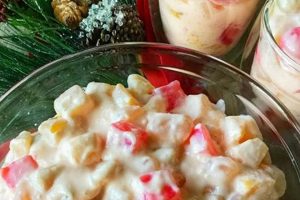
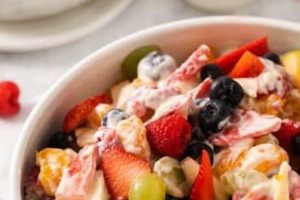
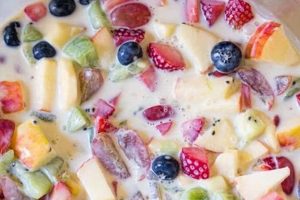
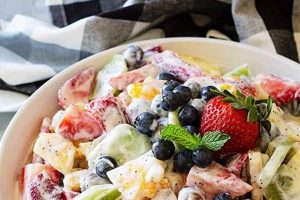
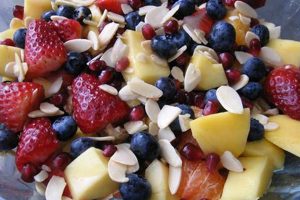
Gelatin-based desserts combined with an assortment of fresh or canned fruits offer a refreshing and visually appealing treat. A simple version might involve diced fruits suspended in prepared gelatin, while more complex variations can incorporate layered arrangements, whipped cream, or a custard base. These desserts provide a flexible canvas for culinary creativity, allowing for diverse flavor combinations and presentations.
The refreshing nature of these desserts makes them popular choices for warm weather gatherings or as a light, palate-cleansing finish to a meal. The inclusion of fruit contributes vitamins and other nutrients, making them a healthier alternative to some richer desserts. Historically, gelatin-based dishes signified a level of culinary sophistication due to the labor-intensive process of gelatin extraction before commercially available powdered options. Today, their ease of preparation and adaptability contribute to their enduring appeal.
This article will explore various aspects of creating these delightful desserts, covering topics such as selecting appropriate fruits, flavor pairings, preparation techniques, and presentation suggestions.
Tips for Creating Exquisite Gelatin and Fruit Desserts
Achieving optimal results with fruit-infused gelatin desserts requires attention to several key factors. The following tips provide guidance for enhancing both flavor and presentation.
Tip 1: Fruit Selection and Preparation: Choose fruits that hold their shape and texture well in gelatin. Avoid overly ripe or bruised specimens. Fruits with high water content, such as watermelon, should be used sparingly or pre-treated to prevent excess liquid from weakening the gelatin’s structure. Consistent sizing enhances visual appeal and even distribution.
Tip 2: Gelatin Preparation: Dissolve gelatin completely and allow it to cool slightly before adding fruit to prevent fruit from sinking to the bottom. Strict adherence to package instructions ensures proper setting.
Tip 3: Layering for Visual Appeal: Create visually stunning desserts by layering different colors of gelatin and fruit. Allow each layer to set completely before adding the next to prevent mixing.
Tip 4: Flavor Combinations: Complementary flavor profiles elevate the overall taste experience. Consider classic pairings such as citrus fruits with berries or tropical fruits with coconut. Taste testing combinations before incorporating them into the final dessert is recommended.
Tip 5: Mold Selection and Unmolding: Choose molds appropriate for the occasion and desired presentation. Lightly grease molds before adding the gelatin mixture for easier unmolding. Briefly dipping the mold in warm water further aids in releasing the dessert intact.
Tip 6: Garnishing and Serving: Enhance the finished product with garnishes like fresh mint sprigs, whipped cream, or a dusting of powdered sugar. Serve chilled for optimal flavor and texture.
Tip 7: Storage: Store leftover dessert covered and refrigerated for up to three days. Avoid freezing, as this can negatively impact the texture of the gelatin.
By applying these tips, one can elevate a simple gelatin and fruit dessert into a truly impressive culinary creation. Attention to detail, from ingredient selection to presentation, contributes to a delightful sensory experience.
This comprehensive guide provides a solid foundation for crafting exceptional fruit-infused gelatin desserts. Experimentation with flavors, textures, and presentation techniques will undoubtedly lead to personalized and memorable creations.
1. Fruit Selection

Fruit selection significantly impacts the overall quality of a gelatin and fruit salad. The choice of fruits influences not only the flavor profile but also the texture, visual appeal, and nutritional value of the final product. Careful consideration of these factors ensures a harmonious blend of taste and aesthetics.
- Fruit Firmness and Ripeness:
Selecting fruits with the appropriate firmness is crucial. Overripe fruit can break down within the gelatin, creating a mushy texture and potentially clouding the appearance. Conversely, underripe fruit may lack desired sweetness and flavor. Optimal ripeness ensures both structural integrity and palatable taste. For instance, firm berries like blueberries and raspberries hold their shape well, whereas overly ripe bananas or peaches might disintegrate. This factor directly affects the dessert’s visual appeal and textural enjoyment.
- Flavor Compatibility:
Harmonious flavor combinations are essential for a successful dessert. Consider the interplay of sweet, tart, and acidic notes. Pairing fruits with complementary flavors, like citrus fruits with berries or melons with mint, creates a balanced and enjoyable taste experience. Clashing flavors can detract from the overall enjoyment. Experimentation and pre-tasting combinations are recommended to ensure a well-balanced flavor profile.
- Color and Visual Appeal:
The visual presentation of the dessert enhances its appeal. A variety of colors creates a vibrant and attractive dish. Consider the natural hues of different fruits and how they will interact within the clear gelatin. Contrasting colors create a visually striking presentation. For example, incorporating red strawberries, green grapes, and orange segments creates a visually stimulating and appealing dessert.
- Nutritional Considerations:
Fruit selection offers an opportunity to incorporate nutritional value. Choosing a diverse array of fruits provides a range of vitamins, minerals, and antioxidants. This can contribute to a healthier dessert option. Incorporating fruits like berries, which are rich in antioxidants, adds a nutritional dimension to the dessert beyond simply taste and aesthetics.
Strategic fruit selection is paramount in crafting a successful gelatin and fruit salad. Considering factors such as firmness, flavor compatibility, color, and nutritional value contributes to a dessert that is not only visually appealing but also offers a delightful and potentially healthful culinary experience. The interplay of these elements elevates the dish from a simple combination of ingredients to a carefully curated culinary creation.
2. Gelatin Preparation
Gelatin preparation is fundamental to the success of jello and fruit salad recipes. Proper handling of gelatin directly impacts the final product’s texture, stability, and overall appeal. Dissolving the gelatin granules completely and at the correct temperature is crucial for achieving the desired consistency. Insufficiently dissolved gelatin results in a grainy texture, while overheating can compromise its setting ability. For instance, using cold water to bloom the gelatin before incorporating hot liquid ensures even hydration and prevents clumping, contributing to a smooth, homogenous final product.
The gelatin’s role extends beyond simply providing a jiggly consistency. It acts as a binding agent, suspending the fruit pieces within the dessert and contributing to structural integrity. This suspension is essential for creating visually appealing arrangements and preventing the fruit from settling at the bottom. The clarity of the gelatin also allows the vibrant colors of the fruit to shine through, enhancing the presentation. Furthermore, proper gelatin preparation ensures even distribution of flavors throughout the dessert.
Mastery of gelatin preparation techniques is essential for creating high-quality jello and fruit salads. Precise adherence to temperature and hydration guidelines ensures the desired texture and stability. This understanding allows for greater control over the final product, facilitating creative variations and consistent, visually appealing results. Challenges, such as preventing the formation of air bubbles or achieving specific textural nuances, can be addressed through refined techniques and informed adjustments to the process. This foundational element ultimately dictates the dessert’s success, highlighting its significance in the culinary process.
3. Flavor Balancing
Flavor balancing is paramount in crafting successful jello and fruit salad recipes. It involves the careful orchestration of sweet, tart, acidic, and other flavor components to create a harmonious and palatable taste experience. A well-balanced flavor profile elevates the dessert beyond a simple combination of ingredients, transforming it into a complex and enjoyable culinary creation. Neglecting this aspect can result in a dish that is overly sweet, excessively tart, or otherwise unbalanced, detracting from its overall appeal.
- Sweetness Modulation
Sweetness forms the foundation of most fruit-based desserts. However, excessive sweetness can be cloying and mask the nuanced flavors of the fruit. Modulating sweetness involves judicious use of sugar or alternative sweeteners and incorporating tart or acidic elements to counterbalance the sweetness. For instance, using less sweet varieties of fruit like berries alongside sweeter options like grapes can achieve a balanced sweetness profile. Additionally, a touch of citrus zest or a splash of lemon juice can add a refreshing counterpoint to the sweetness.
- Acidity and Tartness
Acidity and tartness play a vital role in cutting through the sweetness and adding brightness to the flavor profile. These elements provide a refreshing contrast and prevent the dessert from becoming overly sugary. Incorporating citrus fruits, such as oranges or grapefruits, or using a small amount of vinegar or citric acid can introduce the desired acidity. The level of acidity should be carefully calibrated to complement the sweetness of the fruit and gelatin. For example, pairing tart raspberries with sweet mangoes creates a well-balanced flavor combination.
- Aromatic Complexity
Flavor balancing extends beyond simply managing sweetness and acidity. Incorporating aromatic elements adds depth and complexity to the overall flavor profile. Ingredients like mint, basil, or spices like cinnamon or ginger can introduce intriguing aromatic notes. These aromatic elements can complement the fruit flavors, creating a more nuanced and sophisticated taste experience. For instance, a hint of mint can enhance the freshness of a melon and berry salad, while a touch of cinnamon can add warmth to a jello dish containing apples or pears.
- Texture’s Influence on Flavor Perception
Texture plays a subtle yet significant role in flavor balancing. The mouthfeel of a dessert can influence how the flavors are perceived. A combination of textures, such as the smooth gelatin, the juicy fruit, and perhaps the crunch of nuts, can create a more engaging and satisfying sensory experience. Furthermore, the contrast between textures can enhance the perception of individual flavors. For example, the smooth texture of the gelatin can highlight the juiciness of the fruit, while the addition of chopped nuts can provide a contrasting textural element that enhances the overall flavor experience.
In jello and fruit salad recipes, flavor balancing is achieved through the thoughtful interplay of these elements. A well-executed balance of sweetness, acidity, aromatic complexity, and textural considerations elevates the dessert from a simple mixture to a cohesive and delightful culinary experience. By understanding these principles, one can create jello and fruit salads that are not only visually appealing but also offer a complex and satisfying flavor profile.
4. Texture Variations
Texture variations contribute significantly to the overall sensory experience of gelatin and fruit salads. A combination of textures elevates these desserts beyond simple sweetness, offering a more complex and engaging mouthfeel. The interplay of textures can amplify flavor perception, making each bite more dynamic and enjoyable. Consider the contrast between the smooth, cool gelatin and the burst of juiciness from a grape or the firmness of a diced apple. This contrast creates a more stimulating experience than a uniformly textured dessert. The textural element adds another dimension of enjoyment, engaging the palate on multiple levels.
Strategic incorporation of textural variety can enhance the overall balance of the dessert. For instance, adding chopped nuts provides a welcome crunch against the soft gelatin and juicy fruit. Toasted coconut flakes offer a chewy element, while incorporating whipped cream introduces a creamy, airy component. These textural additions not only diversify the mouthfeel but can also complement the flavor profile. The crunch of nuts can enhance the perception of sweetness, while the creaminess of whipped cream can balance the tartness of certain fruits. These additions create a multi-faceted sensory experience that is more stimulating than a single-texture dessert.
Understanding the impact of texture variations allows for greater control over the final product. One can tailor the textural profile to complement specific flavor combinations or create a particular sensory experience. For example, a tropical-themed salad might benefit from the addition of toasted coconut and macadamia nuts, while a berry-based dessert might be enhanced by the inclusion of a layer of crushed almond biscotti. Challenges, such as preventing textural elements from becoming soggy or maintaining distinct textural contrasts, can be addressed through careful preparation and ingredient selection. This awareness of textures influence on the overall culinary experience empowers creation of truly sophisticated and satisfying gelatin and fruit salads.
5. Presentation Techniques
Presentation techniques significantly influence the perceived appeal and enjoyment of jello and fruit salad recipes. Visual appeal stimulates appetite and enhances the overall dining experience. A thoughtfully presented dessert elevates the dish beyond mere sustenance, transforming it into a culinary creation that engages multiple senses. The impact of presentation extends beyond aesthetics; it can also influence perceived flavors and overall satisfaction. A visually appealing dessert often creates a heightened expectation of flavor, enhancing the enjoyment of the dish. For example, a simple jello and fruit salad served in a plain bowl might be perceived as less appealing than the same salad artfully arranged in individual glasses, garnished with fresh mint, and served on a chilled plate. The presentation elevates the perceived value and enjoyment of the dessert.
Several factors contribute to effective presentation. Mold selection plays a crucial role in shaping the final form of the dessert. Intricate molds can create visually stunning shapes, while individual molds allow for portion control and elegant presentation. Layering different colors of jello and arranging fruit in aesthetically pleasing patterns adds visual interest. Garnishes, such as fresh herbs, whipped cream, or a dusting of powdered sugar, provide finishing touches that enhance the visual appeal. The choice of serving dish and accompanying elements, like cutlery and napkins, further contribute to the overall presentation. For instance, a layered jello mold unmolded onto a decorative platter creates a centerpiece-worthy presentation, while individual parfaits served in elegant glasses offer a refined touch. These details contribute to a more sophisticated and enjoyable dining experience.
Mastery of presentation techniques enhances the appeal of jello and fruit salads. Thoughtful consideration of visual elements elevates these desserts, transforming them from simple dishes into visually captivating culinary creations. Addressing potential challenges, such as preventing the jello from sticking to the mold or maintaining the structural integrity of layered desserts, requires careful preparation and attention to detail. This understanding of presentation’s impact allows for creative expression and enhances the overall enjoyment of the dish, reflecting a sophisticated approach to culinary arts.
6. Storage Methods
Proper storage is crucial for maintaining the quality, texture, and safety of jello and fruit salads. These desserts, often containing fresh fruit and a gelatin base, are susceptible to spoilage and textural changes if not stored correctly. Appropriate storage methods preserve the intended flavor profile, prevent bacterial growth, and maintain the desired visual appeal, ensuring a safe and enjoyable culinary experience.
- Temperature Control
Maintaining a consistent, cool temperature is paramount for preserving jello and fruit salads. Refrigeration at temperatures below 40F (4C) inhibits bacterial growth and slows down enzymatic processes that can lead to spoilage. Avoid storing these desserts at room temperature for extended periods, as this can promote bacterial proliferation and compromise the gelatin’s structural integrity. Fluctuations in temperature can also lead to condensation, affecting the texture and potentially introducing unwanted moisture.
- Air Exposure
Limiting air exposure is crucial for preventing oxidation and maintaining the freshness of both the fruit and the gelatin. Oxidation can cause discoloration and off-flavors, particularly in fruits susceptible to browning. Storing the dessert in airtight containers minimizes air contact, preserving the vibrant colors and preventing the absorption of unwanted odors from other foods in the refrigerator. Proper sealing also helps maintain the desired moisture level, preventing the dessert from drying out or becoming overly saturated.
- Container Selection
Choosing appropriate containers significantly impacts storage effectiveness. Airtight containers, preferably made of glass or food-grade plastic, are ideal for storing jello and fruit salads. Avoid using metal containers, as they can react with acidic fruits, leading to off-flavors and discoloration. The size and shape of the container should be appropriate for the quantity of dessert, minimizing excess air space within the container. Properly sealed containers also prevent spills and maintain the dessert’s presentation.
- Storage Duration
While proper storage extends shelf life, jello and fruit salads are best consumed within a few days of preparation. Fresh fruit, even when incorporated into gelatin, has a limited shelf life. Over time, the fruit can release moisture, potentially weakening the gelatin’s structure and affecting the overall texture. The quality and flavor of the dessert also gradually decline with time. Adhering to recommended storage durations, typically up to 3-4 days, ensures optimal quality and minimizes the risk of spoilage.
Adherence to proper storage practices preserves the quality and safety of jello and fruit salads. Temperature control, minimized air exposure, appropriate container selection, and adherence to recommended storage durations ensure optimal flavor, texture, and visual appeal. Neglecting these aspects can compromise the dessert’s quality and increase the risk of foodborne illness. Careful attention to storage is therefore an essential component of responsible food handling and contributes significantly to a positive culinary experience.
Frequently Asked Questions
This section addresses common inquiries regarding the preparation and enjoyment of gelatin and fruit-based desserts.
Question 1: How can one prevent fruit from sinking to the bottom of the gelatin mold?
Several techniques prevent fruit from sinking. Allowing the gelatin to cool slightly before adding the fruit increases viscosity, hindering downward movement. Distributing denser fruits evenly throughout the mixture or layering them within a multi-layered dessert also helps maintain a balanced presentation. Alternatively, pre-treating certain fruits, such as by briefly blanching or macerating them in sugar, can reduce their water content and minimize sinking.
Question 2: What are suitable alternatives to canned fruit in these recipes?
Fresh, seasonal fruit offers superior flavor and nutritional value compared to canned options. Frozen fruit can also be utilized, ensuring it is thoroughly thawed and drained before incorporation to prevent excess water from weakening the gelatin. Dried fruits, rehydrated and properly drained, can add unique textures and flavors. When using fresh or frozen options, consider the fruit’s water content and adjust gelatin preparation accordingly.
Question 3: Can artificial sweeteners be used in place of sugar?
Artificial sweeteners may be substituted, though they can sometimes affect the final texture and setting properties of the gelatin. Careful experimentation is recommended to determine the appropriate conversion ratios and to assess any impact on the dessert’s overall structure. Consulting specific sweetener package instructions for guidance on gelatin-based recipes often proves beneficial.
Question 4: How can cloudiness in the finished gelatin be avoided?
Cloudiness often results from undissolved gelatin granules or the incorporation of excessive amounts of certain fruits, especially those with high water content. Ensuring complete gelatin dissolution and careful fruit selection mitigate this issue. Straining the gelatin mixture before adding the fruit can also help remove any undissolved particles and improve clarity. Maintaining stable temperatures during cooling and avoiding excessive agitation further minimize cloudiness.
Question 5: What are effective methods for unmolding gelatin desserts without damage?
Briefly dipping the mold in warm water loosens the gelatin from the mold’s surface, facilitating a clean release. Running a thin knife or spatula around the edges of the mold before inverting it onto a serving plate also aids in unmolding. Selecting molds with smooth, non-stick surfaces further simplifies the process. Ensuring the gelatin has fully set before attempting unmolding is crucial for preventing structural damage.
Question 6: How long can prepared gelatin and fruit salads be safely stored?
Properly stored gelatin and fruit salads, kept in airtight containers within a refrigerator set below 40F (4C), typically remain safe for consumption for up to three to four days. However, the quality and freshness of the ingredients, particularly fresh fruit, gradually decline over time. Observing any signs of spoilage, such as mold growth, off-odors, or changes in texture, indicates the need for discarding the dessert, regardless of the storage duration.
Addressing these common inquiries should facilitate successful preparation and enjoyment of gelatin and fruit-based desserts. Attention to detail throughout the process, from ingredient selection to storage, contributes to a satisfying culinary experience.
This concludes the frequently asked questions section. The following segment will offer a collection of diverse recipes showcasing various flavor combinations and presentation techniques for creating visually appealing and delectable gelatin and fruit desserts.
Conclusion
Exploration of gelatin and fruit salad recipes reveals a deceptively complex interplay of factors influencing the final product. Careful fruit selection, considering ripeness, flavor profiles, and color variations, contributes significantly to both taste and visual appeal. Precise gelatin preparation ensures proper texture and structural integrity, enabling creative presentation possibilities. Balancing sweetness, acidity, and aromatic complexity elevates flavor profiles beyond simple sugary treats. Strategic incorporation of textural variations further enhances sensory enjoyment. Thoughtful presentation techniques transform these desserts into visually captivating culinary creations, while proper storage methods maintain quality and safety.
Gelatin and fruit salad recipes, often perceived as simple preparations, offer a canvas for culinary creativity. Understanding the nuances of ingredient selection, preparation techniques, and presentation allows for personalized adaptations and innovative flavor combinations. This knowledge empowers culinary exploration, transforming a seemingly basic dessert into a sophisticated and enjoyable culinary experience.