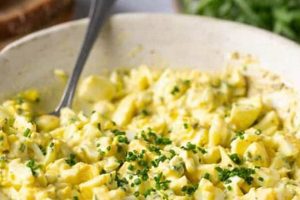
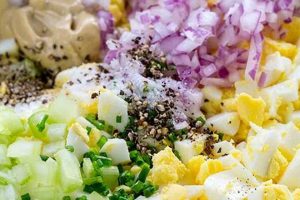
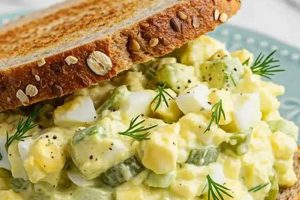
The components required to create this classic dish typically include hard-boiled eggs, mayonnaise, mustard, and seasonings. Variations may incorporate celery, onion, relish, or other additions to enhance flavor and texture.
Choosing fresh, high-quality components is essential for a flavorful and safe outcome. Properly cooked eggs are crucial for food safety and optimal texture. Mayonnaise acts as a binding agent and contributes richness, while mustard adds tang. Seasonings, such as salt, pepper, and paprika, further elevate the taste profile. The adaptability of this dish allows for customization based on individual preferences, dietary needs, and seasonal ingredient availability. Its simple preparation and relatively inexpensive nature have established its enduring popularity.
This exploration will delve into the nuances of component selection, preparation techniques, and variations to enhance the final product. Further discussion will cover storage recommendations and food safety guidelines for optimal enjoyment.
Tips for Elevated Egg Salad
Achieving exceptional egg salad involves careful consideration of component selection and preparation techniques. The following tips offer guidance for optimizing flavor, texture, and overall quality.
Tip 1: Egg Selection and Cooking: Opt for fresh, high-quality eggs. Overcooking results in dry, rubbery yolks; aim for a firm yet moist texture. Immediately cool the cooked eggs in ice water to halt the cooking process and facilitate peeling.
Tip 2: Mayonnaise Matters: The choice of mayonnaise significantly impacts the final flavor. Experiment with different brands or types, such as olive oil-based mayonnaise, to find a preferred taste and texture.
Tip 3: Mustard Magic: Mustard adds a crucial layer of complexity. Dijon, yellow, or whole grain mustards each offer unique flavor profiles that can enhance the overall dish. A balanced combination of mustards can create a particularly nuanced taste.
Tip 4: Seasoning Secrets: Proper seasoning is essential. Freshly ground black pepper adds depth, while a touch of paprika contributes color and subtle smokiness. Experiment with other spices, such as celery seed or dill, for additional flavor dimensions.
Tip 5: Textural Enhancements: Incorporating finely chopped celery or red onion adds a pleasant crunch. Minced fresh herbs, such as chives or parsley, contribute brightness and freshness.
Tip 6: Proper Storage: Refrigerate promptly in an airtight container. Consume within three to five days for optimal quality and food safety. Avoid freezing, as this negatively impacts the texture and consistency.
By following these tips, one can consistently create flavorful, well-balanced egg salad. Careful attention to detail in each step, from component selection to storage, ensures a delightful culinary experience.
These techniques provide a foundation for crafting exceptional egg salad. Experimentation and adaptation of these principles allows for personalized variations and consistently satisfying results.
1. Fresh Eggs

Fresh eggs constitute a cornerstone of high-quality egg salad. Their impact extends beyond flavor, influencing texture, aroma, and food safety. Freshness correlates directly with superior binding properties, contributing to a cohesive, creamy consistency. Conversely, older eggs may yield a watery, less desirable texture. The delicate flavor of fresh eggs allows the nuances of other ingredients, such as mustard and seasonings, to shine through. Older eggs can impart off-flavors that detract from the overall taste experience. Furthermore, using fresh eggs minimizes the risk of bacterial contamination, a critical consideration for food safety.
Consider the difference between egg salad prepared with week-old eggs versus those purchased the same day. The fresher eggs will produce a noticeably firmer, more flavorful salad, while older eggs might result in a looser, potentially less palatable product. This distinction underscores the practical significance of ingredient freshness. Chefs prioritize fresh eggs for egg salad not simply for tradition, but because their superior qualities directly translate to a superior final product. In commercial settings, strict adherence to freshness guidelines ensures consistent quality and mitigates food safety risks.
Prioritizing fresh eggs is paramount in crafting excellent egg salad. This ingredient’s quality has a ripple effect, influencing texture, taste, and safety. Understanding this connection empowers informed ingredient selection, ultimately resulting in a more enjoyable and safer culinary experience.
2. Mayonnaise Type

Mayonnaise serves as a crucial binding agent and flavor component in egg salad, significantly influencing the final product’s texture, taste, and overall quality. The type of mayonnaise selected directly impacts these characteristics. Classic mayonnaise, typically made with soybean oil, offers a neutral flavor profile and creamy texture. This allows the flavors of other ingredients, such as mustard and seasonings, to take center stage. However, its relatively high saturated fat content can contribute to a heavier, richer final product.
Alternatively, olive oil-based mayonnaise introduces a subtle fruity, peppery flavor and often possesses a lighter texture. This can complement the eggs and other ingredients while adding a layer of complexity. Avocado oil mayonnaise provides another option, offering a similar light texture and a mild, buttery flavor. Furthermore, variations like vegan mayonnaise, crafted from plant-based ingredients, cater to dietary restrictions while potentially introducing unique flavor profiles. For instance, a vegan mayonnaise made with aquafaba might impart a slightly different texture and subtle bean flavor, which could either enhance or detract from the overall experience depending on individual preferences. Similarly, choosing a flavored mayonnaise, such as one infused with herbs or spices, can significantly alter the final dish’s taste profile.
Understanding the nuances of various mayonnaise types allows for informed decision-making when crafting egg salad. The choice depends on desired flavor profiles, dietary considerations, and textural preferences. Careful selection elevates this seemingly simple dish, transforming it from basic to bespoke. Choosing the appropriate mayonnaise requires careful consideration of how its characteristics interact with other ingredients, ultimately impacting the overall sensory experience.
3. Mustard Choice
Mustard functions as a critical flavor component within egg salad, contributing significantly to its overall complexity and balance. The specific type of mustard selected profoundly impacts the final flavor profile. Yellow mustard, a ubiquitous choice, provides a mild tang and subtle sweetness. Its familiar flavor generally complements the other ingredients without overpowering them, making it a versatile option. Dijon mustard, characterized by its sharper, more pungent flavor derived from brown mustard seeds, introduces a pronounced depth and complexity. This robust flavor can stand up to the richness of mayonnaise and the fattiness of the eggs, creating a more assertive and nuanced taste experience. Stone-ground or whole-grain mustards, retaining the texture of the mustard seeds, add both textural and flavor complexity. Their earthy, slightly bitter notes contrast with the creamy base of the egg salad, offering a unique sensory experience.
Consider the difference between egg salad made solely with yellow mustard versus one incorporating Dijon. The former presents a familiar, comforting flavor profile, while the latter offers a more assertive, complex taste. A blend of mustards can further enhance the flavor profile, balancing the sweetness of yellow mustard with the sharpness of Dijon. In professional culinary settings, chefs carefully consider the flavor profiles of different mustards when developing egg salad recipes. This nuanced approach underscores the significant impact of mustard choice on the final product. A deli featuring a signature egg salad might utilize a specific mustard blend to distinguish its offering, highlighting the strategic role of this ingredient.
Strategic mustard selection is essential for crafting well-balanced, flavorful egg salad. Understanding the nuances of various mustard types empowers informed decision-making, enabling the creation of egg salad tailored to specific taste preferences. This seemingly minor ingredient plays a pivotal role in shaping the overall sensory experience, highlighting the importance of careful consideration in recipe development and execution.
4. Seasoning Balance

Seasoning balance represents a crucial element in crafting exceptional egg salad. The interplay of salt, pepper, and other seasonings significantly impacts the final flavor profile, elevating the dish beyond simple functionality to a nuanced culinary experience. Careful consideration of seasoning ratios and the incorporation of complementary spices allows for the creation of egg salad that is both flavorful and balanced.
- Salt’s Foundational Role
Salt acts as the foundational seasoning, enhancing the inherent flavors of the eggs and other ingredients. Proper salting is crucial, as insufficient salt results in a bland, underwhelming salad, while excessive salt renders it unpalatable. Professional chefs often recommend tasting and adjusting seasoning throughout the preparation process, ensuring the final product achieves optimal saltiness. The type of salt used can also influence the flavor; for instance, sea salt offers a more complex flavor profile compared to standard table salt.
- Pepper’s Pungent Contribution
Black pepper provides a contrasting pungent note, balancing the richness of the mayonnaise and the subtle sweetness of the eggs. Freshly ground black pepper offers a more intense aroma and flavor compared to pre-ground pepper. White pepper, milder than black pepper, may be preferred for aesthetic reasons, as it does not leave visible black specks in the final product. The amount of pepper used should complement the other seasonings without overpowering them.
- Complementary Spices and Herbs
Beyond salt and pepper, a variety of spices and herbs can enhance the flavor profile of egg salad. Paprika adds a subtle smokiness and a touch of color. Dill, chives, or tarragon contribute fresh, herbaceous notes. Curry powder introduces a warm, savory dimension. The choice of additional seasonings depends on individual preferences and the desired flavor profile. Experimentation with different spice combinations can lead to unique and exciting variations.
- Balancing Flavors through Acidity
A touch of acidity can further enhance the flavor balance of egg salad. A squeeze of lemon juice or a dash of vinegar brightens the flavors and cuts through the richness of the mayonnaise. This acidic element adds a refreshing counterpoint to the other ingredients, preventing the final product from tasting overly heavy or rich. The amount of acid used should be carefully balanced to avoid overpowering the other flavors.
The interplay of these seasoning elements transforms egg salad from a simple combination of ingredients into a balanced, flavorful dish. Careful attention to seasoning ratios and the incorporation of complementary spices allows for the creation of egg salad that is both satisfying and nuanced. The expertise of a seasoned chef lies in understanding these subtle yet crucial flavor dynamics, ultimately elevating a seemingly basic dish to a culinary experience.
5. Textural Additions

Textural additions represent a crucial aspect of crafting well-rounded egg salad. Beyond the foundational ingredients, incorporating elements that provide contrasting textures elevates the sensory experience, transforming a simple dish into something more dynamic and engaging. These additions contribute not only textural complexity but also often introduce complementary flavors that enhance the overall flavor profile.
- Finely Chopped Celery
Celery offers a classic textural counterpoint to the creamy base of egg salad. Its crisp, slightly watery nature provides a refreshing contrast, preventing the salad from becoming overly dense or rich. The subtle vegetal flavor of celery complements the eggs and other ingredients without overpowering them. The amount of celery added can be adjusted based on personal preference; a generous amount contributes significant crunch, while a smaller amount provides a subtle textural variation.
- Diced Red Onion
Red onion introduces a sharp, pungent flavor and a crisp texture that contrasts with the creamy, savory elements of egg salad. The vibrant color of red onion also adds visual appeal. Soaking the diced red onion in cold water for a few minutes before incorporating it into the salad mellows its sharpness, making it more palatable for those sensitive to strong onion flavors. Alternatively, chives or scallions offer a milder onion flavor and a more delicate texture.
- Chopped Fresh Herbs
Fresh herbs, such as chives, parsley, dill, or tarragon, contribute both textural and flavor complexity. Their delicate leaves offer a subtle textural variation, while their distinctive flavors enhance the overall flavor profile. Chives provide a mild onion flavor, parsley adds a fresh, slightly grassy note, dill contributes an anise-like flavor, and tarragon offers a subtle licorice note. The choice of herbs depends on personal preference and the desired flavor profile.
- Water Chestnuts or Jicama
For a unique textural experience, consider incorporating diced water chestnuts or jicama. Water chestnuts offer a crisp, slightly sweet flavor and a satisfying crunch. Jicama, with its slightly sweet and nutty flavor and crisp-tender texture, adds another layer of complexity. These additions offer a departure from traditional textural elements, providing a novel sensory experience.
These textural additions transform egg salad from a homogeneous mixture into a multi-faceted culinary creation. The interplay of textures and flavors creates a more dynamic and engaging sensory experience. Careful consideration of these elements allows for customization and elevates the dish beyond basic functionality to a truly enjoyable culinary delight. The choice and quantity of textural additions can be adjusted to create variations tailored to individual preferences and desired flavor profiles.
Frequently Asked Questions
This section addresses common inquiries regarding the components and preparation of egg salad.
Question 1: What is the ideal egg-to-mayonnaise ratio?
The optimal ratio depends on desired consistency. A general guideline suggests one-quarter to one-third cup of mayonnaise per four large hard-boiled eggs. Adjustments may be necessary based on the mayonnaise’s thickness and personal preferences.
Question 2: Can low-fat mayonnaise be substituted?
Substitution is possible, but may result in a less creamy texture and altered flavor profile. Adding a small amount of Greek yogurt can compensate for reduced richness while enhancing tanginess.
Question 3: How long does egg salad remain safe to consume?
Properly stored in an airtight container within refrigeration, egg salad typically remains safe for consumption for three to five days. Visual inspection and odor assessment should precede consumption to ensure quality.
Question 4: What alternatives exist for mustard?
Prepared horseradish or a small amount of wasabi paste can offer alternative flavor profiles. These options provide a distinct pungency and can complement the other ingredients.
Question 5: How can one achieve perfectly cooked hard-boiled eggs?
Gently boiling eggs for eight to ten minutes, followed by immediate immersion in ice water, typically yields firm yet moist yolks and facilitates easy peeling. Variations in cooking time may be necessary based on altitude and stovetop characteristics.
Question 6: Can other ingredients be added?
Numerous ingredients can enhance flavor and texture. Chopped pickles, relish, bacon crumbles, or avocado can create unique flavor profiles. Incorporating these additions offers opportunities for customization and experimentation.
Understanding these aspects contributes to successful egg salad preparation and enjoyment. Proper ingredient selection, handling, and storage ensure optimal quality and safety.
This information provides a foundation for crafting exceptional egg salad. Experimentation and adaptation of these principles allow personalized variations and consistently satisfying results. For further exploration of specific recipe variations and advanced techniques, consult the following resources
Conclusion
Careful selection of componentsfresh eggs, appropriate mayonnaise, flavorful mustard, balanced seasonings, and considered textural additionsdetermines the ultimate success of egg salad. Understanding the interplay of these elements allows for the creation of a dish that transcends basic sustenance, offering a nuanced and satisfying culinary experience. From classic preparations to innovative variations, the potential for customization within this seemingly simple dish remains remarkably broad.
The enduring popularity of egg salad speaks to its adaptability and the potential for continuous refinement. Exploration of diverse ingredients and techniques allows for the creation of personalized variations, ensuring that this classic dish continues to evolve and delight. Ultimately, the pursuit of exceptional egg salad lies in the appreciation of quality ingredients and the thoughtful application of culinary principles.