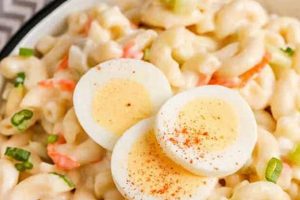
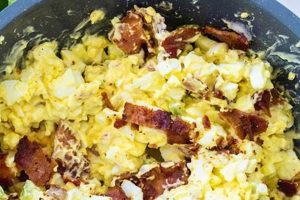
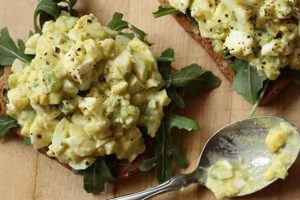
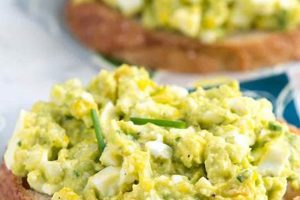
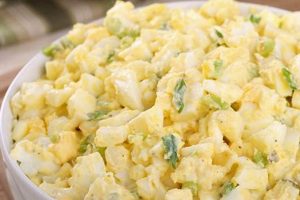
This dish combines the classic elements of egg salad with the creamy texture and tangy flavor of cottage cheese. Typically, it involves hard-boiled eggs, mayonnaise, and seasonings, blended with cottage cheese for a protein-rich and flavorful spread or salad. Variations can include ingredients like chopped celery, onion, mustard, relish, or fresh herbs.
The combination of eggs and cottage cheese offers a substantial source of protein and essential nutrients. This makes it a healthy and satisfying option for meals or snacks. Historically, similar combinations of dairy and eggs have been staples in various cultures, prized for their affordability and nutritional value. The modern iteration offers a versatile base adaptable to different dietary preferences and flavor profiles. It can be enjoyed as a sandwich filling, a topping for crackers or vegetables, or as a light lunch on its own.
Further exploration will cover variations on this dish, including ingredient substitutions for dietary restrictions, tips for achieving the perfect texture and consistency, and creative serving suggestions for different occasions. Nutritional information and potential health benefits will also be discussed.
Tips for Preparing an Egg and Cottage Cheese Dish
Achieving the ideal texture and flavor profile requires attention to detail. These tips offer guidance for creating a satisfying and nutritious meal.
Tip 1: Egg Selection and Preparation: Fresh, high-quality eggs yield the best flavor. For easier peeling, older eggs are recommended for hard-boiling. Ensure eggs are cooked thoroughly, but avoid overcooking, which can result in a rubbery texture.
Tip 2: Cottage Cheese Considerations: Different cottage cheese varieties offer varying textures. Large curd cottage cheese provides a chunkier texture, while small curd or whipped cottage cheese creates a smoother consistency. Low-fat or fat-free versions can reduce overall calorie content.
Tip 3: Mayonnaise Management: Mayonnaise acts as a binding agent and contributes richness. Start with a small amount and add more as needed to achieve the desired creaminess. Greek yogurt can be substituted for a lighter alternative.
Tip 4: Seasoning Strategies: Freshly ground black pepper, paprika, and a pinch of salt enhance the flavor profile. Experiment with other herbs and spices like dill, chives, or mustard powder for added complexity.
Tip 5: Ingredient Incorporation: Gently fold ingredients together to avoid overmixing, which can result in a mushy texture. Chopped celery, red onion, or bell peppers add textural contrast and nutritional value.
Tip 6: Chilling for Optimal Flavor: Allowing the mixture to chill in the refrigerator for at least 30 minutes allows the flavors to meld and enhances the overall experience. This also firms the mixture, making it easier to handle.
Tip 7: Creative Serving Suggestions: Beyond sandwiches, this versatile dish can be served as a salad topping, stuffed into tomatoes or avocados, or enjoyed with crackers or crudits.
By following these tips, one can create a delicious and nutritious meal or snack. Attention to detail in each step ensures optimal flavor and texture.
This exploration concludes with a summary of key takeaways and suggestions for further culinary adventures using this versatile base.
1. Ingredient Quality

Ingredient quality significantly impacts the overall flavor, texture, and nutritional value of an egg salad cottage cheese dish. Subpar ingredients can result in a bland or unpleasant experience, while fresh, high-quality components elevate the dish to a satisfying and healthful meal.
- Freshness of Eggs:
Fresh eggs are essential for optimal flavor and texture. They bind the mixture effectively and contribute a clean, rich taste. Older eggs, while suitable for hard-boiling, may impart a slightly sulfuric flavor, especially when used in large quantities. Freshness indicators include a firm, rounded yolk and a thick, cloudy egg white.
- Type of Cottage Cheese:
Cottage cheese contributes significantly to the texture and tanginess of the dish. Different varieties, such as large curd, small curd, and whipped, offer varying textures. Large curd provides a chunky texture, while small curd creates a smoother consistency. The choice depends on personal preference and desired final product.
- Mayonnaise Selection:
Mayonnaise acts as an emulsifier and adds richness. High-quality mayonnaise, made with natural ingredients, enhances the overall flavor. Lower-quality options may contain artificial flavors or preservatives that detract from the dish’s taste. Using Greek yogurt as a substitute offers a lighter, tangier alternative.
- Seasoning and Add-ins:
Fresh herbs and spices contribute significantly to the flavor profile. Freshly ground black pepper, paprika, dill, chives, and other seasonings enhance the taste. High-quality add-ins, such as crisp celery, red onion, or bell peppers, contribute textural and flavor complexity. Using fresh, high-quality produce elevates the overall sensory experience.
Prioritizing ingredient quality ensures a superior culinary outcome. The interplay of fresh eggs, carefully selected cottage cheese, flavorful mayonnaise, and vibrant seasonings and add-ins creates a harmonious and satisfying egg salad cottage cheese dish.
2. Texture Variations
Texture plays a crucial role in the overall enjoyment of an egg salad cottage cheese dish. Manipulating the texture allows for customization based on individual preferences, ranging from smooth and creamy to chunky and textured. Understanding the factors influencing texture provides control over the final product.
- Egg Preparation:
The consistency of the eggs significantly impacts the final texture. Finely chopped eggs create a smoother, more uniform texture, while coarsely chopped or mashed eggs contribute a chunkier mouthfeel. Overcooked eggs can become rubbery and detract from the overall experience. Proper cooking and chopping techniques are essential for achieving the desired texture.
- Cottage Cheese Curd Size:
Cottage cheese is available in various curd sizes, each contributing a distinct texture. Large curd cottage cheese adds a noticeable chunkiness, while small curd provides a smoother, creamier consistency. Whipped cottage cheese creates an exceptionally smooth and airy texture. Selecting the appropriate curd size is crucial for achieving the desired texture.
- Addition of Vegetables:
Incorporating vegetables introduces textural complexity. Finely diced celery, onions, or bell peppers add a subtle crunch, while larger pieces create a more pronounced textural contrast. The choice of vegetables and their preparation influence the overall sensory experience.
- Mayonnaise or Yogurt Ratio:
The amount of mayonnaise or yogurt used affects the creaminess and binding properties of the dish. A higher ratio of mayonnaise results in a richer, creamier texture, while less mayonnaise or the use of Greek yogurt creates a lighter, less dense consistency. Balancing these ingredients allows for customization based on preference.
Careful consideration of these elements allows for a tailored textural experience. Balancing the textures of the eggs, cottage cheese, vegetables, and binding agents creates a harmonious and satisfying dish that caters to individual preferences. The interplay of these elements elevates the egg salad cottage cheese dish beyond a simple combination of ingredients to a carefully crafted culinary creation.
3. Flavor Combinations
Flavor combinations are essential for creating a delicious and balanced egg salad cottage cheese recipe. The interplay of different tastes and aromas elevates the dish beyond a simple combination of ingredients. Understanding how various flavors interact allows for customization and the creation of a truly satisfying culinary experience.
- Classic Savory Profile:
The foundation of a classic savory profile often includes Dijon mustard, onion powder, garlic powder, salt, and black pepper. These ingredients enhance the inherent savory notes of the eggs and cottage cheese, creating a familiar and comforting flavor. The sharpness of mustard complements the richness of the eggs and the tanginess of the cottage cheese, while onion and garlic powder add depth and complexity.
- Herbaceous Infusion:
Fresh herbs introduce a bright, aromatic dimension. Dill, chives, parsley, and tarragon are popular choices. Dill offers a slightly tangy, anise-like flavor that complements the eggs and cottage cheese. Chives provide a mild onion flavor, while parsley adds a fresh, grassy note. Tarragon introduces a subtle licorice flavor that can be particularly appealing in combination with the other ingredients.
- Spicy Kick:
A touch of spice can elevate the flavor profile. A pinch of cayenne pepper, a dash of hot sauce, or a sprinkle of red pepper flakes add a warming heat that contrasts with the creamy base. The level of spice can be adjusted to suit individual preferences, from a subtle warmth to a fiery kick.
- Tangy Twist:
Ingredients like relish, chopped pickles, or a splash of vinegar introduce a tangy element that balances the richness of the eggs and cottage cheese. Sweet pickle relish adds a touch of sweetness and acidity, while dill pickle relish provides a more savory tang. A splash of apple cider vinegar or white wine vinegar brightens the flavors and adds complexity.
By understanding the interplay of these flavor combinations, one can create an egg salad cottage cheese recipe tailored to individual preferences. The careful balance of savory, herbaceous, spicy, and tangy elements elevates the dish from simple to sophisticated, offering a satisfying and flavorful culinary experience.
4. Nutritional Value
Nutritional value represents a significant aspect of an egg salad cottage cheese recipe. This dish offers a substantial source of complete protein, essential for muscle building, tissue repair, and overall bodily functions. Eggs provide all nine essential amino acids, while cottage cheese contributes a significant amount of casein protein, known for its slow digestion and sustained release of amino acids. This combination makes the dish particularly beneficial for individuals seeking to increase protein intake, such as athletes or those following a high-protein diet. Furthermore, both eggs and cottage cheese are excellent sources of vitamins and minerals, including vitamin B12, selenium, and choline, crucial for nerve function, metabolism, and cognitive health. The specific nutritional content can vary based on the type of cottage cheese (full-fat, low-fat, or non-fat) and the inclusion of additional ingredients, such as vegetables. For instance, adding chopped celery or bell peppers increases the fiber and vitamin content.
The inherent nutritional value of this recipe can be further enhanced through mindful ingredient selection. Opting for organic, free-range eggs increases the omega-3 fatty acid content, beneficial for heart health. Choosing low-fat or non-fat cottage cheese reduces overall calorie and saturated fat intake while maintaining the protein content. Incorporating a variety of colorful vegetables, such as chopped carrots, spinach, or tomatoes, boosts the antioxidant and micronutrient profile, contributing to overall health and well-being. Limiting the amount of mayonnaise or substituting it with Greek yogurt reduces added fat and calories, further optimizing the nutritional value. This adaptability allows the recipe to fit within diverse dietary needs, from weight management to specific nutrient goals.
Understanding the nutritional composition of this dish allows for informed dietary choices. This knowledge empowers individuals to adjust the recipe to meet specific nutritional requirements and maximize health benefits. By carefully selecting ingredients and being mindful of portion sizes, one can enjoy a delicious and nutritious meal that contributes to a balanced and healthy diet. Integrating this dish as part of a balanced dietary pattern, alongside other nutrient-rich foods, supports long-term health and well-being.
5. Preparation Methods
Preparation methods significantly influence the final quality, texture, and overall enjoyment of an egg salad cottage cheese recipe. Different techniques can yield varying results, impacting the dish’s flavor profile, consistency, and aesthetic appeal. A thorough understanding of these methods allows for greater control and customization, ensuring a consistently satisfying culinary outcome.
- Hard-Boiling Eggs:
Properly hard-boiling eggs is fundamental. Methods range from traditional stovetop boiling to steaming or baking. Each technique affects the ease of peeling and the final texture of the yolk. Overcooked yolks can become dry and crumbly, while undercooked yolks can be difficult to incorporate evenly. Precision in timing and temperature control ensures optimally cooked eggs with firm, yet creamy yolks.
- Egg Chopping/Mashing:
The method of preparing the eggs after hard-boiling influences the texture of the salad. Finely chopping creates a smoother, more uniform consistency, while coarsely chopping or mashing yields a chunkier texture. A combination of chopped and mashed eggs can provide a balanced texture. The chosen method contributes to the overall mouthfeel and aesthetic appeal of the finished dish.
- Cottage Cheese Incorporation:
The manner in which cottage cheese is incorporated affects the final texture and flavor distribution. Gently folding the cottage cheese into the egg mixture prevents overmixing and maintains distinct curds. Alternatively, blending the cottage cheese creates a smoother, more homogenous texture. The chosen method depends on the desired texture and aesthetic preference.
- Ingredient Combination Order:
The order in which ingredients are combined can impact the emulsification and flavor development. Combining the mayonnaise with the eggs before adding other ingredients ensures even distribution and prevents a watery consistency. Adding dry seasonings after the wet ingredients have been combined prevents clumping and ensures uniform flavor distribution. A methodical approach to ingredient incorporation contributes to the overall quality and consistency of the final product.
Mastery of these preparation methods allows for precise control over the final product, enabling customization based on individual preferences. Careful consideration of each step, from hard-boiling the eggs to incorporating the ingredients, ensures a consistently delicious and visually appealing egg salad cottage cheese dish. The application of these techniques transforms simple ingredients into a carefully crafted culinary creation.
6. Serving Suggestions
Serving suggestions enhance the versatility and enjoyment of an egg salad cottage cheese recipe. Presentation and accompanying elements significantly influence the overall dining experience. Consideration of various serving options expands the recipe’s utility beyond a basic preparation.
Classic applications include sandwiches, wraps, or lettuce cups. These provide familiar and convenient formats, ideal for quick meals or packed lunches. Open-faced sandwiches on toasted bread offer an elegant presentation. Adding crisp lettuce or sliced tomatoes enhances texture and visual appeal. Wraps provide a portable and less carb-heavy option. Lettuce cups cater to low-carb or gluten-free dietary preferences. Beyond these traditional approaches, the mixture can be utilized as a dip for crudits or crackers, offering a lighter snack or appetizer option. Incorporating the mixture into deviled eggs or stuffed avocados presents a more sophisticated presentation for gatherings or special occasions.
Serving suggestions should complement the flavor profile of the egg salad cottage cheese mixture. For instance, a spicier version pairs well with cooling elements like cucumber or avocado. A more herbaceous mixture complements crusty bread or whole-grain crackers. The chosen serving style influences portion control and perceived satiety. Smaller portions served as appetizers or snacks encourage mindful eating. Larger portions incorporated into main dishes contribute to a more substantial meal. Understanding the interplay between serving suggestions and the overall dining experience elevates this simple dish to a versatile and satisfying culinary creation.
Frequently Asked Questions
This section addresses common inquiries regarding the preparation, storage, and variations of combining eggs and cottage cheese in recipes.
Question 1: What is the best way to prevent a watery consistency?
Excess moisture can result from several factors, including the water content of the cottage cheese and the chopping method used for the eggs. Thoroughly draining the cottage cheese before incorporating it into the mixture helps reduce excess liquid. Finely chopping the eggs, rather than mashing them, also minimizes water release. Adding a small amount of mayonnaise or Greek yogurt can help bind the mixture and create a creamier consistency.
Question 2: How long can this mixture be stored in the refrigerator?
Properly stored in an airtight container, the mixture typically lasts for three to five days in the refrigerator. Factors affecting shelf life include the freshness of the ingredients and the storage temperature. Always check for signs of spoilage, such as a sour odor or discoloration, before consuming.
Question 3: Can this recipe be adapted for low-fat or low-carb diets?
Adapting this recipe to suit dietary restrictions is straightforward. Using low-fat or fat-free cottage cheese reduces overall fat content. Substituting Greek yogurt for mayonnaise lowers fat and adds protein. For low-carb diets, using lettuce wraps or serving the mixture with vegetables instead of bread or crackers reduces carbohydrate intake.
Question 4: What are some alternatives to mayonnaise for binding the mixture?
Greek yogurt, avocado, or hummus serve as healthier alternatives to mayonnaise, providing different flavor profiles and nutritional benefits. Greek yogurt adds tanginess and protein, while avocado contributes creaminess and healthy fats. Hummus introduces a savory, slightly nutty flavor. The quantity used may require adjustment depending on the chosen alternative.
Question 5: How can one prevent hard-boiled eggs from becoming rubbery?
Preventing rubbery hard-boiled eggs requires precise cooking time and rapid cooling. Overcooking causes a chemical reaction that produces hydrogen sulfide, resulting in a rubbery texture and a greenish ring around the yolk. Precise timing and immediate immersion in cold water after cooking prevent this reaction and maintain a tender texture.
Question 6: Can this mixture be frozen for later use?
Freezing is not generally recommended, as it can negatively impact the texture of both the eggs and cottage cheese, leading to a watery consistency upon thawing. Mayonnaise-based mixtures also tend to separate upon freezing. It is advisable to prepare fresh batches as needed for optimal quality and flavor.
These responses offer guidance on common concerns. Experimentation and adherence to food safety guidelines ensure optimal results.
This concludes the frequently asked questions section. Further sections will delve into recipe variations and advanced preparation techniques.
Egg Salad Cottage Cheese Recipe
Exploration of this dish reveals a versatile recipe adaptable to various tastes and dietary needs. Key factors include ingredient quality, textural considerations, flavor combinations, nutritional value, preparation methods, and serving suggestions. Fresh, high-quality ingredients ensure optimal flavor and texture. Texture can be manipulated through egg preparation, cottage cheese curd size, and the addition of vegetables. Flavor profiles expand through herbs, spices, and complementary ingredients. Nutritional value stems from the protein, vitamin, and mineral content, adaptable through ingredient choices. Precise preparation methods, from hard-boiling eggs to incorporating ingredients, ensure consistent results. Serving options range from classic sandwiches to innovative presentations, enhancing versatility.
This adaptable dish offers a foundation for culinary creativity. Understanding the interplay of ingredients, techniques, and presentation elevates a simple combination to a personalized culinary experience. Continued experimentation with flavors and presentations promises further evolution of this versatile recipe.